Brian Haara
Bourbon. Law. Author.
Sipp’n Corn Bourbon Review – Yellowstone 2017 Limited Edition
This is the third year that Steve and Paul Beam at Limestone Branch Distillery in Lebanon, Kentucky (which partners with Luxco), have released a limited edition variety of the historic Yellowstone brand. I enjoyed both of the previous limited editions, but for different reasons. The 2015 Yellowstone Limited Edition was a 105 proof blend of 12 and 7-year bourbons using rye as the secondary grain, and a 7-year bourbon using wheat as the secondary grain, that had robust oak, a black-tea tang, and a finish swelling with rye spice. The 2016 Yellowstone Limited Edition was a 101 proof blend of 7-year and 12-year Kentucky Straight Bourbon (both with rye as the secondary grain), and finished in new wine barrels with varying levels of toast (i.e., not charred) that was a nuanced sipping whiskey.
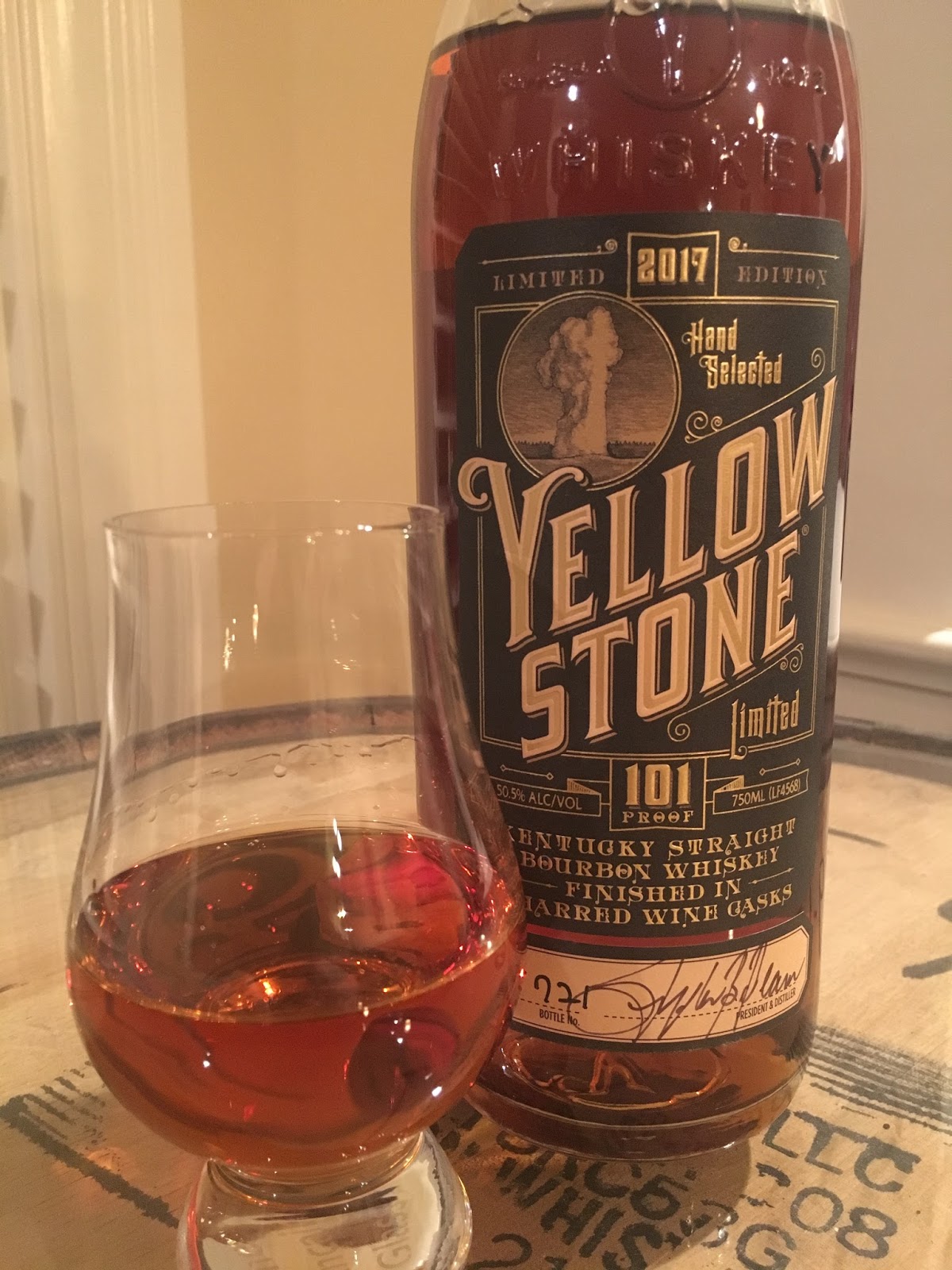
2017 marks the beginning of a new era because this Yellowstone Limited Edition is the first to include bourbon distilled at Limestone Branch. While the proportions are not disclosed, the 2017 Yellowstone limited edition blends together 4-year (the Limestone Branch contribution), 7-year, and 12-year Kentucky Straight Bourbon, which was then finished in wine casks. Interestingly, the finishing casks provide continuity to the 2016 Yellowstone Limited Edition. After that release, Steve Beam sent the wine casks back to Kelvin Cooperage for #1 level charring without scraping the barrels. Then he filled them with the 2017 blend, providing the final step for this year’s Limited Edition.
|
Bourbon:
|
Yellowstone 2017 Limited Edition Kentucky Straight Bourbon Whiskey
|
|
Distillery:
|
Unknown, but including Limestone Branch’s own bourbon
|
|
Age:
|
No age statement, but component bourbons include 4-year, 7-year, and 12-year
|
|
ABV:
|
50.5% ABV (101 proof)
|
|
Cost:
|
$99.99
|
Tasting Notes
Appearance:
Dark amber on the verge of brown.
Nose:
Aromas of leather and oak with cinnamon giving it some spark, along with butterscotch sweetness, pecans, and grassy fields.
Taste:
It needed some air to open up, but then it shined. Consistent with the aromas, the prominent flavors are more earthy flavors, like leather, oak, tobacco and cinnamon again, along with dark, dried fruit. The flavors seem much older than I would expect even from the oldest component bourbon.
Finish:
The finish ties it all together for this Yellowstone edition. I imagined leather-bound books in an old library. Oak and leather provide the backbone, rich caramel sweetness makes it indulgent, and the warmth and lingering flavors make the finish memorable.
Bottom Line
Limestone Branch has been building its credibility with the Yellowstone Limited Editions and shows that it can be a player in the annual fall limited release season hysteria. The 2017 edition is the most complex of the three to date, while not sacrificing consistency from aroma, to taste, to finish. Perhaps most impressive though, the 2017 Yellowstone is robust without being a brute, which is a very fine line to walk.
Score on The Sipp’n Corn Scale: 4.0
The Sipp’n Corn Scale:
1 – Swill. I might dump the bottle, but will probably save it for my guests who mix with Coke.
2 – Hits the minimum criteria, but given a choice, I’d rather have something else.
3 – Solid Bourbon with only minor shortcomings. Glad to own and enjoy.
4 – Excellent Bourbon. Need to be hyper-critical to find flaws. I’m lucky to have this.
5 – Bourbon perfection. I’ll search high and low to get another bottle of this.
Sipp’n Corn Bourbon Heritage Month Reviews – Parker’s Heritage Collection 11th Edition & Four Roses 2017 Limited Edition Small Batch
Bourbon Heritage Month is here! And just as we’ve come to expect, bourbon fans are clamoring for the mid-September releases from Heaven Hill and Four Roses.
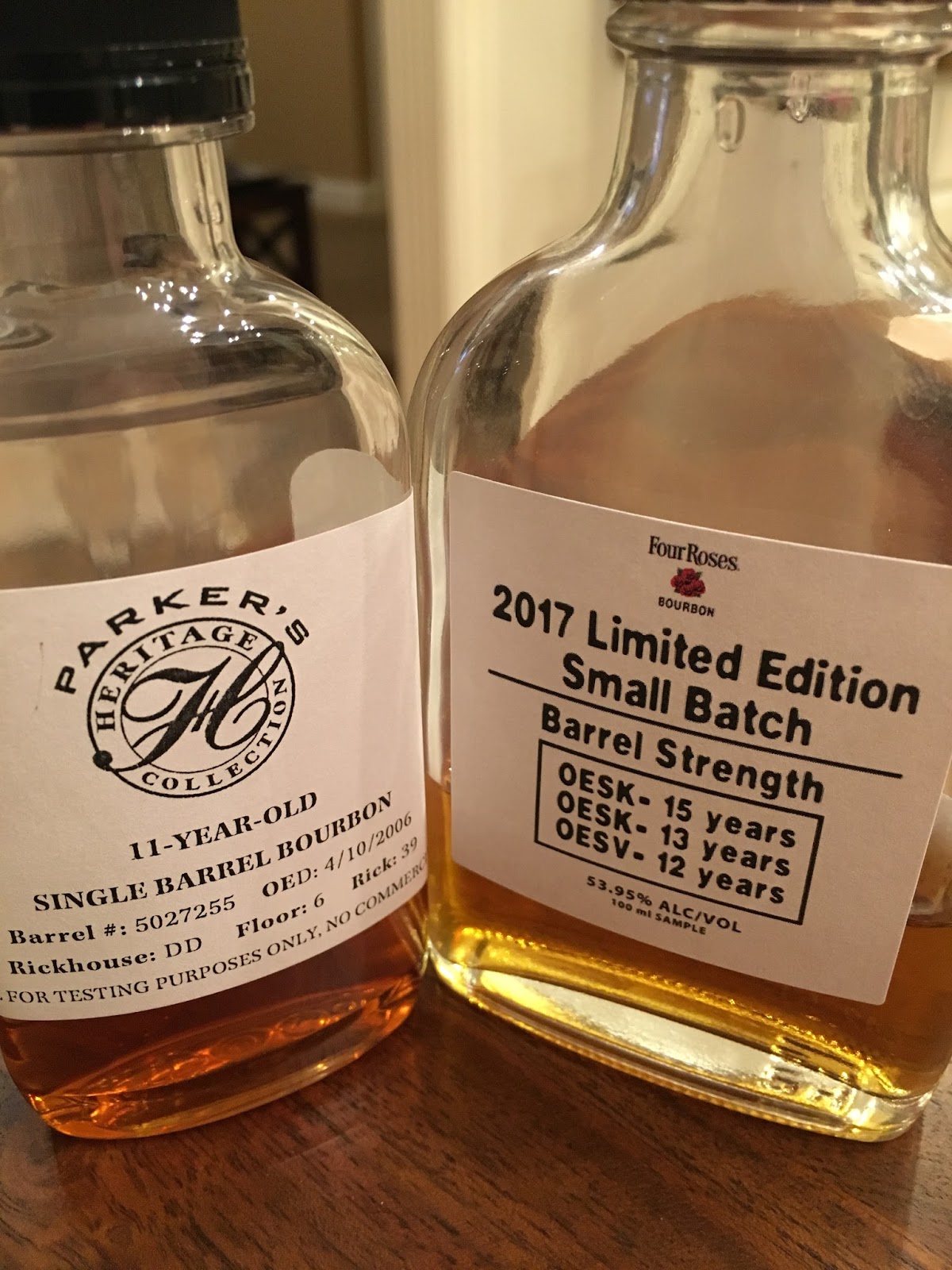 Heaven Hill continues to honor its late Master Distiller Emeritus Parker Beam while also continuing to support ALS research and patient care with the 2017 release of Parker’s Heritage Collection, now in its 11th edition. One of the beauties of Parker’s Heritage Collection has been its range and diversity, but this year—fittingly—Heaven Hill honors Parker with a single barrel run aged in the Deatsville. Some of the best bourbon that I’ve ever had was aged by Heaven Hill in Deatsville, so I’m eagerly anticipating this single barrel release.
This year’s Limited Edition Small Batch from Four Roses comes on the heels of its spring Limited Edition release honoring Al Young’s 50 years of service at Four Roses. The Al Young 50th was absolutely magnificent (and is the current leader for my “bourbon of the year”), so the fall release will forever be compared to it, which is unfair but inevitable. A twist this fall for Four Roses is that Master Distiller Brent Elliott selected only “E” mash bill bourbons for the small batch (of about 13,800 bottles), which means 75% corn, 20% rye, and 5% malted barley, and none of the recipes using the 35% rye mash bill. The Four Roses Limited Edition is always a highlight of September and for everyone visiting for the Kentucky Bourbon Festival, and it’s always a must-have for me.
Parker’s Heritage Collection Tasting Notes
|
Bourbon:
|
Parker’s Heritage Collection, 11th Edition (2017) Single Barrel Kentucky Straight Bourbon Whiskey
|
|
Distillery:
|
Heaven Hill, Bardstown, Kentucky (distilled in Louisville and aged in Deatsville)
|
|
Age:
|
11 years
|
|
ABV:
|
61% (122 proof)
|
|
Cost:
|
$130.00
|
Appearance:
Brown with amber hints, and distinct legs.
Nose:
The aroma hit from the moment that I broke the seal, with leather, dark dried fruit, and spice, all predicting huge flavors. The addition of water really tamped down the aromas, however, so be sure to appreciate the aroma first.
Taste:
This is an intense, robust bourbon, with more oak than I would have guessed for 11 years. It’s a blast of spice and oak with an underlying sugary caramel layer and an overall buttery feel. Try it neat, but also try it with a splash of water, which controlled the heat but retained all of the remarkable flavors.
Finish:
Long, with a dry, slow burn. A splash of water made the finish even better.
Four Roses Limited Edition Small Batch Tasting Notes
|
Bourbon:
|
Four Roses 2017 Limited Edition Small Batch Kentucky Straight Bourbon Whiskey
|
|
Distillery:
|
Four Roses, Lawrenceburg, Kentucky
|
|
Age:
|
15-year OESK – 20%
13-year OESK – 40%
12-year OESV – 40%
|
|
ABV:
|
53.65% (107.3 proof )
Note: The sample bottle was labeled 53.95% (107.9 proof)
|
|
Cost:
|
$130.00
|
Appearance:
Glowing amber, lighter in comparison, and also with distinct legs.
Nose:
The nose is a classic Four Roses fruity, mellow nose, highlighting softer aromas like vanilla with a backbone of oak and spice.
Taste:
Fruit sweetness (think of ripe apricots and peaches) and brown sugar take the lead on this creamy bourbon. It’s easy on the spice, but packs a punch of heat. A splash of water added even more creaminess, but 107 proof has always seemed to be a favorite of mine, so I recommend keeping this one neat.
Finish:
Long, with a shift to baking spice and cinnamon, with lingering warmth.
Bottom Line
These two limited editions showcase the range of bourbon, and they both have great finishes but they get there by a different route. This comparison is also a reminder that higher-rye doesn’t always result in more spice. Here, the Four Roses “low-rye” mash bill of 20% rye grain is still higher than the industry standard, and has twice as much rye grain compared to the mash bill used for this edition of Parker’s Heritage Collection (75% corn, 10% rye, 12% malted barley). Instead, yeast and aging conditions seemed to take the lead here.
Sample sizes are getting smaller and I’d like to have had more time with both of these to be able to elaborate on the reviews, but I can certainly recommend both enthusiastically. If I were forced to pick one over the other, Parker’s Heritage Collection is the easy choice though, based mostly on that punch of heat in the Four Roses.
Be on the lookout for both in mid-September!
Disclaimer: The respective brand managers kindly sent me a sample
for this review, without any strings attached.
Thank you.
Sipp’n Corn Bourbon Review – Rhetoric 23-year old Kentucky Straight Bourbon Whiskey
 According to its press release, Rhetoric 23 was distilled between 1990 and 1993 at the Bernheim Distillery while it was owned by United Distillers. This time frame reported for distillation and the lack of “old” or “new” preceding “Bernheim” leaves some questions about whether Rhetoric 23 was distilled at the old Bernheim Distillery, which historically had been home to I.W. Harper and Old Charter, before United tore it down, or the new Bernheim Distillery, now owned by Heaven Hill since 1999, but built by United as a state-of-the-art distillery to consolidate its operations. The new Bernheim Distillery opened in 1992, so I did some digging with the brand managers, who were able to determine that Rhetoric 23 was distilled entirely at the new Bernheim distillery.
One of the casualties of the new Bernheim Distillery construction was the famed Stitzel-Weller Distillery, which closed in 1992. Master Distiller Ed Foote and all Stitzel-Weller production were moved to the new Bernheim Distillery, but of course, the Stitzel-Weller warehouses still needed to be filled, and that need was satisfied by the new Bernheim production. As the orphan barrel story goes, that’s where Diageo found these old barrels of whiskey.
Regardless, Rhetoric 23 is the tenth overall release in the Orphan Barrel line, and the fourth in the Rhetoric sub-line, which is steadily progressing from 20 years to the planned finale at 25 years old. Kudos to Diageo for this creative release schedule, allowing consumers to isolate age as a single factor and compare expressions.
|
Bourbon:
|
Rhetoric 23-year old Kentucky Straight Bourbon Whiskey
|
|
Distillery:
|
Distilled at the (old or new?) Bernheim Distillery, Louisville, Kentucky, aged at Stitzel-Weller, in Louisville, Kentucky, and bottled in Tullahoma, Tennessee.
|
|
Age:
|
23 years old.
|
|
Mash bill:
|
86% corn; 6% rye; 8% barley.
|
|
ABV:
|
45.3% (90.6 proof)
|
|
Cost:
|
$120.00
|
Disclaimer: The brand managers kindly sent me a sample
for this review, without any strings attached.
Thank you.
Tasting Notes
Appearance:
Rhetoric 23 is not nearly as dark as 23 years in a barrel would impart, so I’m assuming that it underwent pretty substantial filtering, resulting in a medium-brown color with a hint of orange, and with prominent legs.
Nose:
The nose was mostly subtle, but I liked its darkness—oak, old tobacco barn, dark chocolate, rich coffee, polished wood, and leather.
Taste:
Despite the filtration, Rhetoric 23 is still creamy with a softness and the right amount of heat, with flavors like hazelnut, dark chocolate, vanilla, baking spices, and of course oak. There’s no pucker though, which can come from too much oak.
Finish:
The subtleness of the aromas and the softness on the palate led me to expect a warm but uneventful finish. Instead, after an initial swell of cinnamon spice, it has a satisfying, long finish. While controlled by oak, again it’s not over-oaked, and transitions to a smoky, dry finish.
Bottom Line
Oak is the obvious topic for discussion with 23-year old bourbon. Of course, I came in expecting a bunch of oak, and while oak is a big feature of Rhetoric 23, it’s not “over-oaked” to my subjective palate. Rhetoric 23 is also receiving the full gamut of reviews, from “not recommended” to “A-,” which tells me that the oak might be more of a factor than I realize, or that I’m more tolerant of oak. Whatever it means, I thoroughly enjoyed the sample and wished that I had more than the now long-gone 100 mL. Price-wise, I would buy it at sub-$100.
Score on The Sipp’n Corn Scale: 3.0
The Sipp’n Corn Scale:
1 – Swill. I might dump the bottle, but will probably save it for my guests who mix with Coke.
2 – Hits the minimum criteria, but given a choice, I’d rather have something else.
3 – Solid Bourbon with only minor shortcomings. Glad to own and enjoy.
4 – Excellent Bourbon. Need to be hyper-critical to find flaws. I’m lucky to have this.
5 – Bourbon perfection. I’ll search high and low to get another bottle of this.
The Finish Line is in Sight for Lux Row Distillers.
Perhaps best known for Ezra Brooks and Rebel Yell (but readers need to add David Nicholson to that list), family-owned Luxco, Inc. continues to make progress on its path from merchant bottler to distiller. Luxco’s Lux Row Distillery in Bardstown, Kentucky hit another milestone this summer with the completion of one of its six barrel warehouses and the installation of the guts of its new distillery.
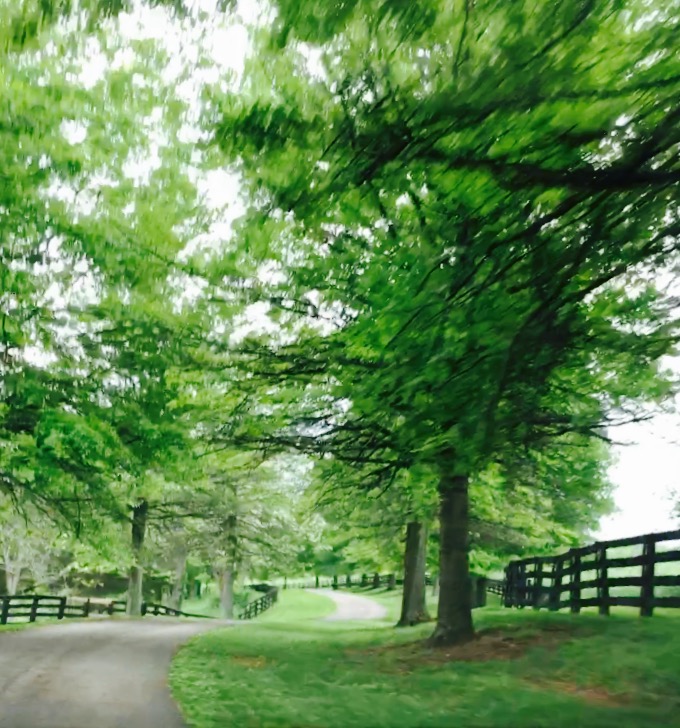
The tree-lined approach to Lux Row Distillers adds to the ambiance.
I visited Lux Row yesterday for a hard-hat tour and saw that since the installation of the 43-foot Vendome column still this past March, hot and chilled water tanks have been added along with meal bins, the beer well, fermenters (8,000 gallons each), cookers (4,000 gallons each), and piping connecting everything. Construction should be complete by the end of the year, distillation can begin in January 2018, and Lux Row should be open to the public by Derby 2018.
 Creative Director Michele Lux described how she got tapped for her design expertise and planning for the visitor’s center and event space, while she and Distillery Operations Manager Tony Kamer showed us the shiny new equipment in the state-of-the-art distillery. When the site is complete, the 18,000 square foot distillery will be accompanied by six identical barrel warehouses, each with six floors and each with a capacity of 20,000 barrels. Within six months after the first distillation run, the 36-inch diameter Vendome still will be worked up to a pace of 25,000 barrels per year, but as with the rest of the distillery, Luxco has planned on being able to increase capacity.
 According to my interview of Luxco President and COO, David Bratcher, during the groundbreaking ceremony in May 2016, Lux Row plans to stick to brown spirits, with bourbon mash bills containing rye or wheat as secondary grains, along with rye whiskey mash bills. Current supply forecasts are sufficient, which allows this dedication to American whiskies, and which will also allow aging of at least five years (2023!) before the first Luxco brands will use Lux Row whiskey.
Now, in the meantime, if I could just convince Luxco to add a private barrel program for Rebel Yell 10-year single barrel, that might help tide us all over.
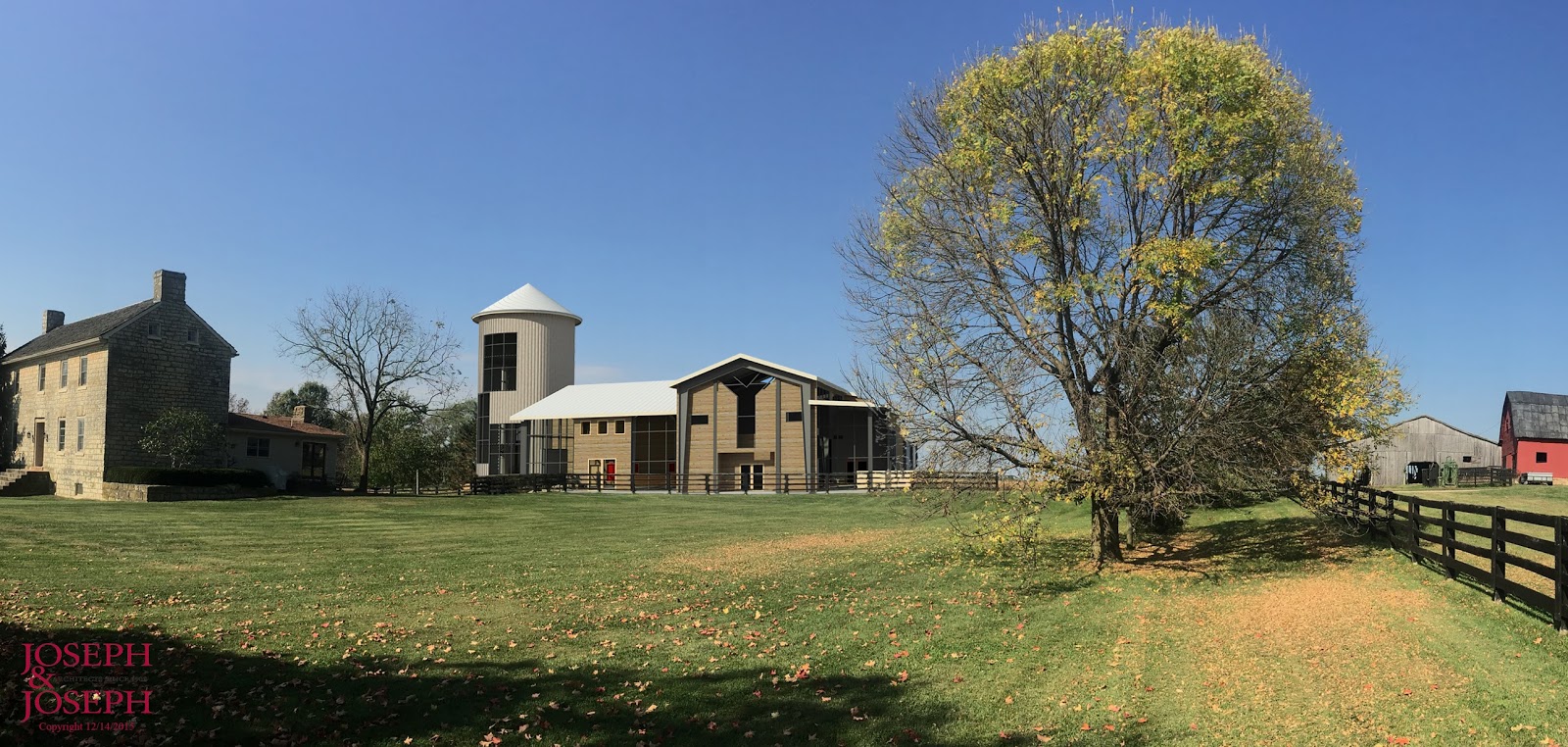
Joseph & Joseph rendering of the completed project.
Sipp’n Corn Bourbon Review – Noah’s Mill
Noah’s Mill is the highest-proof and highest-shelf brand member of Willett’s “Small Batch Boutique Bourbon Collection,” which also includes Kentucky Vintage, Pure Kentucky, and Rowan’s Creek. Before the Bourbon craze it was aged for 15 years, and while it lost that minimum age, most everyone except the age-statement purists agree that it has retained its high quality. One distinguishing characteristic of Noah’s Mill is that it traditionally blended Bourbon using rye as the secondary grain with Bourbon using wheat as the secondary grain, although this four-grain approach may have ended recently.
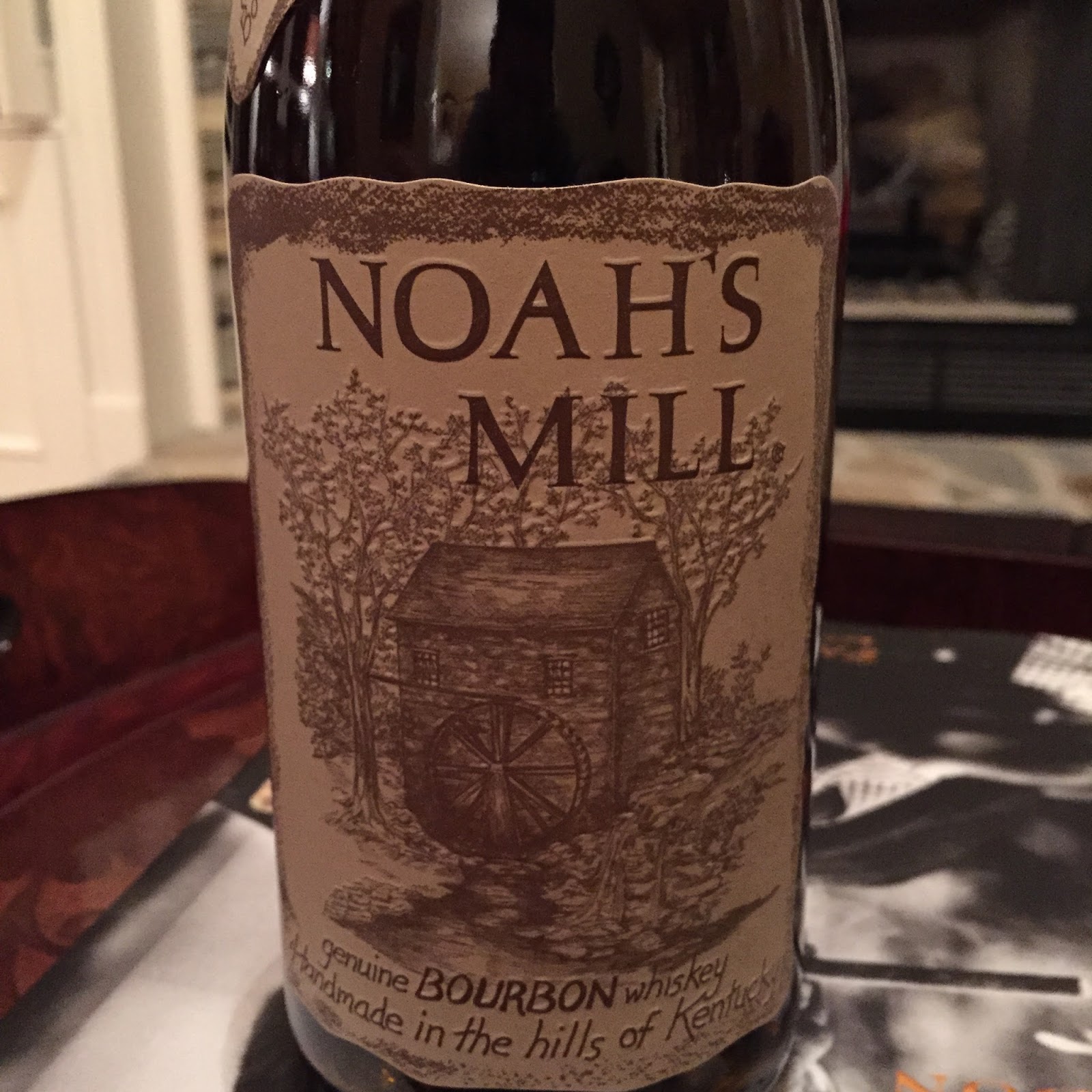 Another interesting side-note is that Noah’s Mill is not labeled as “Straight” Bourbon Whiskey, instead using just “Bourbon Whiskey.” Being able to use the word “Straight” is a badge of honor that every producer should use if it can do so legally. Straight Bourbon Whiskey must first meet the federal regulations to be called “Bourbon”: “whisky produced at not exceeding 160 proof from a fermented mash of not less than 51 percent corn, … and stored at not more than 125 proof in charred new oak containers…”, and bottled at no less than 40 percent ABV. 27 CFR § 5.22(b)(1); 27 CFR § 5.22(b).
Then, in addition, Bourbon “shall be further designated as ‘straight’” if it was “stored in the type of oak containers prescribed for a period of two years or more.” 27 CFR § 5.22(b)(1)(iii). Under another federal regulation and TTB interpretation, no flavoring or coloring additives can be added to Bourbon or Straight Bourbon. 27 CFR § 5.23(a)(2). A whiskey that is “Straight” can only include blends of straight whiskies of the same type produced in the same state. 27 CFR § 5.22(b)(1)(iii). Of course, an age statement is optional for any Straight Bourbon Whiskey that is at least four years old. 27 CFR § 5.40(a).
The folks at Willett confirmed for me that Noah’s Mill qualifies as “Straight” Bourbon Whiskey but that it’s just not on the label. Personally, I’d want to include this guarantee of compliance and purity, but the quality coming out of Willett is undeniable, and they’ve been successful, so I’ll just leave this as my 2 cents and defer to Drew and his family.
|
Bourbon:
|
Noah’s Mill Kentucky Bourbon Whiskey
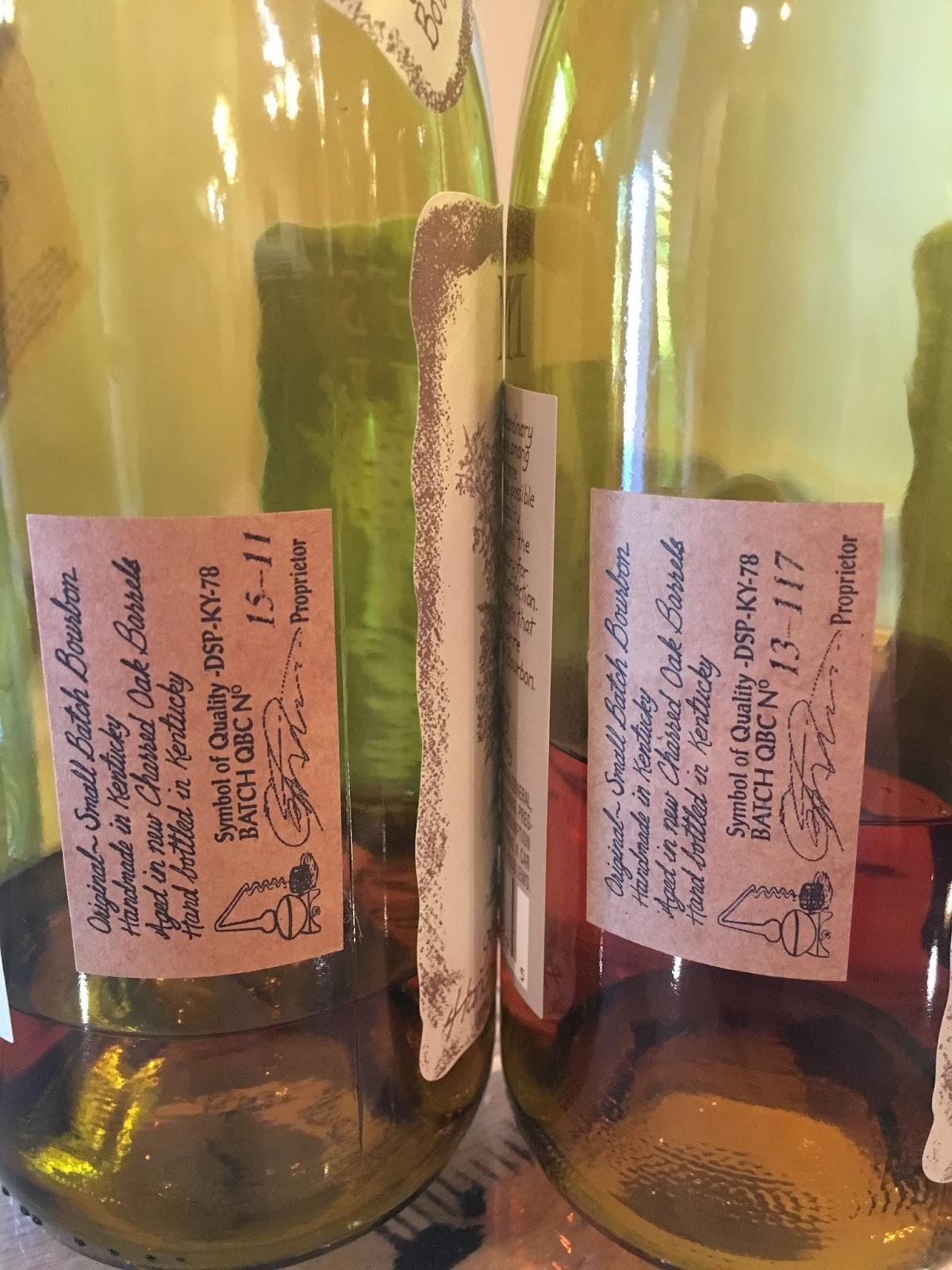
Batch QBC 13-117
Batch QBC 15-11
Batch QBC 15-18
|
|
Distillery:
|
Undisclosed, but bottled by “Noah’s Mill Distilling Company,” which is an assumed name of Kentucky Bourbon Distillers, Ltd. (Willett), Bardstown, Kentucky, DSP-KY-78
|
|
Age:
|
No age statement, so the youngest Bourbon is guaranteed to be at least four years old.
|
|
ABV:
|
57.15% (114.3 proof)
|
|
Cost:
|
Usually around $50.00
|
Tasting Notes
Appearance:
Golden amber with a red hue in the light. The 2013 batch was slightly darker.
Nose:
Great aromas with a fair warning of the high proof. Each of the three had distinct noses; 15-18 was the sharpest and most floral with candy sweetness, 15-11 was mellow with dark fruit and old barn, and 13-117 was more on the earthy side with old oak and cocoa.
Taste:
The high proof is somewhat masked by the complexity and the warm flavors like vanilla, toffee, and cocoa, transitioning to cinnamon, pepper, and oak. Again, each batch had its distinguishing characteristics but overall similarities. For instance, 15-11 has a fantastic malted chocolate note that was not in Batch 15-18, where it was replaced with more intense spice, corn grain, and cherry. Batch 13-117, on the other hand, was the creamiest of the three, with mellow flavors of honey, dark cherry, plum, espresso, and rich caramel. They all took a splash of water or ice very well.
Finish:
Great swelling, warming, oaky finishes with all of these batches. Batch 15-11 had an oaky/caramel balance with a mint kicker. After a quick burst of sugary candy on the finish, 15-18 gives way to pepper spice and oak. And I really enjoyed the long, slow burn of 13-117 that harkened back to its earthy aromas and swell of rye spice.
Bottom Line
Noah’s Mill provides a lush, well-rounded Bourbon with distinct batch characteristics, but all in the same family. It might be too hot for some people, but a splash of water or ice will both drop the ABV and the heat to a range that will appeal to a broader audience without sacrificing any of the flavor. I highly recommend Noah’s Mill.
Score on The Sipp’n Corn Scale: 3.5
The Sipp’n Corn Scale:
1 – Swill. I might dump the bottle, but will probably save it for my guests who mix with Coke.
2 – Hits the minimum criteria, but given a choice, I’d rather have something else.
3 – Solid Bourbon with only minor shortcomings. Glad to own and enjoy.
4 – Excellent Bourbon. Need to be hyper-critical to find flaws. I’m lucky to have this.
5 – Bourbon perfection. I’ll search high and low to get another bottle of this.

