Brian Haara
Bourbon. Law. Author.

I started the Sipp’n Corn® blog in August 2013 with one of my favorite bourbon lawsuits—the Pepper v. Labrot case from 1881. The case captivated me because it told the true story that current-day marketers and tour guides didn’t tell. I hosted Sipp’n Corn® on Google Blogger until November 2018 when Bourbon Justice was released, then I imported and categorized those old posts for this site. Now I use this site to tell new stories of ancient bourbon lawsuits and to share reviews of as many bourbons as I can find.
Enjoy while you sip your corn!
Sipp’n Corn Tasting Notes—Wilderness Trail Single Barrel Bottled in Bond Kentucky Straight Bourbon Whiskey
I reserved my bottle of the planned inaugural bourbon release from Wilderness Trail way back when it was called Wilderness Trace, before a certain Fireball-financed distillery seems to have complained that only it could use the word Trace for a distillery. Long before the name of the Ancient Age Distillery was changed to evoke local history, the phrase Wilderness Trace existed as a descriptive geographic name for the area around Danville, Kentucky for over 100 years. The area is known as the Wilderness Trace and numerous local businesses use Wilderness Trace in their names.
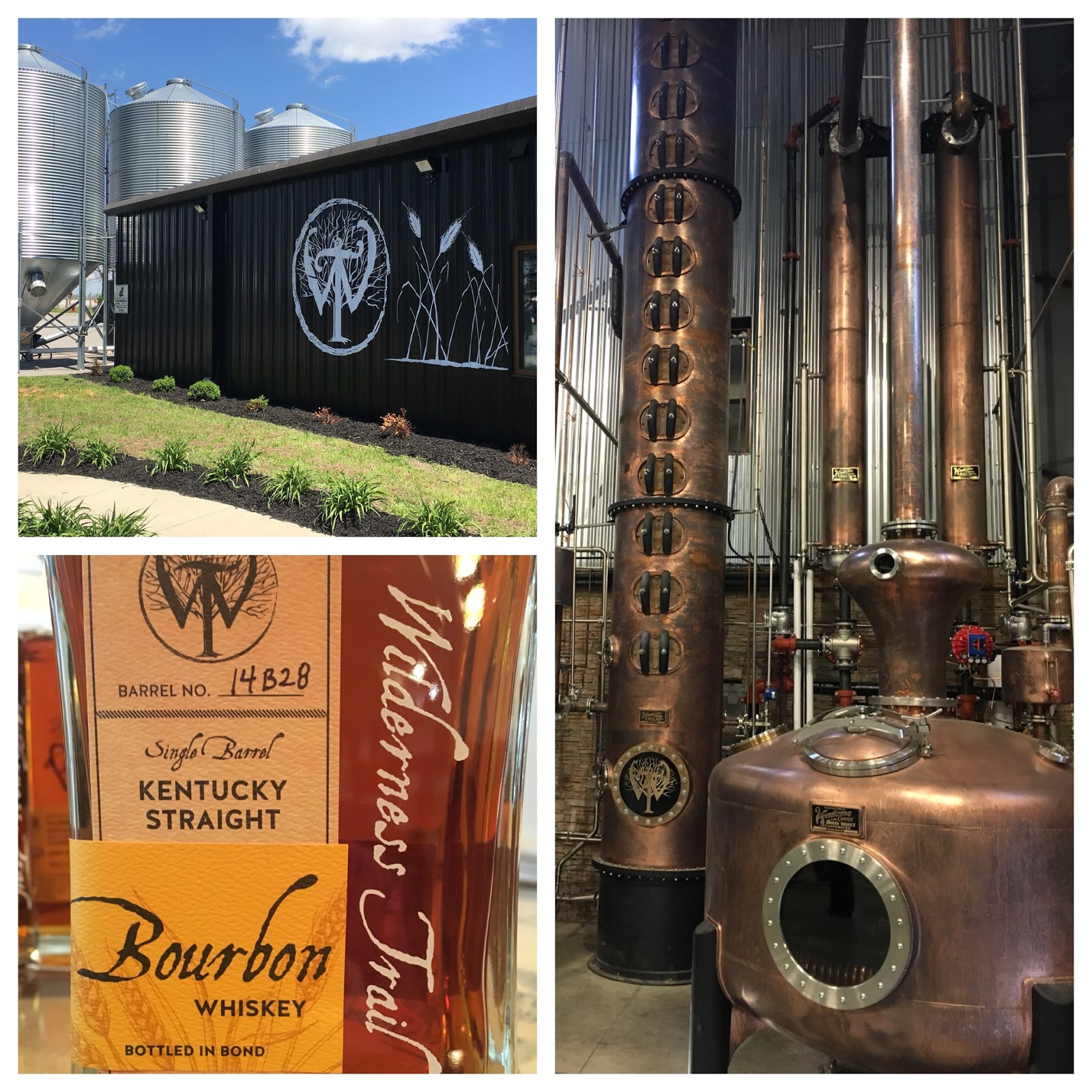 The files at the United States Trademark Office Trademark Trial and Appeal Board reflect that the Wilderness Trace trademark was published in November 2013. An attorney for Sazerac requested an extension of time to oppose Wilderness Trace in December 2013, and by January 2014, Wilderness Trace filed an abandonment of the trademark. It looks like behind-closed-doors discussions occurred in late 2013 and early 2014 resulting in Trail being substituted for Trace, but fortunately, the artistic logo could still be used and is in fact used today.
I didn’t really know anything about the startup distillery when I reserved my bottle so I did my due diligence. I learned about the scientific background of the owners and their successful business, Ferm Solutions, Inc., which provides research, product development, engineering and technical services to the fuel ethanol and distilled spirits industries. These are the guys who work with over 200 brewers and distilleries worldwide to train and consult on fermentation, bacterial contamination, and distillation.
 And now Shane Baker and Pat Heist are using that know-how to produce bourbon that instantly takes on established brands. They have access to seemingly unlimited proprietary yeast strains, they’re using barrel-entry proof that had been unheard of for 100 years (110 proof for bourbon and 100 proof for rye), they have the discipline to use the sweet mash method instead of the more popular sour mash method, and they had the courage to plan on a single-barrel Bottled-in-Bond bourbon as their first whiskey release. Plus, unlike so many startups and legacy distillers alike, Wilderness Trail didn’t invent any gimmicky origin story or legends.
The day finally came this past April when Wilderness Trail released its bourbon, which was celebrated with a “Taste of Danville” celebration complete with local food vendors, live music, tours, and—of course—tastings of bourbon and rye. The majority of Wilderness Trail’s whiskey will continue to age toward a goal of six years, but this first limited edition release of 17 barrels (available with an optional polished wood gift box set) was aged for four years and was reserved for those who signed up early on.
Tasting Notes
|
Bourbon:
|
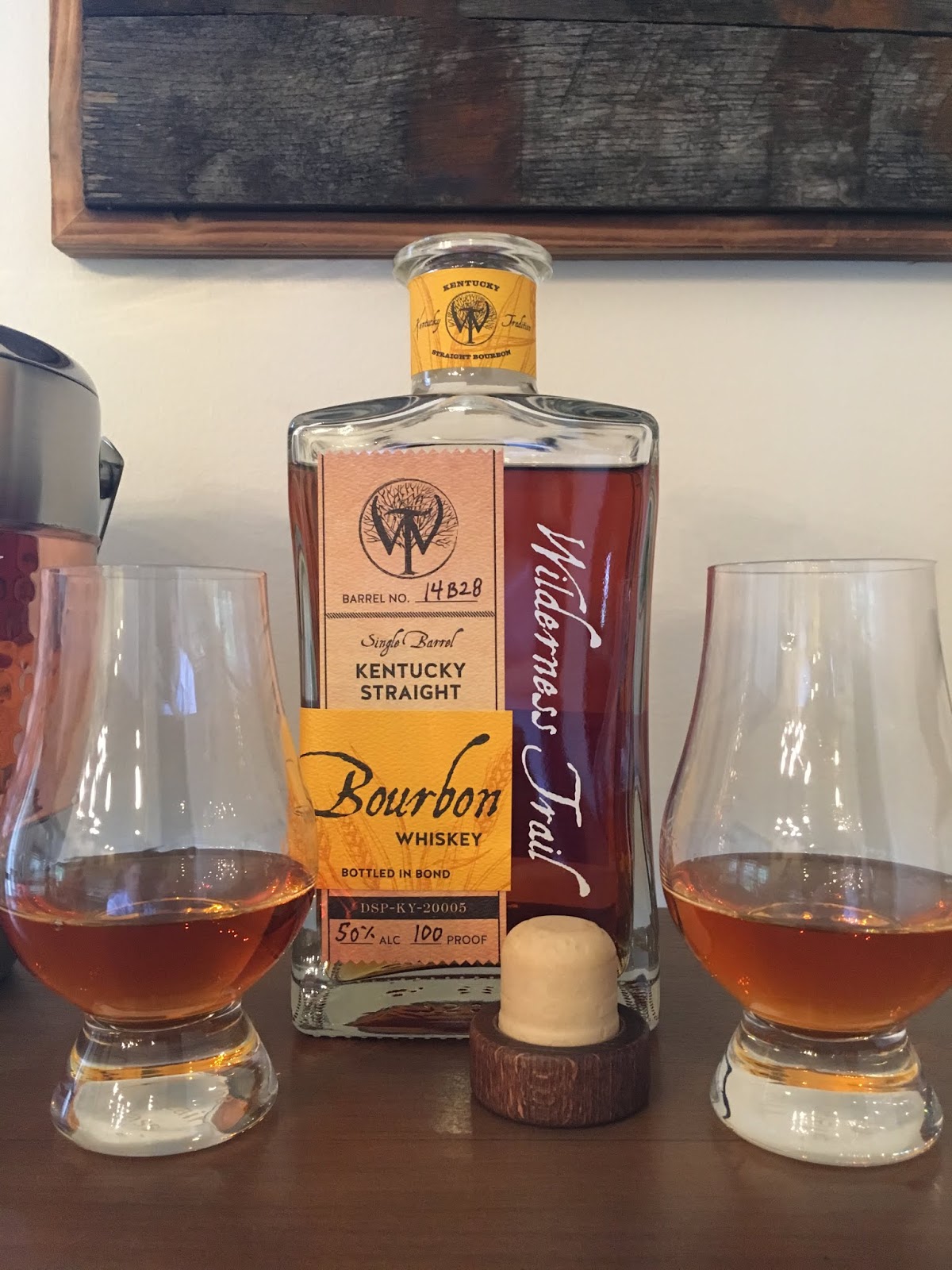
Wilderness Trail Single Barrel Kentucky Straight Bourbon Whiskey Bottled in Bond
Barrel No. 14B28
|
|
Distillery:
|
Wilderness Trail Distillery
|
|
Age:
|
4 years
|
|
Mash Bill:
|
64% corn; 24% wheat; 12% malted barley
|
|
ABV:
|
50% (100 proof)
|
|
Cost:
|
$50.00
|
Appearance:
Brown side of amber.
Nose:
The aromas are almost all sweet, with prominent caramel and light fruit, vanilla, honey, and sweet spring wildflowers and honeysuckle. After a little melt, ice changed the aromas to more malt and more herbal.
Taste:
The flavors are mostly consistent with the aromas, but not as sweet. Caramel is the backbone again, with added layers of almond, dried fruit, cinnamon, and a slightly leathery, earthy flavor. I preferred it neat; when I tried it with ice it seemed to taste younger and it lost depth. But neat it’s easily my favorite new whiskey of 2018.
Finish:
Not hot, but a nice swell of caramel sweetness and cinnamon spice, drying by the end with a bit of clove for a medium-long finish.
Bottom Line
The future is bright for Wilderness Trail Distillery. It’s amazing to me that after just four years they’ve surpassed plenty of other brands at the $50 price point that have been aged twice as long. Maybe it’s the sweet mash or maybe it’s the highest percentage of wheat and lowest barrel-entry proof currently in production. Or maybe it’s the marriage of science with tradition much in the same way that Dr. James Crow revolutionized the industry when he introduced the scientific discipline of his day. And it’s a relief to see Wilderness Trial Distillery doing it right by being transparent and starting from scratch with their own distillate.
Don’t miss out on the second release in just a couple more weeks at the Kentucky State BBQ Festival held September 7-9 at Wilderness Trail Distillery.
Sipp’n Corn Tasting Notes – Peerless Single Barrel Kentucky Straight Rye Whiskey
As most whiskey fans already know, the father and son team of Corky and Carson Taylor revived the Peerless brand that their ancestor, Henry Kraver, started in 1889 in Henderson, Kentucky. I hadn’t been able to visit Peerless—now located just west of Louisville’s downtown business district—until this past spring, and I quickly realized that I’ve been missing out.
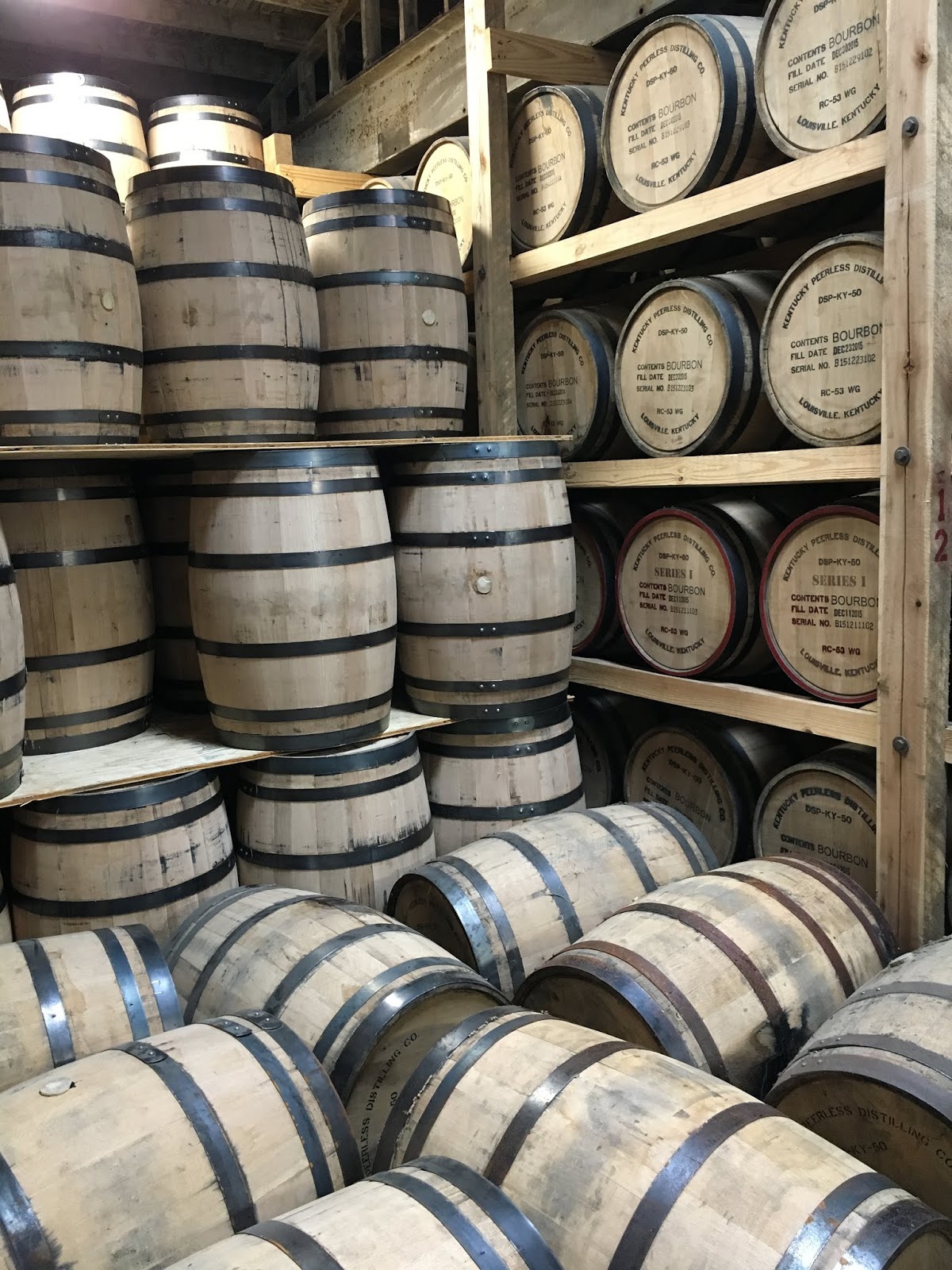
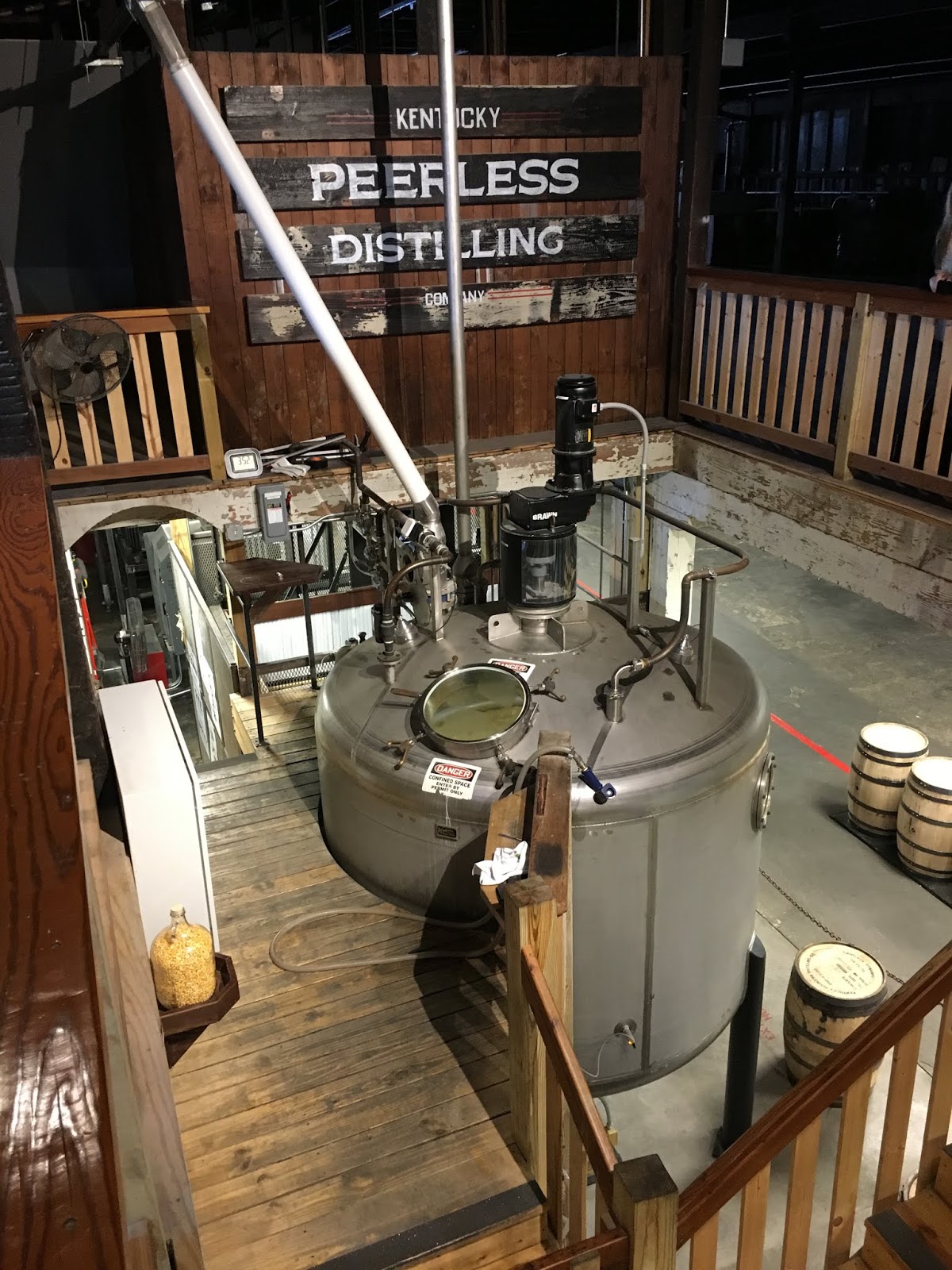
Currently, all distillery operations and aging are in the same building, but as we saw, the aging warehouse area was full to the brim. Peerless has two rickhouses nearing completion in neighboring Henry County, both using a single-story design with a capacity of 5,200 barrels each, that are expected to be ready this summer. Part of what differentiates Peerless from almost all other distilleries is that it uses the sweet mash process. The sour mash process—which is often credited to Dr. James Crow as one of the innovations he perfected around the 1830’s—uses backset from a previous fermentation run to jumpstart the next batch. Sweet mash, however, involves steam sanitizing the fermentation tubs after each run and using only fresh yeast and grain.
Caleb Kilburn, the Head Distiller, is now officially one of my favorite people in the whiskey world. He’s knowledgeable beyond his years, he has tremendous skill and gives straight answers while being personable. After getting deep into the weeds about sweet mash, proof off the still and the doubler, barreling proof (107!), fermentation periods, and more, Caleb took us through a tasting of the award-winning two-year small batch Rye and three single barrels that highlight what he called the three flavor pillars of Peerless: oak & pepper, fruits & floral, and caramel & vanilla. All are non-chill filtered and bottled at barrel strength. My favorite was the single barrel with the sweet profile, which I bought at the gift shop.
My only complaint is that our tour guide, John, incorrectly stated that the old Peerless was one of the “lucky six distilleries to have a license during prohibition to sell medicinal whiskey.” This line also used to be part of the Peerless story that the company was mistaken about, but I thought that it had been sufficiently corrected by folks like Maggie Kimberl (see Maggie’s article here) by early 2017. The six (of ten authorized) medicinal licenses were issued to the A. Ph. Stitzel Distillery, the American Medicinal Spirits Company (via Old Overholt), Brown-Forman, Frankfort Distilling Company (acquired by the Paul Jones Company in 1922), Glenmore Distillery, and Schenley Distillers. Peerless was not one of those six licensees. And just like the other shuttered distilleries, Peerless stocks were consolidated into government warehouses and sold as medicinal whiskey. The banner news here is that Corky and Carson had the love and the drive to revive Peerless, so why not focus on that without the licensee distraction?
|
Whiskey:
|
Peerless Single Barrel Kentucky Straight Rye Whiskey
|
|
Distillery:
|
Kentucky Peerless Distilling Co.
|
|
Mash bill:
|
Undisclosed (but more than the minimum 51% rye grain and less than truly high rye)
|
|
Age:
|
26 months and 15 days
|
|
ABV:
|
53.9% (107.8 proof)
|
|
Cost:
|
$120.00 (gift shop)
|
Appearance:
Medium amber; darker and creamier than I expected.
Nose:
Sweet caramel and vanilla galore along with fresh-baked iced cinnamon rolls. There aren’t any obvious youthful aromas and it has more bourbon aroma than what I would expect from a rye whiskey.
Taste:
Carmel and vanilla as advertised, along with deeper flavors like oak and tobacco, light rye, and baking spice, delivered with a creamy mouthfeel. It’s missing any pronounced pepper and spicier rye, but that’s precisely why this single barrel was selected—to showcase a distinctly sweet profile.
Finish:
Medium finish with noticeable grain coming through while retaining a sweet, satisfying warmth.
Bottom Line
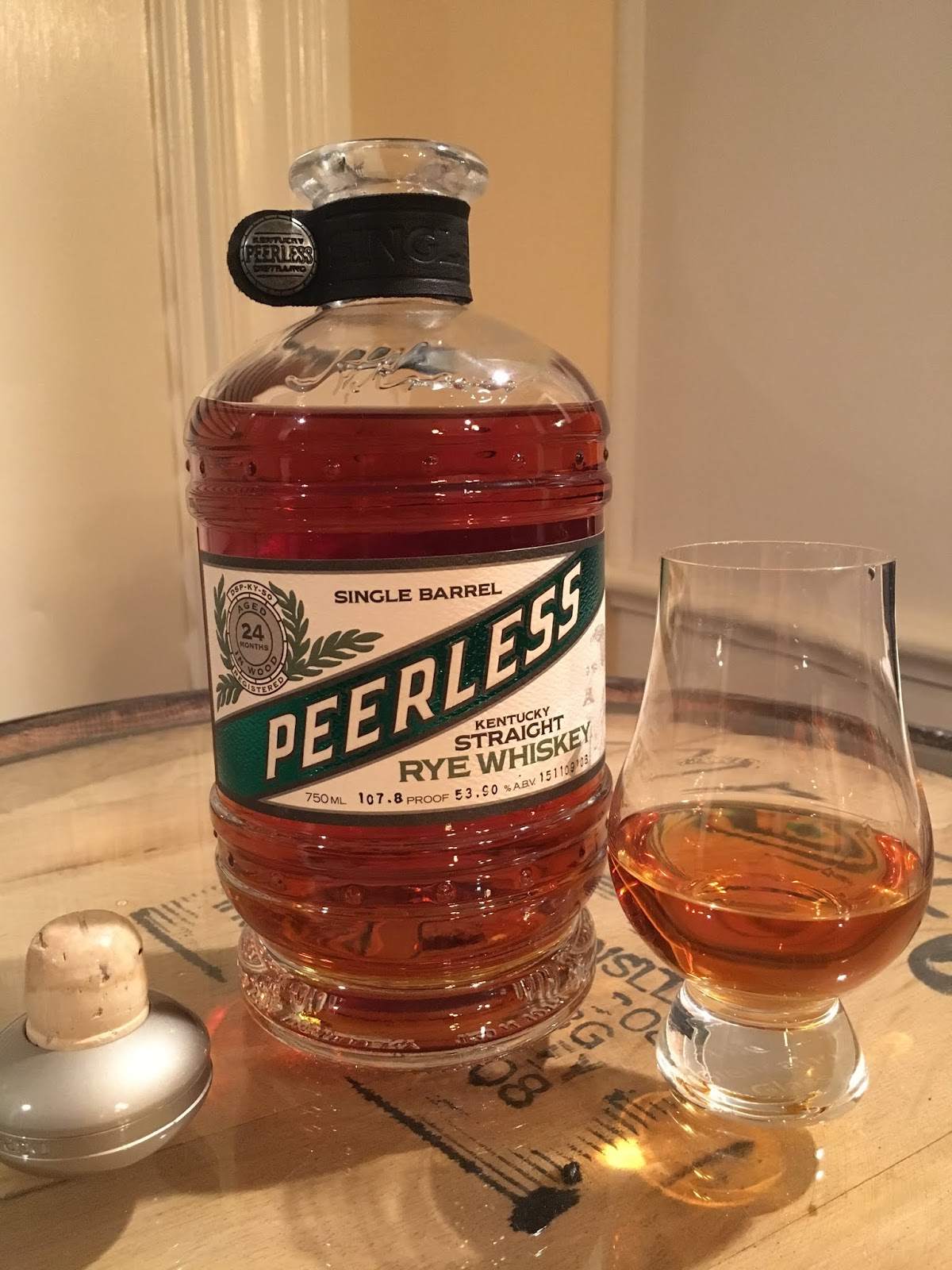
I really enjoyed this Rye, and I don’t qualify it as “great for a two-year Rye.” I never would have been able to guess its age. While Peerless is proof that young whiskeys can be remarkable, rest assured this won’t be confused for a whiskey with a dozen or more years in the barrel. They’ll definitely be different, and I might like them for different reasons, but more age doesn’t always mean better whiskey—just like a higher price doesn’t always mean better whiskey, which is where you have to be careful with Peerless. The price is going to stop many purchasers in their tracks, but that’s probably the only thing preventing it from being out of stock.
Sipp’n Corn Tasting Notes: Heaven Hill Hat Trick—Parker’s Heritage Collection 12th Edition, Old Fitzgerald 9-year, and Heaven Hill 27-year Small Batch
Bourbon Heritage Month is right around the corner, and what better way to prepare than with three samples of highly-anticipated limited editions from Heaven Hill?
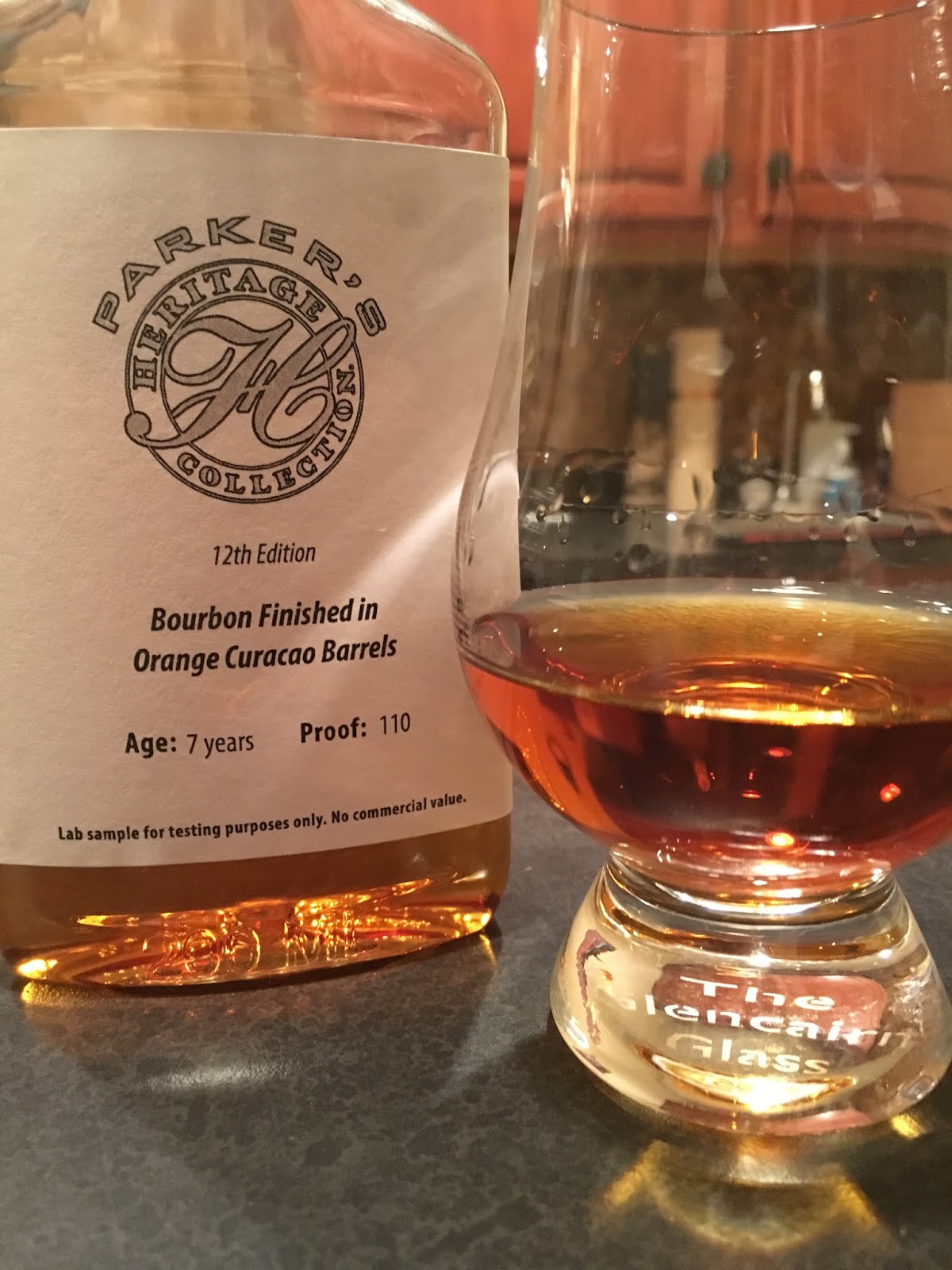
First, Heaven Hill continues to honor its late Master Distiller Emeritus Parker Beam while also continuing to support ALS research and patient care with the 2018 release of Parker’s Heritage Collection, now in its 12th edition. This year Heaven Hill used bourbon aged seven to eight years on upper floors—meaning that temperature extremes may have sped along the aging process and that proof would have increased from the 125 barrel-entry proof—and then finished for four months in French orange curaçao liqueur barrels. (When orange liqueur was gaining popularity in the 17th Century, an orange found only on the Caribbean island of Curaçao was a favorite.)
 Second, Heaven Hill is releasing the second edition of it Old Fitzgerald Bottled-in-Bond decanter series inspired by a 1950’s decanter and using the type of tax strip from a bygone era before the Bottled-in-Bond regulations were relaxed. As usual, Old Fitzgerald uses wheat as its secondary grain. This edition was aged for nine years.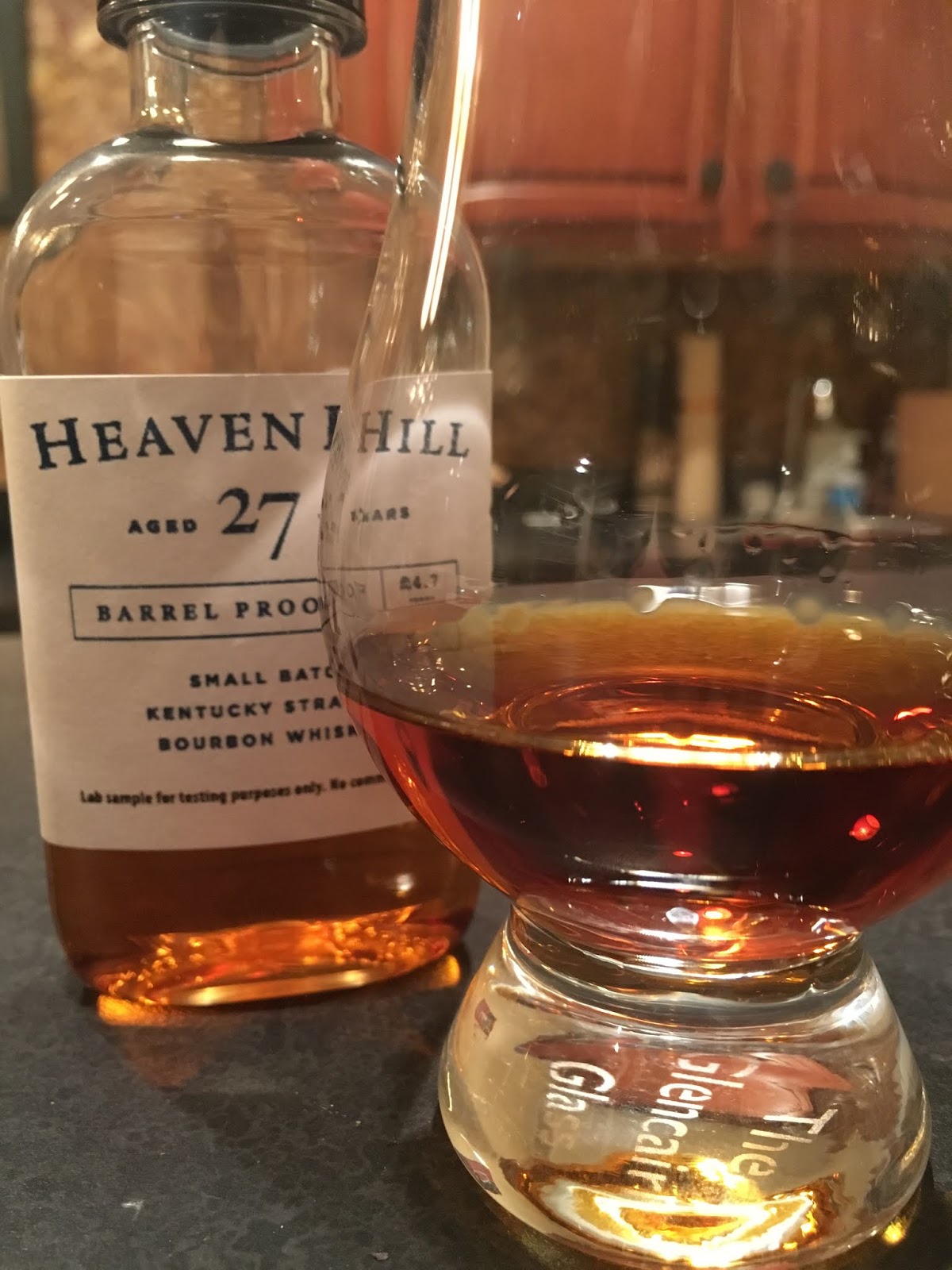
Third—and already a hot topic—is a small batch offering of jaw-dropping 27-year old bourbon. This bottling is truly rare not just because of the extraordinary age, but because it was distilled at Heaven Hill’s old distillery in Bardstown (DSP-KY-31) before it was destroyed by fire in 1996. The bottling consists of only 41 barrels that suffered extreme angel’s share loss over nearly three decades of aging (as expected), resulting in fewer than 3,000 bottles for the release. Just as remarkable, this small batch was bottled at barrel proof, which was only 94.7 proof due to having been aged on low floors. With a fancy custom box to boot, this release has all of the trappings of a true limited edition.
Parker’s Heritage Collection Tasting Notes
|
Bourbon:
|
Parker’s Heritage Collection, 12th Edition (2018) Kentucky Straight Bourbon Whiskey finished in orange curaçao liqueur barrels
|
|
Distillery:
|
Heaven Hill, Bardstown, Kentucky (distilled in Louisville and aged in Bardstown)
|
|
Age:
|
7-8 years (before finishing)
|
|
ABV:
|
55% (110 proof)
|
|
Cost:
|
$89.99
|
Appearance:
Golden brown with a glint of red.
Nose:
I’ve never smelled an orange blossom, but I imagine that it would smell exactly like this. Sweet floral and orange zest.
Taste:
I didn’t know what to expect—other than orange—but I was very pleasantly surprised. There’s a distinct brandy-esque sweetness under an orange backbone. It’s unmistakably orange, but more like a milk chocolate orange cream from a fine chocolatier, with light sweet fruit and basil, giving it a refreshing quality.
Finish:
Curaçao drove the medium-length finish, which would have been outstanding if it could have shifted to dry oakiness and spice, but it didn’t get past floral sweetness.
Old Fitzgerald Bottled-in-Bond Decanter Tasting Notes
|
Bourbon:
|
Old Fitzgerald 2018 Limited Edition Bottled-in-Bond Kentucky Straight Bourbon Whiskey (2nd edition)
|
|
Distillery:
|
Heaven Hill, Bardstown, Kentucky (distilled in Louisville and aged in Bardstown)
|
|
Age:
|
9 years
|
|
ABV:
|
50% (100 proof)
|
|
Cost:
|
$89.99
|
Appearance:
Copper (lightest of the three samples).
Nose:
Old barn, grasses, caramel, brown sugar, fresh bread, oak, and more complexity that I couldn’t quite put my finger on. I really enjoyed the aromas.
Taste:
Out of the gate with strong caramel—which hadn’t dominated the nose—balanced with the right amount of oak and vanilla, followed by a transition to pepper spice. This bourbon checks all of the boxes for me.
Finish:
Long, with a big warm hug.
Heaven Hill 27-Year-Old Barrel Proof Tasting Notes
|
Bourbon:
|
Heaven Hill 27-Year-Old Barrel Proof Small Batch Kentucky Straight Bourbon Whiskey
|
|
Distillery:
|
Heaven Hill, Bardstown, Kentucky (distilled in Bardstown pre-fire at DSP-KY-31, and aged in Bardstown)
|
|
Age:
|
27 years
|
|
ABV:
|
47.35% (94.7 proof)
|
|
Cost:
|
$399.00
|
Appearance:
Brown, of course, but somehow I’ve seen darker in younger bourbon.
Nose:
Oak, of course, but also aromas of tobacco, old leather, old library, and all of those fantastic old oak aromas. There’s some earthiness and a prickle of black pepper. I love the aroma of these extra-extra-aged bourbons.
Taste:
Oak, of course, but not an “oak bomb” in my experience. I’ve had those puckering experiences, and while indisputably oaky, this is nowhere near one-dimensional. There’s a layer of dark (really dark) chocolate and dried dark fruit followed by flavors of black pepper, clove, espresso, and rye toast to round out a dry bourbon that makes me yearn for slow sipping around a fall campfire.
Finish:
Mid-long that builds very slowly, nearly to a gear shift, and then gentle lingering. It’s oak-driven and dry with enjoyable warmth.
Bottom Line
I’m glad to have these samples because chances are that I’ll get shut out at retail on all three. I’d buy all three though, and given the opportunity, I’d back up the proverbial truck for the Old Fitzgerald.
 As much as the Old Fitzgerald Bottled-in-Bond 9-year hits all of the high points for what bourbon should be—and should therefore have wide appeal—the Parker’s Heritage Collection and the Heaven Hill 27-year are geared toward niche crowds. The orange citrus zest flavors of Parker’s Heritage Collection might put off folks who consider themselves bourbon purists, and the prominent oak backbone of the 27-year old (not to mention the steep price) will get other folks to run out for something sweet like Larceny. Whatever your personal preference, you’ll have at least one of these on your hunting list this fall.
Disclaimer: The brand managers kindly sent me samples
for this review, without any strings attached.
Thank you.
Sipp’n Corn Book Review—Mead: The Libations, Legends, and Lore of History’s Oldest Drink by Fred Minnick.
 I was hooked from the opening pages of Mead: The Libations, Legends, and Lore of History’s Oldest Drink, Fred Minnick’s seventh book. Fred launches in pure storyteller fashion with rich visual elements: “They looked like your typical Brooklyn bartenders: handlebar mustaches, pink hair, leather aprons, and tattoos—lots of tattoos. They muddled mint, juiced limes, pinched nutmeg in empty glasses, clanked tin shakers with rhythmic precision, and poured fragrant libations into ice-filled glasses.” I was transported as Fred slowly but surely warmed up to the mystery around the bend—mead.
I’m a product of Scandinavians and Poles, so by all rights my DNA should already predetermine me to be a mead expert. I knew that my Viking and reindeer-herding Swedish and Finnish ancestors would have loved their mead, but I was surprised to learn that my Polish ancestors were just as much a part of mead’s history as their drinking buddies to the far north. (The history buff in me was also excited to see—in a mead book no less—Polish and American-Revolution hero Tadeusz Kościuszko finally get some long-deserved love.)
But in reality, I’m less than a novice when it comes to mead; I’ve never had mead.
That will change this week now that I’ve finished the book. And I’ll have an appreciation for it that I never knew existed. Fake honey, true terroir, memorable personalities, real history, and traditional and varied techniques all give mead’s story similarities to the stories Fred has already told about bourbon and rum. Mead even has a focus on using good water, fermentation, and yeast, so I was right at home with my bourbon frame of mind.
Fred is a spirits expert but the reason that he’s an award-winning author is on full display in Mead with his vivid stories interspersed with technical aspects of how to make mead, history lessons, and recipes. Join me in experiencing mead for the first time by ordering here or find it at your favorite bookstore. Cheers!

