Brian Haara
Bourbon. Law. Author.
Sipp’n Corn Bourbon Review – Boone County Eighteen 33

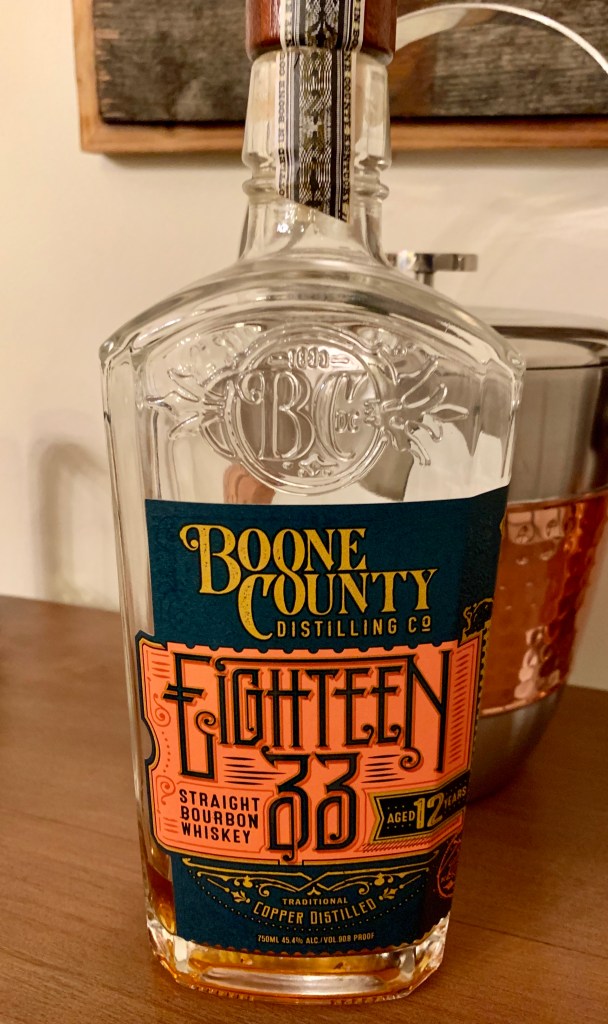
Cheers for Boone County Distilling Company’s transparency in not trying to hide the source of this bourbon and cheers for the 12-year age statement. I could do without the gimmicky “made by ghosts” and strained ties to heritage, but every brand knows that history sells bourbon. Beautiful bottles also sell bourbon, and there’s no denying that Boone County hits a home run with its bottle and label design and overall aesthetics. Those things aside, twelve years piques my interest and I know the quality of MGP, so I have high hopes.
Bourbon: Boone County Eighteen 33 Straight Bourbon Whiskey
Distillery: MGP
Age: 12 years
ABV: 45.4% ABV (90.8 proof)
Cost: $55.00
Tasting Notes
Appearance: Amber brown and oddly cloudy.
Nose: Subtle, earthiness and leather, with almond, black pepper, and furniture polish.
Taste: Not much heat, creamy, leather, and faint spice. It’s not a sweet bourbon by any stretch, instead leaning heavily toward the darker, more earthy flavors.
Finish: Shorter side of medium; nothing remarkable, but still a nice, friendly hug.
Bottom Line
This batch of Boone County Eighteen 33 was enjoyable enough but something was a little off. So I did a blind side-by-side against a front-12 Elijah Craig and was astonished at how different they were. The EC12 beat Boone County at every turn and helped me find what was off—Boone County didn’t have a standard caramel and vanilla backbone. Alone those can be pretty boring tasting notes, but a bourbon is missing something to not have at least a hint of those family of flavors. It’s still a 3.0 for my tastes, but barely.
Score on The Sipp’n Corn Scale: 3.0
The Sipp’n Corn Scale:
1 – Swill. I might dump the bottle, but will probably save it for my guests who mix with Coke.
2 – Hits the minimum criteria, but given a choice, I’d rather have something else.
3 – Solid Bourbon with only minor shortcomings. Glad to own and enjoy.
4 – Excellent Bourbon. Need to be hyper-critical to find flaws. I’m lucky to have this.
5 – Bourbon perfection. I’ll search high and low to get another bottle of this.
Old Lexington Club – An Early Bourbon Lesson in Protecting Brand Names.
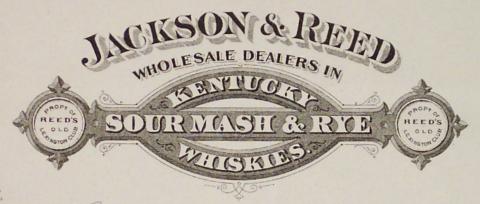
Consumers often wonder why trademark owners seem to sue competitors so often over allegedly-infringing names. A bourbon lawsuit from 1916 helps provide the answer.
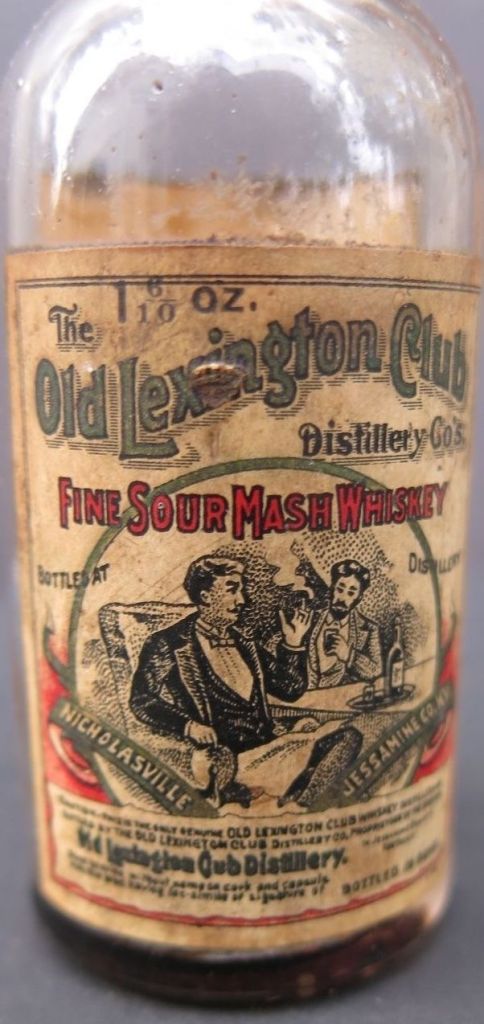
The February 1, 1906 edition of The Wine and Spirits Bulletin reported that the G. & B. Gerdes Company—owners of the “Old Lexington Club” brand—had sued the Kentucky Distilleries and Warehouse Company (Kentucky’s Whiskey Trust) because the Whiskey Trust marketed a brand of whiskey called “Lexington Club.” The court in Old Lexington Club Distillery Co. v. Kentucky Distilleries & Warehouse Co., 234 F. 464 (D. N.J. 1916) explained the history of these two competing brands.
The Old Lexington Club distillery was located on Hickman Creek in Nicholasville, Kentucky, which is in Jessamine County, just south of Lexington. J. H. Reed started using the “Old Lexington Club” name in 1874 and he used it extensively in local advertising. Determining who used a name first is always important in these sorts of trademark fights.
While Reed joined with different partners—Jackson & Reed and later Warner & Reed—through when “Reed became financially embarrassed and the business was taken over by one of its creditors” in 1890, the “Old Lexington Club” name was used continuously.
On the other hand, a Cincinnati whiskey wholesale firm, Freiberg & Workman, started using “Lexington Club” in 1878 for its own whiskey. The Lexington Club brand became popular and was sold in “practically every state in the Union” while Old Lexington Club was limited to the Lexington area with some sales in New York, Chicago, St. Louis, and Cincinnati. In 1899, Freiberg & Workman sold out to the Whiskey Trust, which continued high-volume sales of its Lexington Club brand.
Fast forward to 1905; the new owners of Old Lexington Club tried to register a trademark for the brand, the Whiskey Trust objected, and litigation ensued. Old Lexington Club won the first two rounds, but the Whiskey Trust won on appeal in 1908. The court ruled that “Old Lexington Club” was a descriptive name not entitled to trademark protection and that “Old Lexington Club” hadn’t done anything about “Lexington Club” despite knowing about it for at least 15 years.
The final decision issued in 1916 partially rejected the earlier decision by ruling that “Old Lexington Club” was distinctive enough to be registered as a trademark. But that was a hollow ruling because the court also ruled that by taking no steps to prevent the Whiskey Trust from using a confusingly-similar name for well over a decade, it would be unfair to do so now. Basically, by failing to object earlier, Freiberg & Workman (and later the Whiskey Trust) spent time and resources building their brand and business to a much larger enterprise than Old Lexington Club. If Old Lexington Club was awarded the exclusive right to that name, then it would unfairly acquire all of the goodwill and business reputation built up by the Whiskey Trust.
So the lesson learned by distillers and all other brand owners is to be vigilant in monitoring potential infringement, to have cease-and-desist letters at the ready, and to sue seemingly at the drop of a hat to protect trademarks.
Last-minute gift idea for 2018: Cocktail Crate
“Brian’s Book and a Bottle” was a hit, but people ask me, “What about the cocktail crowd? Aren’t you leaving them out in the cold during this festive time of year? Give them something to make their lives easier too!”
We here at Sipp’n Corn Enterprises have listened, and Ms. Sipp’n herself—as our resident cocktail expert—has penned her first review which now addresses the topic so long excluded from the blog:
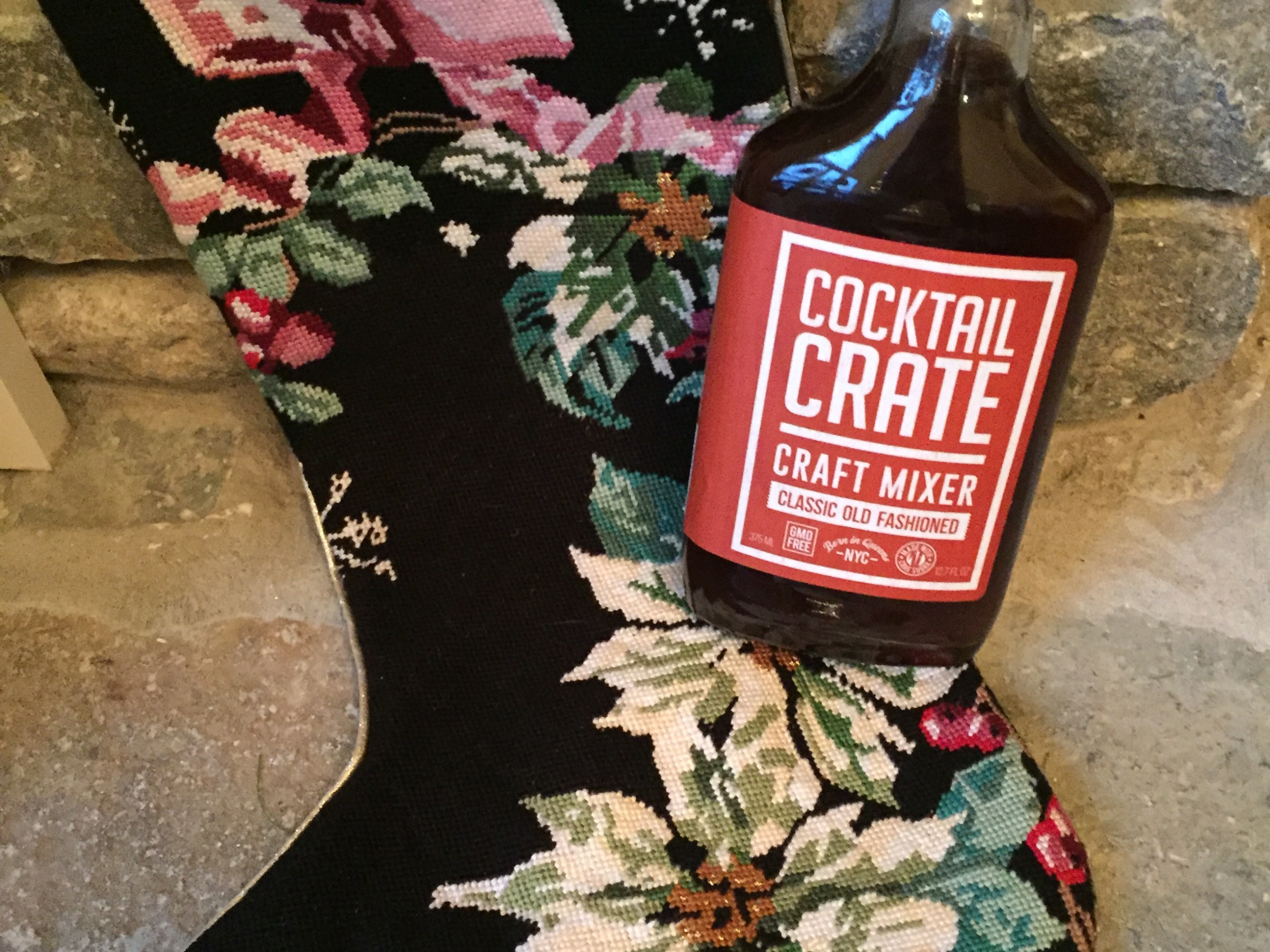
Cocktail Crate touts “an effortless craft cocktail,” and it delivers.
Cocktail Crate was founded in 2012 after a Kickstarter campaign by a 24 year-old cocktail enthusiast in New York City who wanted to build the perfect cocktail. According to Cocktail Crate’s website, these pre-made cocktail mixers are made from locally sourced, fresh, non-GMO ingredients. Just add your favorite bourbon. The website offers several different cocktail mixer options including the classic whiskey sour, classic old fashioned, classic ginger mule, spiced old fashioned, and grapefruit daiquiri (and coming soon are maple whiskey sour, ginger bee, and sriracha margarita). The packaging, bottle shape, and label were attractive with a hip, farmhouse vibe that would make an excellent gift presentation.
 This past summer we tried the classic old fashioned and the classic ginger mule. Since my go-to summer favorite is an icy cold Kentucky mule in a copper mug, I went for the ginger mule first. Following the directions on the bottle, I filled my mug with crushed ice, measured the mixer, and added the bourbon. Simple. I liked that. The cocktail was good, but to be honest, my mules are better with fresh lime and mint that I grow myself in a half bourbon barrel in the backyard. But the Cocktail Crate mixer was better than any restaurant version, and in the winter—when I don’t have my own fresh-grown mint—the Cocktail Crate Kentucky mule can’t be beat.
A couple weeks later I moved to the Old Fashioned. Frankly, I have only had a few Old Fashioneds over the years as I considered it an old man’s drink. I have never made one myself. In fact, I think the only time I remember drinking Old Fashioneds was at an annual Derby Party where they make them by the pitcher filled with copious amounts of fruit garnish so that it looks more like a tropical drink than something from the set of Mad Men. I followed the label directions and stirred my bourbon into the classic old fashioned mixer over 2 large ice cubes. I could not resist adding the orange slice and maraschino cherry embellishment.
I LOVED it. And I may have a new favorite cocktail to get me through the winter months when it’s too cold outside for mules. The mixer was the right balance of sweet and savory. It blended harmoniously with my choice of bourbon. I did not share my bottle of Cocktail Crate classic old fashioned mixer with anyone else.
For comparison’s sake I later ordered an Old Fashioned at the bar of a historic Louisville restaurant that prides itself on old-school Southern food and cocktails. It was exponentially more expensive, but the Cocktail Crate Old Fashioned that I made at home was so much better.
I would be interested in trying more of Cocktail Crate’s offerings. And I will be adding a new bottle of classic old fashioned mixer to my Christmas wish list as a perfect stocking stuffer (Did you catch that, Brian?).
Cocktail Crate mixers are available at www.cocktailcrate.com for $12 for a 375ml bottle, $50 for a six pack, and $40 for a four-bottle party pack. But according to the website, Cocktail Crate is also available at chain retailers such a Walmart, Total Wine, Fresh market, etc. I went into my local Walmart liquor store and found the classic Old Fashioned, the classic ginger mule, and the classic whiskey sour mixes on the shelf and ready for purchase at a lower price point than on the website. I will admit I could not wait for Christmas, so I bought myself the classic Old Fashioned mix and made myself a cocktail that night. But I am pretty sure that I will need a new bottle before December 25, hint, hint.

2018 Brian’s Book and a Bottle™
With the holidays upon us, avoid the awkwardness of lame host gifts and never knowing what to get for bosses, co-workers, and other hard-to-shop-for friends and family. Brian’s Book and a Bottle™ has the right suggestion for everyone on your list:
For your business partner: Bourbon Justice and Four Roses single barrel private selection. These picks are straight from the barrel without any added water, so they are full of flavor and always memorable. You’re clearly the brains of the business.

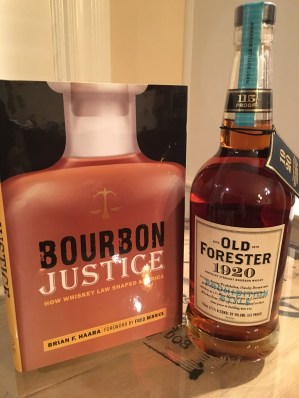
For your impossible family member: Bourbon Justice and Old Forester 1920. Old Forester 1920 won the Bourbon Crusaders Best on the Shelf Bourbon of the Year. Don’t try to be creative or spend a lot of time, just be 100% solid with this fantastic bourbon that you can get anywhere.
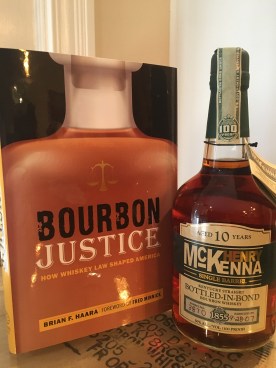
For a host/hostess: Bourbon Justice and Henry McKenna Bottled-in-Bond. Running a close second place in the Bourbon Crusaders Best on the Shelf Bourbon of the Year, this bourbon will give you a chance to make small talk about history and the Bottled-in-Bond Act of 1897 as discussed in Bourbon Justice. And the bottle will be appreciated so much more than a glass ornament or random bottle of wine in a re-used Santa wine sack.
For your boss or other authority figure: Bourbon Justice and Booker’s. The wooden box sends a message of respect and the barrel-strength robust bourbon inside sends a message of courage. You just earned some props.

The Bourbon Crusaders and Willett Set a New Bar for Fundraising.

BREAKING NEWS: The Bourbon Crusaders proved last Saturday something that true bourbon enthusiasts have known all along—the generosity of the bourbon community is limitless. It’s not just about the bourbon.
In the third year of its annual charity event, The Bourbon Crusaders named Willett Distillery as its honored guest, which chose the American Cancer Society as this year’s beneficiary. While the Willett Family Estate private selections may have drawn the crowd initially, Drew Kulsveen’s generosity captured everyone’s attention as he quadrupled his donation of a private barrel selection after four groups were each ready to pay over $40,000 each.
These incomparable donations, along with tremendous contributions from Wilderness Trail Distillery, Heaven Hill Distillers, Brown-Forman / Woodford Reserve—just to name a few more—resulted in over $335,000 in donations to the American Cancer Society!
It’s not just about the bourbon.