Brian Haara
Bourbon. Law. Author.
Sipp’n Corn Review – Copper & Kings Butchertown Reserve Casks Brandy (a/k/a “The Butcher”)
* Updated Nov. 9, 2016, after I learned additional
information about the genesis of Butchertown Reserve.
Butchertown Reserve is named after the neighborhood that Copper & Kings calls home, on the eastern edge of downtown Louisville: Butchertown. Located not too far from the Mellwood Distillery, Copper & Kings saved a dilapidated building and has been a key part in the revitalization of Butchertown. Copper & Kings sourced older stocks of brandy several years ago, mostly from the West Coast, and while continuing to age that brandy, Copper & Kings has installed three Vendome copper pot stills, and has been busy distilling brandy (grape and apple) and absinthe.
Butchertown Reserve originated with former Copper & Kings distiller Alan Bishop (now Master Distiller/Blender at Spirits of French Lick Distillery). In the course of creating a special offering for a single tasting event and auction, Bishop chose three used Heaven Hill barrels and one Kelvin Cooperage new barrel (#2 char) aging older stocks of sourced brandy, to provide a unique barrel-influenced Brandy. The blend was non-chill filtered, contained no coloring or flavoring additives, and was barreled at 125 proof. It turned out so well, though, that Copper & Kings launched it as a regular part of its lineup.
Older Brandy stocks are still used in Butchertown Reserve and it is still blended pursuant to Bishop’s innovative combination of four barrels (three once-used Bourbon barrels and one new charred American Oak barrel from Kelvin Cooperage). It is also still non-chill filtered, contains no coloring or flavoring additives, and is barreled at cask strength. Today’s blends will be slightly different than Bishop’s original blend, but Copper & Kings uses a solera variation by re-blending a portion of original batches into the newest batches.
At an event last spring, a Copper & Kings employee told me that this brandy was finished in Oloroso Sherry casks, but I couldn’t get confirmation from Copper & Kings Head Distiller Brandon O’Daniel. Bishop’s original’s Butchertown Reserve was not finished in that manner, and it’s doubtful that the current blend is either. I also learned that while initially Cooper & Kings sourced most of its used Bourbon barrels from Woodford Reserve, now its barrels are sourced from Willett. Copper & Kings and Willett have a similar style, so this relationship makes sense.

|
Brandy:
|
Copper & Kings Butchertown Reserve Casks Brandy
|
|
Age:
|
NAS (reportedly a variety of ages from 5 to 15, but mostly 8 to 9)
|
|
ABV:
|
Cask Strength 62% (124 proof)
|
|
Cooperage:
|
75% aged in used Bourbon barrels
25% aged in new charred American Oak barrels
|
|
Cost:
|
$60.00
|
Tasting Notes
Appearance:
Silky amber with brilliant gold in the light.
Nose:
Butchertown has robust aromas of caramel, vanilla, and fig, and fruit. The high proof is evident, but not in a distracting way. There is some similarity to a cask-finished Bourbon, but it’s far fruitier than Bourbon, especially with dark berries and the obvious grape.
Taste:
Definitely brandy, but with many Bourbon characteristics that I love imparted by the charred oak. The brandy really pulled the vanilla and caramel flavors from the wood, but it’s still focused on dark fruit flavors along with some lighter pear flavors, and then it transitions to spice. The heat from the high proof is also pretty evident, so I preferred it with a splash of water, which emphasized the grape and dark fruit flavors, and a single cube was my favorite way to enjoy it.
Finish:
Some oaky dryness, but still fruit sweetness and silky through the end, for a warm, medium finish.
Bottom Line
If Brandy proves to be the “next big thing” (it would have to beat out American Rye Whiskey first), we will all be hearing more about Copper & Kings because it will be leading the way. Introducing Brandy that is reminiscent of whiskey is one way to make headway, and maybe that’s why, while I haven’t been a fan of most brandy that I’ve tried, Butchertown Brandy changed my tune. I highly recommend it; even for those like me, who usually stay laser-focused on Bourbon, it is an excellent diversion.
Sipp’n Corn Bourbon Review – Knob Creek 2001 Limited Edition
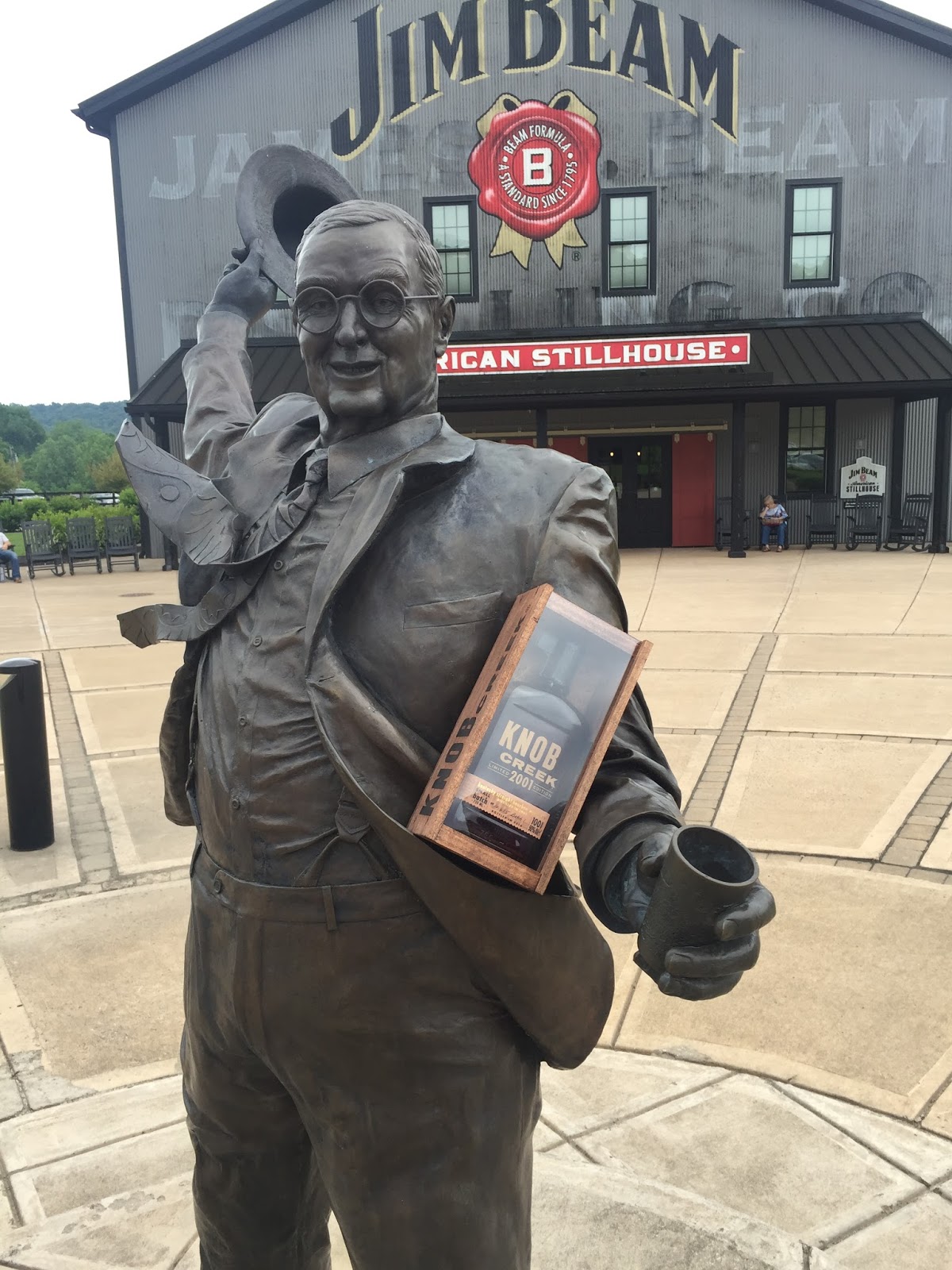
After the success of Booker’s 25th Anniversary Limited Edition, the feverish anticipation for the Booker’s Rye Limited Edition, and growing popularity of Knob Creek’s private barrel program (with some astounding selections, like the 15 year “Unicorn” from Liquor Barn), a Knob Creek Limited Edition was inevitable. The “2001” in Knob Creek 2001 Limited Edition refers to the year that Booker Noe distilled and barreled the three batches that make up this limited edition. At 14 years old, it is well past the nine-year age statement of standard Knob Creek.
|
Bourbon:
|
Knob Creek 2001 Limited Edition Kentucky Straight Bourbon Whiskey (Batch 1; Bottle No. 10,675)
|
|
Distillery:
|
Jim Beam, Clermont, Kentucky
|
|
Age:
|
14 years
|
|
ABV:
|
50% (100 proof)
|
|
Cost:
|
Suggested Retail: $129.99 (750 mL)
My cost: $139.99 (gift shop price)
|
Disclaimer: The brand managers kindly sent me a sample
for this review, without any strings attached.
Thank you.
Tasting Notes
Appearance:
Golden amber.
Nose:
The aromas are all warm – gooey caramel, the vanilla you remember from mom’s kitchen, baking spices, leather, and comfortable oak, along with honey and a slight aroma of polished furniture.
Taste:
Consistent with the aromas, Batch 1 lands on the sweeter side, especially on the first impression. Although far sweeter than any standard or private Knob Creek I’ve had before, as expected from any Knob Creek, it is not one-dimensionally sweet; it transitions to cinnamon, clove, roasted peanuts, and oak. I will need to compare the three batches, but Batch 1 has great balance and will be hard to beat by the other two batches.
Finish:
Warm and long, lingering with drying oak and far less of the sweet flavors. This is a barrel-focused finish showing its age, but it is nowhere near over-oaked. The balance is outstanding.
Bottom Line
While it would be interesting to have tried Knob Creek 2001 Limited Edition at 120 proof (like the private barrel program bottlings), or better yet at barrel proof, I can’t really imagine this batch being better than the 100 proof selected by Fred Noe. It’s the right proof, the right balance, and the right amount of oak, so stick with drinking this one neat. Kudos to Beam Suntory for another great Limited Edition, but please, please, please continue to offer longer-aged barrels for private selection.
The price is high when compared to some of the excellent Knob Creek private barrels in the past 12 months, but I still give it a “buy” recommendation (it would be a “back up the truck” recommendation at $90). There should be plenty of Knob Creek 2001 since there are three batches, so everyone should be able to find this at retail. Thanks to a friend who was in the right place at the right time, I was able to get a bottle of Batch 1 at the Jim Beam Gift Shop, allowing me to evaluate Knob Creek 2001 Limited Edition beyond the sample, and dig in enough to score. I waffled between 3.5 and 4.0, and landed on the higher score because of the finish.
Score on The Sipp’n Corn Scale: 4.0
The Sipp’n Corn Scale:
1 – Swill. I might dump the bottle, but will probably save it for my guests who mix with Coke.
2 – Hits the minimum criteria, but given a choice, I’d rather have something else.
3 – Solid Bourbon with only minor shortcomings. Glad to own and enjoy.
4 – Excellent Bourbon. Need to be hyper-critical to find flaws. I’m lucky to have this.
5 – Bourbon perfection. I’ll search high and low to get another bottle of this.
Sipp’n Corn Review – Booker’s Rye “Big Time Batch” Limited Edition
After being bummed out about the cost when pricing was released a few months ago, as time passed, I transitioned to thinking about how Booker’s 25th Anniversary was outstanding, and I didn’t want to miss out on lighting striking twice. Then I learned that Booker’s Rye was not distilled with Beam’s normal Rye mash bill (which reportedly barely qualifies with 51% rye grain), instead using a reported 70-80% rye grain, and that – as expected – it would be uncut and unfiltered, in the tradition of the Booker’s line. At 13 years old, it’s also a rare find for aged Rye Whiskey, truly qualifying it as a limited release with exclusive company.
|
Rye Whiskey:
|
Booker’s Limited Edition Kentucky Straight Rye Whiskey – “Big Time Batch”
|
|
Distillery:
|
Jim Beam, Clermont, Kentucky
|
|
Age:
|
13 years, 1 month, 12 days
|
|
ABV:
|
68.1% (136.2 proof)
|
|
Cost:
|
Suggested Retail: $299.99 (750ml)
|
Disclaimer: The brand managers kindly sent me a sample
for this review, without any strings attached.
Thank you.

Tasting Notes
Appearance:
Velvety, dark amber shifting to brown.
Nose:
Whoa that’s impressive. The aromas hit strong, even from a distance, with fantastic black pepper, cinnamon, leather-bound books, tobacco leaf, clove, and oak. The high rye grain is absolutely evident. Give this one some air before aggressively appreciating the aromas because it’s hot.
Taste:
Whoa that’s intense both in flavors and blazing heat; again, a little air helps clear out the heat and just the balanced intensity remains. The most prominent sweet flavor is brown sugar, and while there’s also some rich caramel and dark, ripened berries, the focus is spice – rye, black pepper, cinnamon, clove, and baking spices. A single cube increased the creaminess, but muted some flavors. There’s big oak too, of course, and it’s balanced wonderfully. Booker’s Rye is a robust beast that should be tried neat, but then after a few sips, add a splash of water for an appreciation of more subtle flavors hidden by the heat.
Finish:
Whoa that’s long. There’s a little more caramel sweetness as it lingers, but the huge swell defines this spicy, drying finish with a hint of mint.
Bottom Line
Booker’s Rye is serious, and I suspect that it will be talked about as a contender for “Whiskey of the Year.” Some of that talk might be the result of the fascination developing over the past few years for robust, barrel-strength whiskey, which in some cases has meant that consumers sacrifice refinement and complexity. For my preferences, Booker’s Rye was the third-best Rye that I’ve enjoyed to date in 2016, although, to be fair, neither of the other two was released this year, and the best was a practically unattainable 12-year bottling sourced from the Medley Distillery. But if Booker’s Rye is going to be in the discussion for such high accolades, it has to stand up to other highly-acclaimed whiskies.
I can’t make the call yet where Booker’s falls in the grand scheme of Rye Whiskey, and while I’m thankful for the sample because I might not find a bottle at retail, my sample size did not give me my normal opportunity for enough tastings to provide a score on The Sipp’n Corn Scale, either. I’ll be looking, that’s for sure, and will update my post. If the price doesn’t shock your conscience, you should be looking too. Despite the cost, my recommendation is a strong buy.
Sipp’n Corn Bourbon Review – Four Roses Elliott’s Select 2016 Limited Edition Single Barrel
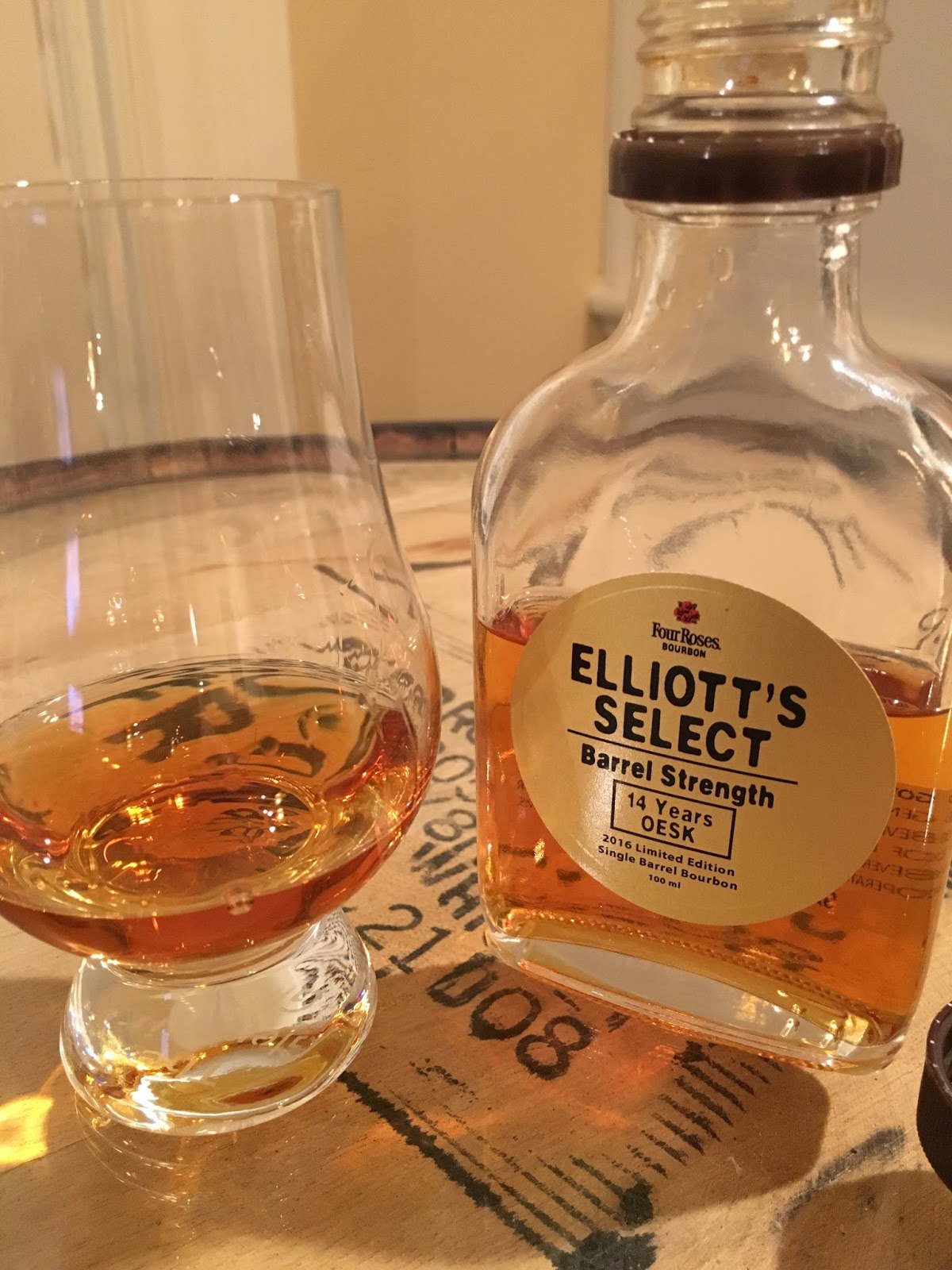
I have never hidden my affinity for Four Roses or the two (out of ten) recipes using the “K” yeast, so when I learned that after skipping 2015, Four Roses would release a springtime Limited Edition single barrel using the OESK recipe, I was thrilled. For a more in-depth discussion of what “OESK” means, please check out my post (Link Here) that covers all ten recipes. The most distinguishing aspect of this release, of course, is that it is the first solo release of new Four Roses Master Distiller, Brent Elliott, after the retirement last August of long-time Master Distiller, Jim Rutledge. Four Roses has confirmed to me that 95 barrels were selected for the release, which resulted in 10,224 bottles.
|
Bourbon:
|
Elliott’s Select 2016 Single Barrel Limited Edition Kentucky Straight Bourbon Whiskey
|
|
Distillery:
|
Four Roses, Lawrenceburg, Kentucky
|
|
Age:
|
14 years
|
|
ABV:
|
58.4% (116.8 proof), but will vary for each single barrel included in the release
|
|
Cost:
|
Suggested Retail: $124.99 (750 mL)
|
Disclaimer: The brand managers kindly sent me a sample
for this review, without any strings attached.
Thank you.
But I also bought my own bottle from the Four Roses Gift Shop.
Tasting Notes
Appearance:
Golden amber.
Nose:
Sweetness and more sweetness. Aromas of caramel, vanilla, corn pudding, and sweet, ripe fruit.
Taste:
Caramel, peach cobbler and other sweetness of honey and vanilla, but whereas the aromas were all sweet, the flavors are balanced with pepper spice, baking spice, ripe fruit (the “K” yeast shining through), and oak, with complexity and balanced intensity. The elegance of this OESK is a fantastic contrast to the brute force that some distillers shoot for with barrel-strength limited editions. Like so many other Four Roses Limited Edition single barrels and small batches, Elliott’s Select nails the interplay between having character and remaining civilized.
Finish:
Long with a great swell that lingers and ends with fresh mint and lingering warmth.
Bottom Line
I hope that this release means that Four Roses intends to keep a spring Limited Edition Single Barrel as a permanent feature of its line. While I always look for the “K” yeast, past Limited Edition Single Barrels have certainly shown that I need to broaden my horizons with the other eight recipes. In the meantime, this OESK Limited Edition is a Bourbon that I highly recommend. I plan to hound the Gift Shop and stalk my favorite local store until I have a bottle or two, and then I’ll update my review with a score on The Sipp’n Corn Scale.
Update with my own purchases
 Regardless, my bottle numbers are QN-53-2D (52.5% ABV) and QN-47-2Q (52.2% ABV). Each bottle of Elliott’s Select was aged on the north side of Warehouse Q, but you’ll be able to find variations based upon precise barrel location. Both of my barrels were stored on the second row, so the lower barrel proof was expected (and it’s something that I look for in Four Roses Single Barrels). Rack 53 is eight racks away from the exterior wall, on the interior section, and this barrel was stored only four barrels deep. Rack 47 is just one rack away from the exterior wall, also on the interior section, and at “Q,” this barrel was 17 barrels deep.
Update with my own purchases
As a single barrel bottling, my bottles are bound to have differences between each other and the media sample. While it can be fun to compare and find nuanced differences (and sometimes much greater variations), dissimilarities can also be frustrating when a new bottle doesn’t meet expectations. That might be why many people have commented that they’ve had better OESK private barrels than Elliott’s Select, for $30-$50 less. In reality though, I think that it is a high complement to Four Roses that private barrel selections can compete with Limited Edition selections.
 Regardless, my bottle numbers are QN-53-2D (52.5% ABV) and QN-47-2Q (52.2% ABV). Each bottle of Elliott’s Select was aged on the north side of Warehouse Q, but you’ll be able to find variations based upon precise barrel location. Both of my barrels were stored on the second row, so the lower barrel proof was expected (and it’s something that I look for in Four Roses Single Barrels). Rack 53 is eight racks away from the exterior wall, on the interior section, and this barrel was stored only four barrels deep. Rack 47 is just one rack away from the exterior wall, also on the interior section, and at “Q,” this barrel was 17 barrels deep.
I picked up a lot more oak on the nose in both of these bottles, sometimes prickly, but mostly the old library oak sensation. The taste was still elegant like the sample, but both had bigger nutty-chocolate candy flavors. Consistent with the seemingly heavier barrel influence on the nose and palate, the finish was also dryer and oaky. Both of these were classic examples of the OESK profile.
I’m a fan of OESK and OBSK; nothing new there. I’ve been lucky enough to have tried nearly 100 OESK single barrels either in bottles or in barrel selections, and even though I’ve liked them all, some really stand out. Elliott’s Select is solidly in the top of those OESKs, but behind the 2012 Limited Edition Single Barrel, and there are one or two OESK private selections within the past three years that are on par with Elliott’s Select. This sort of age is not available with private selection barrels, so especially if you enjoy the greater influence of oak, Elliott’s Select is a must-have Bourbon.
Score on The Sipp’n Corn Scale: 4.0
The Sipp’n Corn Scale:
1 – Swill. I might dump the bottle, but will probably save it for my guests who mix with Coke.
2 – Hits the minimum criteria, but given a choice, I’d rather have something else.
3 – Solid Bourbon with only minor shortcomings. Glad to own and enjoy.
4 – Excellent Bourbon. Need to be hyper-critical to find flaws. I’m lucky to have this.
5 – Bourbon perfection. I’ll search high and low to get another bottle of this.
Sipp’n Corn Bourbon Review – Bulleit Barrel Strength (at the Pimento Cheese Social 2016)
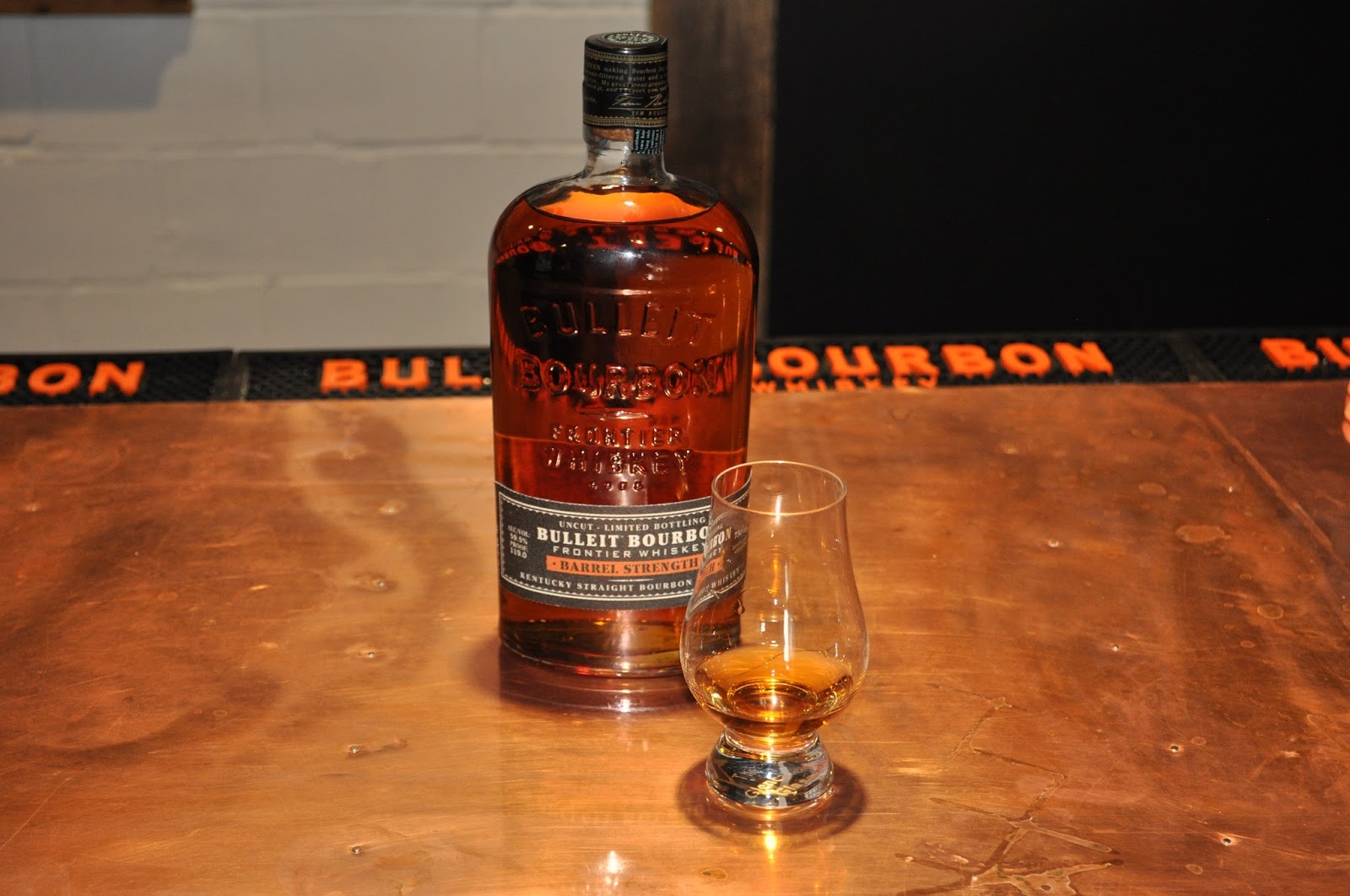
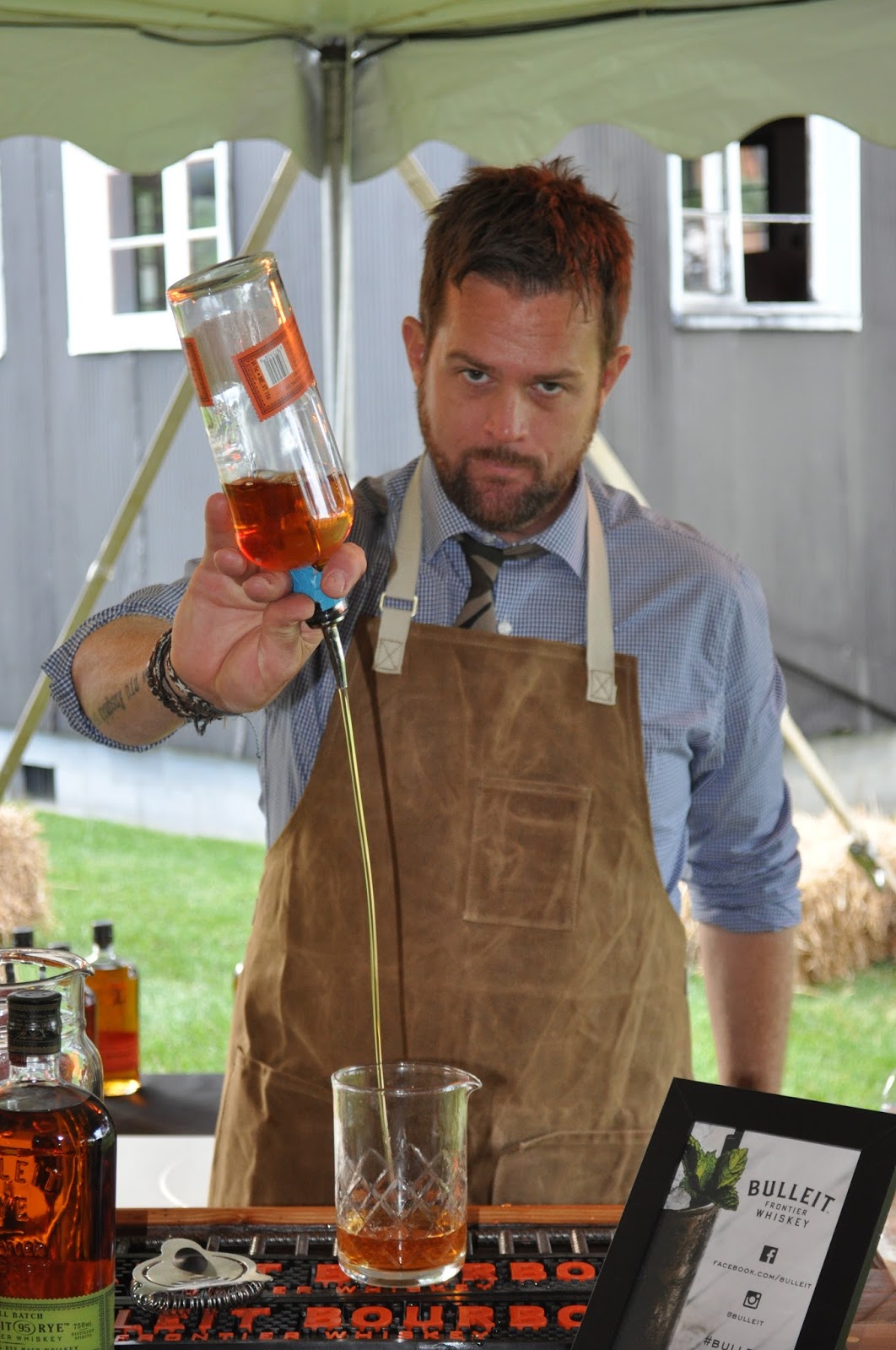 After years of consumers calling for it, Diageo’s Bulleit Bourbon has entered the barrel proof show with an immediate go-to contender. I got an advance tasting at this year’s Kentucky Derby week Pimento Cheese Social, held again at the historic Stitzel-Weller distillery in Shively, Kentucky. Tom Bulleit told me that Bulleit Barrel Strength comes from the same source as the standard orange label Bulleit, and it shows.
The 5th Annual Pimento Cheese Social was a hit too, with live music from Billy Goat Strut Revue and inventive pimento cheese creations from area chefs. Overall and compared to 2015, the 2016 chefs were the clear winners. Garage Bar prepared smoked cheddar pimento served in small cheese cones with chipotle sauce that were outstanding; The Hub prepared pimento cheese stuffed, bacon-wrapped dates that might be the only way to ever eat dates again; and Monnik Beer Co. prepared a pimento cheese spread paired with fresh bread.
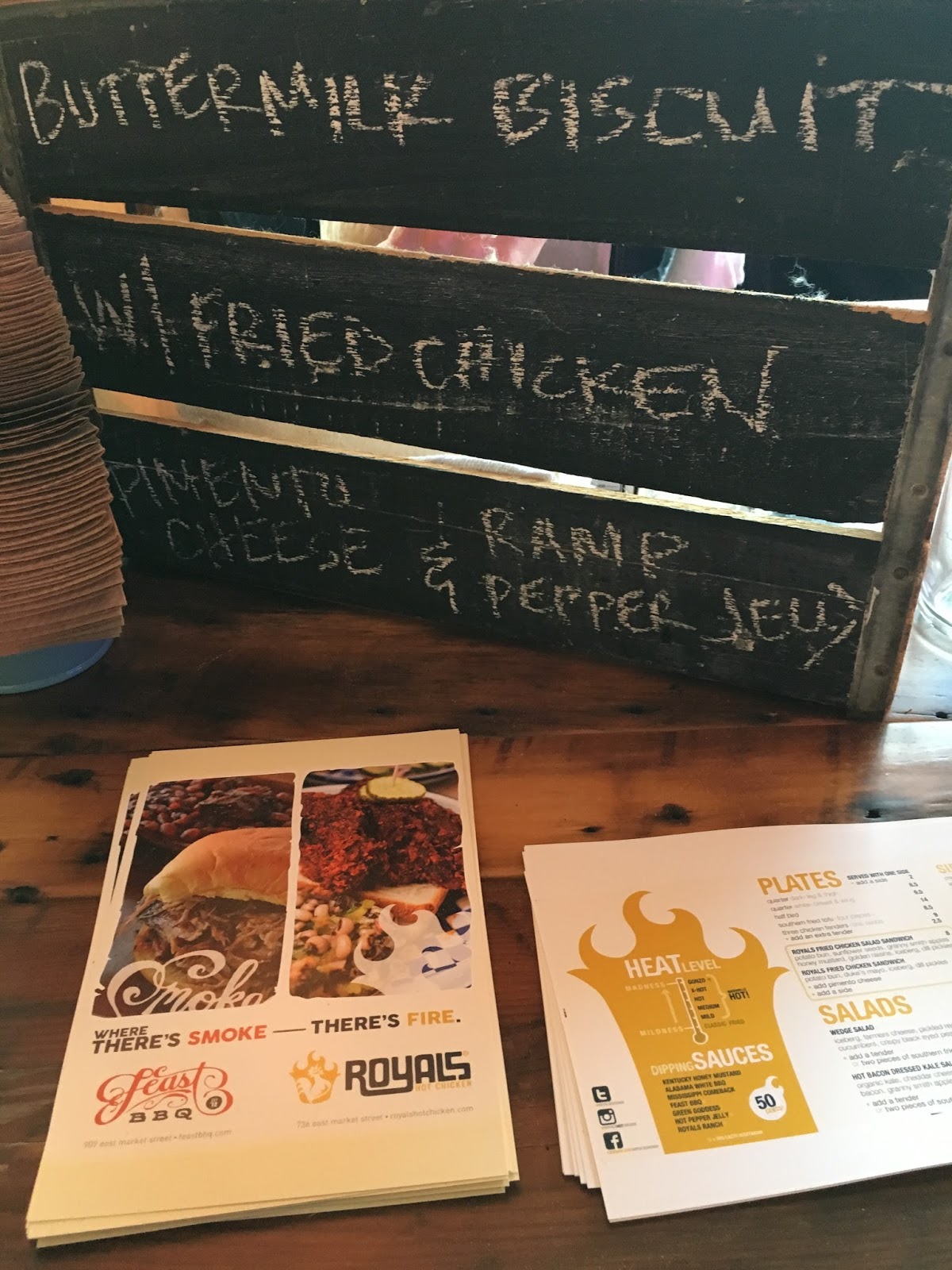
My favorite combination, however, was from Feast BBQ and Royals Hot Chicken: fried pimento mac-n-cheese balls alongside fried spicy chicken with pimento cheese pepper jelly on fresh buttermilk biscuits. Under the tent at Stitzel-Weller, with Billy Goat Strut playing in the background, it was a perfect evening.
|
Bourbon:
|
Bulleit Barrel Strength Limited Edition Kentucky Straight Bourbon Whiskey
|
|
Distillery:
|
Unknown
|
|
Age:
|
No Age Statement
|
|
ABV:
|
59.5% (119 proof) [expected range for future editions: 118-125 proof]
|
|
Cost:
|
Suggested Retail: $49.99 (750ml); $29.99 (375ml)
Price I found in Louisville: $54.99
|
Tasting Notes
Appearance:
Typical amber with an orange / copper hue.
Nose:
There’s some untamed heat evident in the nose, but then it sweetens up with caramel and honey, also with clear pepper and cinnamon. I would not call it “complex,” but has a nice balance of aromas.
Taste:
There’s also a great balance here between sweet (caramel, brown sugar, graham cracker), spice (black pepper and cinnamon again), and oak. These flavors are combined with some rough fire that should be expected from nearly 60% ABV, so I wouldn’t necessarily recommend a novice of cask-strength Bourbons drink this neat. But if you are already comfortable with cask-strength, Bulleit Barrel Strength will be smooth and enjoyable neat. After some air and time, there’s a slight nuttiness, so my recommendation is to try this neat and drink it slowly.
Finish:
Medium-long finish, creamy, sweet toffee, but overall dry with a focus on oak and spice.
Bottom Line
Non-chill filtered and barrel strength will now reach the masses between Bulleit’s release (even though it’s currently Kentucky-only) and Maker’s Mark’s nationwide release last year. I liked it well enough that I bought a bottle within a week, and it’s been a great bottle to enjoy as we enter the summer outdoor season. As good as the standard Bulleit is in cocktails, I expect Bulleit Barrel Strength to be better, but so far I’ve only had it neat and on ice. This one deserves some more experimentation.
Score on The Sipp’n Corn Scale: 4.0
The Sipp’n Corn Scale:
1 – Swill. I might dump the bottle, but will probably save it for my guests who mix with Coke.
2 – Hits the minimum criteria, but given a choice, I’d rather have something else.
3 – Solid Bourbon with only minor shortcomings. Glad to own and enjoy.
4 – Excellent Bourbon. Need to be hyper-critical to find flaws. I’m lucky to have this.
5 – Bourbon perfection. I’ll search high and low to get another bottle of this.