Brian Haara
Bourbon. Law. Author.
Sipp’n Corn Bourbon Review – Barrell Bourbon Batch 006
I’ve read and heard many glowing reviews of Barrell Bourbon, but for some reason I was resisting the temptation to jump aboard. Maybe it was because I had felt burned by a few other merchant bottlers. Or maybe it was because the $90.00 price tag for eight year old Bourbon distilled in Tennessee didn’t make sense to me when I could get Elijah Craig 12-year Barrel Proof and all kinds of Four Roses private selection Single Barrel options at barrel strength, both of which have known provenance and a proven track record. Still, I was curious, and all it took was seeing a sale price at Kroger. Now that Batch 007 and private selections have landed, it’s time for a review.
|
Bourbon:
|
Barrell Bourbon Cask Strength Straight Bourbon Whiskey
Bottle 4076 of 5460.
|
|
Distillery:
|
Unknown, but distilled in Tennessee
|
|
Mash bill:
|
70% corn; 26% rye; 4% malted barley
|
|
Age:
|
8 years, 6 months
|
|
ABV:
|
61.45% (122.9 proof)
|
|
Cost:
|
$76.99 (sale price)
|
Tasting Notes
 Appearance:
Rich caramel amber with a hint of orange.
Nose:
Enticing aromas of brown sugar, warm caramel, and a nutty, sugary desert. I was pleasantly surprised.
Taste:
There’s some fire initially, but it is tamed down with some air, and you’re left with complexity beyond what I expected, especially with a splash of water. It’s buttery with a nice transition from vanilla and caramel sweetness to cinnamon, baking spice, pepper, and big charred oak. Other than a slightly distracting green wood flavor, I really enjoyed it.
Finish:
Long, not from a high-proof burn, but from a wonderful, warm swell of corn and brown sugar sweetness, lingering cinnamon red hots, and plenty more oak. This finish is the real deal.
Bottom Line
Limited releases and distinct batches are tough to predict. I’ve been wrong about some that I made herculean efforts to find, and I’ve passed over others, only later learning that I had missed out on a remarkable Bourbon. Barrell Bourbon was one of those that I shouldn’t have waited so long to try.
Score on The Sipp’n Corn Scale: 3.0
The Sipp’n Corn Scale:
1 – Swill. I might dump the bottle, but will probably save it for my guests who mix with Coke.
2 – Hits the minimum criteria, but given a choice, I’d rather have something else.
3 – Solid Bourbon with only minor shortcomings. Glad to own and enjoy.
4 – Excellent Bourbon. Need to be hyper-critical to find flaws. I’m lucky to have this.
5 – Bourbon perfection. I’ll search high and low to get another bottle of this.
Sipp’n Corn Bourbon Review – “The 107 Proof Challenge” – Old Weller Antique vs. Pure Kentucky XO vs. Baker’s
 I had often wondered why a handful of Bourbons were offered at 107 proof. Was this supposed to be a sweet spot? Knowing barrel-entry proof used to be lower, I wondered if it was a throwback to earlier days. I read what supposedly had been Pappy Van Winkle’s explanation, as recounted by Sally Van Winkle Campbell, but I wondered about reliability. I also wondered why seven years seemed to be a common age statement on 107 proof options. But in reality, I was just guessing about everything.
Then Josh Feldman wrote about his epic tasting of 1998-2008 Old Weller Antiques, and followed up after talking with John Lipman about the origin of 107 proof – it was essentially “barrel proof” back in the 1940’s because distillers barreled at 100 proof, and couldn’t barrel higher than 110 proof. While the mystery might be solved, I decided to compare three 107 proof Bourbons in three price ranges – under $20, under $30 and under $40, arranged here by price:
Old Weller Antique Original 107 Brand Kentucky Straight Bourbon Whiskey
Distillery: “W. L. Weller and Sons,” which is really Buffalo Trace, Frankfort, Kentucky
Age: NAS
Proof: 107
Cost: $19.99 (but sadly, good luck finding it, let alone at this price)
Pure Kentucky XO Kentucky Straight Bourbon Whiskey
Distillery: Unknown, but bottled by “Pure Kentucky Distilling Company,” which is an assumed name of Kentucky Bourbon Distillers, Ltd. (Willett), Bardstown, Kentucky
Age: NAS
Proof: 107
Cost: $28.99
Baker’s Kentucky Straight Bourbon Whiskey
Distillery: Jim Beam, Clermont, Kentucky
Age: 7 Years
Proof: 107
Cost: $38.99
I tasted these blind (but I knew the three up for review) in random order, each poured neat in a Glencairn. My rankings below are from the blind tasting, but I re-tasted each Bourbon many times after the reveal to check my initial opinions and to elaborate on the aromas and flavors.
1st Glass (Old Weller Antique):
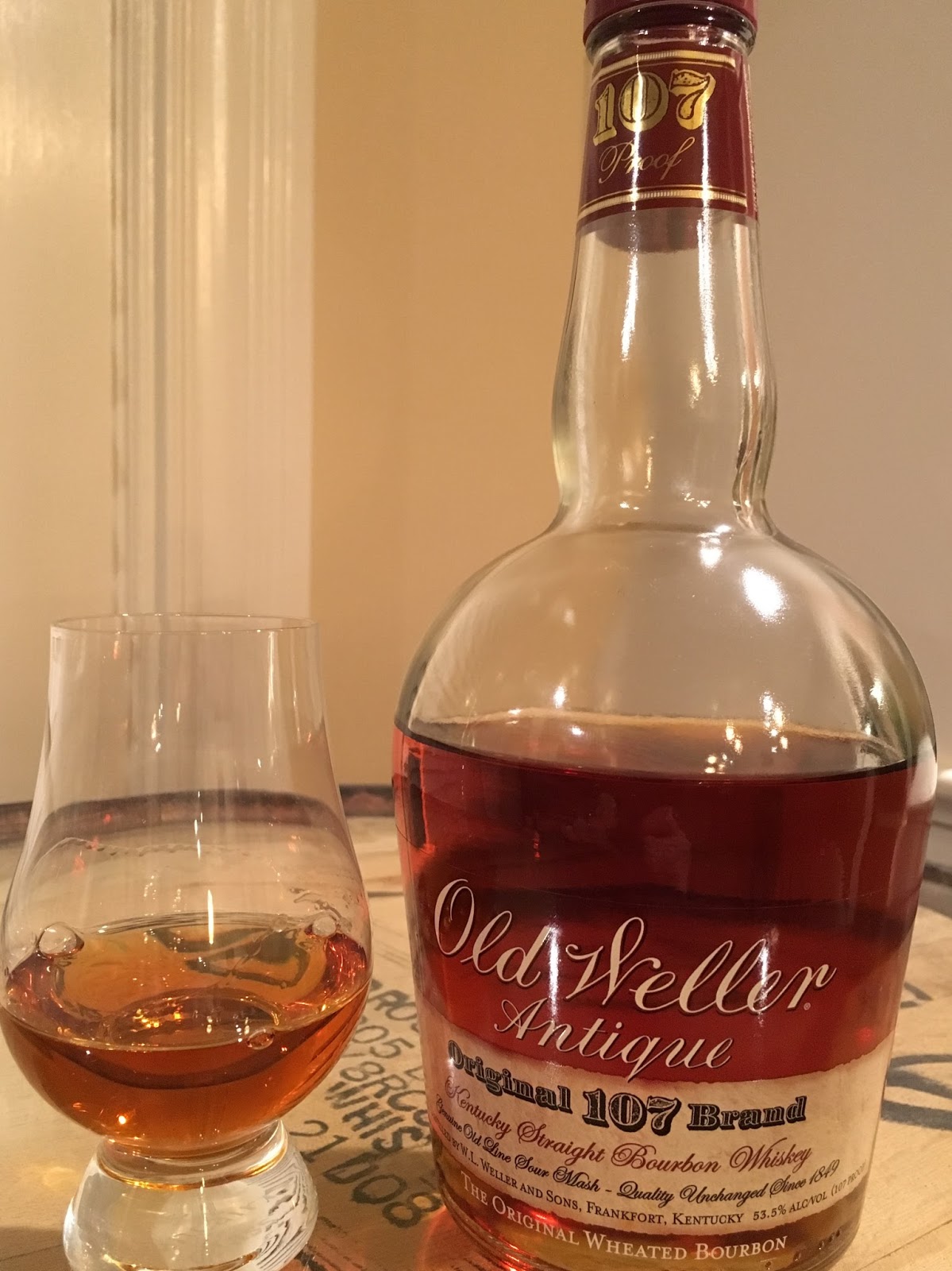 I’m plenty familiar with the Weller line, so I could identify this one blind, especially knowing that it was somewhere in the lineup. The color is a rich amber, with a slight hint of orange, depending on how the light hits, and a little more brown in other light. The aroma is medium intensity, with plenty of caramel, apple pie, and cinnamon rolls, with slight oak. The dominant flavors are caramel and vanilla, but also with pastry sweetness, spiced apples, honey, and toffee, without any hint of bitterness. It has a fantastic creamy sensation. The finish was warm and satisfying, with more flavors of caramel (rich dessert caramel), cinnamon, and vanilla, and with decent oak balance. It wasn’t a home run finish, which really would have taken this one to the next level, but was still a stand up double on the finish.
 2nd Glass (Baker’s):
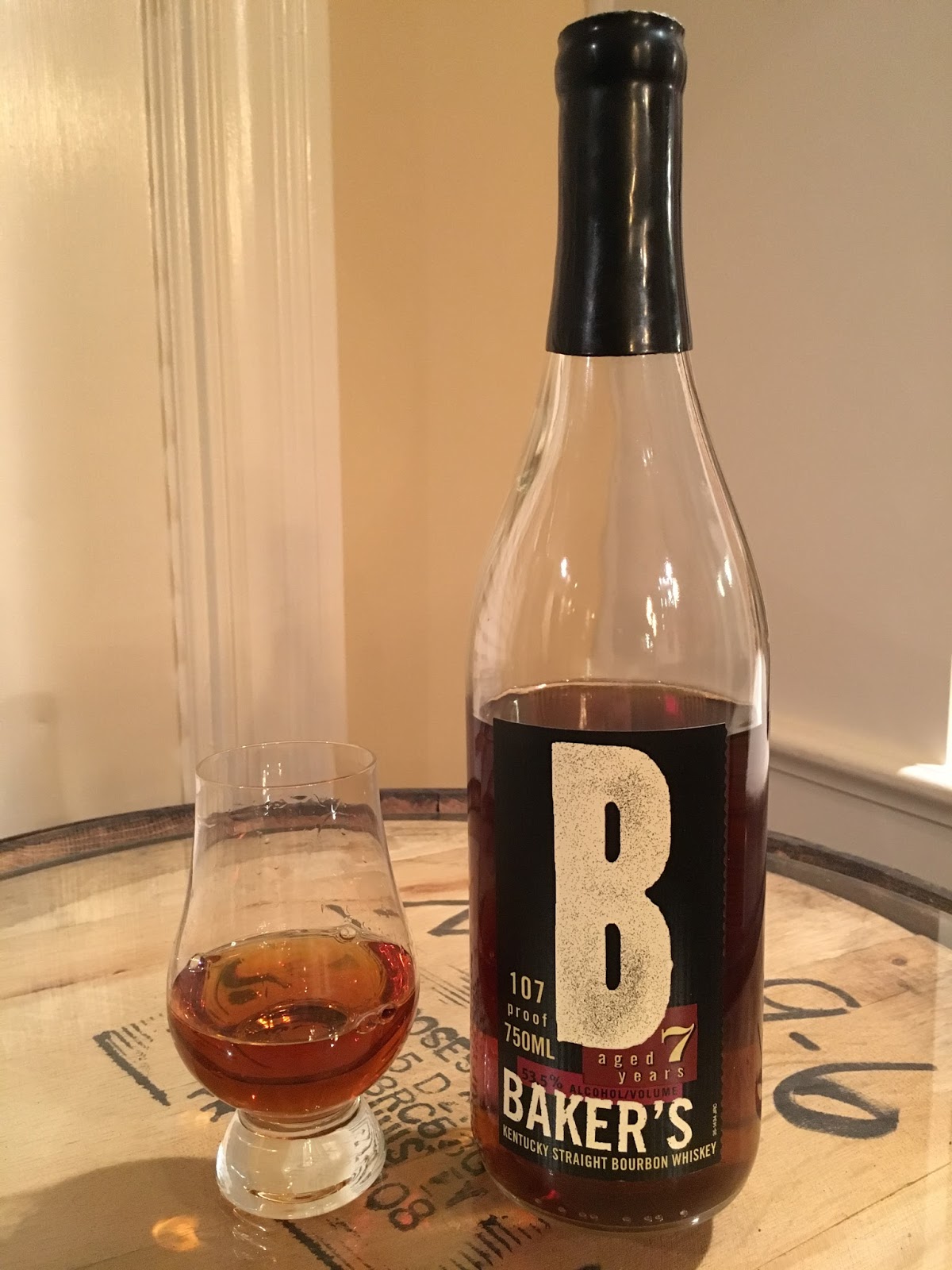
The appearance of the second glass stood out from the other two as much darker – pushing mahogany – and oily in the glass. The aroma was the most intense of all three, and it hit from a distance. It was hot, with black pepper, oak, old barn, citrus zest, and wet-dirt-in-the-springtime earthiness. The taste seemed a little too hot at first, and I thought that I detected the telltale Beam yeastiness (but, admittedly, I was looking for it). The primary flavors were oak, peanuts, black pepper, cedar, and a slight over-cooked vegetable flavor. It finishes medium with nice warmth, but the flavors in the finish were uneventful. This Bourbon clearly had a solid foundation, but something didn’t quite click; it didn’t commit to going all-out robust rock star, nor did it commit to balanced complexity, and instead got stuck in the middle.
3rd Glass (Pure Kentucky XO):
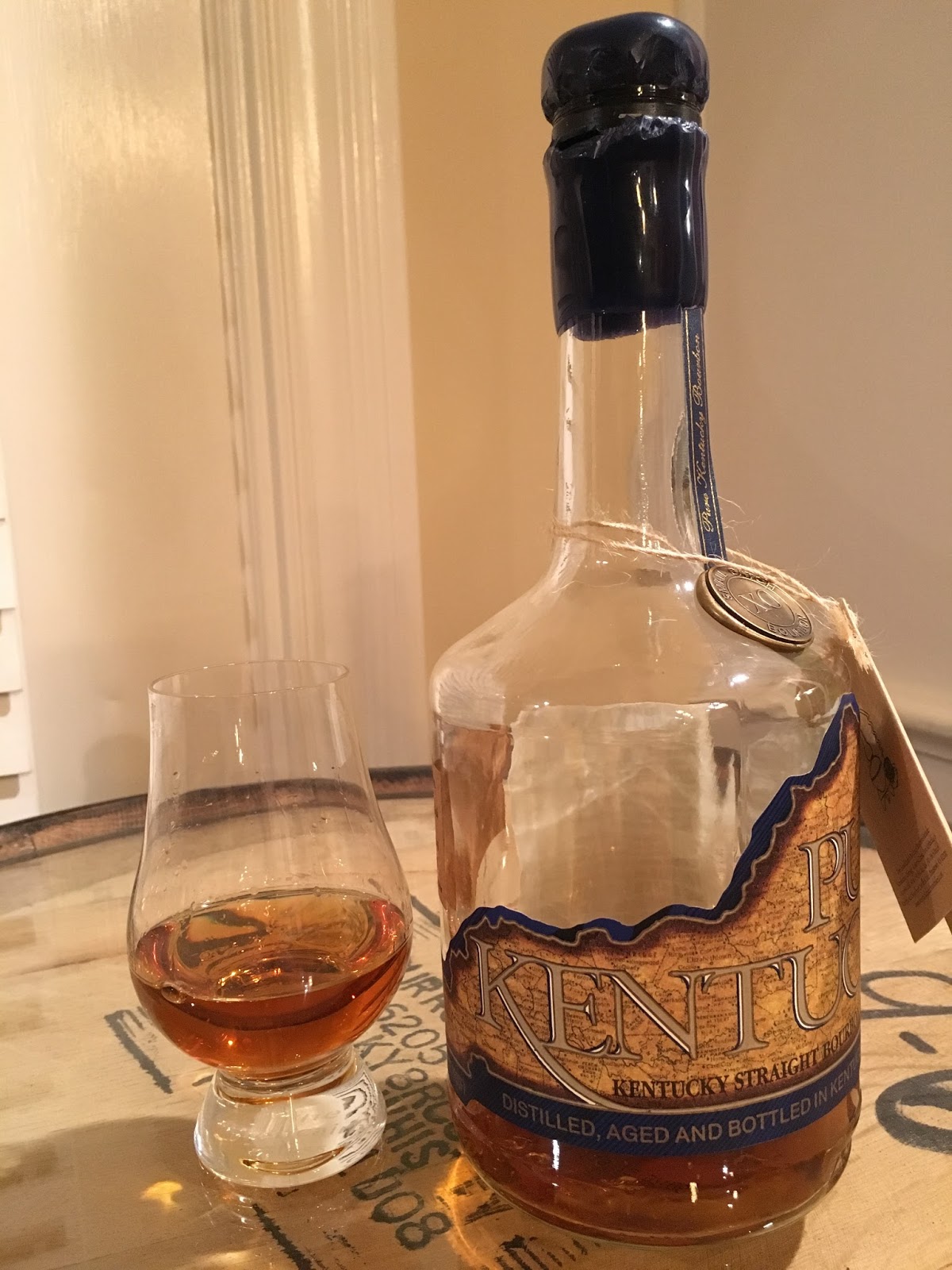 The appearance of the third contender was a subdued brown. The aromas were subdued, too, with every note being subtle, making it overall light and elegant, but nothing remarkable, either. Corn sweetness, malt vinegar, and black pepper emerged as primary aromas. Upon tasting it, though, I found a rush of complexity. After initial flavors of corn pudding, it transitioned to slight caramel, coconut, oak, leather, char, and black pepper, all while maintaining an overall distinctly malt flavor. The dry flavors continued through the finish, which was medium in length, with a nice swell. This was a Bourbon that makes you want to ponder it for a while.
WINNER: Each of these had its distinct pros and cons, each was very different from the other, and each seemed to be missing one component that could have improved it, but overall, the first glass – Old Weller Antique – rose to the top as the 107 proof Bourbon with the best aromas, taste, and finish. It happens to carry the lowest retail price, too. Unfortunately, it has fallen prey to allocations and hoarding, so it may not be available at your favorite retail store. If it’s not on the shelves of your favorite store (or if you don’t go for the sweet profile), I highly recommend the Pure Kentucky XO.
Bottom Line:
The first-place finish of Old Weller Antique surprised me. I had scored it high in a previous review (comparing next-to-bottom-shelf wheated bourbons), but the competition was stiffer here, so I expected it to show flaws in comparison. Instead of revealing flaws in Old Weller Antique, the opposite happened; it helped me identify what was missing in the other two Bourbons.
With so much of the tasting experience dependent upon aromas, the faint nose of Pure Kentucky XO put it at a disadvantage from the start. I have not compared my batch (No. 13-85) to previous or current batches to see whether the profile has remained consistent, but even with a sub-par nose, I really enjoyed this complex, malty, earthy profile, which really makes Pure Kentucky XO a contemplative Bourbon. It was a very close second in my comparison, and it could easily become your new favorite sub-$30 brand. Out of the three bottles, it is the one that I finished first.
Baker’s was a distant third. I hadn’t had Baker’s in several years, and didn’t remember much about it, which is consistent with my impression that it’s often an overlooked brand. In fact, the only reason I bought it was that I needed it for this 107-proof challenge. I initially thought that Baker’s might have suffered because I tasted it on the heels of the sweet Old Weller Antique, but on re-tasting all three, I tried Baker’s first, and later I tried each one independently on different days, none of which changed my impression. The back label suggests drinking it “over ice or with a splash of water,” so I tried that too, but to me, water seemed to accentuate bitterness. I don’t see myself buying Baker’s again, especially with so many great alternatives for $40 or less, but I’m not going to turn it down.
Score on The Sipp’n Corn Scale:
Old Weller Antique: 3.5
Pure Kentucky XO: 3.5
Baker’s: 2.5
The Sipp’n Corn Scale:
1 – Swill. I might dump the bottle, but will probably save it for my guests who mix with Coke.
2 – Hits the minimum criteria, but given a choice, I’d rather have something else.
3 – Solid Bourbon with only minor shortcomings. Glad to own and enjoy.
4 – Excellent Bourbon. Need to be hyper-critical to find flaws. I’m lucky to have this.
5 – Bourbon perfection. I’ll search high and low to get another bottle of this.
A Modest Bourbon Proposal for the Secondary Market.
Before I jump in, some people have articulated that selling or trading whiskey for collectability is perfectly legal. I don’t agree, but I’m not giving anyone legal advice, and if any reader has questions about it, I encourage consultation with counsel.

With that out of the way, I was asked recently, by someone who had already heard that selling Bourbon on the secondary market is illegal, whether tradingbottles could avoid those problems, and it got me thinking about how to fix the secondary whisk(e)y market in the United States. Then yesterday and today, the secondary market was rocked when Facebook shut down popular Bourbon trading and sale groups, emphasizing for me that there needs to be a legal outlet for selling and trading rare bottles.
Spirits are highly regulated, of course, and can only be sold in accordance with state regulations, which most often involve the “three tier” system of producers, wholesalers, and retailers. Those regulations have driven whiskey sales into an unregulated secondary market. While secondary market sales occur everywhere that Bourbon enthusiasts outweigh supply, sellers are taking a risk that somewhere, some day, local authorities will decide to enforce laws that make these types of sales illegal. In Kentucky, for example, KRS 243.020(1) requires a license to sell alcohol under any circumstance whatsoever: “A person shall not do any act authorized by any kind of license with respect to the manufacture, storage, sale, purchase, transporting, or other traffic in alcoholic beverages unless he or she holds the kind of license that authorizes the act.”
The Kentucky statute does not expressly use the words “trade” or “barter,” so some consumers might stop there, without checking the definition section applicable to Chapter 243. The definitions provide that the word “sale” “means any transfer, exchange, or barter for consideration, and includes all sales made by any person, whether principal, proprietor, agent, servant, or employee, of any alcoholic beverage.” KRS 241.010 (49). In other words, at least in Kentucky, trading Bourbon is just like selling it. The realquestions are whether the authorities will ever care about small-scale consumer-to-consumer selling and trading, and whether the risks – like being the test-case or getting a fake – are worth it.
Minor reforms in existing laws could provide a relatively simple solution. Yesterday I suggested to a Kentucky State Senator that Kentucky could leap to the forefront of a new white market by creating a legal, taxable, verifiable clearinghouse for the sale of rare whiskey. A new category of license could be created to permit sales from non-licensed people to a clearinghouse licensee, which could verify and authenticate the bottle, and then sell or trade it in an online market (we might have to change shipping laws, too, but let’s take this one step at a time). Authenticity and purchase prices could be determined by trained examiners, and other proof of authenticity (like an original retail receipt) would help consumers demand the best price for their Pappy Van Winkle, Willett Family Estate, and other hard-to-find limited edition whiskeys.
This would allow consumers – and even the dreaded “flippers” – to sell without violating the law, and it would reduce every black market buyer’s very real concern of counterfeit whiskey. Plus, clearinghouse licensees will be competing against each other on both paying top dollar to acquire the best selection of rarest Bourbon, and on the prices they charge for re-sale, along with competing on managing those margins and training employees to avoid fakes. This combination of the free market and sensible regulation would bring the secondary market out of the shadows and Facebook wouldn’t have to aggravate its users by closing private groups.
What do you think? Could this work?
How History Forgot the “Lesser Samuels.”
When families have members in the same line of business, it’s natural to compare and rank them, sometimes unfairly. Despite his success, Eli will always be the “Lesser Manning;” due to his lack of success, Daniel will always be the “Lesser Baldwin;” and Zeppo will always be the standard-bearer as the “Lesser Marx.” This is especially inevitable when one family member excels in the spotlight, like Peyton, Alec, and Groucho.
The Samuels family is one of Kentucky Bourbon’s Royal Families, with commercial distilling beginning with Taylor William “T.W.” Samuels in 1840, and farm-distilling before then, as early as 1783. The Samuels line of commercial distillers is unbroken through six generations: T.W. Samuels (1821-1898), William I. Samuels (1845-1898), Leslie B. Samuels (1871-1936); Taylor William Samuels, IV (“Bill, Sr.”) (1911-1992), Taylor William Samuels, V (“Bill, Jr.”), and Rob Samuels, even though Prohibition and breaking off to form Maker’s Mark both resulted in some down-time.
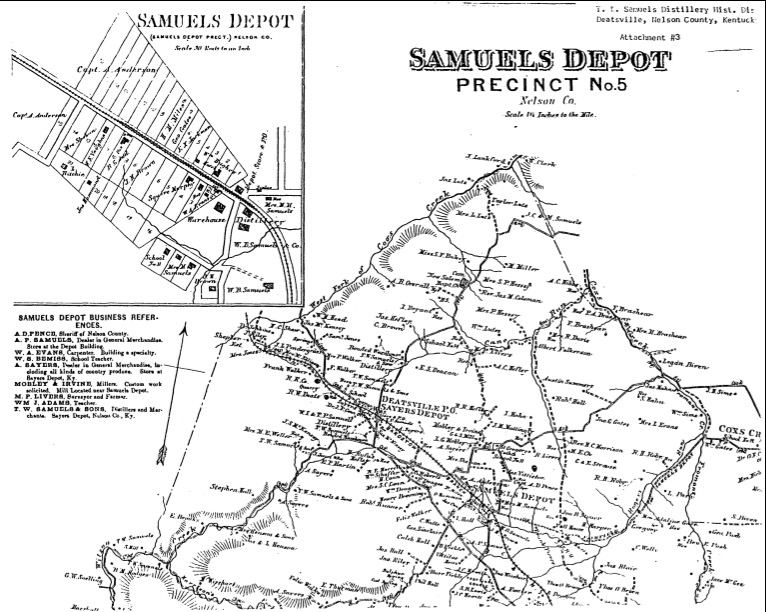 According to the National Register of Historic Places application for the T.W. Samuels Historic District, T.W. Samuels had a younger cousin in the business, W.B. Samuels. W.B. Samuels started the W.B. Samuels & Co. distillery in 1869, located at Samuels Depot on the L&N railroad, a stone’s throw away from the T.W. Samuels Distillery. Samuels Depot has other fame (or infamy) as the final hideout for Frank James before Sheriff T.W. Samuels arranged for him to surrender at the end of the Civil War. Decades later, a trio of cases from the early 1900’s – Edelen v. W. B. Samuels & Co., 31 Ky. L. Rptr. 731 (1907), T. M. Gilmore & Co. v. W. B. Samuels & Co., 135 Ky. 706 (1909), and W. B. Samuels & Co. v. T. M. Gilmore & Co., 142 Ky. 166 (1911) – tell the story of the demise of W.B. Samuels & Co. after W.B.’s death.
W.B. died from typhoid fever in July 1902, at which time the stock in his company was transferred to his wife and his son. His wife and son continued to run the distillery, but apparently haphazardly. So in 1906, they agreed to sell their aging Bourbon, the distillery property, and the business itself, through a Louisville broker, T. M. Gilmore & Co.
However, almost immediately, they had seller’s remorse and tried to find a way out of the deal. Their solution was to argue that W.B.’s widow (referred to only as “M. A. Samuels”) was strung out on drugs and didn’t have the capacity to enter into a contract. Specifically, they argued that M. A. Samuels “was in poor health, and had been for some time, was much of the time confined to her bed, and … was so weakened and enfeebled by the continued and protracted use of morphine that she did not know and understand what she was doing.”
Despite the apparent truth that M. A. Samuels had been addicted to morphine for many years, and despite testimony from physicians of her mentally-weak condition, M. A. Samuels testified herself that “she knew and understood what she was doing” when she signed the contract with T. M. Gilmore & Co. As expected whenever a star witness contradicts the defense raised by her own attorneys, the court ruled in favor of the broker.
The W.B. Samuels & Co. distillery was eventually sold and later was dismantled during Prohibition, never to return. Despite extensive searches in public online resources, I could not find any photographs of W.B. Samuels & Co. distillery or the man behind it, so if it weren’t for these lawsuits, the W.B. Samuels side of the family would have been completely lost to history, and we wouldn’t be able to contrast them with the rock-star side of the family.
Distillery Slop – Bourbon’s First Environmental Challenge.
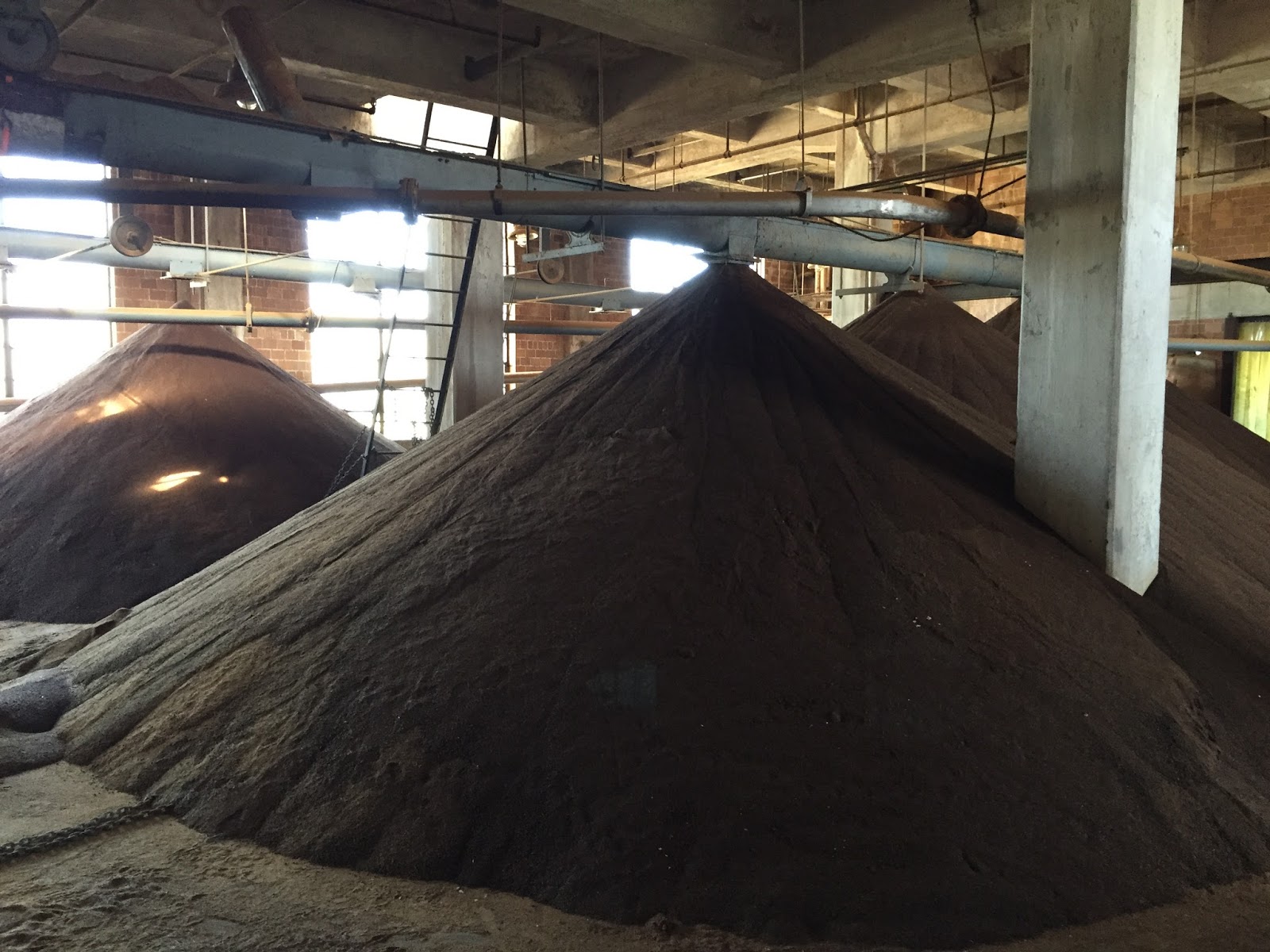 The process of converting grain into distilled spirits requires a tremendous amount of grain, and therefore, creates a significant volume of “slop” – the material remaining after fermented mash has been distilled – as a byproduct. A more attractive name often used after most of the water is removed from the slop is “distillers grain,” or the more Agri-Science-sounding name of “distiller dried grains,” with its acronym, “DDG.”
Although most of the starch is removed from the grains, practically all of the protein, fat, and fiber remain in the slop. (Slop is alcohol free, so the laugh-lines used by some tour guides about “very happy cattle” are just jokes.) Slop from a traditional Bourbon mash bill will have a higher fat content because of the corn, and therefore, slop from early Kentucky distillers became recognized as a valuable source of livestock feed. With the high capacity of today’s distilleries, anyone who has taken a tour has probably heard that the distilleries allow local farmers to haul away distillers grain, free of charge, for their use in feeding livestock.
In the early days of farmer-distillers, distillation runs were small enough that the slop could be used for the farmer’s own livestock. Even as distilleries grew into commercial enterprises, they often maintained livestock as a secondary source of income, or leased adjoining land to farmers, and used their built-in supply of slop for feeding the livestock.
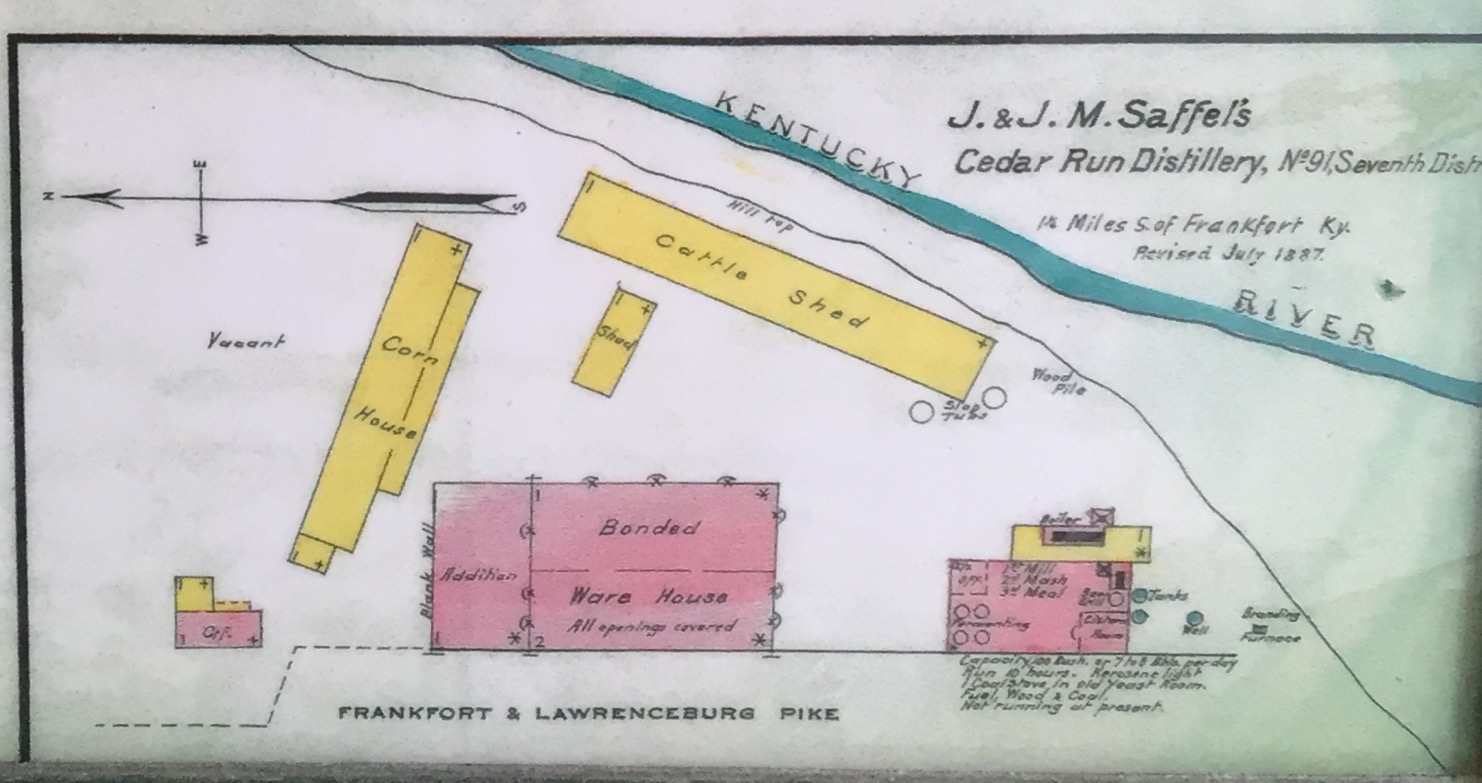
However, as America and distilleries continued to grow together, and as the pace of distillation increased with larger stills and the introduction of column stills, the production of slop outstripped the immediate needs of the distiller, and sometimes of the local community. Slop was often piped into waterways or sewers, or retention ponds overflowed into waterways, polluting rivers, killing fish, and creating an awful stench. This put Bourbon on the front line of conservation and preservation efforts in the early 1900’s.
As early as 1904, in addressing slop from the Peacock Distillery in Bourbon County that polluted “Stoner Creek,” the Court of Appeals of Kentucky ruled that “Every person must use his own property and conduct his business with regard to certain rights of his neighbors.” Peacock Distillery Co. v. Commonwealth, 25 Ky. L. Rptr. 1778 (1904). Theories of land-use rights in the United States had previously stressed the right of landowners to use their land and resources however they saw fit; Peacock Distillery shows the emerging trend that balanced individual rights with the common good.
Kentucky Peerless Distilling Co., which was recently reborn in Louisville, gave its original home of Henderson, Kentucky, its share of water problems in the early 1900’s. As explained in a trio of cases, City of Henderson v. Robinson, 152 Ky. 245 (1913), City of Henderson v. Kentucky Peerless Distilling Co., 161 Ky. 1 (1914), and Kraver v. Smith, 164 Ky. 674 (1915), Kentucky Peerless and its owner, Henry Kraver, were accused of polluting Canoe Creek with distillery slop so severely that “the waters of the creek were thereby made so impure as to render them unfit for use as stock water, cause them to emit foul odors, and so poison the atmosphere surrounding the creek as to endanger the lives of each of the [plaintiffs], his family and stock, make their houses at time uninhabitable, and depreciate the value and use of the real estate along and contiguous to the stream on which each resides.”
Similar lawsuits were brought against the Eminence Distilling Company in Henry County (Thomas’ Adm’r v. Eminence Distilling Co., 151 Ky. 29 (1912)) where a boy’s death was blamed on falling into and accidentally swallowing water from Fox Run Creek, the Commonwealth Distillery in Fayette County (Kentucky Distilleries & Warehouse Co. v. Commonwealth, 24 Ky. L. Rptr. 2154 (1903)), and the Walsh Distillery in Bourbon County (Commonwealth v. Kentucky Distilleries & Warehouse Co., 154 Ky. 787 (1913)).
Despite some missteps along the way, early Bourbon distillers proved that they could handle this major environmental risk. And today, while the primary use for slop is still livestock feed – which distilleries can probably claim is the greenest solution of any industry in response to such a voluminous byproduct – Bourbon distilleries are still innovating. For example, Maker’s Mark uses slop as a resource of renewable energy, through an anaerobic process that converts the organics into biogas, which is used as fuel for its boilers to offset natural gas usage by up to 20%. With innovation like this, we can expect Bourbon distilleries to be leaders in sustainable industry.

Cows love DDG

