Brian Haara
Bourbon. Law. Author.
Sipp’n Corn Review – Scotch Samples Showdown
I’ll be the first to admit that I’m Bourbon-centric, after all, that’s my model, so I embrace it. However, through my blog I’ve been able to meet and talk with people who appreciate all kinds of whiskey and whisky. Many of us (me included) compare whiskies and turn it into a competition over which we think is the best, but others find the time and the place to enjoy the wider variety.
As part of broadening my own horizons, I starting trying Scotch in earnest, with an eye toward finding Scotch that will appeal to the Bourbon enthusiast. I landed on a handful that I’ll review in a future post, but there are so many Scotch whiskies to try, I needed to find a way to knock several out without intruding on my Bourbon budget, and without becoming too reliant on the generosity of friends who have sent Scotch samples.
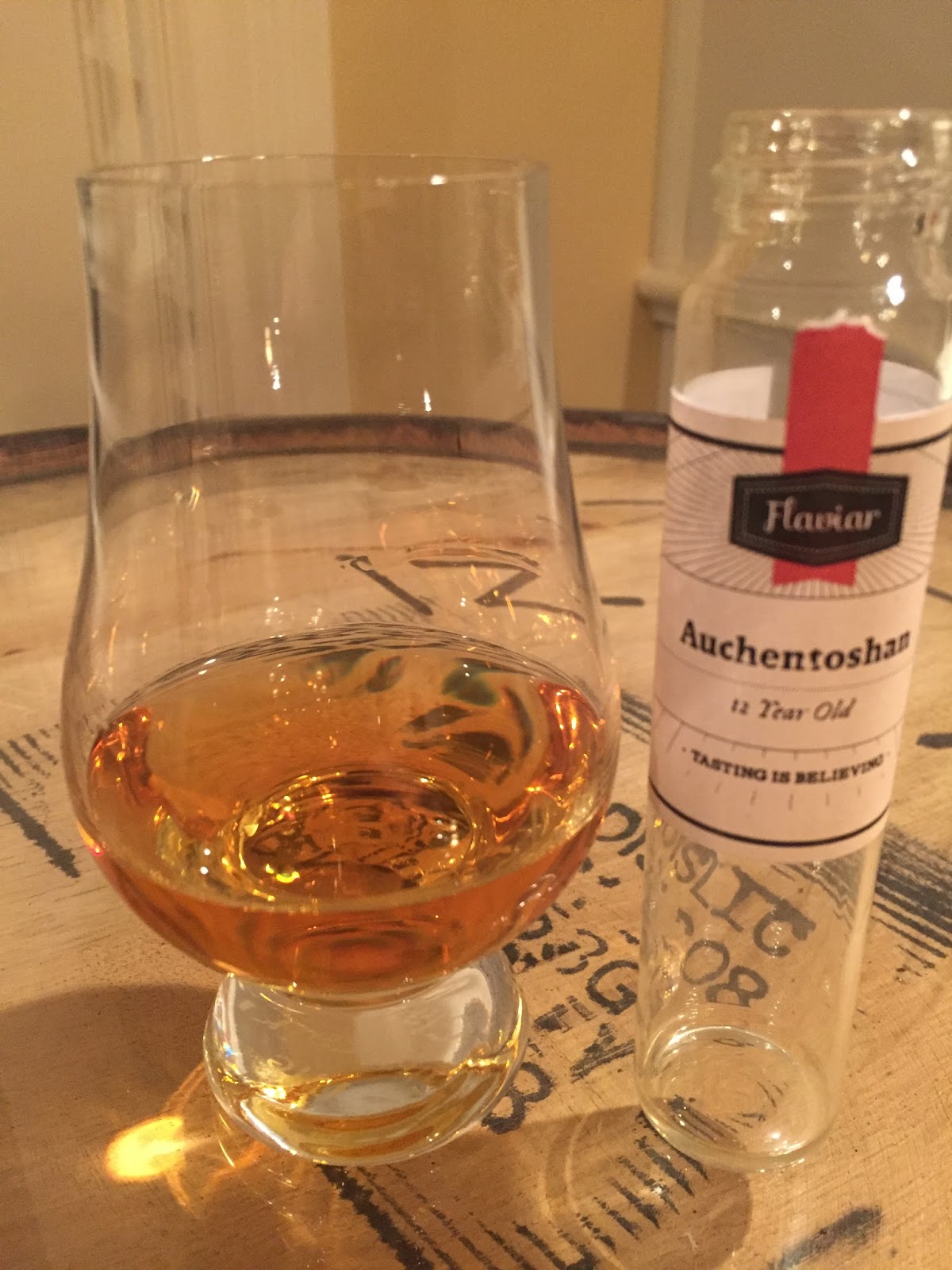
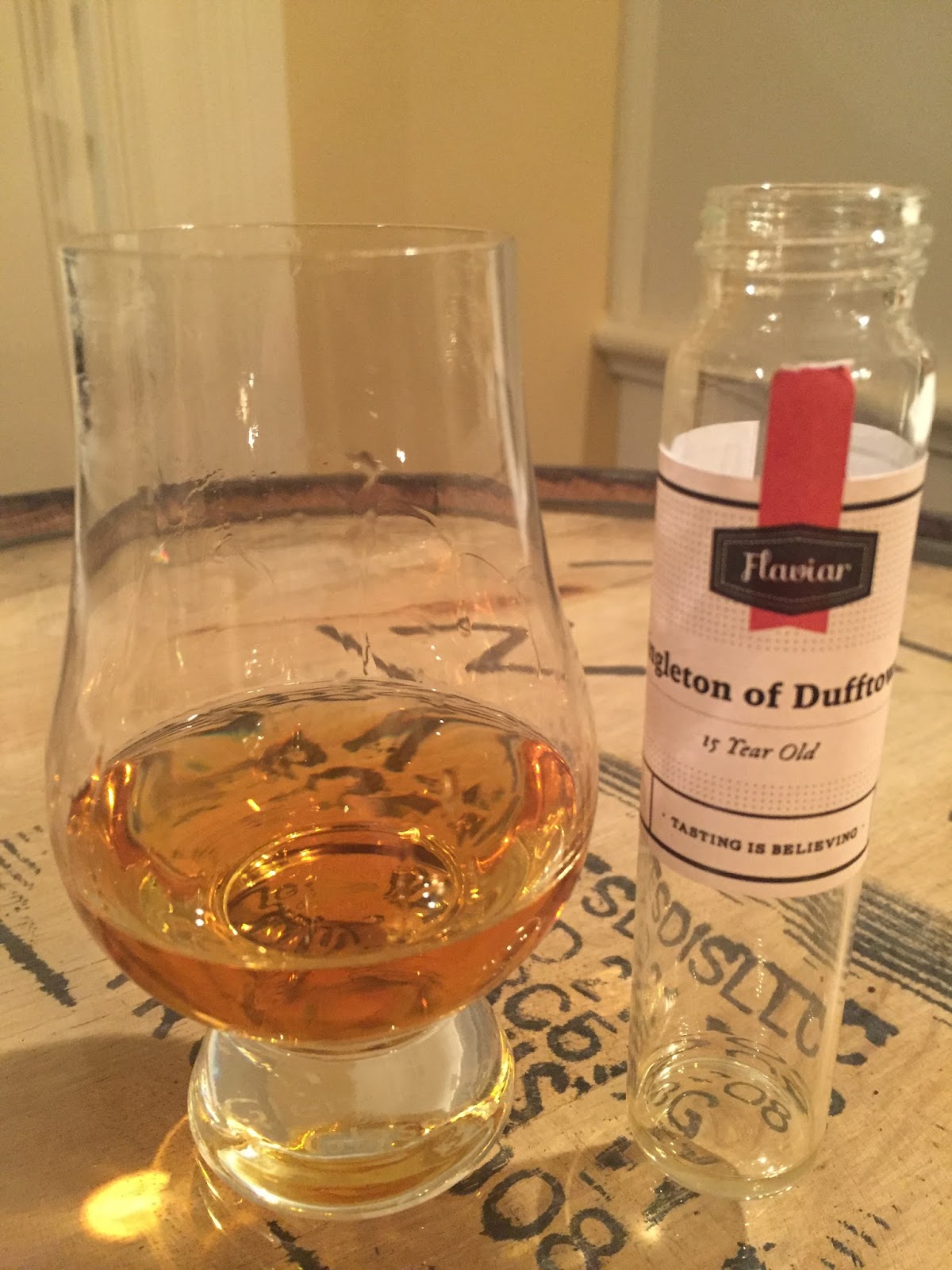
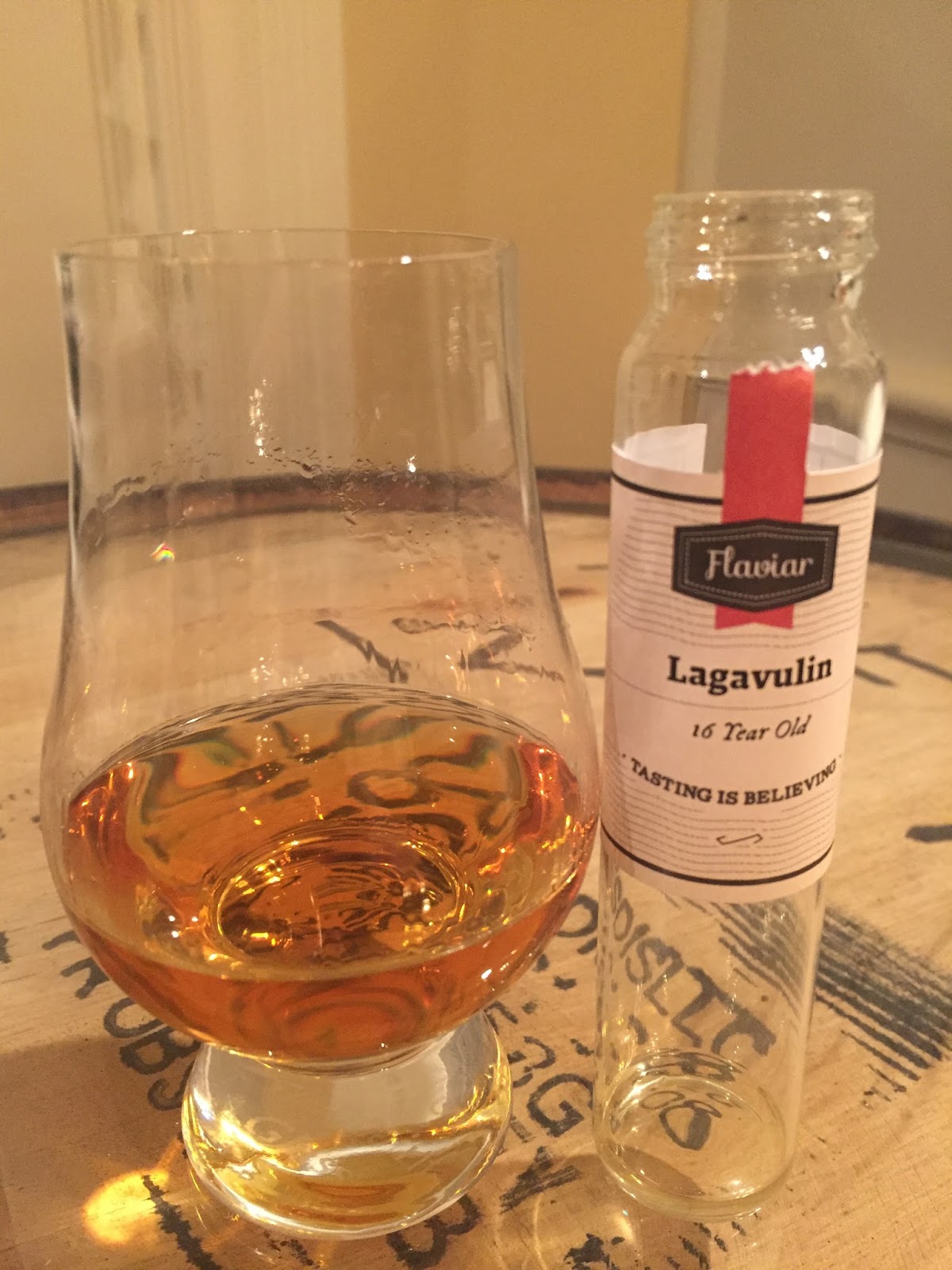
The answer came to me from Flaviar, which in addition to selling bottles online, offers a variety of different sample packages. Flaviar sent me (gratis) its “5 Flavours of Scotch” sample package, which included 45 mL samples of Auchentoshan 12 year, The Glenlivit 18 year, Singleton of Dufftown 15 year, Laphroaig Quarter Cask, and Lagavulin 16 year. I had only previously had two of the five – a flight of Auchentoshan offerings, and a sample of the Lagavulin 16 year – so I was excited to try a mostly-new lineup. So here are my thoughts about Scotch from the perspective of a Bourbon enthusiast and admitted Scotch novice:
|
Whisky:
|
Auchentoshan 12 year old
|
||
|
Region:
|
Lowlands
|
||
|
ABV:
|
40%
|
||
|
Tasting Notes
|
|||
|
Appearance:
|
Light copper.
|
||
|
Aroma:
|
Light fruit, malt, citrus zest, nutty, and grassy fields.
|
||
|
Taste:
|
Malty, some citrus, ginger, and vanilla. Overall, not really much going on here, but inoffensive.
|
||
|
Finish:
|
Short-to-medium, with a slight drying ginger tang.
|
||

|
Whisky:
|
The Glenlivet 18 year old
|
||
|
Region:
|
Speyside
|
||
|
ABV:
|
43%
|
||
|
Tasting Notes
|
|||
|
Appearance:
|
Light golden amber.
|
||
|
Aroma:
|
Richly fruity, green apple, finally some oak, nuttiness, toffee, orange citrus, and dark chocolate.
|
||
|
Taste:
|
Really enjoyable rich sweetness, like nougat, caramel, honey, and malt. After my first run, this was my favorite of the five.
|
||
|
Finish:
|
Long and lingering with dark fruit and oakiness.
|
||
|
Whisky:
|
Singleton of Dufftown 15 year old
|
||
|
Region:
|
Speyside
|
||
|
ABV:
|
40%
|
||
|
Tasting Notes
|
|||
|
Appearance:
|
Light gold.
|
||
|
Aroma:
|
A little more prominent malt, along with some vanilla waxiness and light fruit, and slightly smoky.
|
||
|
Taste:
|
Light fruit dominates, with malt again like the nose, along with citrus zest and some nuttiness for overall light, subtle flavors, but slightly medicinal. I was hoping for more after the nose.
|
||
|
Finish:
|
Short-ish in length, somewhat non-descript because of the faintness of the flavors, but nice transition from pear to drying pepper spice.
|
||

|
Whisky:
|
Laphroaig Quarter Cask
|
||
|
Region:
|
Islay
|
||
|
ABV:
|
45%
|
||
|
Tasting Notes
|
|||
|
Appearance:
|
Light amber (lightest of all five).
|
||
|
Aroma:
|
Peat, smoke, and salty right away, and then after some time, coconut, berries, and grasses.
|
||
|
Taste:
|
Immature heat, pronounced campfire smoke, malt, oaky, and earthy flavors.
|
||
|
Finish:
|
Medium and mostly all ashtray.
|
||
|
Whisky:
|
Lagavulin 16 year old
|
||
|
Region:
|
Islay
|
||
|
ABV:
|
43%
|
||
|
Tasting Notes
|
|||
|
Appearance:
|
Solid, silky amber (darkest of all five).
|
||
|
Aroma:
|
Pungent smoke, peat, iodine, and more smoke, with underlying berry sweetness. Despite more prominent smoke, it was much better than the Laphroaig.
|
||
|
Taste:
|
Under the campfire and cigar smoke, I was able to find incredible complexity. I particularly enjoyed the dark fruit, dark chocolate, oak, and maltiness of this robust – yet elegant – whisky. It surprised me, and I’m still thinking about it.
|
||
|
Finish:
|
Smoke that lingered for a long time, with just enough sweetness, nuttiness, and coffee to prevent the campfire from being overpowering. The flavors stuck with me, like after a cigar.
|
||
Bottom Line
The Glenlivet 18 and the Lagavulin 16 are the only two that tempt me for purchase, although they’re very different, and I foresee vastly different scenarios where I’d enjoy each. Still, compared to all of these, I missed Bourbon’s sweetness, kick of rye spice, and the dark oakiness that comes with extra aging. Especially at retail prices for a bottle, there are probably ten Bourbons I would want to hunt down before buying any of these Scotch Whiskies.
That’s the beauty of samples though, so thanks to Flaviar for the “5 Flavours of Scotch” sample package. If you’re interested and your state allows shipping, check out Flaviar at this link: https://flaviar.com/. Flaviar offers a type of commission for promoting and linking through partner sites, but this is not one of those links, so I have no financial interest in anyone clicking the link, all in the spirit of full disclosure and maintaining my independence.
Sipp’n Corn Bourbon Review – Yellowstone Limited Edition Kentucky Straight Bourbon Whiskey.
A formerly popular historical label has been revived and saved from its recent bottom-shelf status. The origin of Yellowstone lies with the union of the Beam and Dant families 105 years ago, and continued today at Limestone Branch Distillery with brothers Steve and Paul Beam.
Luxco owned the Yellowstone name, but now in partnership with Limestone Branch, the brand reunited with the family re-launched with a limited edition 105-proof Bourbon, sourced and blended from 12 and seven-year Bourbons using rye as the secondary grain, and a seven-year Bourbon using wheat as the secondary grain. Limestone Branch has followed this initial reintroduction with a lower-proof and lower-priced regular production Yellowstone Select, but the Limited Edition is up first:

|
Bourbon:
|
Yellowstone Limited Edition Kentucky Straight Bourbon Whiskey
|
|
Distillery:
|
Not Disclosed
|
|
Blending:
|
Limestone Branch Distillery, Lebanon, Kentucky
|
|
Age:
|
Minimum of 7 years
|
|
ABV:
|
52.5% (105 proof)
|
|
Cost:
|
$105.00
|
Tasting Notes
Color:
Dark amber with a slight reddish hue.
Nose:
Caramel, brown sugar, and vanilla dominate, with other subtle aromas, like fresh clover, creamed corn, oak, leather, and very slight mint. I would not have guessed that it is over 100 proof.
Taste:
Consistent with the aromas, the flavors start with creamy, buttery caramel and vanilla flavors, with brown sugar and fig to add another dimension of sweetness. Then the flavors shift to cinnamon, leather, and more oak than I expected from a Bourbon using two seven-year components, followed with a transition to something much more unique: a tang of black tea. A single large ice cube made Yellowstone creamier, and contrary to my usual experience of ice accentuating sweet flavors, here it amplified the rye spice.
Finish:
The finish was longish, and was overall dry, despite some corn sweetness, with a nice swell of rye spice (almost prickly) and lingering warmth.
Bottom Line
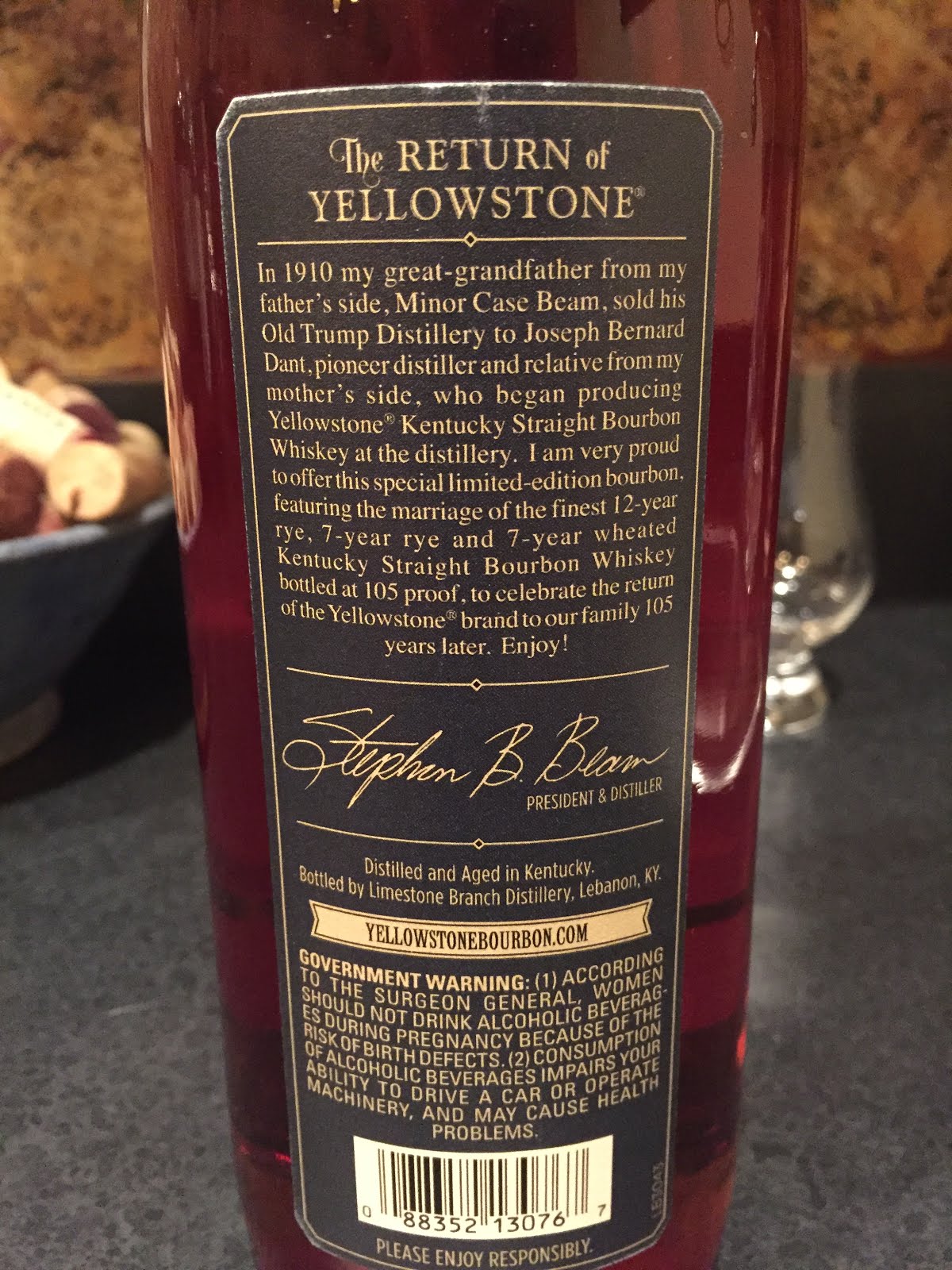 Blending Bourbons that use different secondary grains is a fantastic idea, and it provides an opportunity for home-blenders to experiment as well. Here, although we do not know the percentages used, the flavors suggest a higher usage-rate of the 12-year Bourbon. It’s arguable that we ought to be told which percentages were used in accordance with 27 C.F.R. § 5.40(a)(1), (e)(1), (e)(2) and TTB’s The Beverage Alcohol Manual; A Practical Guide, Basic Mandatory Labeling Information for DISTILLED SPIRITS, vol. 2, at Chapter 8 (2012), but the seven-year age statement on the front label is arguably sufficient. Either way, I expect more blending of different mash bills as producers seek to distinguish themselves in a crowded market.
Although I’ve removed value as a component of my ratings, Yellowstone warrants some mention of value due to its price tag and limited availability. No doubt, Yellowstone is pushing the limits of what it can reasonably expect consumers to pay, but considering its uniqueness and one-time batch, Yellowstone Limited Edition is priced appropriately in the market, although I recognize that many other people will pass because of the price. There are worse “values” and better “values” out there, but at least here we have a trustworthy producer, and we have more information about the Bourbon than many other sourced brands offer. Hopefully with Steve and Paul Beam at the helm, Limestone Branch can create a track record of excellent blends in partnership with Luxco, which will help justify the cost of future editions.
Score on The Sipp’n Corn Scale: 3.5
The Sipp’n Corn Scale:
1 – Swill. I might dump the bottle, but will probably save it for my guests who mix with Coke.
2 – Hits the minimum criteria, but given a choice, I’d rather have something else.
3 – Solid Bourbon with only minor shortcomings. Glad to own and enjoy.
4 – Excellent Bourbon. Need to be hyper-critical to find flaws. I’m lucky to have this.
5 – Bourbon perfection. I’ll search high and low to get another bottle of this.
Sipp’n Corn Bourbon Review – Booker’s and Revisiting Booker’s 25th Anniversary
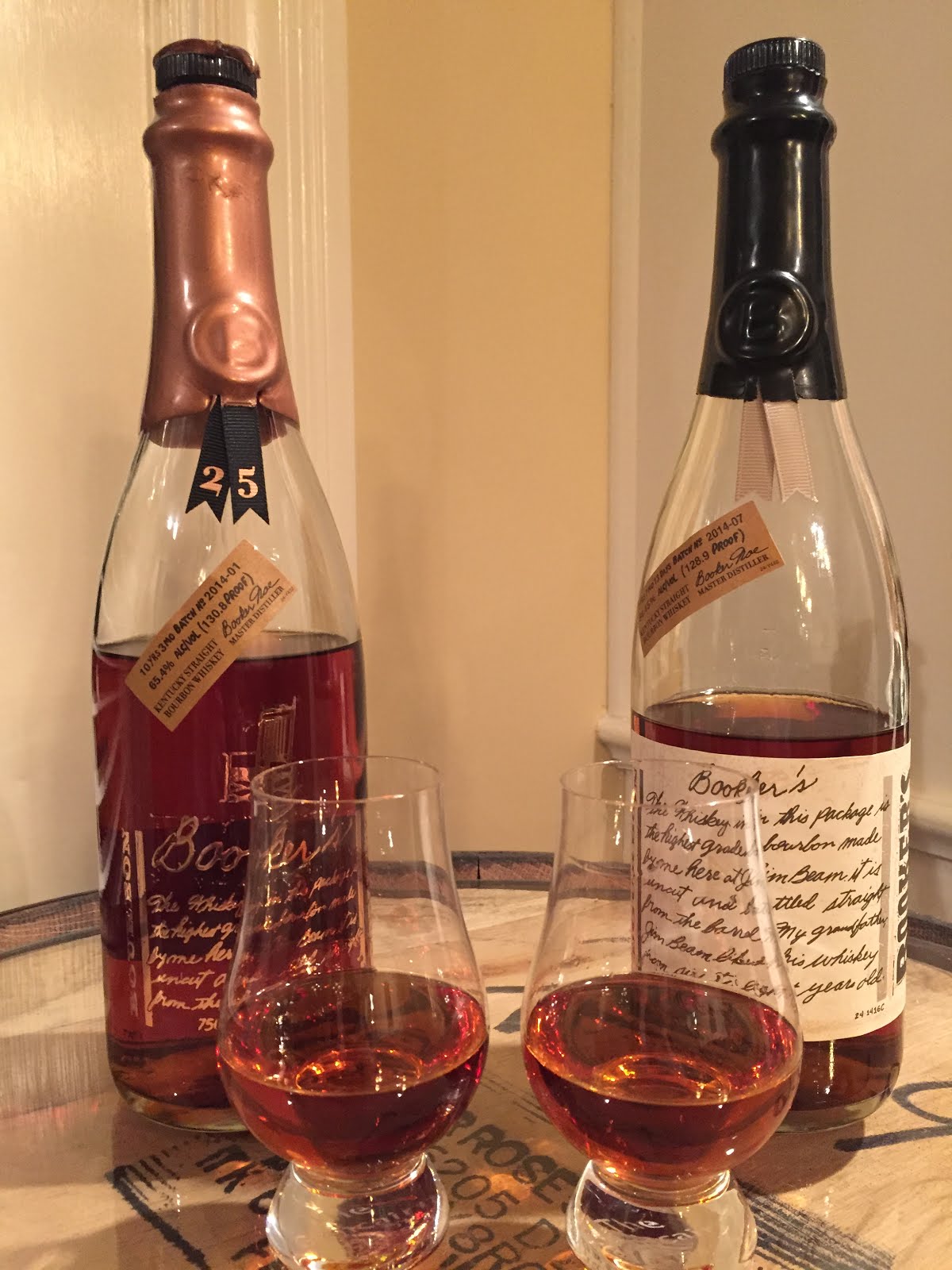 Beginning in January 2015, in a stroke of genius from a marketing perspective, Beam Suntory released batches of Booker’s with individual names. I took the contrarian view and passed over the first named batch, and bought the last batch of 2014 instead, which was still on the shelves. While others have compared and contrasted each of the named 2015 batches, for this review I’ll go “old school” with the last unnamed batch.
Last fall, I also finally found a bottle Booker’s 25thAnniversary, so I can pick up my previous sample review with a little more in-depth contemplation. I was gouged by a store in Tennessee, but I was glad to find the last bottle there.
|
Bourbon:
|
Booker’s Kentucky Straight Bourbon Whiskey,
Batch 2014-07
|
|
Distillery:
|
Beam Suntory, Clermont, Ky.
|
|
Age:
|
7 years, 7 months, 13 days
|
|
ABV:
|
64.45% (128.9 proof)
|
|
Cost:
|
$49.99
|
and
|
Bourbon:
|
Booker’s 25th Anniversary Kentucky Straight Bourbon Whiskey, Batch 2014-1
|
|
Distillery:
|
Beam Suntory (at the time, still Jim Beam), Clermont, Ky.
|
|
Age:
|
10 years, 3 months
|
|
ABV:
|
65.4% (130.8 proof)
|
|
Cost:
|
$99.99 suggested retail
|
Tasting Notes
Color:
Both are dark amber on the verge of brown, but the 25thAnniversary is slightly darker, as expected because of the additional age.
Nose:
The aroma of each is powerful, but not in a nose-singeing way. Instead, the power is in the depth. Batch 2014-07 is full of brown sugar sweetness, lots of cinnamon, and some furniture polish, while the proof is more evident. The 25th Anniversary hits hard with darker aromas (like oak and leather), rich vanilla, and overall less sweetness, with the high proof better-disguised. A splash of water or an ice cube opened up the caramel sweetness.
Taste:
These are bold, spicy Bourbons. Batch 2014-07 has toffee and dark fruit sweetness, peanuts, orange zest, heavy baking spices with herbal flavors, and decent oak. The only downside is that it’s too hot and a little yeasty hitting the back of the throat. I liked it better with a splash of water, but water didn’t take away the slight throat irritation, which left it a little distracting. I tried it with a single cube too; some somehow that seemed to accentuate the heat, and not do much else.
I expected the 25th Anniversary to start very hot and to need some time in the glass first, but I knew that I would struggle to find that kind of patience. The sample that I reviewed last spring already had some air, so it was great from the first sip, and this time, trying from a freshly opened bottle, I vacillated between diving right in and waiting. I didn’t give it much time, but it was enough, because the 25thAnniversary was as phenomenal as I had remembered. It’s a classic, robust Bourbon, starting with deep brown sugar, caramel, and vanilla, balanced by plenty of cinnamon, leather, and oak. The 25thAnniversary has great creaminess, especially with a splash of water or a single ice cube. It’s still worth trying neat, however, before experimenting with ice or a splash.
Finish:
Batch 2014-07 had a good finish with great warmth, but it was still a little distracting in a few ways (like raw heat, yeastiness, and furniture polish). I suspect that my scoring on the taste and finish of Batch 2014-07 suffered due to a continued comparison with the 25th Anniversary edition. While the taste of the 25th Anniversary was fantastic, just as I had found with my sample last year, the finish takes it up a notch further. The 25th Anniversary finishes with a huge swell of cinnamon and warmth, and you can feel it shift gears, transitioning to dark oak and leather with maple sweetness.
Bottom Line
The standard Booker’s is a top-notch barrel strength beast, and probably my favorite of the Beam Suntory lineup. At retail from $50 – $60 and readily available – along with other barrel proof options from Maker’s Mark, Four Roses, and Heaven Hill – there’s no reason to wait for certain “antique” limited fall releases to get your barrel proof fix. As with all smaller batches, you will find batch variation in Booker’s, and some are better than others. All of the 2015 named batches that I’ve tried have been better than Batch 2014-07.
Additionally, the 25thAnniversary batch shows that, with a little focus, Beam Suntory – known predominantly for its ubiquitous “white label” Jim Beam – could challenge the kings of the super-premium segment. I’d put Booker’s 25th Anniversary and Parker’s Heritage Collection 8thEdition as the two best American whiskies of 2014, and both will likely be in the top 10 for the decade. Now that we’re into 2016, you’ll have to rely on a friend to try either of those, but I hope that you’ll get the chance. If not, try the next standard named batch of Booker’s.
Score on The Sipp’n Corn Scale:
Booker’s Batch 2014-07: 3.0
Booker’s 25th Anniversary: 4.5+
The Sipp’n Corn Scale:
1 – Swill. I might dump the bottle, but will probably save it for my guests who mix with Coke.
2 – Hits the minimum criteria, but given a choice, I’d rather have something else.
3 – Solid Bourbon with only minor shortcomings. Glad to own and enjoy.
4 – Excellent Bourbon. Need to be hyper-critical to find flaws. I’m lucky to have this.
5 – Bourbon perfection. I’ll search high and low to get another bottle of this.
Sipp’n Corn Bourbon Review – Old Forester Single Barrel at Butchertown Grocery
Louisville has had a thriving restaurant scene for decades, which has paired perfectly with our love of Bourbon. Now, just east of downtown in the Butchertown neighborhood – and a stone’s throw from Copper and Kings – Butchertown Grocery is our newest culinary star, with Chef Bobby Benjamin nailing the interplay between creativity and approachability.
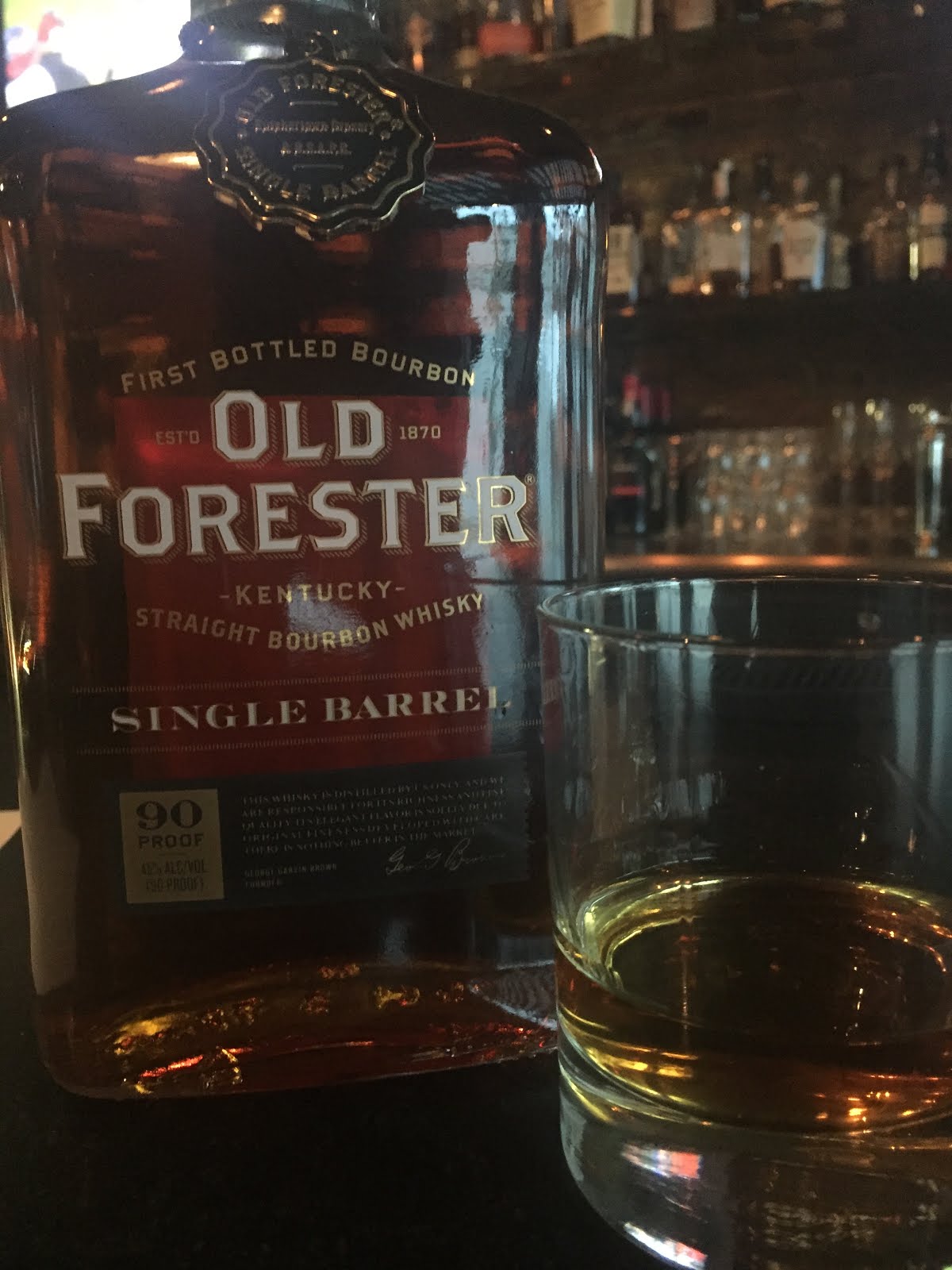 Butchertown Grocery also has an ambitious beverage program headed by Marie Zahn. While still working on expanding its Bourbon selection, Butchertown Grocery opened with fantastic cocktail options, including entirely different cocktail menus downstairs and upstairs; downstairs focuses on classic cocktails and upstairs is more modern and adventurous. The upstairs cocktail menu is helpfully arranged from easiest-drinking to strongest, and sweet to dry, plus, a bespoke cocktail program allows guests to choose three words from a menu, which are then used to create a custom cocktail.
I went back to Butchertown Grocery for Bourbon, though, and the Old Forester Single Barrel Private Selection in particular, to see if the Bourbon selection could match the culinary side of the menu.
|
Bourbon:
|
Old Forester Single Barrel Private Selection
|
|
Distillery:
|
Brown-Forman, Louisville, Kentucky
|
|
Age:
|
6 ½ years for this barrel
Barreled May 11, 2009
Lot ID: 09 E 11
|
|
Mash Bill:
|
72% corn; 18% rye; 10% malted barley
|
|
ABV:
|
Bottled at 45% (90 proof), and 67.5% out of the barrel
|
|
Cost:
|
$12.00 / 2 oz. standard pour
|
Tasting Notes
Color:
Reddish amber, but the room was dark.
Nose:
Rich caramel, honey, and candle wax up front, followed by pecans (reminiscent of the classic New Orleans Praline), and balanced with slight leather.
Taste:
Caramel and honey sweetness are the primary features, dominating the sweet profile (without any fruit sweetness). The rye comes through nicely, along with leather and polished wood as hinted in the aroma, and toasted candied nuts. It’s not particularly complex or assertive, which should make it a crowd-pleaser.
Finish:
The finish was medium in length, with nice, lingering warmth. Oak became more noticeable in the finish, without being overly-woody. While the finish was overall dry, it still had a pleasant fading caramel sweetness and a hint of fig pastry.
Bottom Line
Old Forester is sometimes lovingly referred to as “Louisville’s House Bourbon,” and for good reason. It is one of the absolute best values on the quality/cost matrix, and when you drink as much Bourbon as we do in Kentucky, not everything can be a Limited Edition. Old Forester works well in cocktails (especially the Old Fashioned), neat, or on ice, which isn’t true of all Bourbons.
It’s always nice to mix it up between the different Old Forester proof options, an occasional Birthday Bourbon Limited Edition, and great private barrels like Butchertown Grocery’s. This private barrel had less of the corn flavors than I typically find in both the 86 proof and 100 proof Old Forester options, and none of the fruitiness, but it had much more caramel, which is one of the dynamics that I love about single barrels.
After proofing down, the barrel produced 225 bottles, so you’ll have several months to try this Old Forester at Butchertown Grocery. On the other hand, there’s really no reason to wait when both the restaurant and the Bourbon are outstanding.

Sipp’n Corn Bourbon Review – William Larue Weller Buffalo Trace Antique Collection (2013 edition)
By the fall release season of 2013, Bourbon’s popularity had already been surging for a decade. While it had legitimately developed into a “craze” about two years earlier, 2013 was just about the time that truly limited edition Bourbon became nearly impossible to find in Kentucky. The market hadn’t yet been flooded with 50 new “super-premium” brands or previously “lost” barrels, and brands like W. L. Weller 12-year were still four deep on shelves. Unfortunately, Weller 12 was just being discovered by a new breed of Pappy histrionics who were hearing that Weller 12 “was the same thing as Pappy.”
Demand was skyrocketing for Buffalo Trace’s wheated Bourbon mash bill – which Buffalo Trace desperately needed to succeed since it was just about out of its Stitzel-Weller stock used for Pappy Van Winkle 20 and 23-year. Apparently, however, Buffalo Trace had underestimated demand for longer-aged wheated Bourbon, so it had sacrificed the seven-year age statements on Old Weller Antique and W. L. Weller Special Reserve. Weller 12 was also rumored to be discontinued or dropping its age statement, presumptively because more needed to be held back for more profitable brands.
While fans are now dealing with Weller 12 allocations, instant cleaning of shelves when it or Old Weller Antique are released, and a high secondary market, at least Weller 12 didn’t lose its age statement then (or since). The other member of the Weller line that continued to receive high acclaim was the wheated member of its popular Buffalo Trace Antique Collection (“BTAC”), William Larue Weller.
In 2013, Buffalo Trace set aside 39 barrels for William Larue Weller. At 12 years old, these barrels could have been used for Weller 12 (90 proof) or Van Winkle Special Reserve 12-year (90.4 proof), and gone a lot further. On average, about 55% of each barrel had been lost to evaporation (meaning just about 23.7 gallons per barrel), but I suppose that BTAC pricing for barrel proof Bourbon makes up for fewer bottles. Here are my thoughts:

Details
William Larue Weller Kentucky Straight Bourbon Whiskey
Buffalo Trace Antique Collection 2013
Distillery: Buffalo Trace, Frankfort, Kentucky
Age: NAS label, but 12 years, 1 month
Barrel: Independent Stave #4 Char
Barrel Entry Proof: 114
Bottle Proof: 136.2
Warehouses: M and P, 3rd and 4thFloors
Filtration: None
Cost: MSRP $80.00
Tasting Notes
Color:
Dark, luscious amber.
Nose:
This is a sweet nose with the expected caramel notes, and other sweet notes of brown sugar and butterscotch, but with depth added with aromas of raisins, espresso, and tobacco. Despite the high proof, I didn’t really get any alcohol burn.
Taste:
I tried to find similarities in the taste alongside Weller 12, and while there are some (like butterscotch, caramel, and fresh bread), even without considering the distractingly high proof of Weller BTAC, they seem barely related. I did not particularly enjoy this Weller BTAC neat, and I struggled to find the correct ratio of water, but found that a single ice globe worked magic, retaining complexity and opening up new flavors. The sweet caramel and butterscotch flavors were heightened, along with other rich sweetness like dried dark fruits. There’s also a nutty quality, along with cinnamon with a blast of oak and tobacco. With right amount of water and chill, it’s a rich and robust powerhouse.
Finish:
The warmth outlasted the flavors on the finish, which was overall dry with more leather, pepper spice, and really dark chocolate as it faded.
Bottom Line
Although we’re hardly removed from it, I think that we’ll look back at the summer of 2013 as the point when the Bourbon craze turned into Bourbon pandemonium. Since then, Buffalo Trace has pumped out press releases of doom and gloom for the shortages of its premium brands, age statements have dropped like flies (but sometimes numerals remain on the bottle), and old over-filtered stocks have flooded the market in an attempt to capitalize on the resurgence of Bourbon.
Value-wise, though I really enjoyed it, this isn’t worthy of the hype or worth the trouble to hunt because there are plenty of cask-strength alternatives now. Maker’s Mark Cask Strength, for example, is readily available, and while it is a little younger, it will satisfy your need for a wheated high-proof Bourbon. Either way, you can count me as one more person who is done hunting for the Antique Collection. Just let me reserve the right to change my mind.
Score on The Sipp’n Corn Scale: 4.0
The Sipp’n Corn Scale:
1 – Swill. I might dump the bottle, but will probably save it for my guests who mix with Coke.
2 – Hits the minimum criteria, but given a choice, I’d rather have something else.
3 – Solid Bourbon with only minor shortcomings. Glad to own and enjoy.
4 – Excellent Bourbon. Need to be hyper-critical to find flaws. I’m lucky to have this.
5 – Bourbon perfection. I’ll search high and low to get another bottle of this.

