Brian Haara
Bourbon. Law. Author.
2022 BRIAN’S BOOK AND A BOTTLE ™

You can make 2022 brighter with the right bottle of Bourbon or Rye Whiskey paired with Bourbon Justice. Think of these bottles for gifts as Holiday parties ramp up, for the whiskey enthusiast on your list, or just for treating yourself. Brian’s Book and a Bottle™ has the right suggestion for everyone on your list:
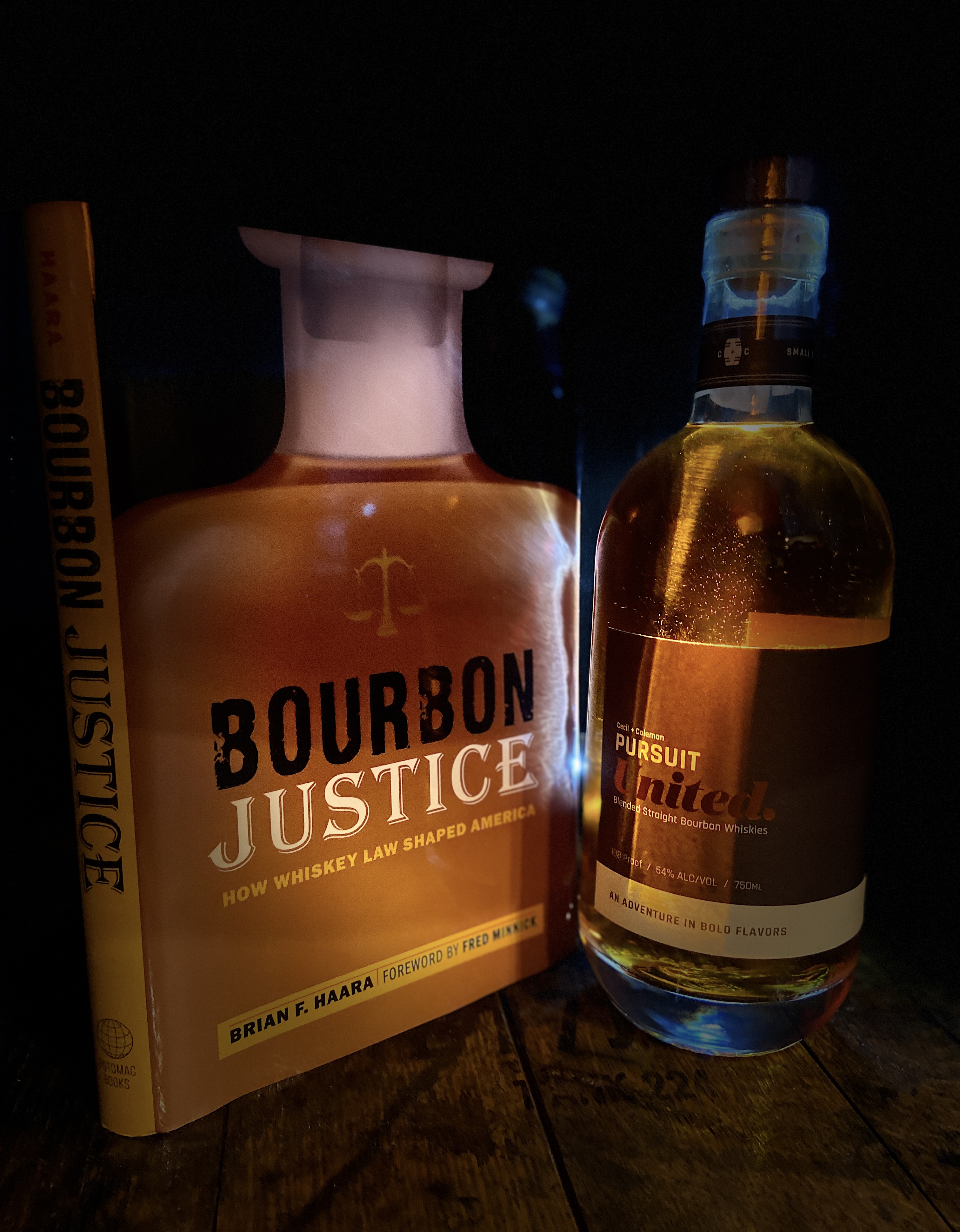
For your business partner: Bourbon Justice and Pursuit United because partners Kenny Coleman and Ryan Cecil are showing everyone how to do it right. You’ll show yourself to be the creative brain of the operation.
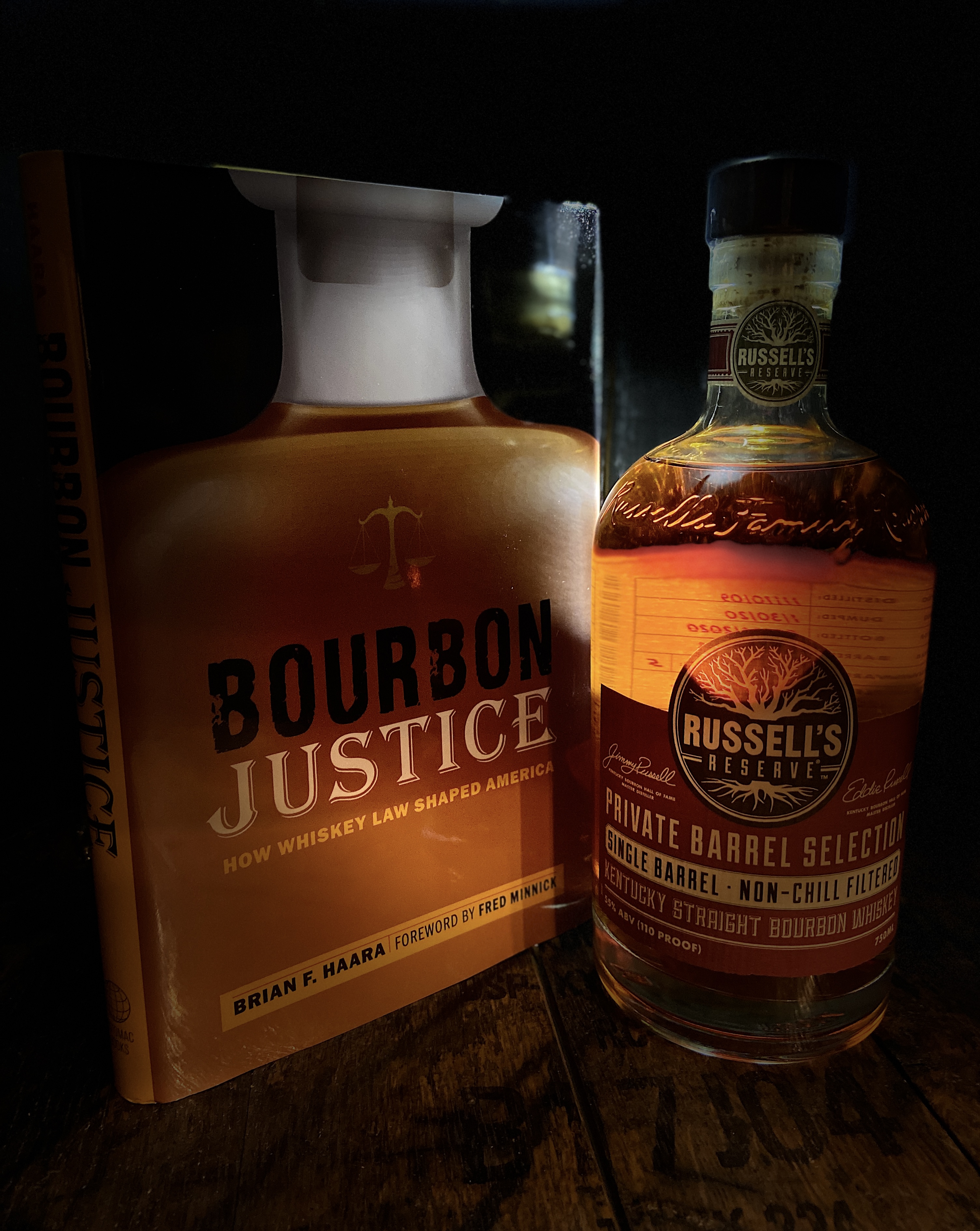
For your impossible family member: Bourbon Justice and Russell’s Reserve by Wild Turkey. Lord knows that we need to get back to solid roots and there’s hardly anything as solid as Jimmy Russell, Mater Distiller at Wild Turkey since 1954. Jimmy has been the heart and soul of Wild Turkey and he can tell you all about family.
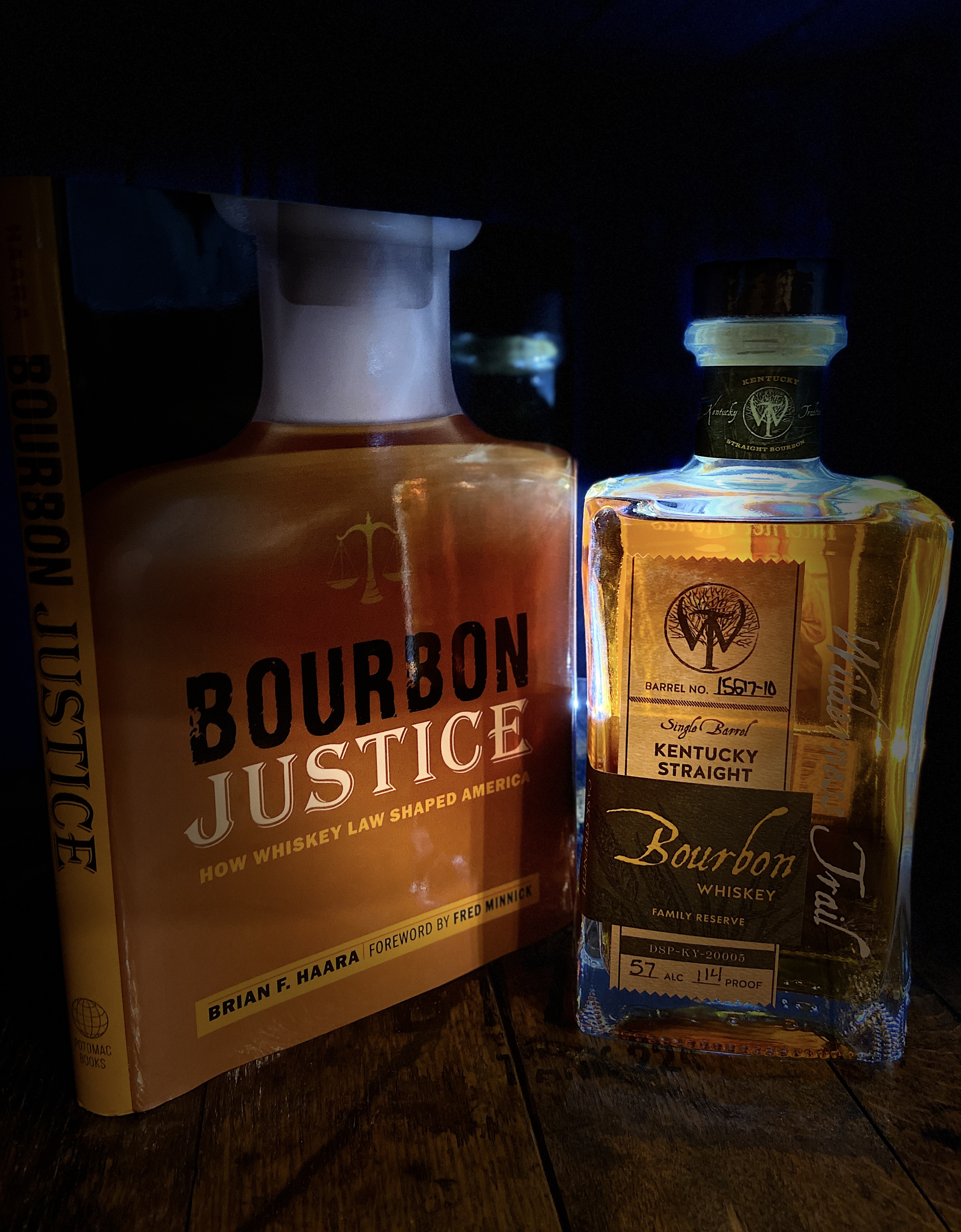
For a host/hostess: Bourbon Justice and Wilderness Trail. Shane and Pat’s authenticity is evident in every bottle of Wilderness Trail, and your host will appreciate the low barrel entry proof sweet mash far more than that bottle of white wine that keeps getting regifted. Step up with the most memorable gift of the evening.
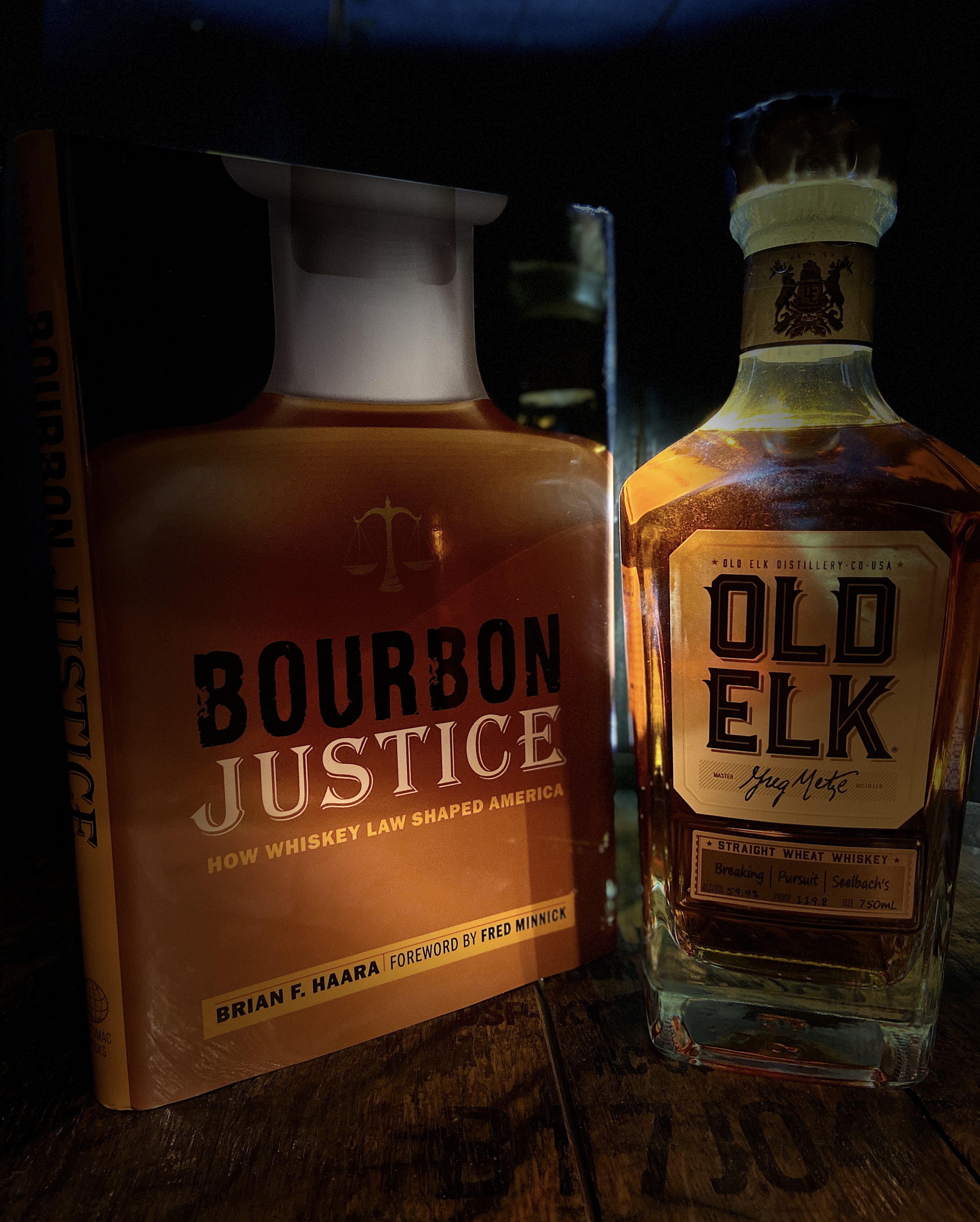
For your boss or other authority figure: Bourbon Justice and Old Elk. There may not be a distillery with a more diverse offering than Old Elk, with Bourbon, Rye, wheat whiskey, wheated Bourbon, barrel finished Bourbon, and more, giving you the opportunity to nail the perfect gift to showcase your wisdom. That sensibility and personalization will show that you are a crucial part of the team.
Where to find Bourbon Justice:
Best deal: Bourbon Justice is on a 50% off sale through Potomac until Dec. 31 with promotion code 6HLW22 — use this link: Potomac.
Fastest Shipping: Amazon is tough to beat — you know the drill: Amazon.
Signed by me: Visit A Taste of Kentucky in person or online for a signed book or tell them that you’d liked it personally inscribed and I’ll make it happen. They ship anywhere.
Please enjoy the Holidays responsibly!
Sipp’n Corn Tasting Notes – Yellowstone Select Landmark Edition

I’ve been a big fan of most of Steve and Paul Beam’s limited edition Yellowstone bourbon releases, and I’ve had an excellent private selection, but until now I haven’t really had their standard releases. I suppose that the “Landmark Edition” release isn’t exactly standard, at least insofar as this series of six bottles celebrates the 150th anniversary of the Yellowstone Bourbon brand with different scenes from the national park that inspired the brand.
But it’s probably the same bourbon used for the standard releases. I reached out to the brand manager for information about the bourbon itself. I asked for the mash bill; the age/ages contained in this small batch; and whether the blend included bourbon distilled at Limestone Branch, Lux Row, or perhaps a third area distillery that everyone knew was the source for Lux Row (or some combination). Unfortunately, despite several requests, I got nothing back.
I suppose sometimes it can be better to not know the source, but I’m still interested to see how Limestone Branch and Lux Row are coming along.
Bourbon: Yellowstone Select Kentucky Straight Bourbon Whiskey
Edition: Landmark Edition celebrating Yellowstone’s 150th Anniversary
Distillery: Unknown
Age: Unstated
ABV: 46.5% (93 proof)
Cost: $42.99
Tasting Notes
Appearance:
Light amber.
Nose:
Classic caramel with baking spice and nuttiness, along with faint orange zest and maybe some toasted marshmallow.
Taste:
More classic bourbon notes as predicted by the aromas: caramel and vanilla, baking spice, and a fair oak note, but young green oak. I lost the citrus but gained light fruit. This hits many of the marks without really exceeding any expectations.
Finish:
Crisp finish of oak and black pepper with a quick hit of heat.
Bottom Line
This is a nice standard bourbon, although too short on the finish. There’s no particular pizzazz and it doesn’t necessarily stand out, especially in the crowded $40-$50 range, where there are some absolute stunners. In contrast, every bottle from Limestone Branch has been beautiful, and some have been stunning. I have faith in Steve and Paul that the contents will one day match that beauty.
Disclaimer: The brand managers kindly
sent me a sample for this review,
without any strings attached.
Thank you.
Sipp’n Corn Review – Blind Barrel Tasting Kit
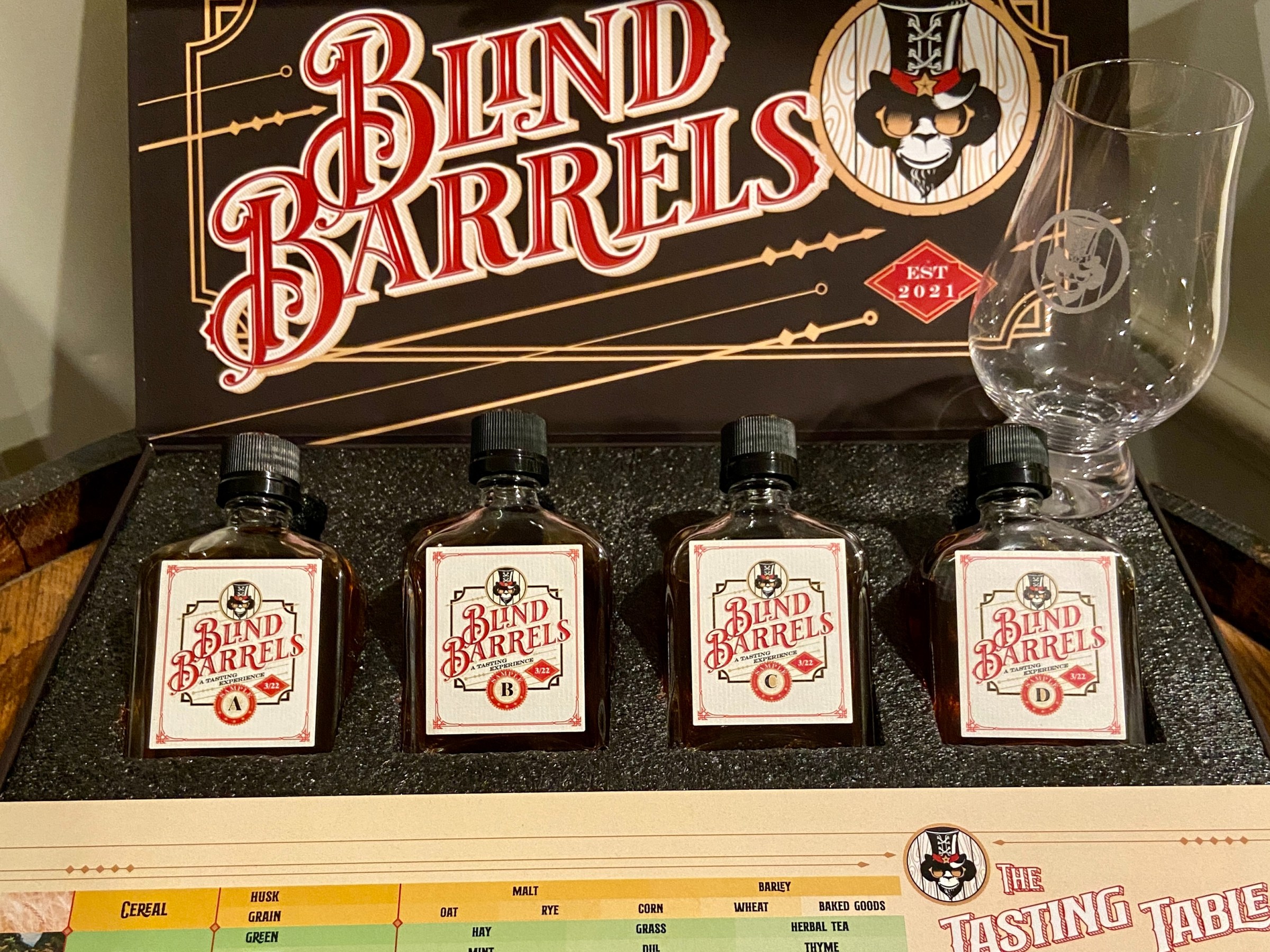
I’ve always encouraged blind tastings. Most often it’s fun when you’re trying new bourbons, but it’s also a fantastic way to get real with a brand that you think is your favorite and to mix in a brand that you claim to not like so much. Blind tastings are, to put it paradoxically, eye-opening.
But it’s sort of impossible to do a blind tasting without help… Until now.
The Blind Barrel Tasting Kit from Blind Barrles provides the samples for a blind tasting for you with a subscription kit on a quarterly basis. The kit includes four 50 ml samples of craft whiskey brands, providing an opportunity to try new products instead of blind adherence to what you think is your favorite brand. And then when you fall in love with a new brand, scan the QR code for the reveal and you can order a bottle.
It ends up costing about $15 per sample which is reasonable not just for the variety and exposure to new whiskey, but economically for a “try before you buy” mindset. For my four samples, I ended up with a four grain bourbon that struck me as having lots of green wood and too herbal for my liking; a sweet, nutty bourbon that was creamy with a great cinnamon kick (it ended up being Kings County!) that I enjoyed tremendously; a wheat whiskey finished in Sherry casks that was heavy on the barrel finish in a balanced, layered way; and a Rye that stood out immediatley as a powerhouse Rye, although on the verge of too much pine for me. Other than Kings County, I had never had these brands (and hadn’t even heard of two of them), so I’ll keep the secret so as to not influence your guesses. I would buy two of these in a heartbeat, and I’d consider the Rye, so those are really nice odds.
Check out https://blindbarrels.com/ for the holiday season or just for fun. You’ll find the typical few usual suspects states who don’t like shipping, but fulfillment partners can deliver to 42 states, which is likely to have you covered.
Disclaimer: The brand managers kindly
sent me a sample for this review,
without any strings attached.
Thank you.
Sipp’n Corn Tasting Notes – Fortuna Kentucky Straight Bourbon Whiskey.
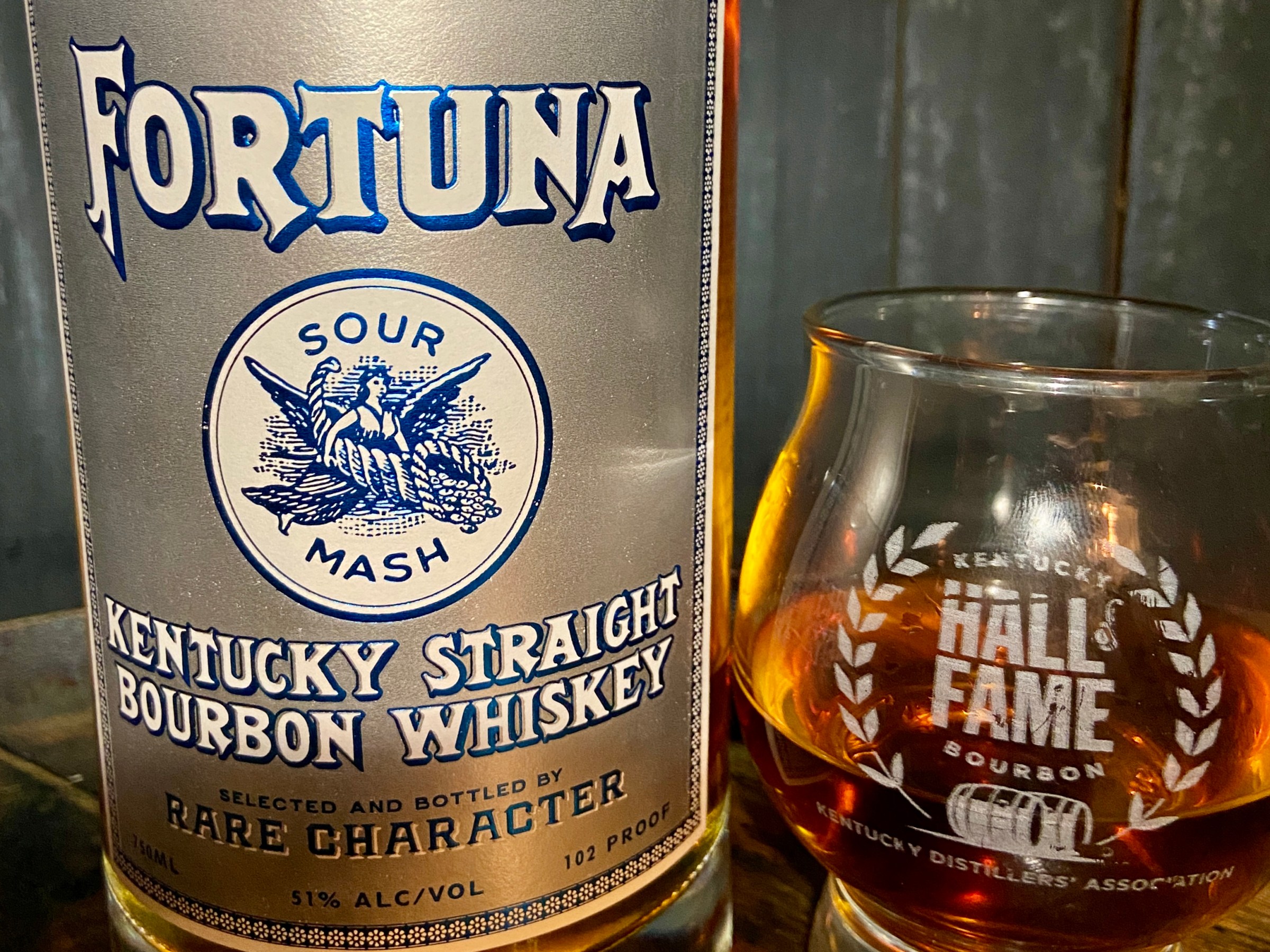
There’s a new resurgence of Old Fortuna, the historic Kentucky Bourbon brand dating back to the late 1800’s. Its first release is a small batch of just six barrels aged at least six years and bottled at 102 proof.
Fortuna was a popular brand from the late 1800’s until the midcentury downturn for bourbon, when the distillery closed. It was started by a name well-known in Louisville—the Hollenbach family. Phillip and Louis Hollenbach founded Hollenbach Bros. in 1877 and by 1882, they were blending whiskey with the Stitzels at the Glencoe Distillery for the Old Fortuna and Glencoe brands. Business was good enough that they bought the Glencoe Distillery in 1902. Prohibition shut them down, like so many other distilleries, but at least there was still medicinal whiskey. After Repeal, they built a new Glencoe Distillery and sustained Fortuna’s popularity.
Now the brand has been revived by Rare Character with a throwback label and the all-important “Kentucky” designation as its state of distillation.
Fortuna Tasting Notes
Whiskey: Fortuna Kentucky Straight Bourbon Whiskey
ABV: 51% (102 proof)
Cost: $84.99
Nose:
The caramel hits first with oak… It has some familiarities but I’m not taking a guess just yet. I get graham cracker, brown sugar, vanilla, and a more oak and rye than I had expected.
Taste:
The palate is incredibly balanced with the flavors just as predicted by the aromas. The same sweet flavors of caramel, brown sugar, and vanilla complement oak, black pepper, rye, and tobacco as a late arrival. The sweetness shifts to a bit of crème brûlée with cherries and citrus zest. It has flavor for days.
Finish:
The finish is long and classic Kentucky bourbon, not overly sweet, with a gentle warming swell.
Bottom Line
When historic brands are revived out of the blue, I tend to be suspicious. I have sales resistance. But then I tasted Fortuna…
The six-year age statement has to be coming in under the rule about having to use the youngest whiskey in the bottle because this drinks much older than a six-year bourbon. True to form, Rare Character knocks this one out of the park. I’m now curious whether anyone is better than Rare Character on getting access to prime barrels or being able to pick diamonds in the rough.
Disclaimer: The brand managers kindly
sent me a sample for this review,
without any strings attached.
Thank you.
Sipp’n Corn Tasting Notes: Elijah Craig 12-Year Barrel Proof 2022 (A122, B522, and C922).

After some wide variety in proof, the three 2022 batches of Elijah Craig Barrel Proof have established a trend of just over 60% ABV—A122 is 60.4%; B522 is 60.5%, and C922 is the highest at 62.4%. Actually, the last batch of 2021 (C921) started the trend with 60.1% ABV. I for one am happy to see these hover in a proof range of the low 120’s, and I’d like to see another one dip below 120.
But similarity in ABV has not meant similarity in flavors. C921 was sweeter and less oaky (I called it “beautifully sweet with rich dessert qualities”) while A122 was more classic Elijah Craig (I said that it had a “great balance of brown sugar, caramel apple pie, and a bit of cocoa, along with a building push of rye spice, black pepper, and oak”). Given the similarities for 2022 proofs, I thought that I’d revisit A122 and compare to B522 and C922.
Elijah Craig Barrel Proof A122 Tasting Notes
Bourbon: Elijah Craig Barrel Proof Kentucky Straight Bourbon Whiskey
Distillery: Heaven Hill
Age: 12 years
ABV: 60.4% (120.8 proof)
SRP: $59.99
Nose:
The aromas are classic Elijah Craig, known for caramel and oak, nuttiness, with vanilla and baking spice.
Taste:
Great balance of brown sugar, caramel apple pie, and a bit of cocoa, along with a building push rye spice, black pepper, and oak. It’s not a robust blast, but instead builds with complexity. This is all right down the middle of being on-profile for Elijah Craig, which is another way to say that it’s fantastic.
Finish:
Long, warm, consistent with the flavors and with the emergence of cinnamon to complement the caramel and oak.
Elijah Craig Barrel Proof B522 Tasting Notes
Bourbon: Elijah Craig Barrel Proof Kentucky Straight Bourbon Whiskey
Distillery: Heaven Hill
Age: 12 years
ABV: 60.5% (121 proof)
SRP: $59.99
Nose:
Woody aromas make me think of the hiking and camping season. There’s also vanilla and cola sweetness, but it’s mostly the woodiness, black pepper, and baking spice.
Taste:
Baking spice dominates the palate that overall is extremely consistent with the aroma. This is pure grandma’s kitchen with vanilla, allspice, clove, and cinnamon, but more like the buttered cinnamon and sugar toast. The spice is intriguing and warming.
Finish:
A long, warming finish that comes back full circle to the woodiness. Maybe just already miss fire pits and camping, but this is exactly what B522 has me thinking about.
Elijah Craig Barrel Proof C922 Tasting Notes
Bourbon: Elijah Craig Barrel Proof Kentucky Straight Bourbon Whiskey
Distillery: Heaven Hill
Age: 12 years
ABV: 62.4% (124.8 proof)
SRP: $69.99
Nose:
Like the first batch of 2022, the aromas of C922 are classic Elijah Craig with the same oakiness, nuttiness, baking spice, caramel, and vanilla. The proof is a bit more assertive than A122, however.
Taste:
The palate is also similar to A122, particularly with the creamy sweetness and brown sugar, but pretty quickly the spicier side asserts itself as a more robust bourbon. The black pepper, rye spice, and baking spice take charge with great oak influence. C922 also drinks the hottest of the three.
Finish:
Oaky, leather, drying, and long.
Bottom Line
The 2022 batches of Elijah Craig 12-Year Barrel Proof have many familial similarities and no outliers, as in some past years. They’re all more in line with the classic Elijah Craig profile and that makes it a little more difficult to rank them against each other, but overall A122 is my pick. Whichever one of these you find, as always they’re a strong buy.
Disclaimer: The brand managers kindly
sent me samples for this review,
without any strings attached.
Thank you.

