Brian Haara
Bourbon. Law. Author.
Sipp’n Corn Bourbon Review – Willett Pot Still Reserve Single Barrel
Update: in 2015 Willett quietly transitioned
Willett Pot Still Reserve from Single
Barrel to Small Batch
The Willett Distillery in Bardstown, Kentucky is an assumed name adopted by Kentucky Bourbon Distillers, Ltd. (“KBD”) in 2005 (The Willett Distilling Company was originally incorporated in September 1936). Well-known for bottling many different brands, its most recognizable brand on the shelf is its namesake Post Still Reserve, due in part to its unique bottle.
Willett Pot Still Reserve Kentucky Straight Bourbon Whiskey
Distillery: Undisclosed
Age: NAS
Proof: 94 proof
Cost: $37.99
Bottle No. 212 of 280 from Barrel No. 6477
Color:
Brown side of amber.
Nose:
Not hot. Woody, toffee, citrus, caramel, and plum flavors, and not particularly complex. The caramel increased with air or a splash of water.
Taste:
The flavors focused on the front of the tongue. There wasn’t any real heat at all, but there was certainly very nice warmth. Similarly, there was none of the common spicy pepper; and while it was very smooth, I wish that it showed me some bite.
Finish:
Incredibly warm (not hot) and medium finish. Flavors of oak and caramel dominated.
Rating:
I totally missed out on an epic tour and tasting last month because of work demands. So I knew that I had to try to make up for it with a bottle of Willett Pot Still Reserve Single Barrel. After a series of tastings, I realized that I should have bought this a long time ago.
This is also the second straight $37.99 bourbon that I’ve reviewed (see Rare Breed Review). So I feel compelled to compare this to Wild Turkey Rare Breed, although they are really two different styles of bourbon. Rare Breed packs more heat and has complex rye flavors which are missing in the Willett Pot Still Reserve, and in some respects I really missed the rye and the heat. But the Willett was so drinkable, and the warm finish really won me over. I rate both this Willett and the Rare Breed at 3.5 out of 5, but if I had to choose between the two, I’d choose Willett.
This is a great buy that I recommend drinking neat, but go elsewhere if you really want “the burn.”
Score on The Sipp’n Corn Scale: 3.5
The Sipp’n Corn Scale:
1 – Wouldn’t even accept a free drink of it.
2 – Would gladly drink it if someone else was buying.
3 – Glad to include this in my bar.
4 – Excellent bourbon. Worth the price and I’m sure to always have it in my bar.
5 – Wow. I’ll search high and low to get another bottle of this.

Sipp’n Corn Bourbon Review – Wild Turkey Rare Breed
* Update: This batch (WT-03RB) ended in spring 2014. The new Rare Breed batch is unnumbered and 112.8 proof.
Bourbon: Wild Turkey Rare Breed, 108.2 proof (barrel proof); a blend of Wild Turkey 6-, 8- and 12-year-old stocks. Batch No. WT-03RB.
Distillery: Wild Turkey, Lawrenceburg, Kentucky.
Cost: $37.99
Color:
Amber with an orange tint.
Nose:
Noticeable rye, but also vanilla and caramel sweetness.
Taste:
Rare Breed is smoother than many other bourbons of similar proof. It has a hint of citrus and big kick of spice. A splash of water opened up sweeter flavors like caramel, but you have to be cautious about over-diluting because the spice was too quick to disappear. A single large ice cube did just as well at bringing out the sweetness without sacrificing the spice.
Finish:
Long finish, with nice lingering rye heat.
Rating:
I finally went on the Wild Turkey tour last August. Getting to go into Warehouse A – built in 1890 over the Kentucky River – was a highpoint for me, but the tour of the modern distillery was a little sterile. I’ll definitely go back for the new visitor’s center, but my tour still ended in the tiny tasting room of the cramped old house that served as the visitor’s center. We got to choose three out of five offerings, which unfortunately did not include Kentucky Spirit. Of the five available, the two that I was most interested in were Russell’s Reserve 10-year and Rare Breed. Between the two, Rare Breed was my clear favorite. The nose of Rare Breed was better and the spice in Russell’s Reserve was a little prickly. So I knew that I needed to do a little more research with my own bottle of Rare Breed.
I was pleased to find that it was even better than I had remembered from the tour. Rare Breed has the heat, the flavor complexities and the finish that we’re all looking for. I tend to prefer some more fruit flavors to balance the spice, but I didn’t really miss those flavors here. Occasionally, however, there was some harshness and bitterness. That was usually tamed by a splash of water or a single large ice cube, but as noted above, there’s not much room for error before you over-dilute.
Maybe that’s why they say that Jimmy Russell recommends serving Rare Breed chilled from the freezer. He certainly knows more about bourbon than I’ll ever hope to know, but after several tastings, I still prefer my Rare Breed with a large ice cube in order to open up the sweeter flavors.
As so many more bourbons fly past the $50 mark and beyond, $40 is quickly becoming the new $30 in bourbon, and Rare Breed is knocking on the $40 door. Fortunately, there are several excellent bourbons still priced in the high $20’s and low $30’s; I just wish that Rare Breed was one of them. While it may be on the verge of overpriced, I highly recommend that you include a bottle of Rare Breed in your home bar.
Score on The Sipp’n Corn Scale: 3.5
The Sipp’n Corn Scale:
1 – Wouldn’t even accept a free drink of it.
2 – Would gladly drink it if someone else was buying.
3 – Glad to include this in my bar.
4 – Excellent bourbon. Worth the price and I’m sure to always have it in my bar.
5 – Wow. I’ll search high and low to get another bottle of this.

The Origin of Col. E. H. Taylor, Jr.’s Signature (As Told By Three Trademark Rulings).
If Dr. James Crow was the father of modern bourbon, then Col. Edmund Haynes (“E. H.”) Taylor, Jr. (1830-1923) is often viewed as the father of the industrialization of bourbon-making. Dr. Crow is largely credited with bringing his knowledge of chemistry to bourbon and with developing the sour mash process in the early 1830’s at the Old Oscar Pepper Distillery (later Labrot & Graham and now Woodford Reserve); see How Woodford Reserve got to keep the (old) name of its distillery). In contrast, Col. Taylor came from the business and banking side of bourbon, and he acquired his first distillery on the banks of the Kentucky River in 1869.
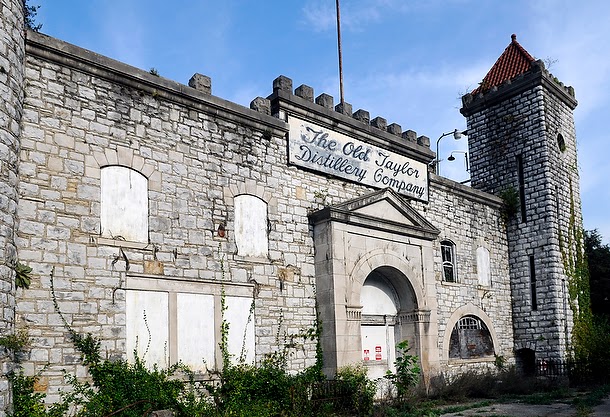
Col. Taylor christened his distillery the “O. F. C.” (“Old Fire Copper”) Distillery and there he produced the famous O.F.C. Whiskey brand. Later, after financial ups and downs, Col. Taylor sold his interest in O.F.C. and opened the Old Taylor Distillery with his sons in Woodford County. The Old Taylor Distillery has been out of operation for decades now, but is reportedly up for sale; here’s a picture if you’re interested:
The O.F.C. Distillery, and the adjacent distillery built by Col. Taylor, The Carlisle Distillery, enjoyed a better fate. They were operated by George T. Stagg, eventually became the Ancient Age Distillery, and are now Buffalo Trace.
But for my purposes, Col. Taylor also has the distinction of being one of the more litigious distillers. While many of the well-known (and now forgotten) brands may have a trademark case or contract dispute here and there, without much trouble, I found fourteen cases involving Col. Taylor and the “Old Taylor” or “E.H. Taylor, Jr.” brands. For the time being, I’ll stick with the most interesting series of court opinions that reveal the origin of Col. Taylor’s most distinguished trademark – his script signature:
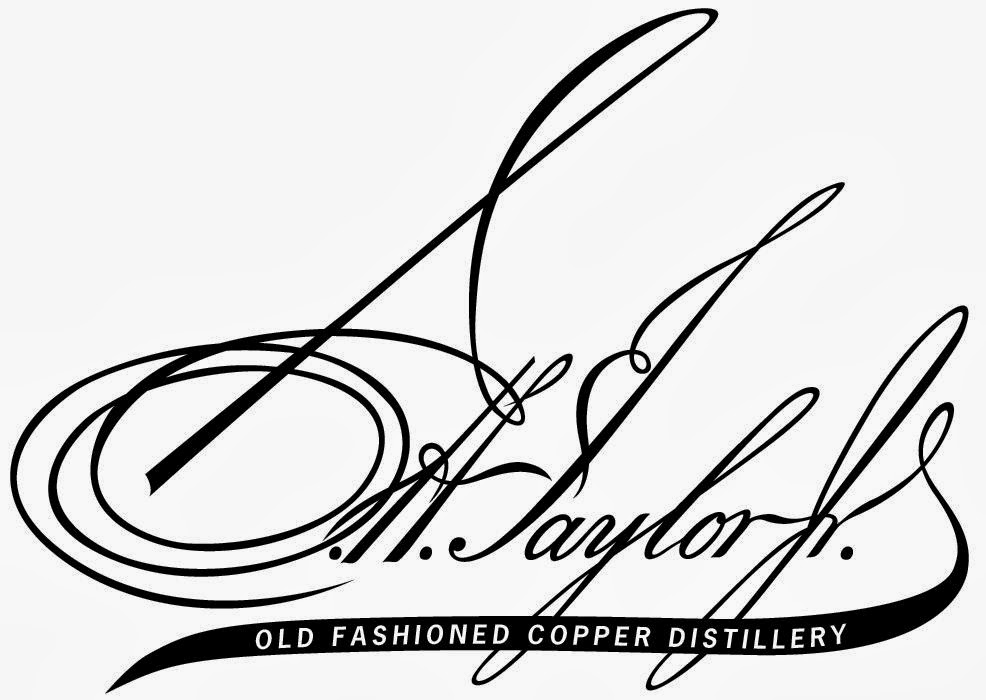
A trio of cases tells the story about this famous script signature and Col. Taylor’s contentious litigation against his former partner – the man who bailed him out of bankruptcy – George T. Stagg. The three cases are:
· Geo. T. Stagg Co. v. Taylor, 16 Ky.L.Rptr. 213, 95 Ky. 651, 27 S.W. 247 (1894);
· Taylor v. Geo. T. Stagg Co., 18 Ky.L.Rptr. 680, 37 S.W. 954 (1896); and
· Geo. T. Stagg Co. v. E.H. Taylor & Sons, 24 Ky.L.Rptr. 495, 113 Ky. 709, 68 S.W. 862 (1902).
The story begins with Col. Taylor’s financial ruin in 1877. After buying the O.F.C. Distillery in 1869, partnering with Gaines, Berry & Co. to operate the Old Oscar Pepper Distillery (and later buying it from James Pepper when Pepper went bankrupt), Col. Taylor was forced into bankruptcy himself in May 1877.
In December 1877, George T. Stagg, a St. Louis whiskey merchant and a large creditor of Col. Taylor, bought Col. Taylor out of bankruptcy by paying 20 cents on the dollar to the creditors. In exchange, beginning in January 1878, Stagg became the owner of the O.F.C. Distillery (which he kept and leased back to Col. Taylor) and the Old Oscar Pepper Distillery (which he sold to James Graham of Labrot & Graham). A year later, the success of Col. Taylor and Stagg allowed them to build The Carlisle Distillery next to O.F.C., and they continued to enjoy great success.
Stagg also took measures to protect the O.F.C. trade name and the business. He formed “E. H. Taylor, Jr. Company” in 1879 and registered the “O.F.C.” trademark. Stagg was the president and majority shareholder of the company, and Col. Taylor was the Vice President, apparently owning just a single share. Importantly, the trademark registrations focused on “O.F.C.” and not on the use of Col. Taylor’s name. In time, however, the use of Col. Taylor’s name became more and more prominent, finally resulting in the use, in 1880, of the well-known script signature.
The court summarized the evolution of using Col. Taylor’s script signature on O.F.C. bourbon. Col. Taylor (and Stagg) began by simply noting Col. Taylor’s name, as the distiller, in normal font under the O.F.C. brand name. By 1881, they used what the court characterized as “the well-known and striking autograph signature of E. H. Taylor, Jr., with a caution to the trade that such script was the test of the genuineness of O.F.C. and Carlisle whiskies in the market.” But did this script signature become part of a protectable trademark for Stagg?
Stagg and Col. Taylor parted ways toward the end of 1886, and effective January 1, 1887, the split was official. Stagg retained The O.F.C. and Carlisle Distilleries, and Col. Taylor was given the J.S. Taylor Distillery (operated by one of Col. Taylor’s sons) in Woodford County, which the E. H. Taylor, Jr. Co. had acquired in 1882.
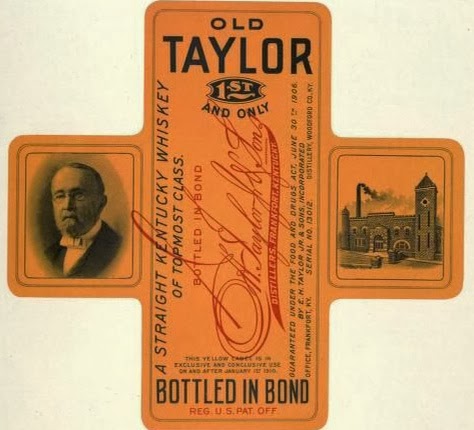
Col. Taylor immediately formed a partnership with his sons, again using his name for the name of the business: “E. H. Taylor, Jr. & Sons.” He renamed the distillery the “Old Taylor Distillery” and used the same script signature that he had used with his O.F.C. bourbon, except he added “& Sons,” as seen in this 1913 label:
In the meantime, Stagg, who formed the “George T. Stagg Co.” after his split with Col. Taylor, was in the process of making improvements to The O.F.C. and Carlisle Distilleries, and they remained idle for 18 months. When Stagg resumed production in January 1889, he started using Col. Taylor’s script signature, much to Col. Taylor’s dismay.
So Col. Taylor sued Stagg on October 16, 1889, asking for an injunction to stop Stagg from using the company name of “E. H. Taylor, Jr. Co.,” from using his script signature, and for damages. The trial court granted an injunction, and Stagg appealed. The 1894 opinion of the Kentucky Court of Appeals partially sided with Col. Taylor, and prohibited Stagg from using the script signature on any bourbon distilled after January 1, 1887 (because Col. Taylor wasthe distiller before that date).
In answering the question of whether the script signature became a trademark owned by Stagg, the court looked into the origin of the script signature, and noted the testimony of Col. Taylor and Stagg:
Stagg says that on one occasion, when Taylor was in St. Louis, the latter noticed a striking script signature on packages of imported brandy, and was impressed with the idea that the signature of the company, as written by him, would be appropriate, and look well on a barrel. Taylor suggested it. Stagg agreed with him, and it was done. … Taylor contends that it was a mere fancy with him, and was intended to show his personal identification with the distilling operations of the company.
The court then analyzed the actual trademark registration, which only emphasized “O.F.C.” as the essential feature. The name of Col. Taylor, the court held, merely identified him as the distiller, and the court expected any subsequent distiller’s name to be substituted for that of Col. Taylor. In fact, the court recognized that any continued use of Col. Taylor’s name as the distiller – after a time when he ceased to actually be the distiller – would have been improper.
But the court did not award any damages and it did not stop Stagg’s use of the corporate name. Col. Taylor wasn’t satisfied with just the injunction, however. He wanted damages, so he asked the court to reconsider its decision about damages. In 1896, the Kentucky Court of Appeals again rejected the damages claim, and maybe in an effort to push back on Col. Taylor, the Court noted that its 1894 ruling in his favor “was with some reluctance.”
Col. Taylor remained persistent, and he continued to push the issue of damages with the lower court, where he won on the issue and was awarded damages. Undaunted himself, Stagg appealed to the Kentucky Court of Appeals, where in 1902 – after nearly 13 years of litigation – Col. Taylor finally lost the damages issue for good. His loss might have been predictable given the Court’s 1894 brush-back, but the history of Col. Taylor shows that persistence was certainly one of his character traits.
So even though it started as a mere “fancy,” the E. H. Taylor, Jr. script signature is now one of the most recognizable trademarks among all bourbons. I suppose 13 years of litigation is worth 130 years (and going strong) of trade recognition.

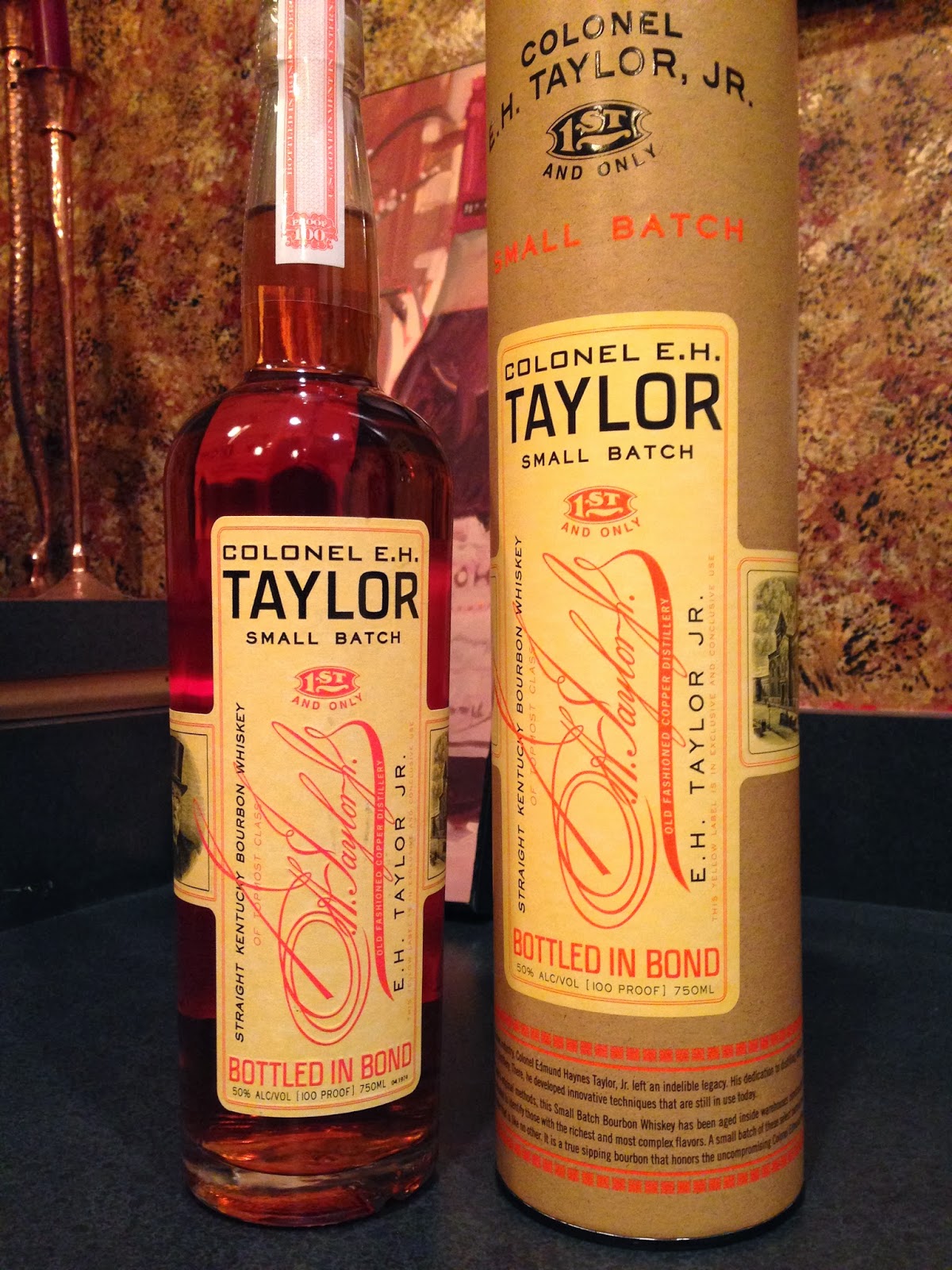
Sipp’n Corn Bourbon Review – E. H. Taylor, Jr. Small Batch Bottled in Bond
Bourbon: E. H. Taylor, Jr. Small Batch Bottled in Bond, 100 Proof
Distillery: Buffalo Trace
Cost: $39.99
Color:
Reddish-amber; darker than many other bourbons of this approximate age.
Nose:
Initial alcohol sting on the nose, but followed by caramel, corn grain, and oak. The nose opens up with a splash of water (and loses the sting) and brings lots of vanilla.
Taste:
Caramel, burnt sugar, clove, and tobacco. With a splash of water the clove came out even more, along with black licorice. I didn’t really detect any fruit, corn or hot spices. The clear focus is on earthy flavors, but there’s great balance with sweeter candy flavors like butterscotch, caramel and toffee. Great warmth without being hot.
Finish:
Medium finish, with medium warmth, caramel, oak and more clove.
Rating:
If any brand deserves a mention about “Bottled in Bond,” E. H. Taylor, Jr. is it. Col. Taylor, who was a politician and banker in addition to being the father of the industrialization of Bourbon, was instrumental in passing the Bottled-In-Bond Act of 1897, meant primarily to protect the public against the “horrors” of whiskey rectifiers. The act required that any spirit labeled as “Bottled-in-Bond” be the product of one distiller at one distillery during one distillation season, and aged in a federally-bonded warehouse under federal government supervision for at least four years and bottled at 100 proof.
I’ve been researching Col. Taylor and his penchant for litigation (new post coming soon), so I thought that the least I owed to the brand and this history was a bottle. Thankfully, there’s no representation that this Bourbon is the same recipe as Col. Taylor used; in fact, it uses the standard Buffalo Trace mash bill #1, which is shared with the Buffalo Trace brand, Eagle Rare, George T. Stagg, Old Charter, and Benchmark. And this bourbon gets extra style points for being aged in the very same warehouse (Warehouse C) built by Col. Taylor in 1881, despite all of ownership changes of the old “O.F.C.” Distillery and the ownership of the Taylor brand over the years.
Despite the legitimate history of this brand, taste is still subjective, and I’m not particularly a fan of bourbons that focus on the earthy flavors to the exclusion of fruit and spice. I was also hoping for more from the finish. E.H. Taylor, Jr. Small Batch is extremely drinkable, but overall I thought that the clove and earthy tones overpowered the other flavors that I wanted to find (although it was certainly nicely balanced with butterscotch, caramel, and toffee flavors). It’s still unseasonably warm and muggy here in Louisville, so maybe that’s why my palate was looking for more fruit or spice, but I can’t wait to try E.H. Taylor, Jr. Small Batch again in a few months when it’s 20 degrees outside and I’m sitting next to a warm fire.
Score on The Sipp’n Corn Scale: 3.0
The Sipp’n Corn Scale:
1 – Wouldn’t even accept a free drink of it.
2 – Would gladly drink it if someone else was buying.
3 – Glad to include this in my bar.
4 – Excellent bourbon. Worth the price and I’m sure to always have it in my bar.
5 – Wow. I’ll search high and low to get another bottle of this.
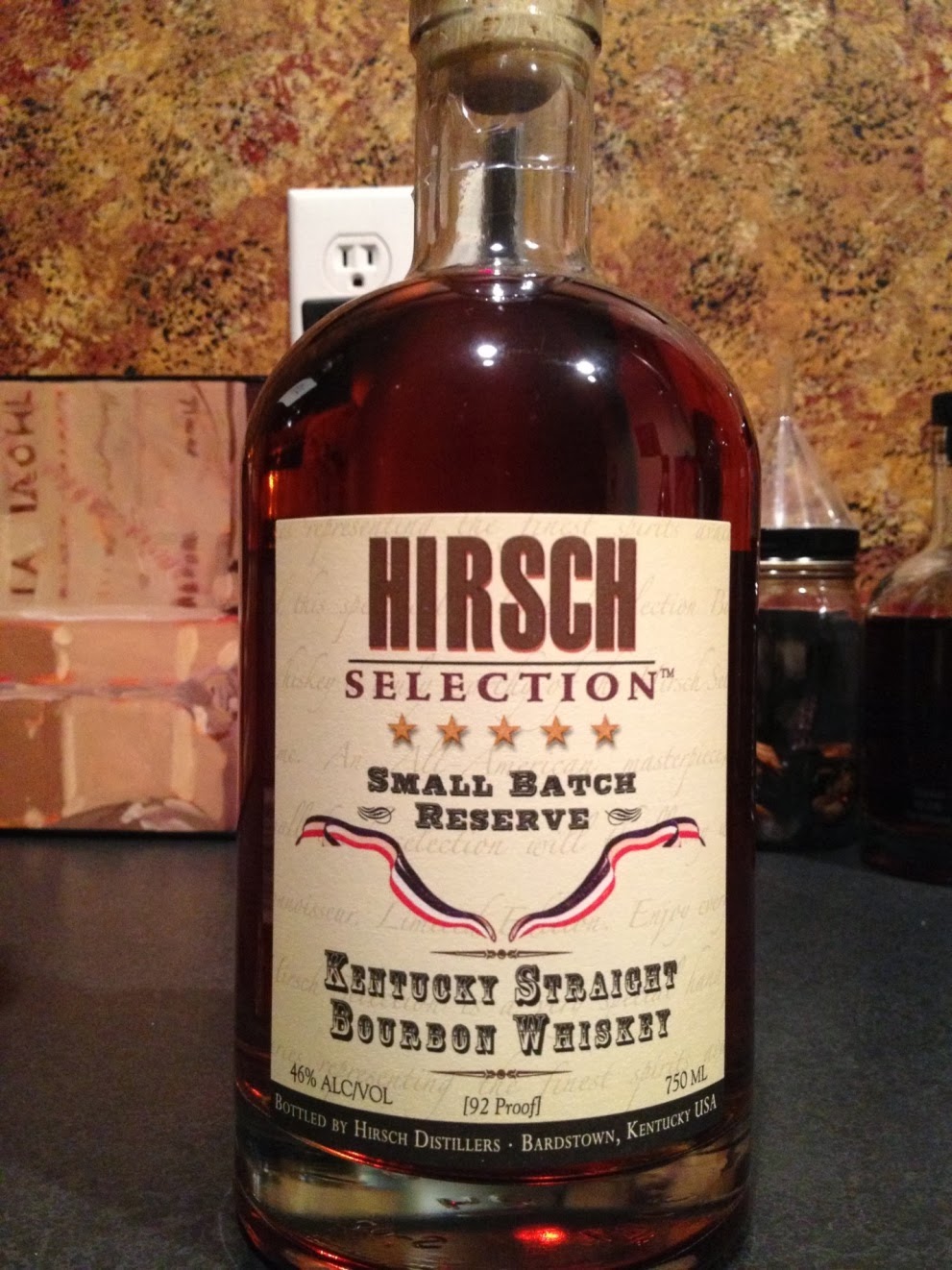
Sipp’n Corn Bourbon Review – Hirsch Selection Small Batch Reserve
Bourbon: Hirsch Selection Small Batch Reserve, 92 Proof
Distillery: Who knows? It’s sourced. When it comes to Hirsch, Anchor Distilling Company is a Non-Distiller Producer (“NDP”). And Anchor isn’t telling. (Style points deduction.)
Cost: $35.99
Color:
Light amber.
Nose:
Smooth and subtle.
Taste:
Balanced vanilla, cinnamon and caramel.
Finish:
Medium and very pleasant, but not complex.
Rating:
The older offerings with a Hirsch label – the real thing labeled “A.H. Hirsch” and which you can’t find or afford – get all of the attention. And so far as I can tell, when the Hirsch Selection Small Batch Reserve does get attention, it has ranged from lukewarm to outright pummeling, with the notable exception being the recent review from my friends at Fork & Stave (which gave it a 3 out of 5; read it at Fork & Stave Review).
No doubt the Hirsch Selection Small Batch Reserve can’t hold a candle to the fabled A.H. Hirsch 16-year and older releases that I’ve only read about. It’s simply not the same bourbon that was distilled in the spring of 1974 at the Pennco Distillery in Schaefferstown, PA by Adolph Hirsch, a former Schenley executive.
Many of the reviews that I’ve read on Hirsch Selection Small Batch Reserve criticize it for not being up to par with the older genuine A.H. Hirsch bourbons. But what is? And should anyone really expect it to be when Hirsch Selection Small Batch Reserve sells for about $35.00, compared to the reported astronomical prices for whatever is left of the A.H. Hirsch? I can’t compare it to the A.H. Hirsch bourbon, so hopefully my clean slate helps.
Or maybe Hirsch Selection Small Batch Reserve is criticized because it’s from a NDP which happens to own a famous name brand, and is trying to make a buck from heritage that it doesn’t really have. Fair enough. (See the Old Pogue story from 100 years ago where this would have been considered fraud.) But as many others have proven, sourced bourbon can be awesome.
When you look at Hirsch Selection Small Batch Reserve against its price-range peers, it’s a top-contender. It also, somewhat to my surprise, was the unanimous favorite in the very first Sipp’n Corn blind tasting event when paired with Four Roses Small Batch and Maker’s Mark, and it tied with Four Roses Single Barrel in the second blind tasting event.
Overall, Hirsch Selection Small Batch Reserve really strikes me as a beginner’s bourbon. Maybe that’s what some aficionados really find offensive about it. It’s smooth, very drinkable, and not overly complex. There are plenty of other less expensive bourbons that new bourbon fans should try (like Maker’s Mark, Four Roses “Yellow Label” and the terrific W.L. Weller 12-Year, just to name a few), but Hirsch Selection Small Batch Reserve is also a fine place to start, and it’s great to keep in your home bar for a relaxing drink or for friends who don’t consider themselves bourbon fans (yet).
Score on The Sipp’n Corn Scale: 3.5
The Sipp’n Corn Scale:
1 – Wouldn’t even accept a free drink of it.
2 – Would gladly drink it if someone else was buying.
3 – Glad to include this in my bar.
4 – Excellent bourbon. Worth the price and I’m sure to always have it in my bar.
5 – Wow. I’ll search high and low to get another bottle of this.