Brian Haara
Bourbon. Law. Author.
Sipp’n Corn Tasting Notes: Heaven Hill Hat Trick—Parker’s Heritage Collection 12th Edition, Old Fitzgerald 9-year, and Heaven Hill 27-year Small Batch
Bourbon Heritage Month is right around the corner, and what better way to prepare than with three samples of highly-anticipated limited editions from Heaven Hill?
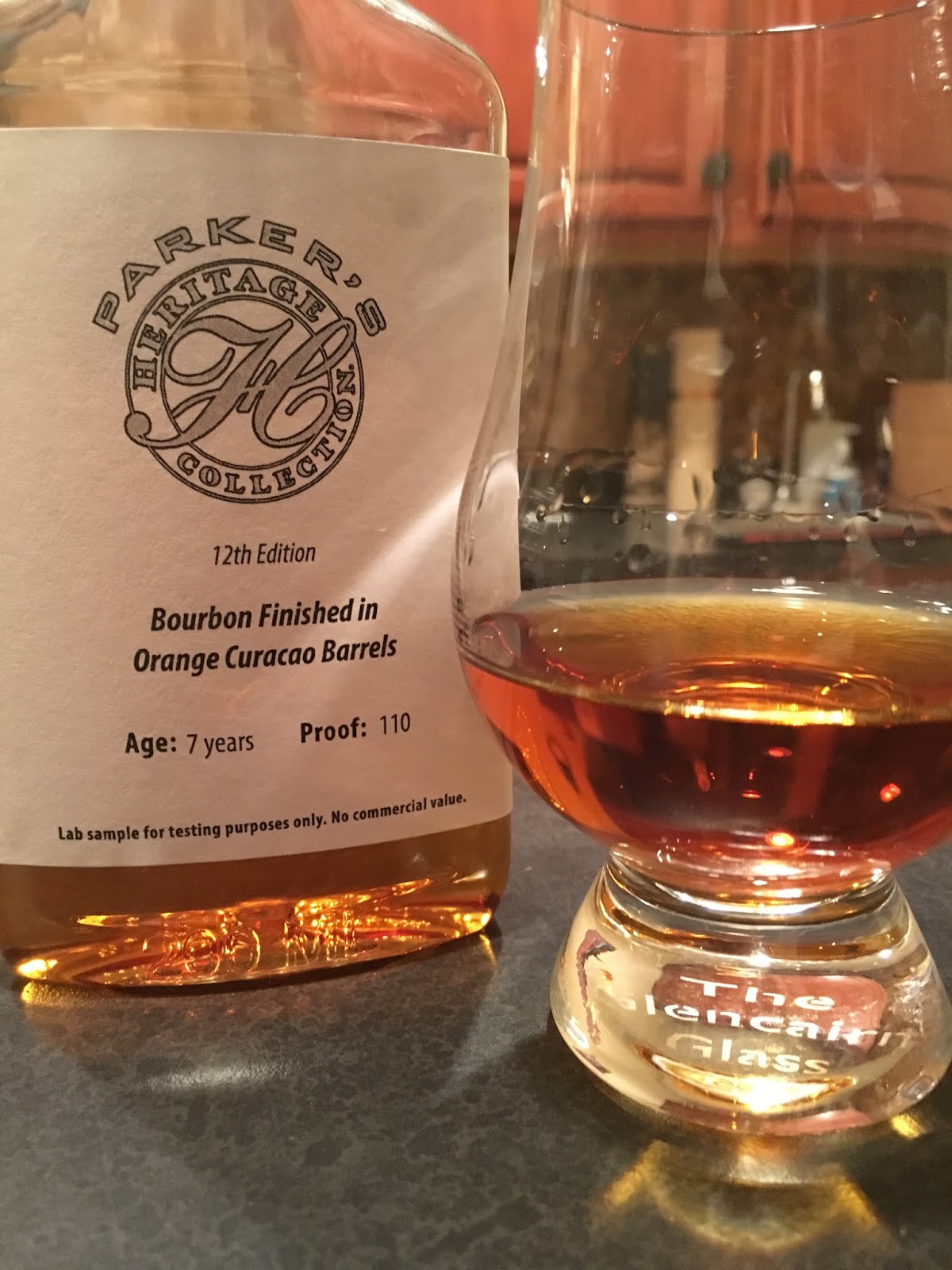
First, Heaven Hill continues to honor its late Master Distiller Emeritus Parker Beam while also continuing to support ALS research and patient care with the 2018 release of Parker’s Heritage Collection, now in its 12th edition. This year Heaven Hill used bourbon aged seven to eight years on upper floors—meaning that temperature extremes may have sped along the aging process and that proof would have increased from the 125 barrel-entry proof—and then finished for four months in French orange curaçao liqueur barrels. (When orange liqueur was gaining popularity in the 17th Century, an orange found only on the Caribbean island of Curaçao was a favorite.)
 Second, Heaven Hill is releasing the second edition of it Old Fitzgerald Bottled-in-Bond decanter series inspired by a 1950’s decanter and using the type of tax strip from a bygone era before the Bottled-in-Bond regulations were relaxed. As usual, Old Fitzgerald uses wheat as its secondary grain. This edition was aged for nine years.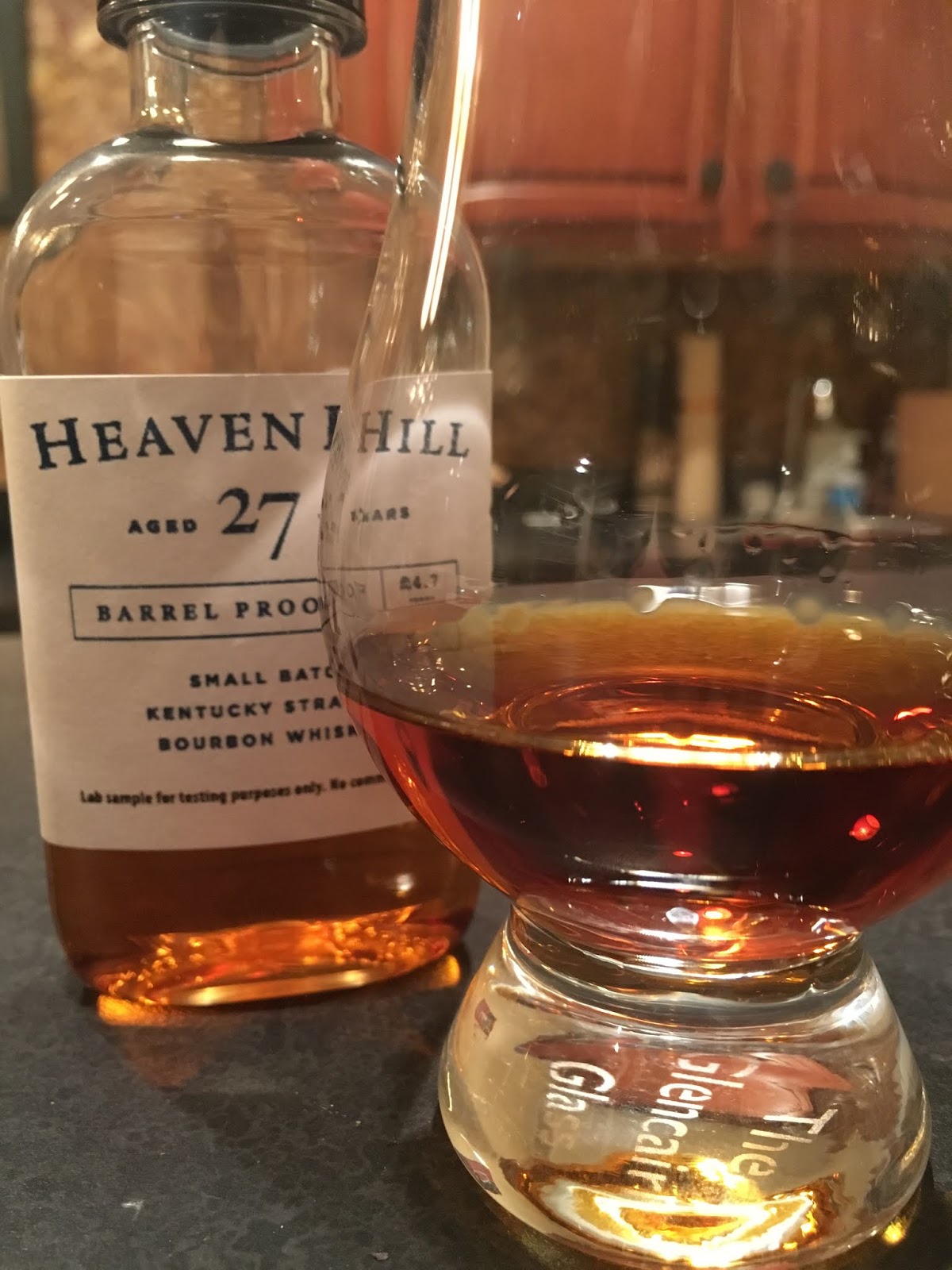
Third—and already a hot topic—is a small batch offering of jaw-dropping 27-year old bourbon. This bottling is truly rare not just because of the extraordinary age, but because it was distilled at Heaven Hill’s old distillery in Bardstown (DSP-KY-31) before it was destroyed by fire in 1996. The bottling consists of only 41 barrels that suffered extreme angel’s share loss over nearly three decades of aging (as expected), resulting in fewer than 3,000 bottles for the release. Just as remarkable, this small batch was bottled at barrel proof, which was only 94.7 proof due to having been aged on low floors. With a fancy custom box to boot, this release has all of the trappings of a true limited edition.
Parker’s Heritage Collection Tasting Notes
|
Bourbon:
|
Parker’s Heritage Collection, 12th Edition (2018) Kentucky Straight Bourbon Whiskey finished in orange curaçao liqueur barrels
|
|
Distillery:
|
Heaven Hill, Bardstown, Kentucky (distilled in Louisville and aged in Bardstown)
|
|
Age:
|
7-8 years (before finishing)
|
|
ABV:
|
55% (110 proof)
|
|
Cost:
|
$89.99
|
Appearance:
Golden brown with a glint of red.
Nose:
I’ve never smelled an orange blossom, but I imagine that it would smell exactly like this. Sweet floral and orange zest.
Taste:
I didn’t know what to expect—other than orange—but I was very pleasantly surprised. There’s a distinct brandy-esque sweetness under an orange backbone. It’s unmistakably orange, but more like a milk chocolate orange cream from a fine chocolatier, with light sweet fruit and basil, giving it a refreshing quality.
Finish:
Curaçao drove the medium-length finish, which would have been outstanding if it could have shifted to dry oakiness and spice, but it didn’t get past floral sweetness.
Old Fitzgerald Bottled-in-Bond Decanter Tasting Notes
|
Bourbon:
|
Old Fitzgerald 2018 Limited Edition Bottled-in-Bond Kentucky Straight Bourbon Whiskey (2nd edition)
|
|
Distillery:
|
Heaven Hill, Bardstown, Kentucky (distilled in Louisville and aged in Bardstown)
|
|
Age:
|
9 years
|
|
ABV:
|
50% (100 proof)
|
|
Cost:
|
$89.99
|
Appearance:
Copper (lightest of the three samples).
Nose:
Old barn, grasses, caramel, brown sugar, fresh bread, oak, and more complexity that I couldn’t quite put my finger on. I really enjoyed the aromas.
Taste:
Out of the gate with strong caramel—which hadn’t dominated the nose—balanced with the right amount of oak and vanilla, followed by a transition to pepper spice. This bourbon checks all of the boxes for me.
Finish:
Long, with a big warm hug.
Heaven Hill 27-Year-Old Barrel Proof Tasting Notes
|
Bourbon:
|
Heaven Hill 27-Year-Old Barrel Proof Small Batch Kentucky Straight Bourbon Whiskey
|
|
Distillery:
|
Heaven Hill, Bardstown, Kentucky (distilled in Bardstown pre-fire at DSP-KY-31, and aged in Bardstown)
|
|
Age:
|
27 years
|
|
ABV:
|
47.35% (94.7 proof)
|
|
Cost:
|
$399.00
|
Appearance:
Brown, of course, but somehow I’ve seen darker in younger bourbon.
Nose:
Oak, of course, but also aromas of tobacco, old leather, old library, and all of those fantastic old oak aromas. There’s some earthiness and a prickle of black pepper. I love the aroma of these extra-extra-aged bourbons.
Taste:
Oak, of course, but not an “oak bomb” in my experience. I’ve had those puckering experiences, and while indisputably oaky, this is nowhere near one-dimensional. There’s a layer of dark (really dark) chocolate and dried dark fruit followed by flavors of black pepper, clove, espresso, and rye toast to round out a dry bourbon that makes me yearn for slow sipping around a fall campfire.
Finish:
Mid-long that builds very slowly, nearly to a gear shift, and then gentle lingering. It’s oak-driven and dry with enjoyable warmth.
Bottom Line
I’m glad to have these samples because chances are that I’ll get shut out at retail on all three. I’d buy all three though, and given the opportunity, I’d back up the proverbial truck for the Old Fitzgerald.
 As much as the Old Fitzgerald Bottled-in-Bond 9-year hits all of the high points for what bourbon should be—and should therefore have wide appeal—the Parker’s Heritage Collection and the Heaven Hill 27-year are geared toward niche crowds. The orange citrus zest flavors of Parker’s Heritage Collection might put off folks who consider themselves bourbon purists, and the prominent oak backbone of the 27-year old (not to mention the steep price) will get other folks to run out for something sweet like Larceny. Whatever your personal preference, you’ll have at least one of these on your hunting list this fall.
Disclaimer: The brand managers kindly sent me samples
for this review, without any strings attached.
Thank you.
Sipp’n Corn Book Review—Mead: The Libations, Legends, and Lore of History’s Oldest Drink by Fred Minnick.
 I was hooked from the opening pages of Mead: The Libations, Legends, and Lore of History’s Oldest Drink, Fred Minnick’s seventh book. Fred launches in pure storyteller fashion with rich visual elements: “They looked like your typical Brooklyn bartenders: handlebar mustaches, pink hair, leather aprons, and tattoos—lots of tattoos. They muddled mint, juiced limes, pinched nutmeg in empty glasses, clanked tin shakers with rhythmic precision, and poured fragrant libations into ice-filled glasses.” I was transported as Fred slowly but surely warmed up to the mystery around the bend—mead.
I’m a product of Scandinavians and Poles, so by all rights my DNA should already predetermine me to be a mead expert. I knew that my Viking and reindeer-herding Swedish and Finnish ancestors would have loved their mead, but I was surprised to learn that my Polish ancestors were just as much a part of mead’s history as their drinking buddies to the far north. (The history buff in me was also excited to see—in a mead book no less—Polish and American-Revolution hero Tadeusz Kościuszko finally get some long-deserved love.)
But in reality, I’m less than a novice when it comes to mead; I’ve never had mead.
That will change this week now that I’ve finished the book. And I’ll have an appreciation for it that I never knew existed. Fake honey, true terroir, memorable personalities, real history, and traditional and varied techniques all give mead’s story similarities to the stories Fred has already told about bourbon and rum. Mead even has a focus on using good water, fermentation, and yeast, so I was right at home with my bourbon frame of mind.
Fred is a spirits expert but the reason that he’s an award-winning author is on full display in Mead with his vivid stories interspersed with technical aspects of how to make mead, history lessons, and recipes. Join me in experiencing mead for the first time by ordering here or find it at your favorite bookstore. Cheers!
Bourbon takes on the L&N Railroad—two titans of the late 1800’s, a fire-breathing locomotive, and bourbon set ablaze…
Not many industries could compete with railroad companies after the Civil War through the early 1900’s. Railroads had reputations for using their power to price-gouge farmers, for otherwise being ruthless and greedy, and for having a wanton disregard for public safety. The public started pushing back with the Interstate Commerce Act of 1887, which was designed to regulate the monopolies that the railroad industry had enjoyed, and laws were also passed to require certain safety equipment on locomotives and cars. One such type of safety equipment was a “spark arrestor,” which was fitted inside smokestacks to prevent sparks, cinders, flames, and other flammable material from catching trackside brush and trees on fire. Smokestacks ballooned into their memorable shapes for larger and better-performing spark arrestors, until coal took over as the fuel of choice.
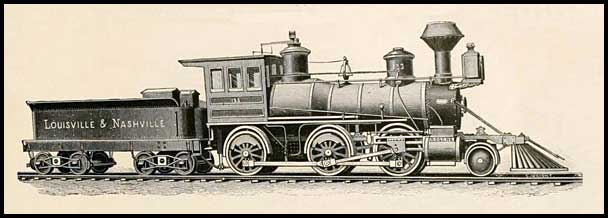
At the same time, by the late 1800’s, the bourbon industry was booming and industrial distillers exerted their own influence, at least in Kentucky, although the railroad industry was, of course, bigger and wielded more power and clout. The two titans came head-to-head when a Louisville & Nashville Railroad locomotive started a fire on June 9, 1897 at the original T.W. Samuels distillery in Deatsville, Kentucky, as recounted in Louisville & Nashville Railroad Co. v. Samuels’ Executors, 57 S.W. 235 (Ky. 1900).
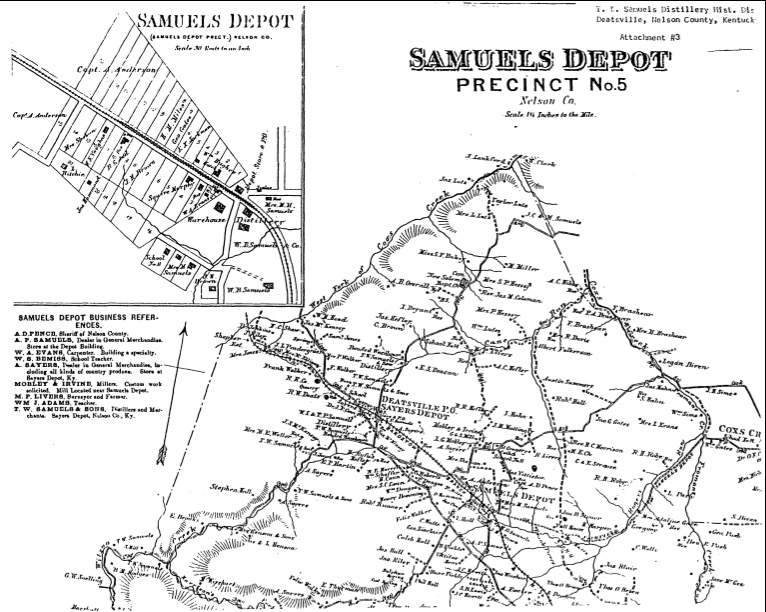 T.W. Samuels built a small warehouse at his distillery in 1866 at the edge of the railroad right of way, with a platform and roof extending over the right of way nearly to the track. In addition to storing barrels, T.W. Samuels also used this particular warehouse as a private depot (leading to the formal name “Samuels Depot,” which you can still find on maps today) for loading his bourbon and other goods onto trains.
The court recognized that this small warehouse had become quite dilapidated and, in particular, at the time of the fire in 1897, the warehouse still had its original 1866 shingle roof. The L&N argued that the “frail and combustible” nature of the warehouse and its platform extension to the edge of the track made T.W. Samuels negligent and excused the L&N from any liability. In other words, never mind the fire-breathing locomotive—the burned warehouse was T.W. Samuels’ own fault.
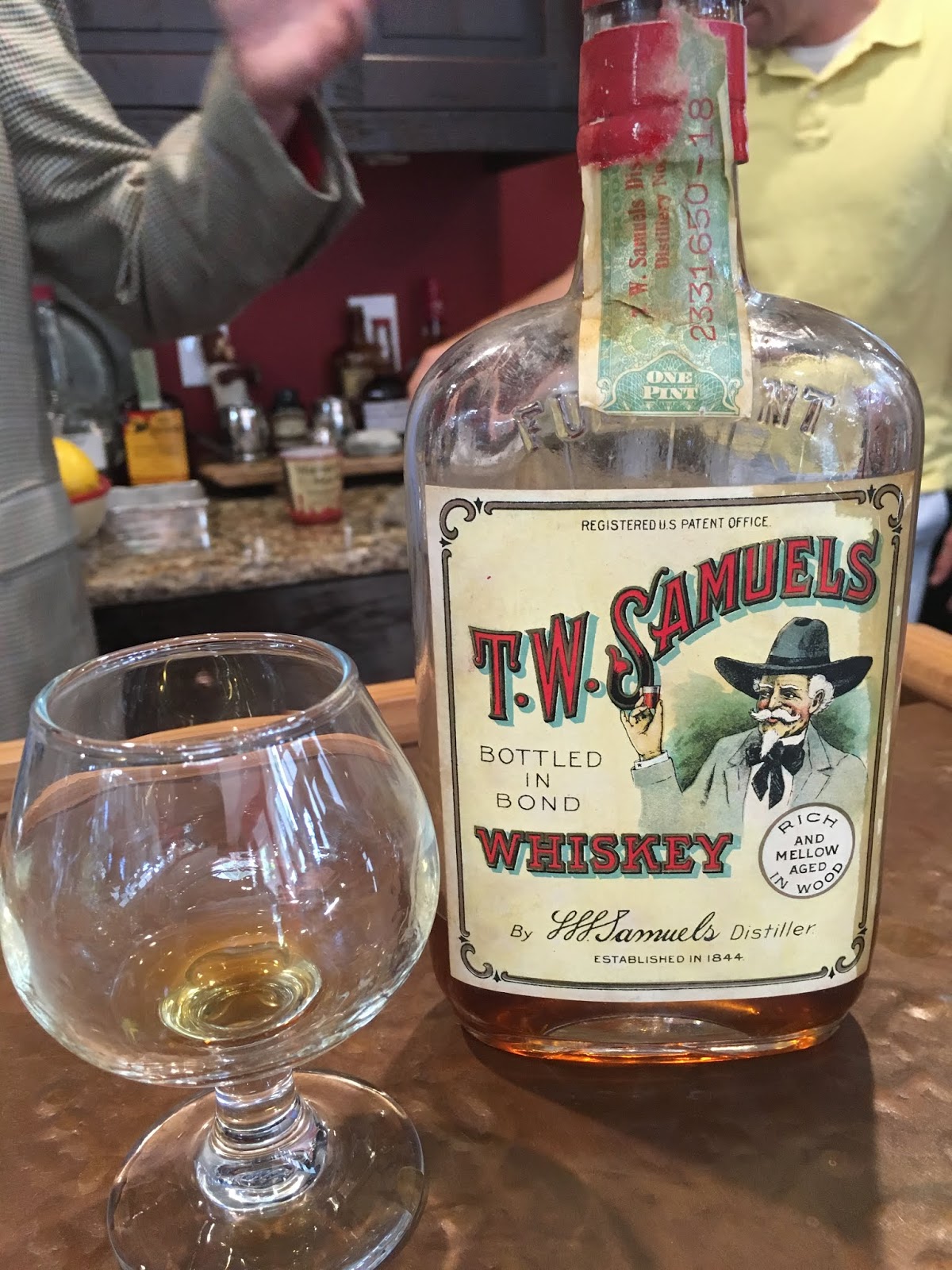 But there was plenty of evidence of the L&N’s negligence. One witness testified that the locomotive had thrown cinders 50 feet from the track, and that the ground was covered in burning cinders. Another witness saw burning cinders on the adjacent roadway and grass set ablaze along the sides of the track. Still another witness was on the platform and he saw the locomotive spewing sparks and cinders. T.W. Samuels was only able to save ten out of 90 barrels in the warehouse before the fire consumed the building. After T.W. Samuels died in 1898, his Estate sued the L&N for loss of the warehouse and 41 barrels owned by the distillery. (The remaining 40 or so barrels were owned by holders of warehouse receipts, like Max Idleman, who sued the L&N separately. Louisville & Nashville Railroad Co. v. Idleman, 57 S.W. 237 (Ky. 1900).)
A Kentucky statute at the time protected railroad companies from liability for emissions of sparks if the locomotive at issue was equipped with the best available spark arrestor. The problem here was that the locomotive had a faulty spark arrestor—and it burned sacred bourbon—so the Nelson County jury awarded its verdict to Samuels.
While T.W. Samuels’ neighbors in Nelson County ruled against the L&N, the Court of Appeals reversed and ordered a new trial. The Court of Appeals wanted the jury to consider the negligence of T.W. Samuels, not just the L&N. At the time in Kentucky (and across the nation), if a plaintiff was also at fault, recovery could be denied for his “contributory negligence.” This rule developed in England in the early 1800’s (Butterfield v. Forrester, 11 East 60, 103 Eng.Rep. 926 (1809)), made it across the Atlantic by 1824 (Smith v. Smith, 2 Pick. (19 Mass.) 621 (Mass. 1824)), and then inland to Kentucky by the early 1890’s (Newport News & M.V.R. Co. v. Dauser, 13 Ky.L. Rep. 734 (1892)), where it survived until the 1980’s (Hilen v. Hays, 673 S.W.2d 713 (Ky. 1984)).
The Court of Appeals was eager to have the jury use this new rule that protected defendants (especially industrial defendants) by considering a plaintiff’s fault. There is no record of how the second jury ruled, but with the influence of bourbon in Nelson County, I’d put my money on the Samuels family.
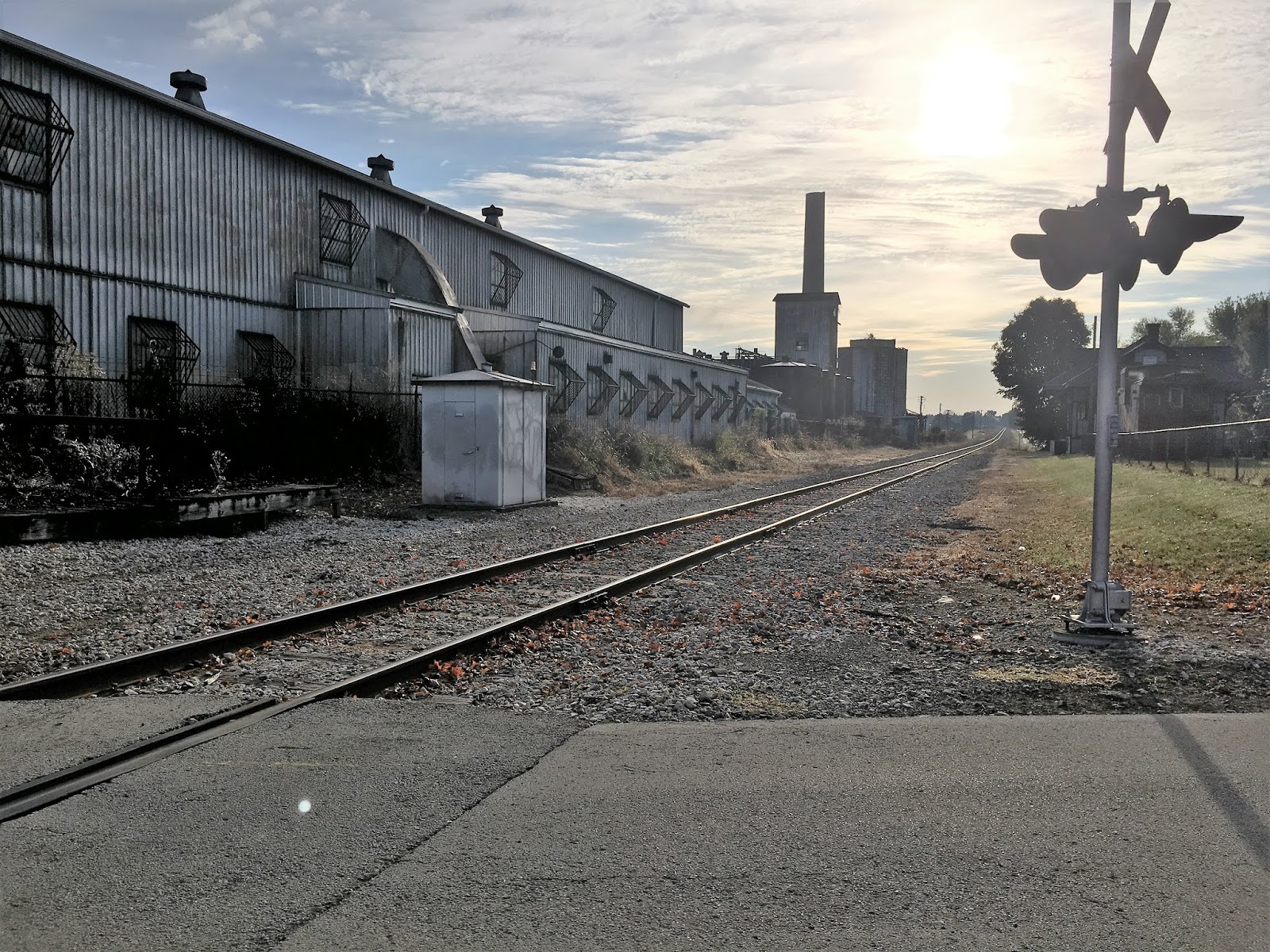
Perhaps not learning their lesson, the new T.W. Samuels Distillery built after Prohibition is almost as close to the L&N track as was the doomed warehouse.
Kentucky Bourbon Affair – Music, Whiskey Science, and Country Ham at The Higher Proof Expo 2018.
Another Kentucky Bourbon Affair—sponsored by the Kentucky Distillers’ Association—wrapped up last month in tremendous fashion and for the second year it included the “Higher Proof Expo” as the final daytime event after a full week of bourbon fantasy camp. During the week the events focused on the distilleries, but the Higher Proof Expo brought the experts to us at Louisville’s newly-opened Omni Hotel for a day of bourbon-centric education and tasting.
Due to a Sixth Circuit oral argument in a bourbon trademark case that week, I was disappointed to miss everything except the tail-end of the Jeptha Games. I was free for the weekend though, and the Higher Proof Expo was right up my alley. Participants could select from a smorgasbord of seminars, ranging from bourbon and food pairings, to a “hemped bourbon experience,” to developing whiskey brand concepts. It was tough to select from so many unique experiences, but I knew that I wanted to start with Wall Street Journal-bestselling author Fred Minnick for his seminar called “Pairing Bourbon with Music.”
 I’ve always found that the bourbon experience is influenced by my surroundings—the same bourbon can taste different (better or worse) alone by a campfire, playing poker, with a juicy steak, or at a party. Fred expanded on this phenomenon with music pairings. After an entertaining history of music and libations, we jumped right in with Fred’s playlist and whiskey samples.
I was amazed at how spot-on Del McCoury’s simple pickin’ was paired with the graininess of Mellow Corn, how Andrea Bocelli brought out the complex yet approachable flavors of Henry McKenna 10-year Bottled in Bond, and how Whitesnake’s “Here I Go Again”—yes that 80’s hair band anthem—changed the experience of Knob Creek. Fred emphasized that whiskey/music pairings are inherently subjective because we all like different music, and he encouraged us to try different whiskeys with different music we like, assuring us that we would find that our preferences run deep.
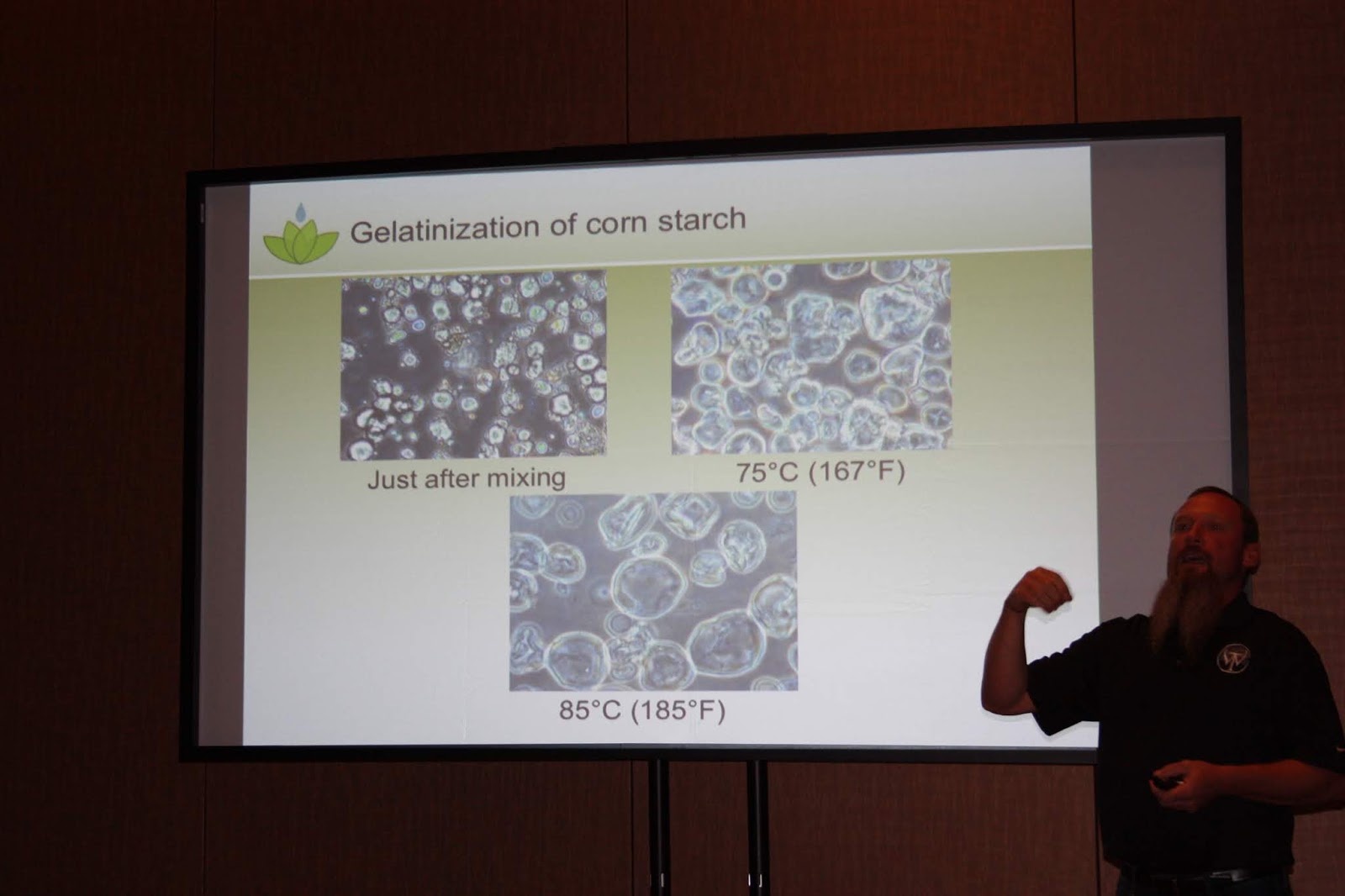 For my next seminar, I opted for a 180-degree turn and plunged deep into science with Dr. Pat Heist of Wilderness Trail Distillery in Danville, Kentucky. In “Using Microbiology and Biochemistry to Make the World’s Best Bourbon,” we heard about the sweet mash method used by Wilderness Trail in comparison to the much more pervasive sour mash method, and how Dr. Heist ensures consistency through science and discipline.
We learned about the importance of starch and moisture content in the grains, the gelatinization of corn starch at different temperatures, how yeast cell counts are monitored, and how microbial contamination is detected—and sometimes how it is used affirmatively. The amount of data collected at Wilderness Trail is mind-boggling, and I came away with a new appreciation for the science of distilling (and a new suspicion of the old-time sign at Stitzel-Weller that reads “No scientists allowed in this distillery.”).
 Lunch whetted my appetite for bourbon and food pairings, so I attended “Complementing, Contrasting, & Enhancing Flavor Through Whiskey & Food Pairing” presented by author Steve Coomes (a self-proclaimed “ham and spirits lover”), Kelly Ramsey of Art Eatables, and a team from Michter’s—Pam Heilmann and Andrea Wilson—who provided the bourbon. Steve curated a wide selection of country hams and cheeses, Kelly brought her chocolate and an amazing sorghum caramel, and we tasted through a variety of Michter’s whiskeys while experiencing how these rich foods changed and elevated the bourbon experience. This sort of food pairing experience is a must for any bourbon enthusiast.
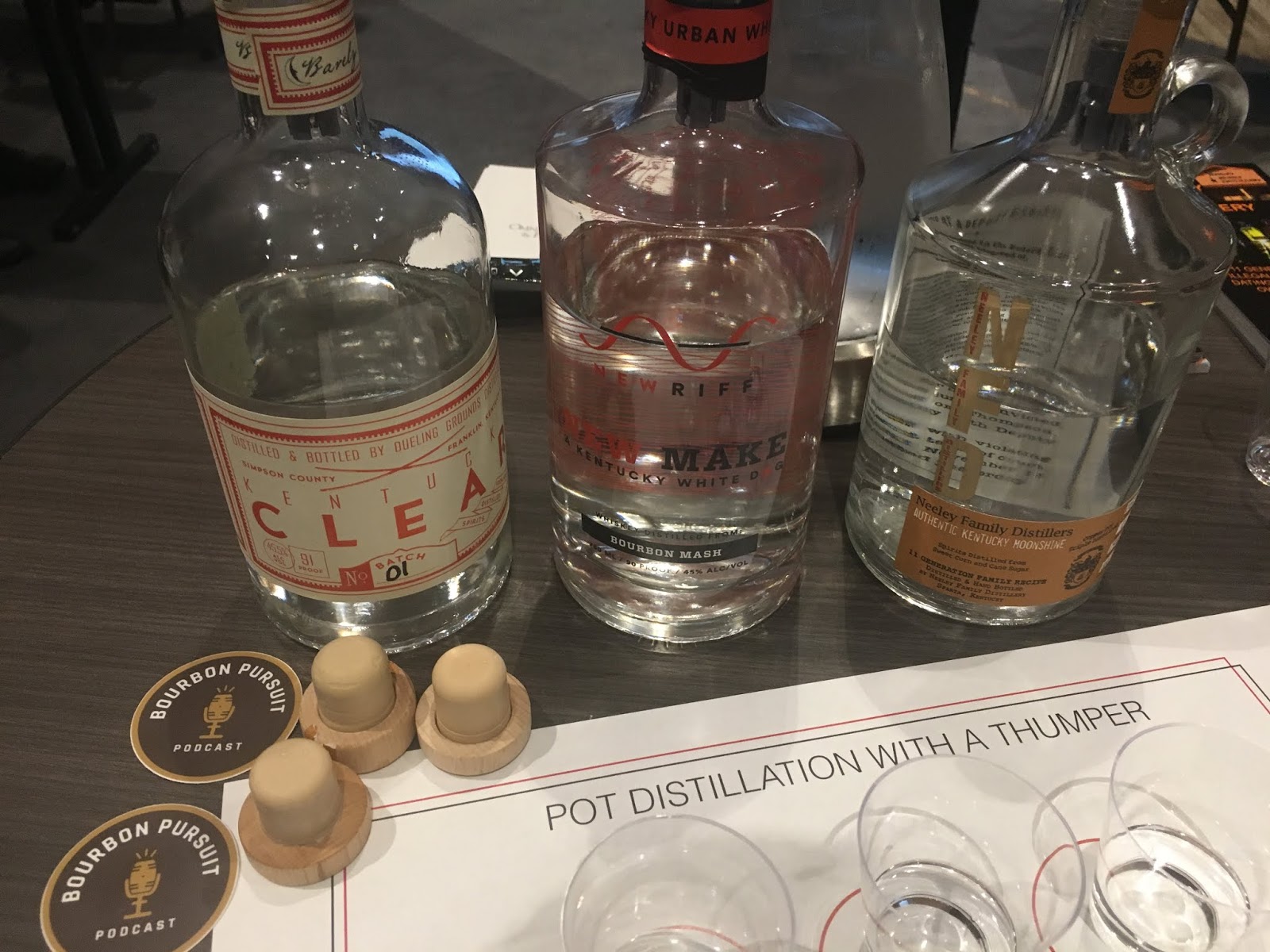 I rounded out my Saturday by getting down to basics with “Pot Distillation with a Thumper: Traditional Methods of Bourbon Production,” presented by Marc Dottore of Dueling Grounds Distillery in Franklin, Kentucky and Royce Neeley of the Neeley Family Distillery in Sparta, Kentucky. It seemed like the real challenge for these distillers is separating the heads, the hearts, and the tails—which is definitely something that needs to be done right—and it was interesting to contrast their approach with the scientific approach from earlier in the day. The history and the mechanics kept the class captivated, but when it came time to try the new make and legal “moonshine,” I was reminded yet again that my personal preference is mature whiskey.
The Higher Proof Expo was a perfect opportunity for those, who like me, couldn’t make any of the distillery events during the week, but I also met friends who had been in Louisville all week and were capping off their 2018 Kentucky Bourbon Affair with a final day of in-depth bourbon experiences. With new events every year, I encourage everyone to check out the Kentucky Bourbon Affair and the Higher Proof Expo in 2019. I’ll see you there.
Sipp’n Corn Book Review – The Bourbon Tasting Notebook (2nd Edition) by Susan Reigler and Mike Veach.
Susan Reigler and Mike Veach, two of the most knowledgeable bourbon writers, collaborated a few years ago for The Bourbon Tasting Notebook which gave us honest reviews without debate-inducing rankings or “bourbon of the year” proclamations.
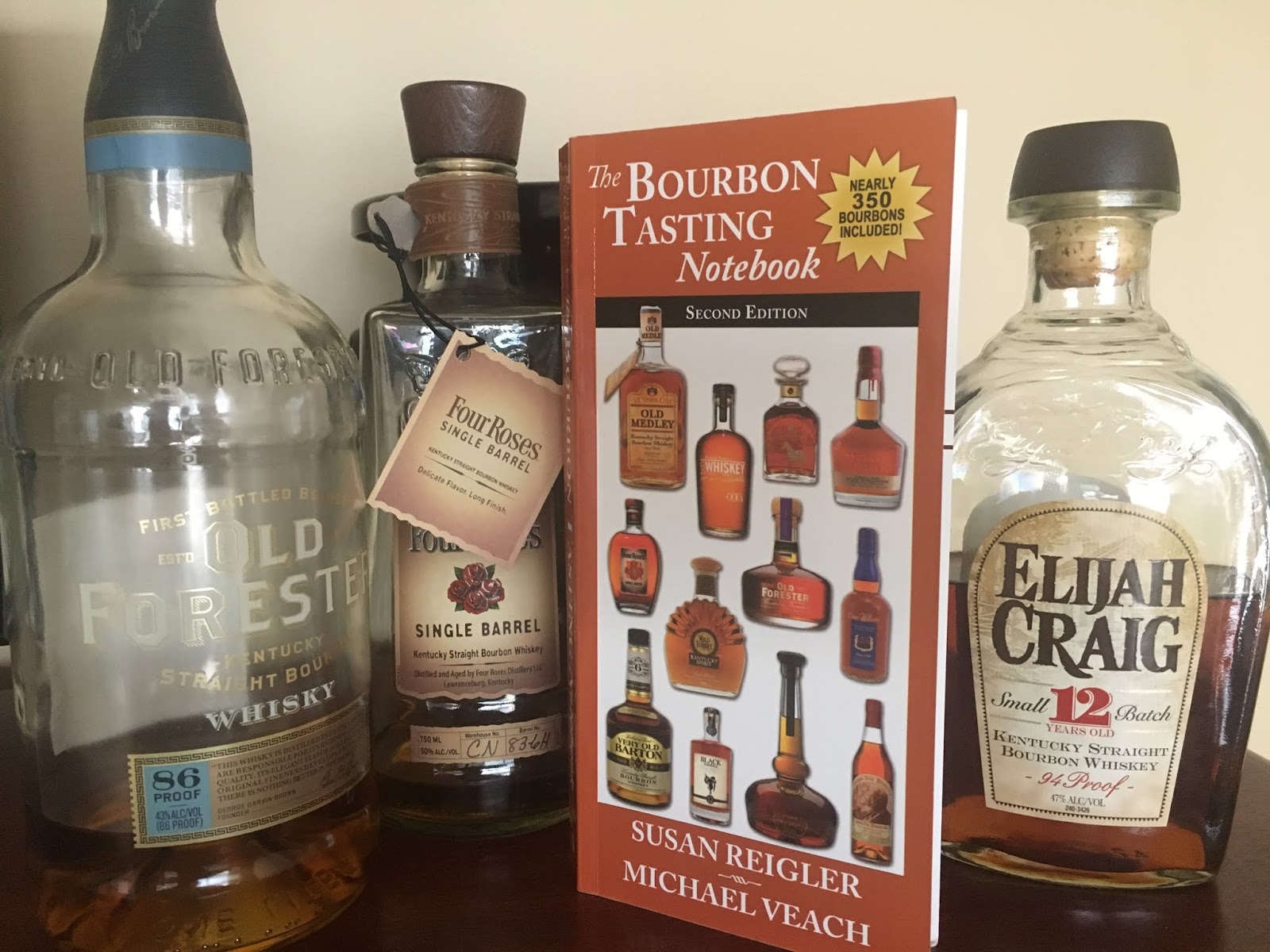 Mike and Susan provide their respective tasting notes—which are often different comparatively—to embrace the reality that we all experience bourbon uniquely. I would have expected more similarities, so it was fascinating to see their themes and preferences play out through the nearly 350 (!) reviews of bourbon from major producers, craft distillers, and merchant bottlers.
The Bourbon Tasting Notebook begins with a primer on what it takes to qualify as bourbon, along with a summary of the different sources of bourbon’s varied, rich flavor profiles. But the rightful focus is on tasting notes. The genius of The Bourbon Tasting Notebook is in resisting the temptation to provide rankings or scores and instead allowing readers to decide personally which bourbons are their favorites.
At the same time, the book avoids being drearily neutral. Each bourbon includes a “Notes” section used primarily to give additional information about provenance, food pairing or cocktail suggestions, or batch specifics. Occasionally those notes veer to singing high praise—“Worth every penny of the sticker price. Beautifully complex and balanced.” (Wild Turkey Russell’s Reserve). And less frequently, the notes issue a polite warning to avoid the bourbon—“Contents not unpleasant, but should be much better for the money.” (Calumet Farm). Even with those assessments, the form and lack of rankings foster personal exploration and enjoyment. And of course, each page has space for the reader’s own thoughts and impressions.
I don’t think that I’ve ever commented on a book’s index before, but the indices in The Bourbon Tasting Notebook are helpfully prepared not just in the standard alphabetical format, but also separately by proof, style, and price, which combined with the book’s sensible organization, makes finding specific brands a breeze.
Given the rapidly-changing landscape of bourbon, we should be hoping for a new edition of The Bourbon Tasting Notebook every few years. Another 50 bourbons will probably be on the market by 2020, existing brands will have undergone changes in flavor profiles, and brands that have lost their age statements (like Elijah Craig and Very Old Barton) can be updated. I hope that Susan and Mike continue to be the duo to memorialize the vast library of bourbon.
In the meantime, the second edition of The Bourbon Tasting Notebook is timed perfectly for summer and the new bourbon season. Plus, Acclaim Press kept the price at $19.95 despite 50% growth from the first edition. Here’s the Amazon link, enjoy!
 Brian Haara