Brian Haara
Bourbon. Law. Author.
Sipp’n Corn Bourbon Review – Four Roses Elliott’s Select 2016 Limited Edition Single Barrel
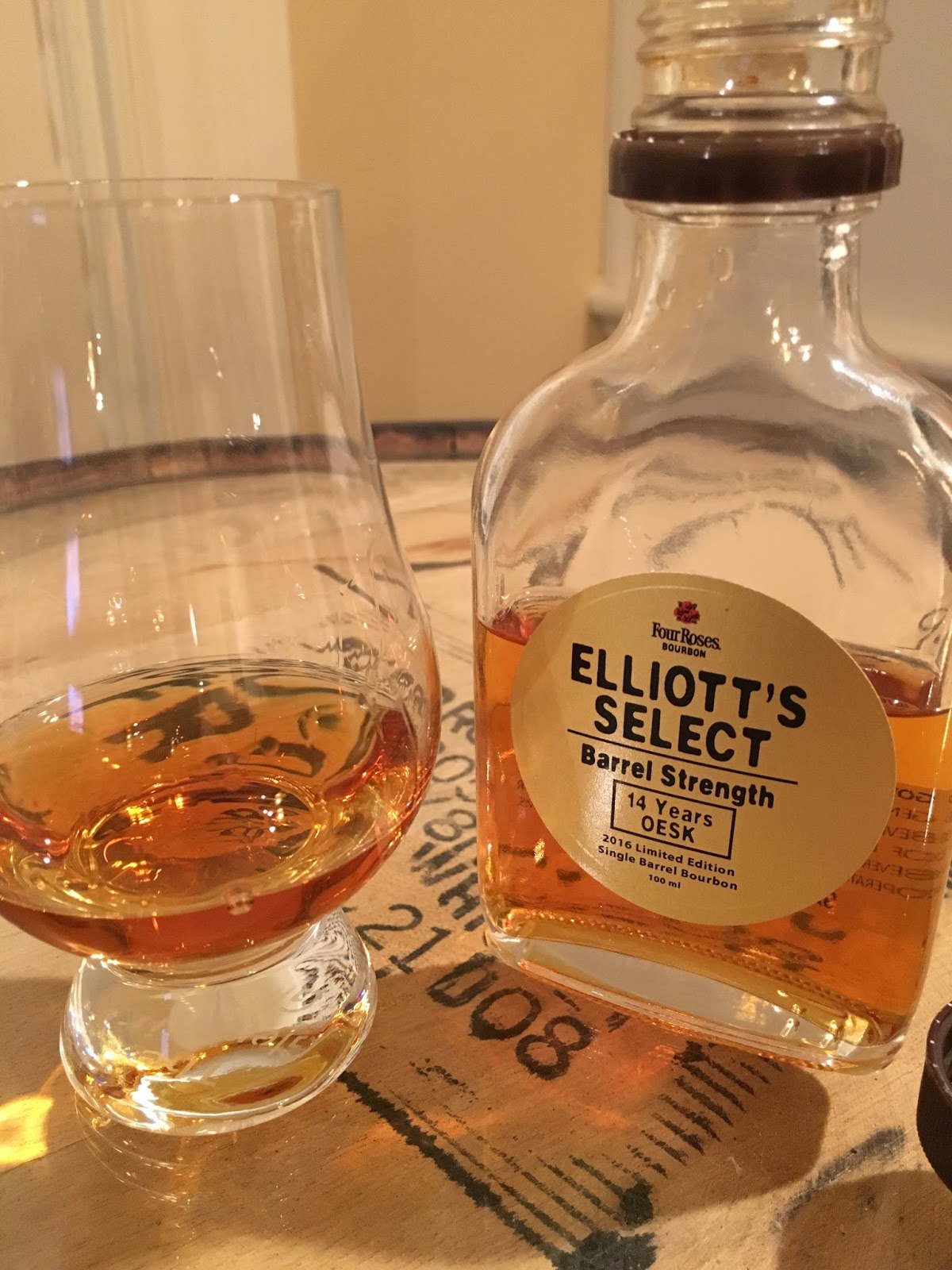
I have never hidden my affinity for Four Roses or the two (out of ten) recipes using the “K” yeast, so when I learned that after skipping 2015, Four Roses would release a springtime Limited Edition single barrel using the OESK recipe, I was thrilled. For a more in-depth discussion of what “OESK” means, please check out my post (Link Here) that covers all ten recipes. The most distinguishing aspect of this release, of course, is that it is the first solo release of new Four Roses Master Distiller, Brent Elliott, after the retirement last August of long-time Master Distiller, Jim Rutledge. Four Roses has confirmed to me that 95 barrels were selected for the release, which resulted in 10,224 bottles.
|
Bourbon:
|
Elliott’s Select 2016 Single Barrel Limited Edition Kentucky Straight Bourbon Whiskey
|
|
Distillery:
|
Four Roses, Lawrenceburg, Kentucky
|
|
Age:
|
14 years
|
|
ABV:
|
58.4% (116.8 proof), but will vary for each single barrel included in the release
|
|
Cost:
|
Suggested Retail: $124.99 (750 mL)
|
Disclaimer: The brand managers kindly sent me a sample
for this review, without any strings attached.
Thank you.
But I also bought my own bottle from the Four Roses Gift Shop.
Tasting Notes
Appearance:
Golden amber.
Nose:
Sweetness and more sweetness. Aromas of caramel, vanilla, corn pudding, and sweet, ripe fruit.
Taste:
Caramel, peach cobbler and other sweetness of honey and vanilla, but whereas the aromas were all sweet, the flavors are balanced with pepper spice, baking spice, ripe fruit (the “K” yeast shining through), and oak, with complexity and balanced intensity. The elegance of this OESK is a fantastic contrast to the brute force that some distillers shoot for with barrel-strength limited editions. Like so many other Four Roses Limited Edition single barrels and small batches, Elliott’s Select nails the interplay between having character and remaining civilized.
Finish:
Long with a great swell that lingers and ends with fresh mint and lingering warmth.
Bottom Line
I hope that this release means that Four Roses intends to keep a spring Limited Edition Single Barrel as a permanent feature of its line. While I always look for the “K” yeast, past Limited Edition Single Barrels have certainly shown that I need to broaden my horizons with the other eight recipes. In the meantime, this OESK Limited Edition is a Bourbon that I highly recommend. I plan to hound the Gift Shop and stalk my favorite local store until I have a bottle or two, and then I’ll update my review with a score on The Sipp’n Corn Scale.
Update with my own purchases
 Regardless, my bottle numbers are QN-53-2D (52.5% ABV) and QN-47-2Q (52.2% ABV). Each bottle of Elliott’s Select was aged on the north side of Warehouse Q, but you’ll be able to find variations based upon precise barrel location. Both of my barrels were stored on the second row, so the lower barrel proof was expected (and it’s something that I look for in Four Roses Single Barrels). Rack 53 is eight racks away from the exterior wall, on the interior section, and this barrel was stored only four barrels deep. Rack 47 is just one rack away from the exterior wall, also on the interior section, and at “Q,” this barrel was 17 barrels deep.
Update with my own purchases
As a single barrel bottling, my bottles are bound to have differences between each other and the media sample. While it can be fun to compare and find nuanced differences (and sometimes much greater variations), dissimilarities can also be frustrating when a new bottle doesn’t meet expectations. That might be why many people have commented that they’ve had better OESK private barrels than Elliott’s Select, for $30-$50 less. In reality though, I think that it is a high complement to Four Roses that private barrel selections can compete with Limited Edition selections.
 Regardless, my bottle numbers are QN-53-2D (52.5% ABV) and QN-47-2Q (52.2% ABV). Each bottle of Elliott’s Select was aged on the north side of Warehouse Q, but you’ll be able to find variations based upon precise barrel location. Both of my barrels were stored on the second row, so the lower barrel proof was expected (and it’s something that I look for in Four Roses Single Barrels). Rack 53 is eight racks away from the exterior wall, on the interior section, and this barrel was stored only four barrels deep. Rack 47 is just one rack away from the exterior wall, also on the interior section, and at “Q,” this barrel was 17 barrels deep.
I picked up a lot more oak on the nose in both of these bottles, sometimes prickly, but mostly the old library oak sensation. The taste was still elegant like the sample, but both had bigger nutty-chocolate candy flavors. Consistent with the seemingly heavier barrel influence on the nose and palate, the finish was also dryer and oaky. Both of these were classic examples of the OESK profile.
I’m a fan of OESK and OBSK; nothing new there. I’ve been lucky enough to have tried nearly 100 OESK single barrels either in bottles or in barrel selections, and even though I’ve liked them all, some really stand out. Elliott’s Select is solidly in the top of those OESKs, but behind the 2012 Limited Edition Single Barrel, and there are one or two OESK private selections within the past three years that are on par with Elliott’s Select. This sort of age is not available with private selection barrels, so especially if you enjoy the greater influence of oak, Elliott’s Select is a must-have Bourbon.
Score on The Sipp’n Corn Scale: 4.0
The Sipp’n Corn Scale:
1 – Swill. I might dump the bottle, but will probably save it for my guests who mix with Coke.
2 – Hits the minimum criteria, but given a choice, I’d rather have something else.
3 – Solid Bourbon with only minor shortcomings. Glad to own and enjoy.
4 – Excellent Bourbon. Need to be hyper-critical to find flaws. I’m lucky to have this.
5 – Bourbon perfection. I’ll search high and low to get another bottle of this.
Sipp’n Corn Bourbon Review – Bulleit Barrel Strength (at the Pimento Cheese Social 2016)
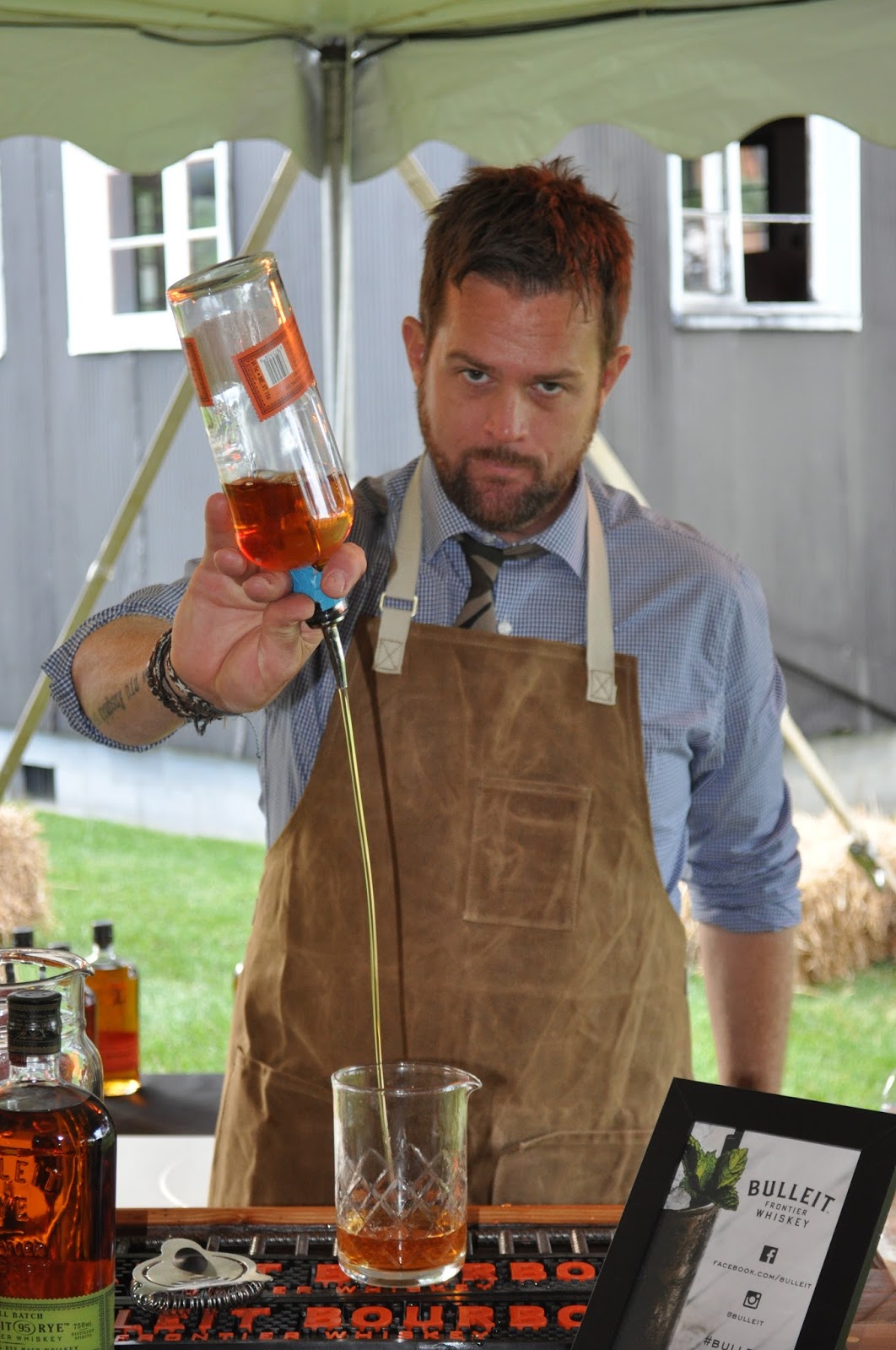 After years of consumers calling for it, Diageo’s Bulleit Bourbon has entered the barrel proof show with an immediate go-to contender. I got an advance tasting at this year’s Kentucky Derby week Pimento Cheese Social, held again at the historic Stitzel-Weller distillery in Shively, Kentucky. Tom Bulleit told me that Bulleit Barrel Strength comes from the same source as the standard orange label Bulleit, and it shows.
The 5th Annual Pimento Cheese Social was a hit too, with live music from Billy Goat Strut Revue and inventive pimento cheese creations from area chefs. Overall and compared to 2015, the 2016 chefs were the clear winners. Garage Bar prepared smoked cheddar pimento served in small cheese cones with chipotle sauce that were outstanding; The Hub prepared pimento cheese stuffed, bacon-wrapped dates that might be the only way to ever eat dates again; and Monnik Beer Co. prepared a pimento cheese spread paired with fresh bread.
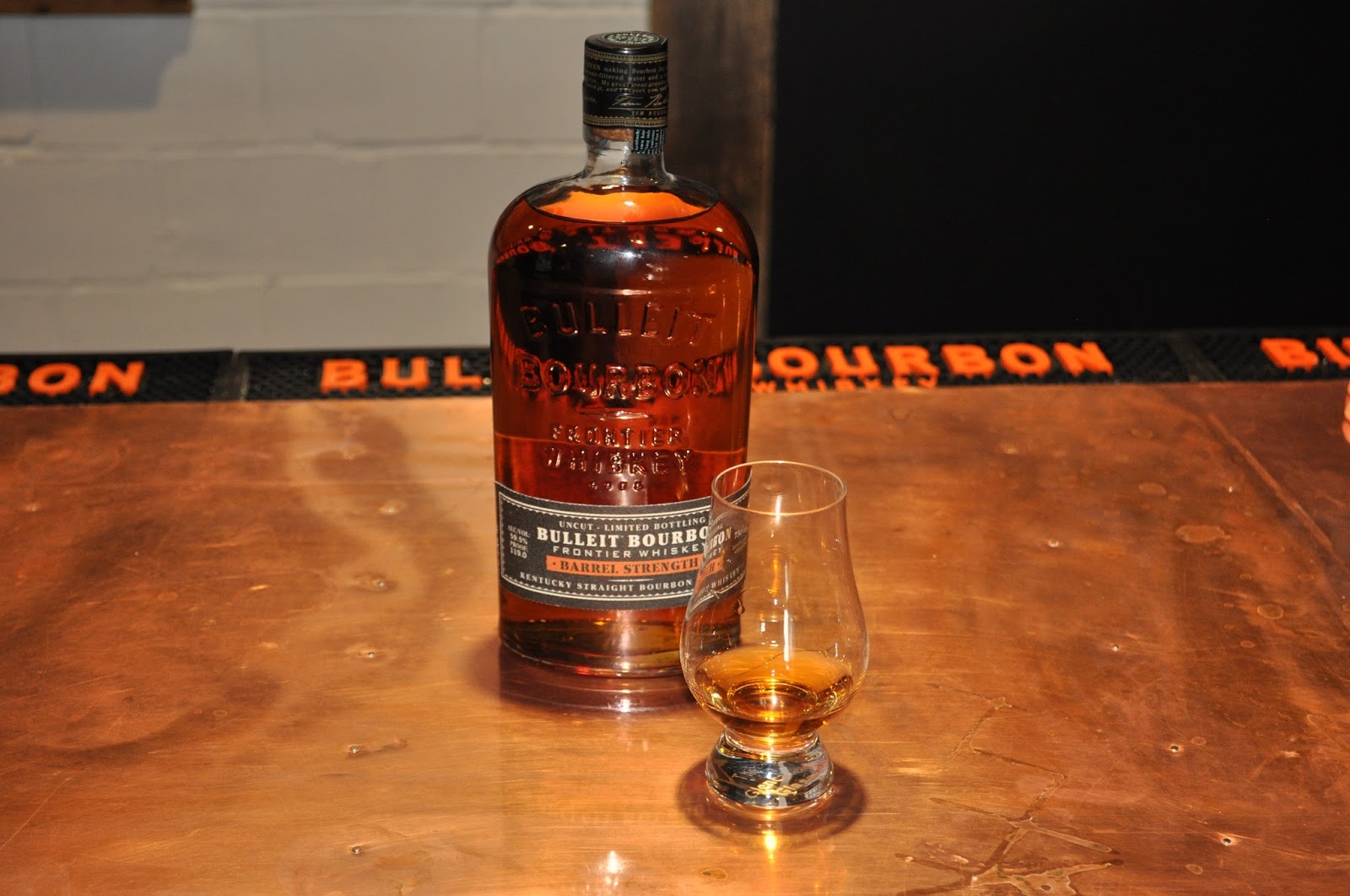
My favorite combination, however, was from Feast BBQ and Royals Hot Chicken: fried pimento mac-n-cheese balls alongside fried spicy chicken with pimento cheese pepper jelly on fresh buttermilk biscuits. Under the tent at Stitzel-Weller, with Billy Goat Strut playing in the background, it was a perfect evening.
|
Bourbon:
|
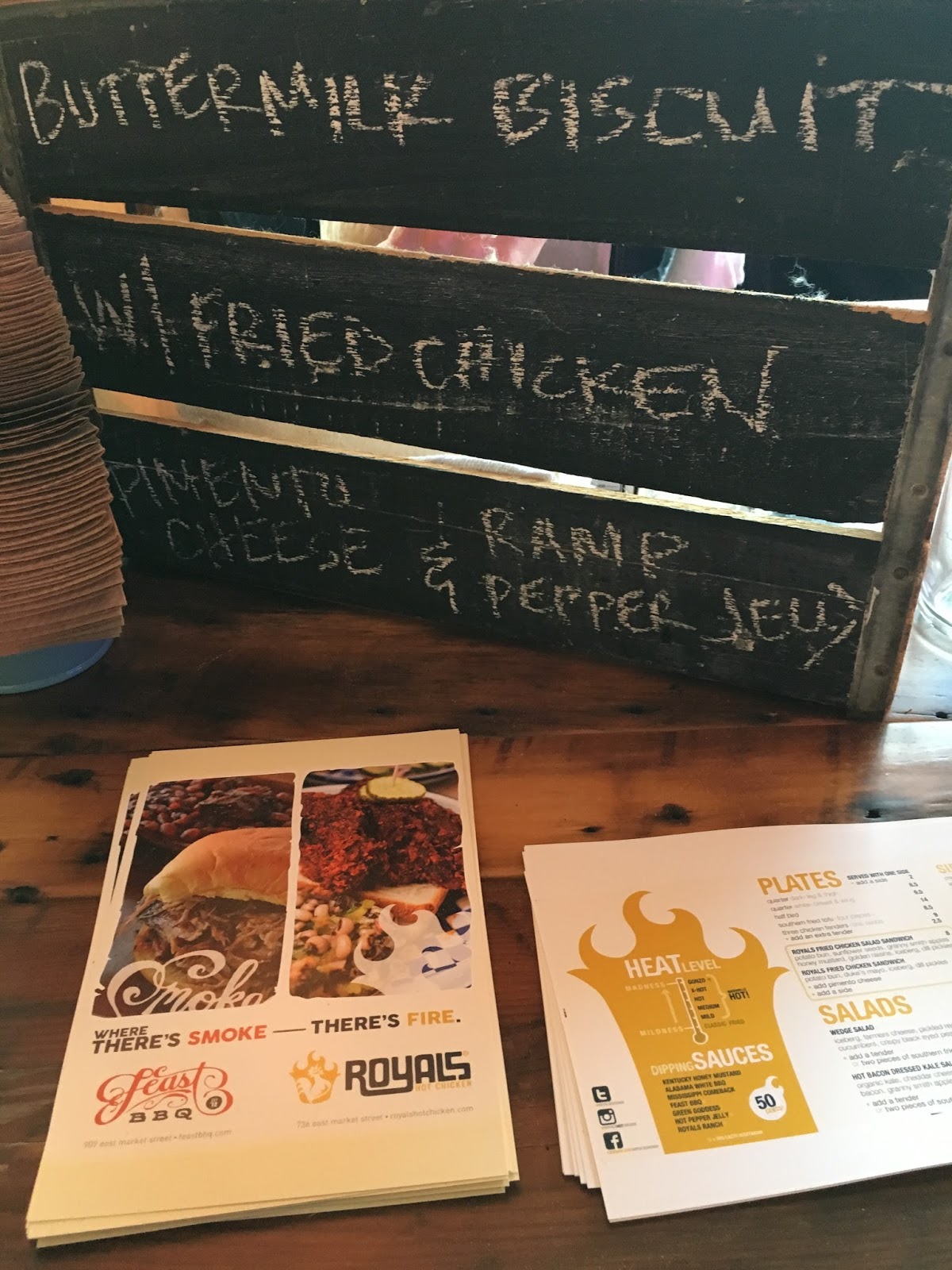
Bulleit Barrel Strength Limited Edition Kentucky Straight Bourbon Whiskey
|
|
Distillery:
|
Unknown
|
|
Age:
|
No Age Statement
|
|
ABV:
|
59.5% (119 proof) [expected range for future editions: 118-125 proof]
|
|
Cost:
|
Suggested Retail: $49.99 (750ml); $29.99 (375ml)
Price I found in Louisville: $54.99
|
Tasting Notes
Appearance:
Typical amber with an orange / copper hue.
Nose:
There’s some untamed heat evident in the nose, but then it sweetens up with caramel and honey, also with clear pepper and cinnamon. I would not call it “complex,” but has a nice balance of aromas.
Taste:
There’s also a great balance here between sweet (caramel, brown sugar, graham cracker), spice (black pepper and cinnamon again), and oak. These flavors are combined with some rough fire that should be expected from nearly 60% ABV, so I wouldn’t necessarily recommend a novice of cask-strength Bourbons drink this neat. But if you are already comfortable with cask-strength, Bulleit Barrel Strength will be smooth and enjoyable neat. After some air and time, there’s a slight nuttiness, so my recommendation is to try this neat and drink it slowly.
Finish:
Medium-long finish, creamy, sweet toffee, but overall dry with a focus on oak and spice.
Bottom Line
Non-chill filtered and barrel strength will now reach the masses between Bulleit’s release (even though it’s currently Kentucky-only) and Maker’s Mark’s nationwide release last year. I liked it well enough that I bought a bottle within a week, and it’s been a great bottle to enjoy as we enter the summer outdoor season. As good as the standard Bulleit is in cocktails, I expect Bulleit Barrel Strength to be better, but so far I’ve only had it neat and on ice. This one deserves some more experimentation.
Score on The Sipp’n Corn Scale: 4.0
The Sipp’n Corn Scale:
1 – Swill. I might dump the bottle, but will probably save it for my guests who mix with Coke.
2 – Hits the minimum criteria, but given a choice, I’d rather have something else.
3 – Solid Bourbon with only minor shortcomings. Glad to own and enjoy.
4 – Excellent Bourbon. Need to be hyper-critical to find flaws. I’m lucky to have this.
5 – Bourbon perfection. I’ll search high and low to get another bottle of this.
Sipp’n Corn Bourbon Review – Barrell Bourbon Batch 006
I’ve read and heard many glowing reviews of Barrell Bourbon, but for some reason I was resisting the temptation to jump aboard. Maybe it was because I had felt burned by a few other merchant bottlers. Or maybe it was because the $90.00 price tag for eight year old Bourbon distilled in Tennessee didn’t make sense to me when I could get Elijah Craig 12-year Barrel Proof and all kinds of Four Roses private selection Single Barrel options at barrel strength, both of which have known provenance and a proven track record. Still, I was curious, and all it took was seeing a sale price at Kroger. Now that Batch 007 and private selections have landed, it’s time for a review.
|
Bourbon:
|
Barrell Bourbon Cask Strength Straight Bourbon Whiskey
Bottle 4076 of 5460.
|
|
Distillery:
|
Unknown, but distilled in Tennessee
|
|
Mash bill:
|
70% corn; 26% rye; 4% malted barley
|
|
Age:
|
8 years, 6 months
|
|
ABV:
|
61.45% (122.9 proof)
|
|
Cost:
|
$76.99 (sale price)
|
Tasting Notes
 Appearance:
Rich caramel amber with a hint of orange.
Nose:
Enticing aromas of brown sugar, warm caramel, and a nutty, sugary desert. I was pleasantly surprised.
Taste:
There’s some fire initially, but it is tamed down with some air, and you’re left with complexity beyond what I expected, especially with a splash of water. It’s buttery with a nice transition from vanilla and caramel sweetness to cinnamon, baking spice, pepper, and big charred oak. Other than a slightly distracting green wood flavor, I really enjoyed it.
Finish:
Long, not from a high-proof burn, but from a wonderful, warm swell of corn and brown sugar sweetness, lingering cinnamon red hots, and plenty more oak. This finish is the real deal.
Bottom Line
Limited releases and distinct batches are tough to predict. I’ve been wrong about some that I made herculean efforts to find, and I’ve passed over others, only later learning that I had missed out on a remarkable Bourbon. Barrell Bourbon was one of those that I shouldn’t have waited so long to try.
Score on The Sipp’n Corn Scale: 3.0
The Sipp’n Corn Scale:
1 – Swill. I might dump the bottle, but will probably save it for my guests who mix with Coke.
2 – Hits the minimum criteria, but given a choice, I’d rather have something else.
3 – Solid Bourbon with only minor shortcomings. Glad to own and enjoy.
4 – Excellent Bourbon. Need to be hyper-critical to find flaws. I’m lucky to have this.
5 – Bourbon perfection. I’ll search high and low to get another bottle of this.
Sipp’n Corn Bourbon Review – “The 107 Proof Challenge” – Old Weller Antique vs. Pure Kentucky XO vs. Baker’s
 I had often wondered why a handful of Bourbons were offered at 107 proof. Was this supposed to be a sweet spot? Knowing barrel-entry proof used to be lower, I wondered if it was a throwback to earlier days. I read what supposedly had been Pappy Van Winkle’s explanation, as recounted by Sally Van Winkle Campbell, but I wondered about reliability. I also wondered why seven years seemed to be a common age statement on 107 proof options. But in reality, I was just guessing about everything.
Then Josh Feldman wrote about his epic tasting of 1998-2008 Old Weller Antiques, and followed up after talking with John Lipman about the origin of 107 proof – it was essentially “barrel proof” back in the 1940’s because distillers barreled at 100 proof, and couldn’t barrel higher than 110 proof. While the mystery might be solved, I decided to compare three 107 proof Bourbons in three price ranges – under $20, under $30 and under $40, arranged here by price:
Old Weller Antique Original 107 Brand Kentucky Straight Bourbon Whiskey
Distillery: “W. L. Weller and Sons,” which is really Buffalo Trace, Frankfort, Kentucky
Age: NAS
Proof: 107
Cost: $19.99 (but sadly, good luck finding it, let alone at this price)
Pure Kentucky XO Kentucky Straight Bourbon Whiskey
Distillery: Unknown, but bottled by “Pure Kentucky Distilling Company,” which is an assumed name of Kentucky Bourbon Distillers, Ltd. (Willett), Bardstown, Kentucky
Age: NAS
Proof: 107
Cost: $28.99
Baker’s Kentucky Straight Bourbon Whiskey
Distillery: Jim Beam, Clermont, Kentucky
Age: 7 Years
Proof: 107
Cost: $38.99
I tasted these blind (but I knew the three up for review) in random order, each poured neat in a Glencairn. My rankings below are from the blind tasting, but I re-tasted each Bourbon many times after the reveal to check my initial opinions and to elaborate on the aromas and flavors.
1st Glass (Old Weller Antique):
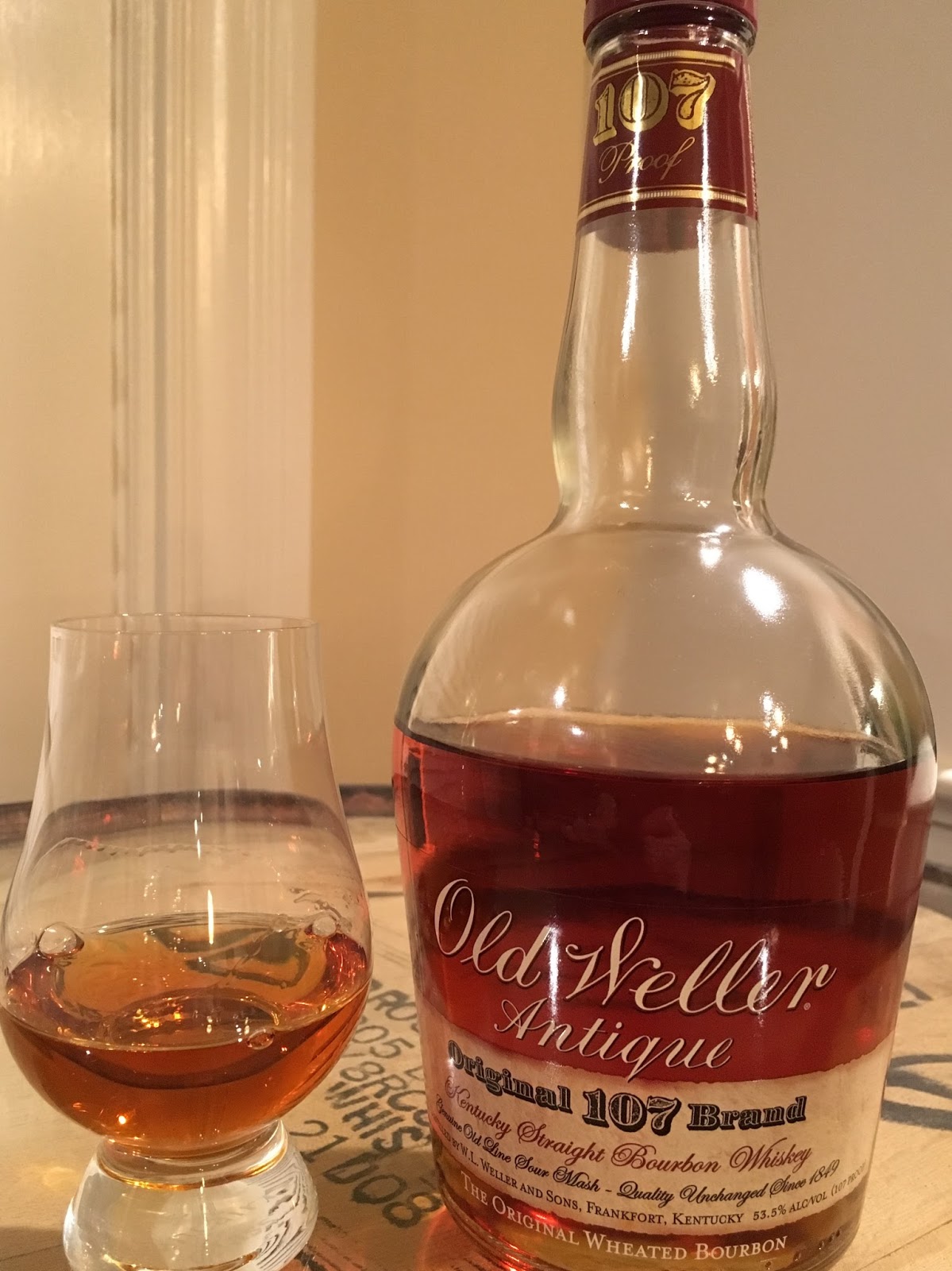 I’m plenty familiar with the Weller line, so I could identify this one blind, especially knowing that it was somewhere in the lineup. The color is a rich amber, with a slight hint of orange, depending on how the light hits, and a little more brown in other light. The aroma is medium intensity, with plenty of caramel, apple pie, and cinnamon rolls, with slight oak. The dominant flavors are caramel and vanilla, but also with pastry sweetness, spiced apples, honey, and toffee, without any hint of bitterness. It has a fantastic creamy sensation. The finish was warm and satisfying, with more flavors of caramel (rich dessert caramel), cinnamon, and vanilla, and with decent oak balance. It wasn’t a home run finish, which really would have taken this one to the next level, but was still a stand up double on the finish.
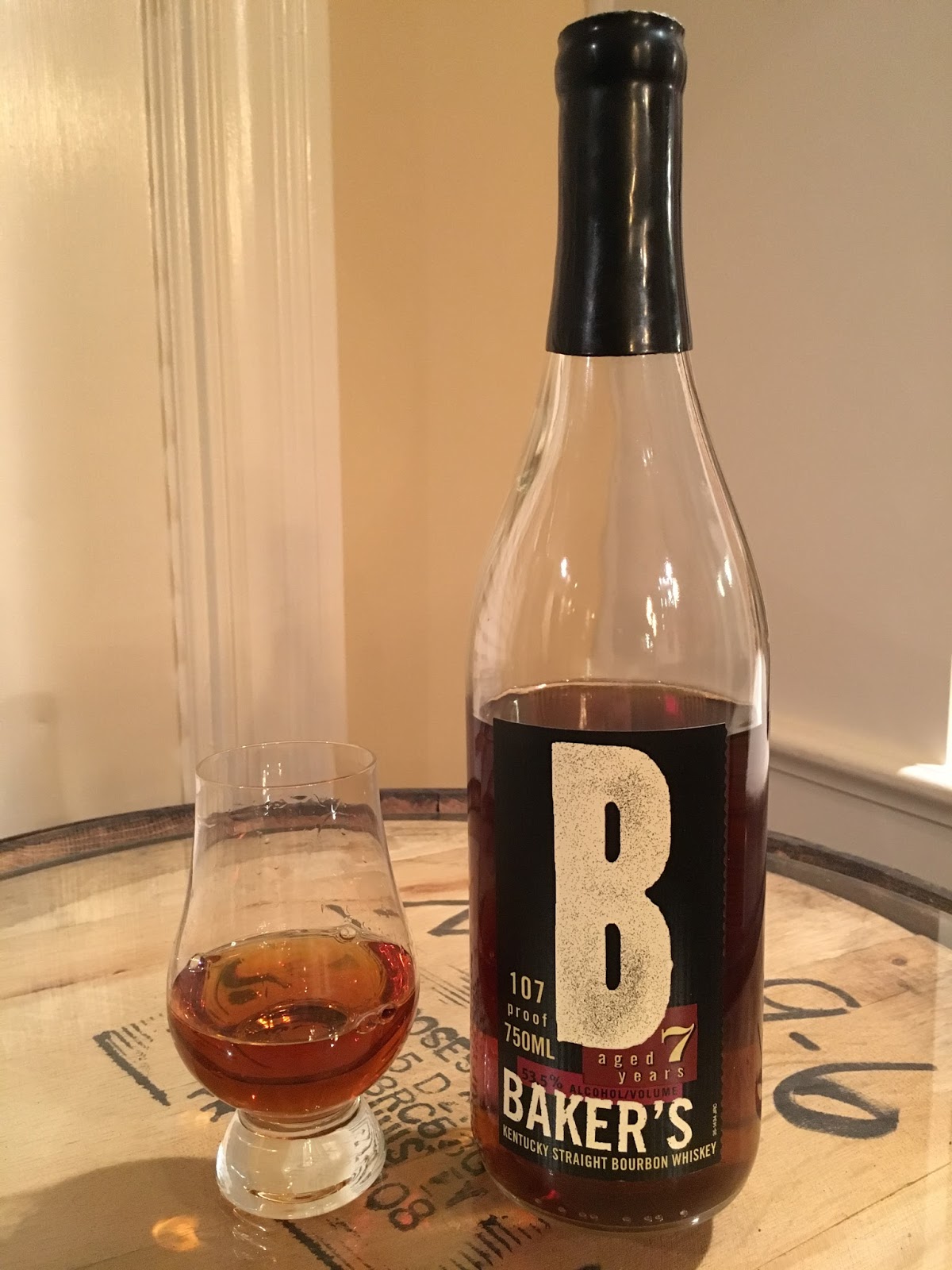 2nd Glass (Baker’s):
The appearance of the second glass stood out from the other two as much darker – pushing mahogany – and oily in the glass. The aroma was the most intense of all three, and it hit from a distance. It was hot, with black pepper, oak, old barn, citrus zest, and wet-dirt-in-the-springtime earthiness. The taste seemed a little too hot at first, and I thought that I detected the telltale Beam yeastiness (but, admittedly, I was looking for it). The primary flavors were oak, peanuts, black pepper, cedar, and a slight over-cooked vegetable flavor. It finishes medium with nice warmth, but the flavors in the finish were uneventful. This Bourbon clearly had a solid foundation, but something didn’t quite click; it didn’t commit to going all-out robust rock star, nor did it commit to balanced complexity, and instead got stuck in the middle.
3rd Glass (Pure Kentucky XO):
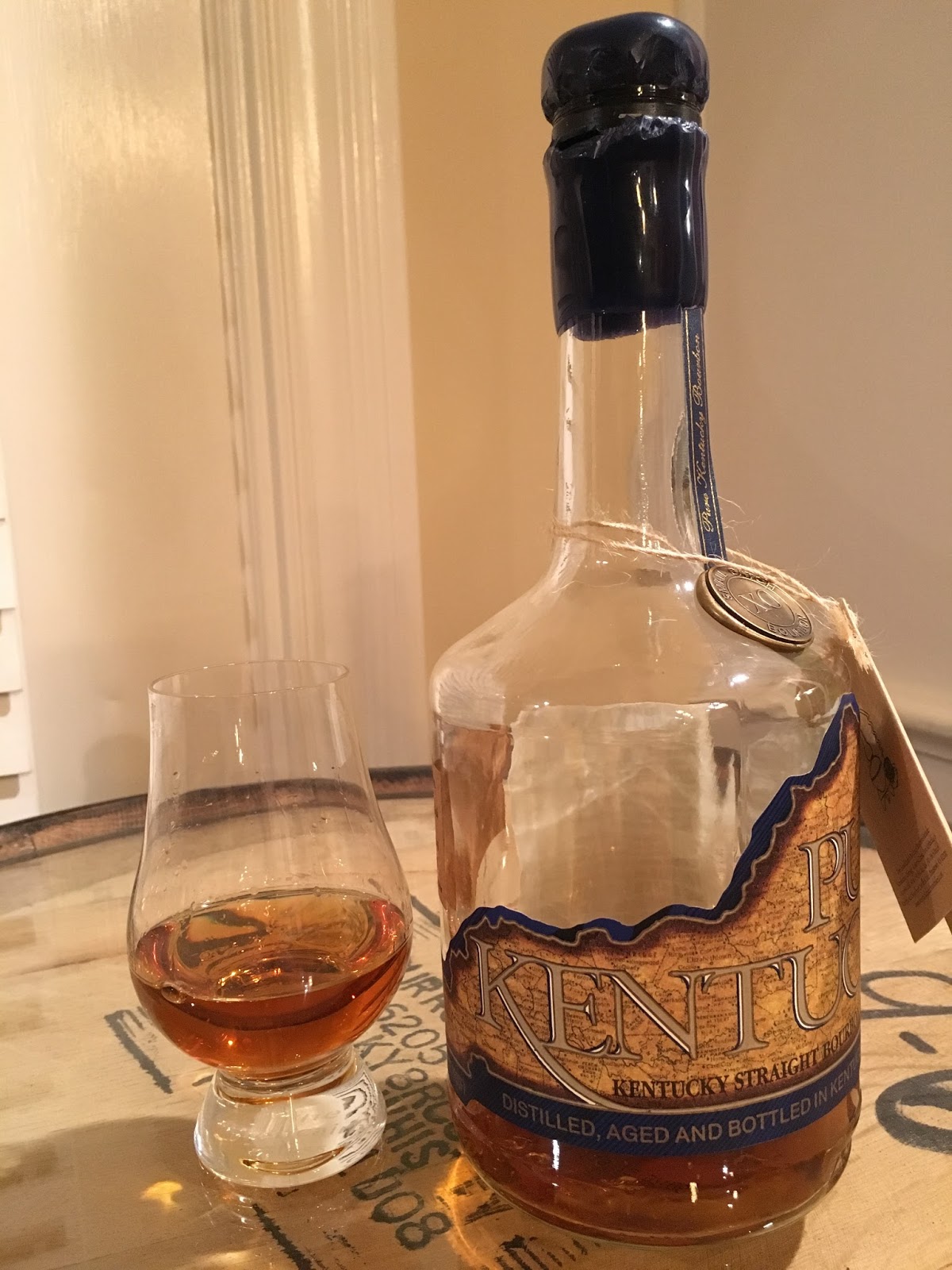 The appearance of the third contender was a subdued brown. The aromas were subdued, too, with every note being subtle, making it overall light and elegant, but nothing remarkable, either. Corn sweetness, malt vinegar, and black pepper emerged as primary aromas. Upon tasting it, though, I found a rush of complexity. After initial flavors of corn pudding, it transitioned to slight caramel, coconut, oak, leather, char, and black pepper, all while maintaining an overall distinctly malt flavor. The dry flavors continued through the finish, which was medium in length, with a nice swell. This was a Bourbon that makes you want to ponder it for a while.
WINNER: Each of these had its distinct pros and cons, each was very different from the other, and each seemed to be missing one component that could have improved it, but overall, the first glass – Old Weller Antique – rose to the top as the 107 proof Bourbon with the best aromas, taste, and finish. It happens to carry the lowest retail price, too. Unfortunately, it has fallen prey to allocations and hoarding, so it may not be available at your favorite retail store. If it’s not on the shelves of your favorite store (or if you don’t go for the sweet profile), I highly recommend the Pure Kentucky XO.
Bottom Line:
The first-place finish of Old Weller Antique surprised me. I had scored it high in a previous review (comparing next-to-bottom-shelf wheated bourbons), but the competition was stiffer here, so I expected it to show flaws in comparison. Instead of revealing flaws in Old Weller Antique, the opposite happened; it helped me identify what was missing in the other two Bourbons.
With so much of the tasting experience dependent upon aromas, the faint nose of Pure Kentucky XO put it at a disadvantage from the start. I have not compared my batch (No. 13-85) to previous or current batches to see whether the profile has remained consistent, but even with a sub-par nose, I really enjoyed this complex, malty, earthy profile, which really makes Pure Kentucky XO a contemplative Bourbon. It was a very close second in my comparison, and it could easily become your new favorite sub-$30 brand. Out of the three bottles, it is the one that I finished first.
Baker’s was a distant third. I hadn’t had Baker’s in several years, and didn’t remember much about it, which is consistent with my impression that it’s often an overlooked brand. In fact, the only reason I bought it was that I needed it for this 107-proof challenge. I initially thought that Baker’s might have suffered because I tasted it on the heels of the sweet Old Weller Antique, but on re-tasting all three, I tried Baker’s first, and later I tried each one independently on different days, none of which changed my impression. The back label suggests drinking it “over ice or with a splash of water,” so I tried that too, but to me, water seemed to accentuate bitterness. I don’t see myself buying Baker’s again, especially with so many great alternatives for $40 or less, but I’m not going to turn it down.
Score on The Sipp’n Corn Scale:
Old Weller Antique: 3.5
Pure Kentucky XO: 3.5
Baker’s: 2.5
The Sipp’n Corn Scale:
1 – Swill. I might dump the bottle, but will probably save it for my guests who mix with Coke.
2 – Hits the minimum criteria, but given a choice, I’d rather have something else.
3 – Solid Bourbon with only minor shortcomings. Glad to own and enjoy.
4 – Excellent Bourbon. Need to be hyper-critical to find flaws. I’m lucky to have this.
5 – Bourbon perfection. I’ll search high and low to get another bottle of this.
A Modest Bourbon Proposal for the Secondary Market.
Before I jump in, some people have articulated that selling or trading whiskey for collectability is perfectly legal. I don’t agree, but I’m not giving anyone legal advice, and if any reader has questions about it, I encourage consultation with counsel.
With that out of the way, I was asked recently, by someone who had already heard that selling Bourbon on the secondary market is illegal, whether tradingbottles could avoid those problems, and it got me thinking about how to fix the secondary whisk(e)y market in the United States. Then yesterday and today, the secondary market was rocked when Facebook shut down popular Bourbon trading and sale groups, emphasizing for me that there needs to be a legal outlet for selling and trading rare bottles.
Spirits are highly regulated, of course, and can only be sold in accordance with state regulations, which most often involve the “three tier” system of producers, wholesalers, and retailers. Those regulations have driven whiskey sales into an unregulated secondary market. While secondary market sales occur everywhere that Bourbon enthusiasts outweigh supply, sellers are taking a risk that somewhere, some day, local authorities will decide to enforce laws that make these types of sales illegal. In Kentucky, for example, KRS 243.020(1) requires a license to sell alcohol under any circumstance whatsoever: “A person shall not do any act authorized by any kind of license with respect to the manufacture, storage, sale, purchase, transporting, or other traffic in alcoholic beverages unless he or she holds the kind of license that authorizes the act.”
The Kentucky statute does not expressly use the words “trade” or “barter,” so some consumers might stop there, without checking the definition section applicable to Chapter 243. The definitions provide that the word “sale” “means any transfer, exchange, or barter for consideration, and includes all sales made by any person, whether principal, proprietor, agent, servant, or employee, of any alcoholic beverage.” KRS 241.010 (49). In other words, at least in Kentucky, trading Bourbon is just like selling it. The realquestions are whether the authorities will ever care about small-scale consumer-to-consumer selling and trading, and whether the risks – like being the test-case or getting a fake – are worth it.
Minor reforms in existing laws could provide a relatively simple solution. Yesterday I suggested to a Kentucky State Senator that Kentucky could leap to the forefront of a new white market by creating a legal, taxable, verifiable clearinghouse for the sale of rare whiskey. A new category of license could be created to permit sales from non-licensed people to a clearinghouse licensee, which could verify and authenticate the bottle, and then sell or trade it in an online market (we might have to change shipping laws, too, but let’s take this one step at a time). Authenticity and purchase prices could be determined by trained examiners, and other proof of authenticity (like an original retail receipt) would help consumers demand the best price for their Pappy Van Winkle, Willett Family Estate, and other hard-to-find limited edition whiskeys.
This would allow consumers – and even the dreaded “flippers” – to sell without violating the law, and it would reduce every black market buyer’s very real concern of counterfeit whiskey. Plus, clearinghouse licensees will be competing against each other on both paying top dollar to acquire the best selection of rarest Bourbon, and on the prices they charge for re-sale, along with competing on managing those margins and training employees to avoid fakes. This combination of the free market and sensible regulation would bring the secondary market out of the shadows and Facebook wouldn’t have to aggravate its users by closing private groups.
What do you think? Could this work?
 Brian Haara