Brian Haara
Bourbon. Law. Author.
Sipp’n Corn Bourbon Review – Parker’s Heritage Collection 8th Edition – “Original Wheat”
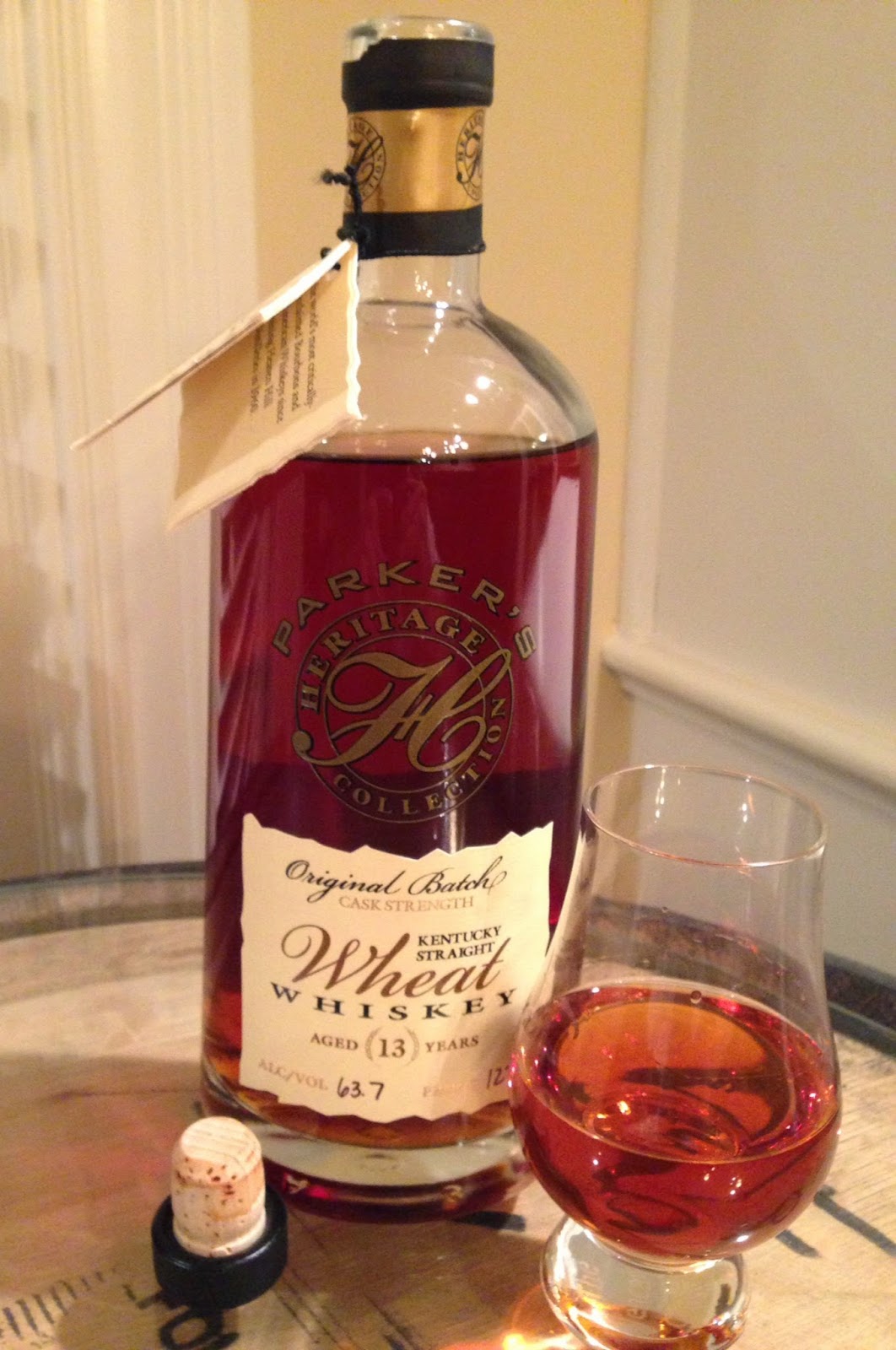
This time – and as a first – Parker’s Heritage Collection is not actually Bourbon. Instead, it uses the same distillate as Bernheim Wheat Whiskey produced by Heaven Hill, but is aged six years longer. In fact, this edition of the Parker’s Heritage Collection contains the first run of Heaven Hill’s Wheat Whiskey recipe.
Just like federal law provides minimum grain composition requirements for a spirit to be called “Bourbon” (at least 51% corn) or “Rye” (at least 51% rye), federal law requires “Wheat Whiskey” to contain at least 51% wheat. Bourbon, of course, often contains a much higher percentage of corn, and then usually adds rye as a secondary grain, but a handful of brands (Maker’s Mark, the Weller line, Larceny, Rebel Yell and that brand that has had everyone in a crazed state for the past five years) use wheat as the secondary grain. Those “Wheated Bourbons” still qualify as “Bourbon.”
Bernheim Wheat Whiskey uses corn as its secondary grain, along with a small percentage of malted barley. I’ve been told that the mash bill percentages may barely qualify Bernheim as a “Wheat Whiskey,” using just the minimum of 51% wheat, along with 39% corn and 10% malted barley. On the other extreme, MGP recently added a Wheat Whiskey to its line that contains a whopping 95% wheat with 5% malted barley.
So here, this edition of Parker’s Heritage Collection is basically Bernheim Wheat Whiskey aged almost twice as long as normal, but also bottled at barrel strength (instead of Bernheim’s 90 proof) and without chill filtration. And like last year’s “Promise of Hope” edition, Heaven Hill will be donating part of its proceeds to ALS research and treatment in honor of Master Distiller Emeritus Parker Beam. However, whereas the “Promise of Hope” donation was $20 per bottle, this year the donation is just $5 per bottle.
Whiskey: Parker’s Heritage Collection 8th Edition – “Original Batch Kentucky Straight Wheat Whiskey”
Distillery: Heaven Hill – so distilled in Louisville and aged in Bardstown
Age: 13 Years
Proof: First Batch – 127.4 Proof; Second Batch – 126.8 Proof
Cost: $129.99 (Evan Williams Bourbon Experience price, which is a sad premium over what even Heaven Hill stated would be the average retail price of $89.99)
Tasting Notes
Color:
The age and lack of chill filtration give this whiskey a nice deep bronze tone.
Nose:
The nose is crisp, and has hints of graham cracker, vanilla, chess pie, honey and oak. The high proof is there, but it is not distracting.
Taste:
Unlike the last high-proof Heaven Hill whiskey I reviewed, the high proof here does not need any taming, and instead this 8thEdition really shines as-is, so try it neat (but there’s still room for an ice cube or a splash of water if you prefer). What Bernheim – which I really enjoy, incidentally – lacks in complexity and power, Parker’s Heritage Collection brings with balance and the brute force of barrel strength. It balances the mellowness of wheat, the sweetness of vanilla, toffee and ripe cherry, the spice of black pepper and the dryness of oak and a little leather, with a hint of fresh mint to boot.
Finish:
The finish is warm and long.
Bottom Line
First off, the premium price charged by Heaven Hill at the Evan Williams Bourbon Experience is a shame. I’m all for the free market setting the retail price, but I don’t understand why Heaven Hill would charge more to people who go out of their way to visit its gift shops. Still, I don’t have buyer’s remorse for paying the premium price by any stretch of the imagination.
On the other hand, “Original Wheat” is being released to retail stores in the next week or so, and if you can find it around the expected retail price of $90, I highly recommend its purchase.
Score on The Sipp’n Corn Scale: 4.25
The Sipp’n Corn Scale:
1 – Wouldn’t even accept a free drink of it.
2 – Would gladly drink it if someone else was buying.
3 – Glad to include this in my bar.
4 – Excellent bourbon. Worth the price and I’m sure to always have it in my bar.
5 – Wow. I’ll search high and low to get another bottle of this.
Whiskey Rectifying for the 21st Century.
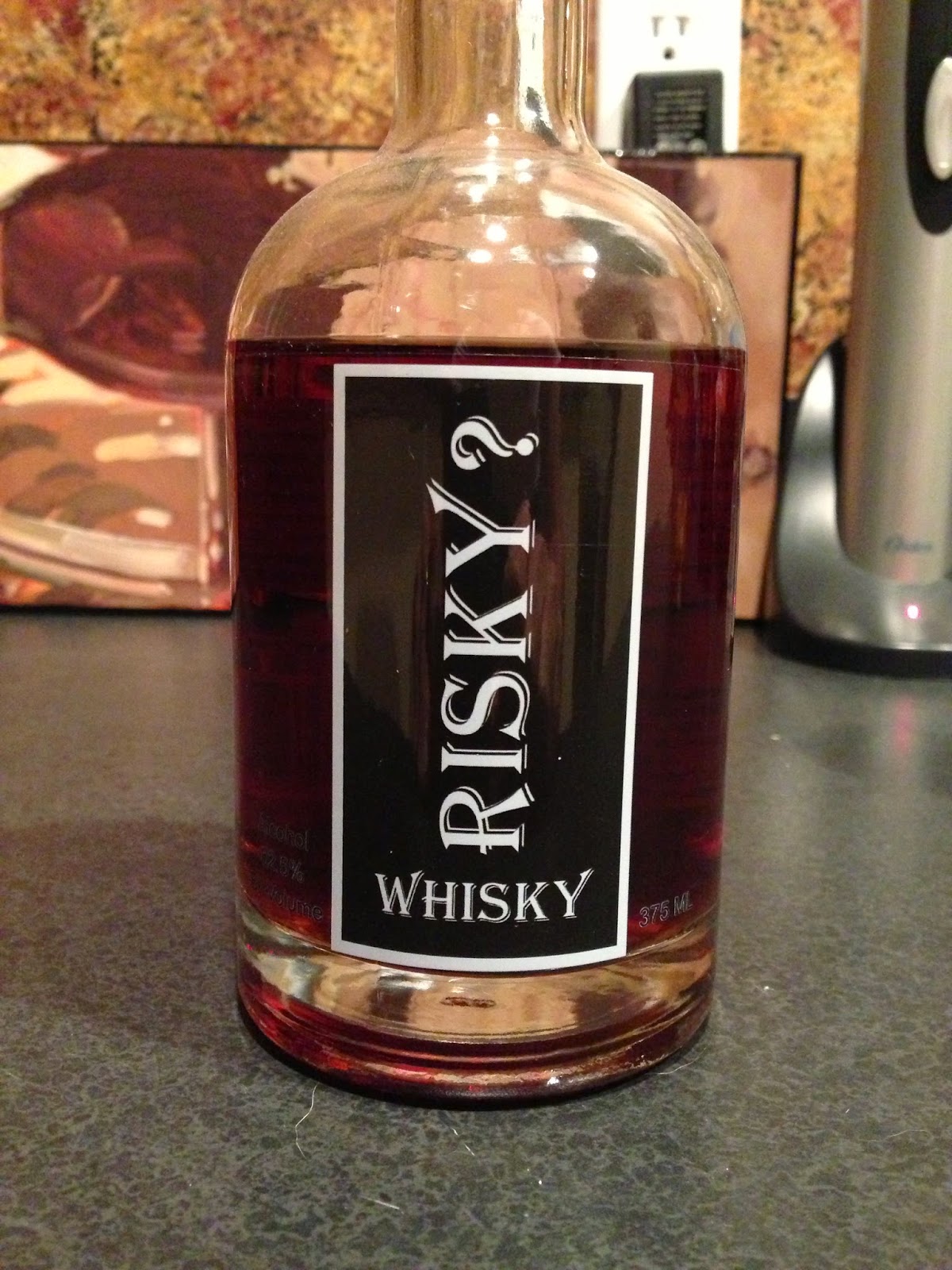
Many bloggers and readers alike are experimenting with blending their own stock of whiskeys – like Bourbonr’s “Poor Man’s Pappy” and Bourbontruth’s 60-40 blend of Bernheim Wheat and Rare Breed. Many others have started aging their own white dog in miniature barrels or blending different brands together. I took the route several years ago of trying “Risky Whisky,” which is a kit containing a bottle of white dog, a mason jar and a handful of charred oak wood chips. While a friend ended up with a remarkable end product, mine was absolutely horrible (hence the “risky” name). It smelled like model airplane glue and tasted worse.
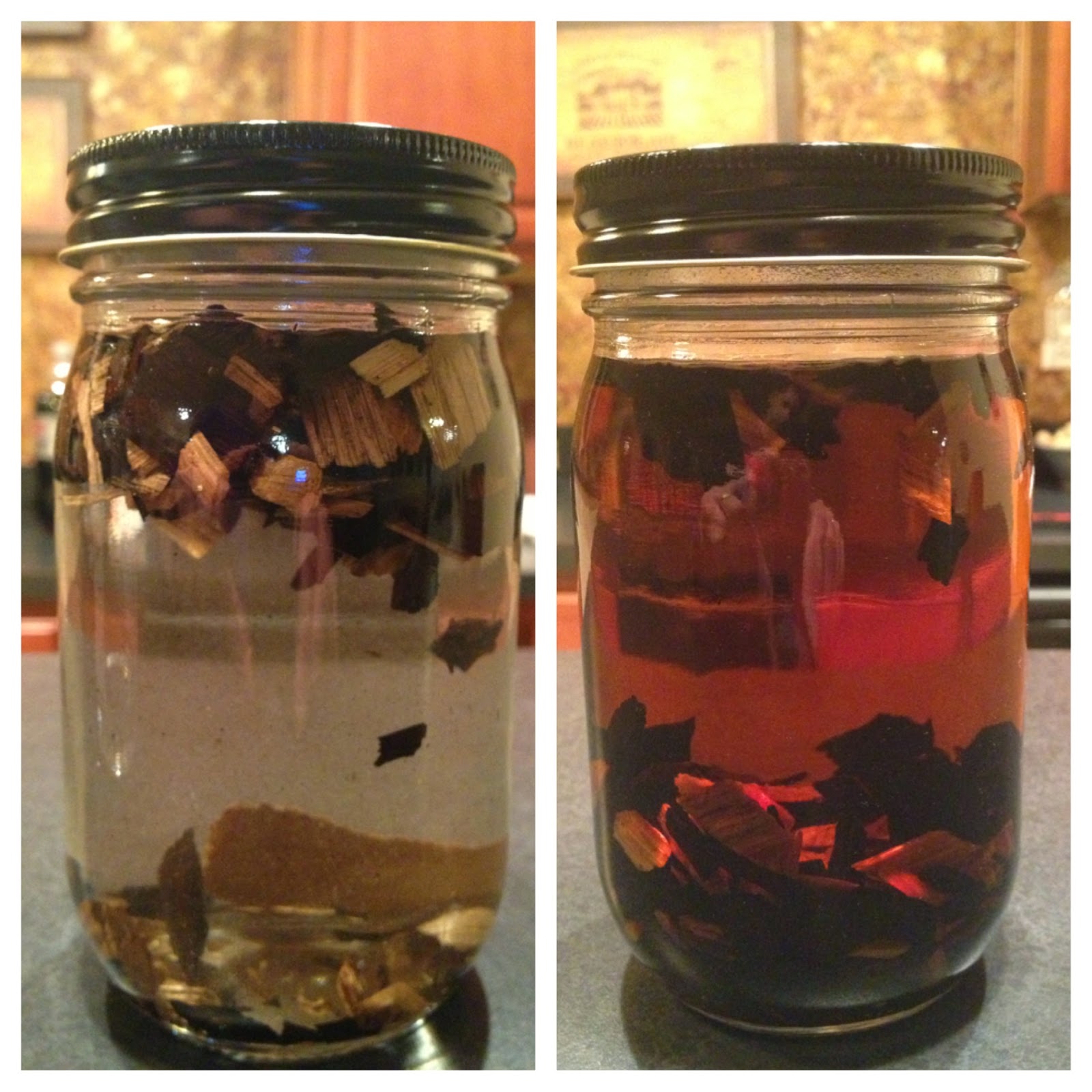
It’s been sitting on my shelf since then, where I periodically dare a guest to taste it. But after being inspired by the rectifiers of the 1800’s, who were a thorn in the side of Bourbon purists like Col. E. H. Taylor, Jr., I decided to see if I could rectify this abomination that I had created.
Some rectifiers of the 1800’s did not use safe additives. They’re not my inspiration. Other rectifiers used neutral spirits, harmless coloring and flavor additives to simulate the appearance and taste of Bourbon. Even though their product would have been safe to drink, some of them still passed off their concoctions as Bourbon. Selling something under false pretenses is deplorable, but the ability to mimic Bourbon is intriguing. It was also big business.
In the mid-1800’s Pierre Lacour published The Manufacture of Liquors, Wines and Cordials Without the Aid of Distillation, which contained a recipe for “Old Bourbon Whiskey” that blended neutral spirits, simple syrup, tea, oil of wintergreen, tincture of cochineal (a bug that when crushed provided red coloring) and burnt sugar. Around the same time, Joseph Fleischman published The Art of Blending and Compounding Liquors and Wines, which contained a variety of recipes that could be passed off as Bourbon and Rye, mostly involving neutral spirits, prune and other juices, simple syrup and coloring
The Kentucky Court of Appeals in E. H. Taylor, Jr. & Sons Co. v. Marion E. Taylor, 27 Ky.L.Rptr., 124 Ky. 173, 85 S.W. 1085 (1905) noted the difference between rectified whiskey and straight Bourbon, and, interestingly, noted that it was favored over true Bourbon:
[R]rectifiers or blenders take a barrel of whisky, and draw off a large part of it, filling it up with water, and then adding spirits or other chemicals to make it proof, and give it age, bead, etc. The proof also shows that from 50 to 75 percent of the whisky sold in the United States now is blended whisky, and that a large part of the trade prefer it to the straight goods. It is a cheaper article, and there is therefore a temptation to simulate the more expensive whisky.
Col. Taylor was instrumental in changing that tide, running rectifiers out of town, and in passage of the Bottled-In-Bond Act of 1897, which was drafted to protect the public and to give assurances about the actual spirits contained in a bottle. Among other requirements, the Act originally required that any spirit labeled as “Bottled-in-Bond” identify and be the product of one distiller at one distillery during one distillation season, be aged in a federally-bonded warehouse under federal governmental supervision for at least four years, have no additives, be bottled at exactly 100 proof and be sealed with an engraved strip stamp. And later, President William Howard Taft’s famous “Taft Decision” in 1909 defined “straight,” “blended” and “imitation” whiskey, to further protect the public and to provide assurances that the public could know exactly what they were buying and drinking.
Still, I was surprised to learn how downright easy it was to turn my swill into something that competes with many mid-shelf Bourbons. After some experimentation with smaller samples and a long list of flavoring agents from pomegranate juice to fresh herbs, my final additives included:
· One vanilla bean
· Almond extract
· Tea
· Fresh mint leaf
· Fresh lemon balm leaf
· Caramel extract
The result was dramatic. So instead of dumping it, experiment with your Town Branch, Old Crow, or whatever you think is rot gut that has been collecting dust in the back of your bottom shelf, and try your hand at rectifying.
Devil John Moonshine & Oak Rum at Barrel House Distillery.
Back when I was at the University of Kentucky in the early-and-mid 90’s, I had a 1979 Chevy Impala. Despite it being my first car – and sentimentally the favorite car I’ve ever owned – it always needed a lot of mechanical work. So I made many, many trips to Ferrell’s, which was on Manchester St., north of Rupp Arena. It was in a dark, run-down, formerly industrial area of town, and I had no clue that I was driving past a slice of Bourbon history.
When I started learning about James E. Pepper and his distillery, I hunted down the distillery site, and found it in ruins, but I was happy to see Ferrell’s still going strong. While the Pepper distillery was pretty apocalyptic, the entire site is being gutted and renovated, and a micro-distillery has been operating on site for years. The site as undergone huge improvements recently, as shown in these comparison pictures:
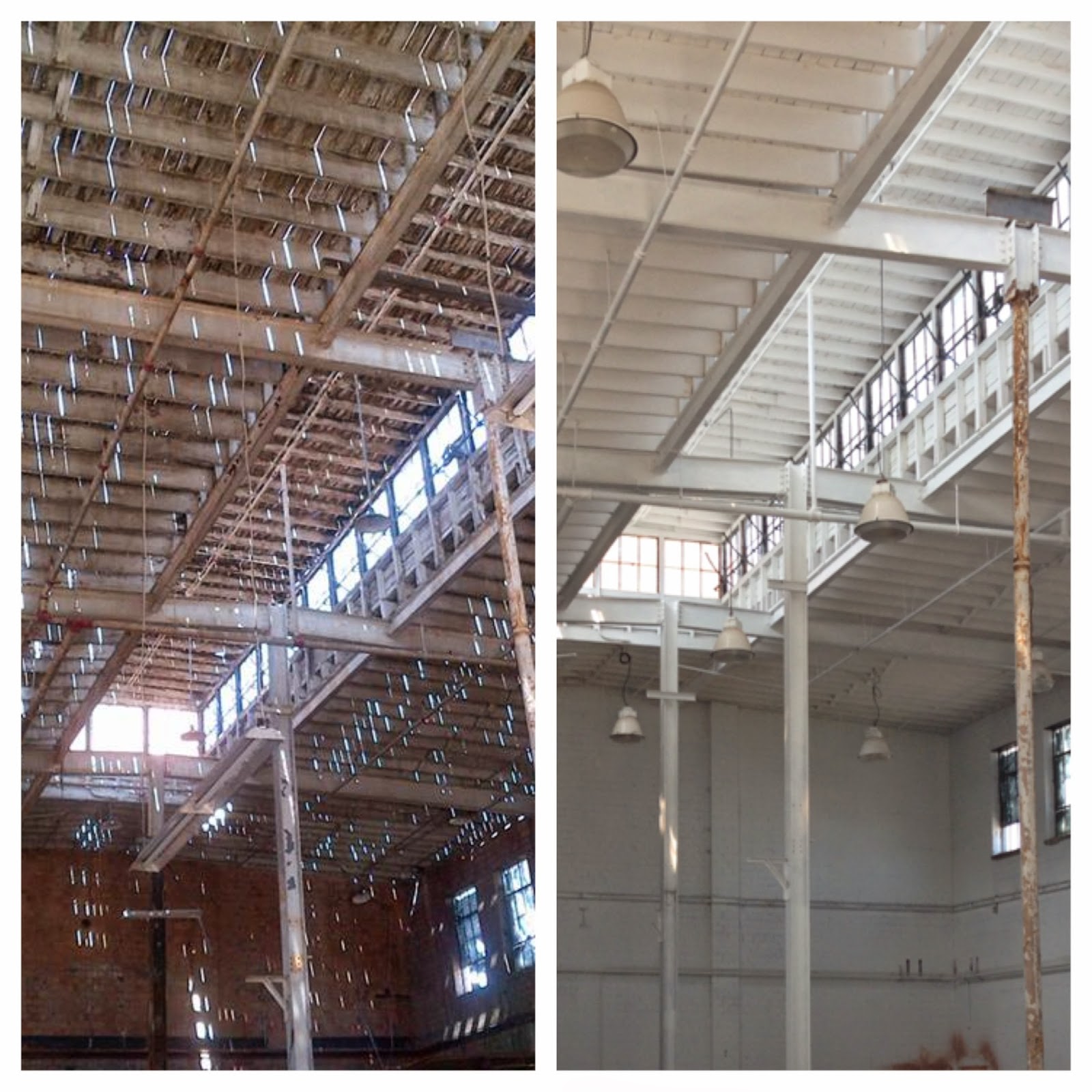
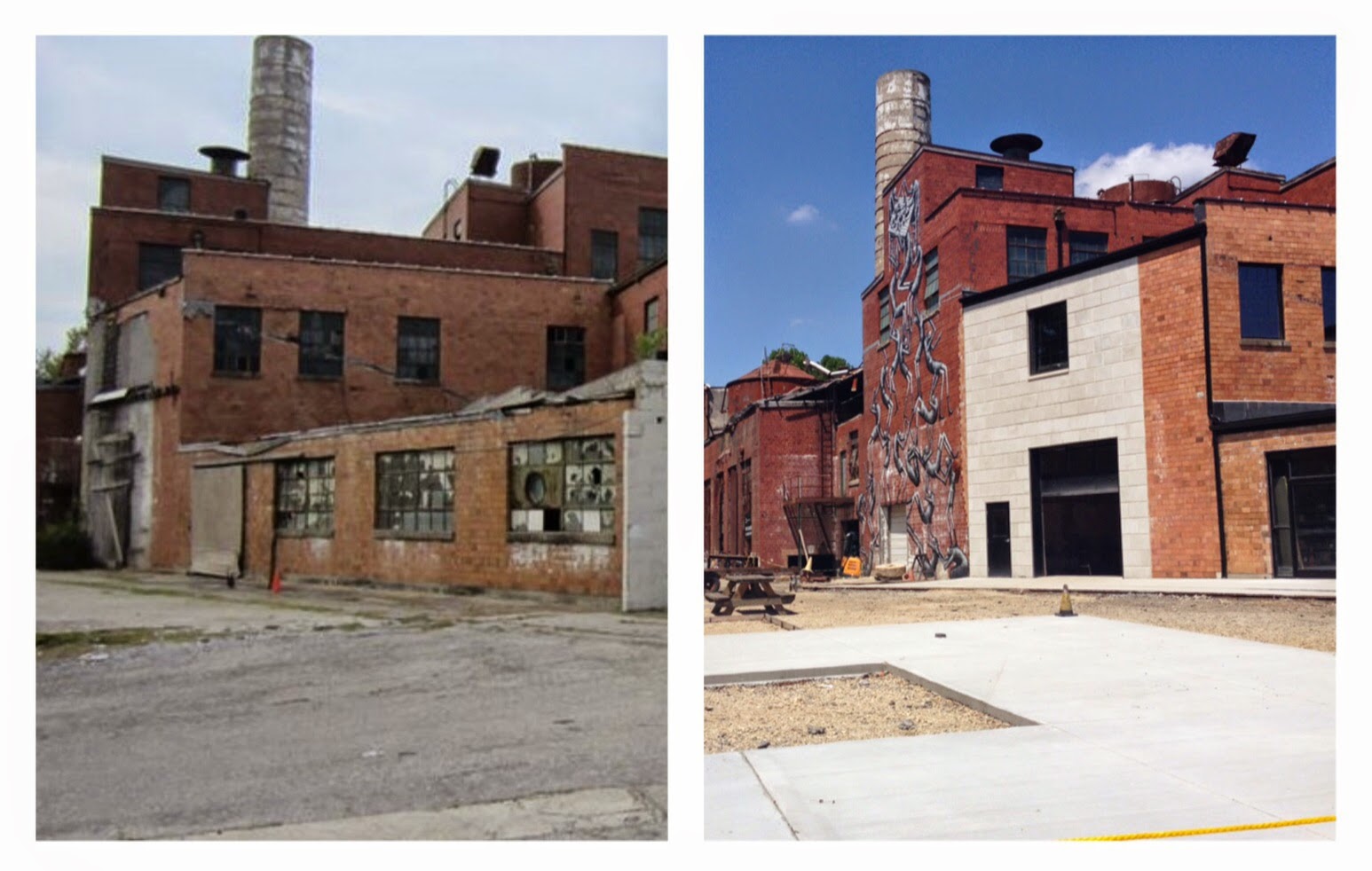
But the Manchester St. side is still an eyesore:
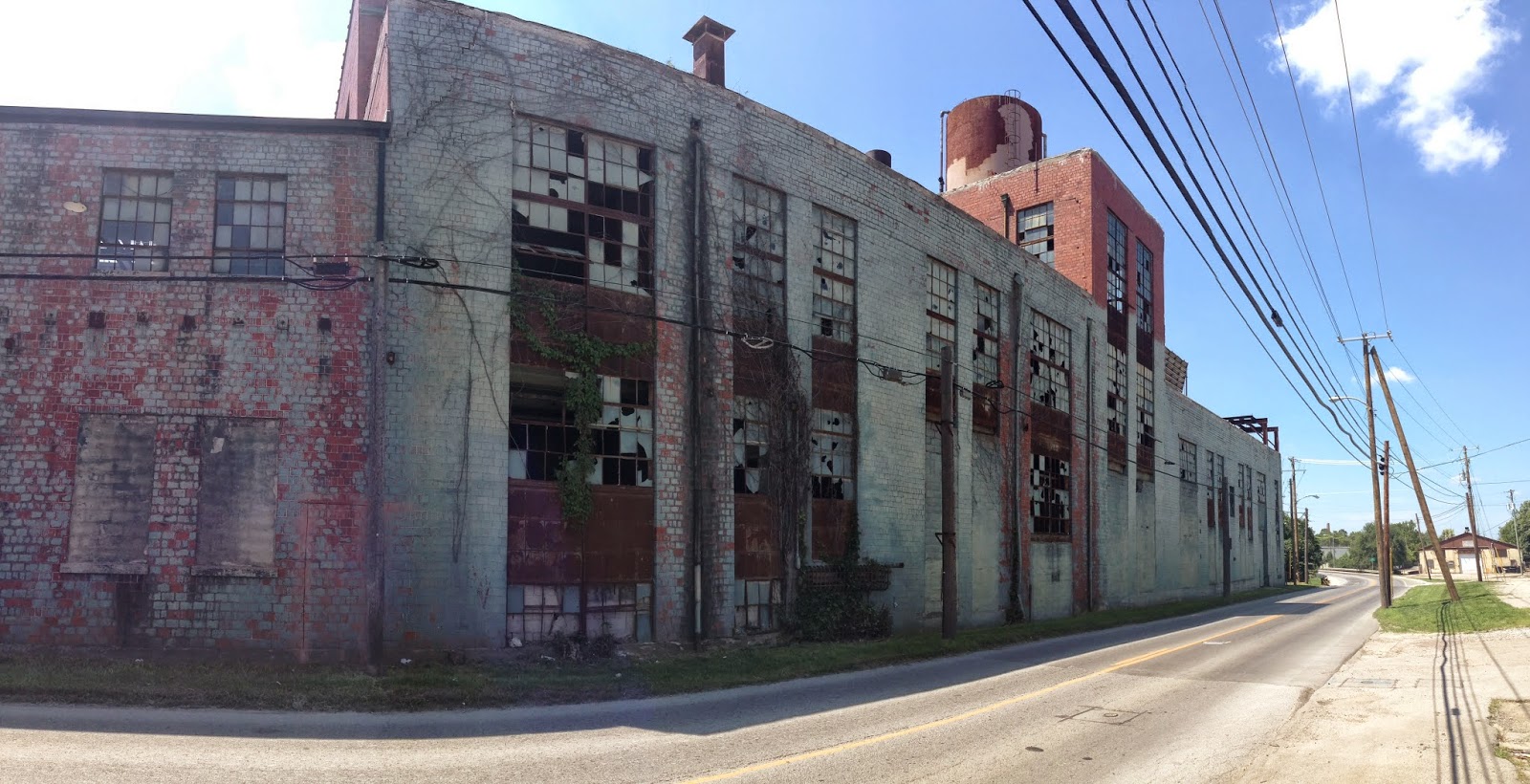
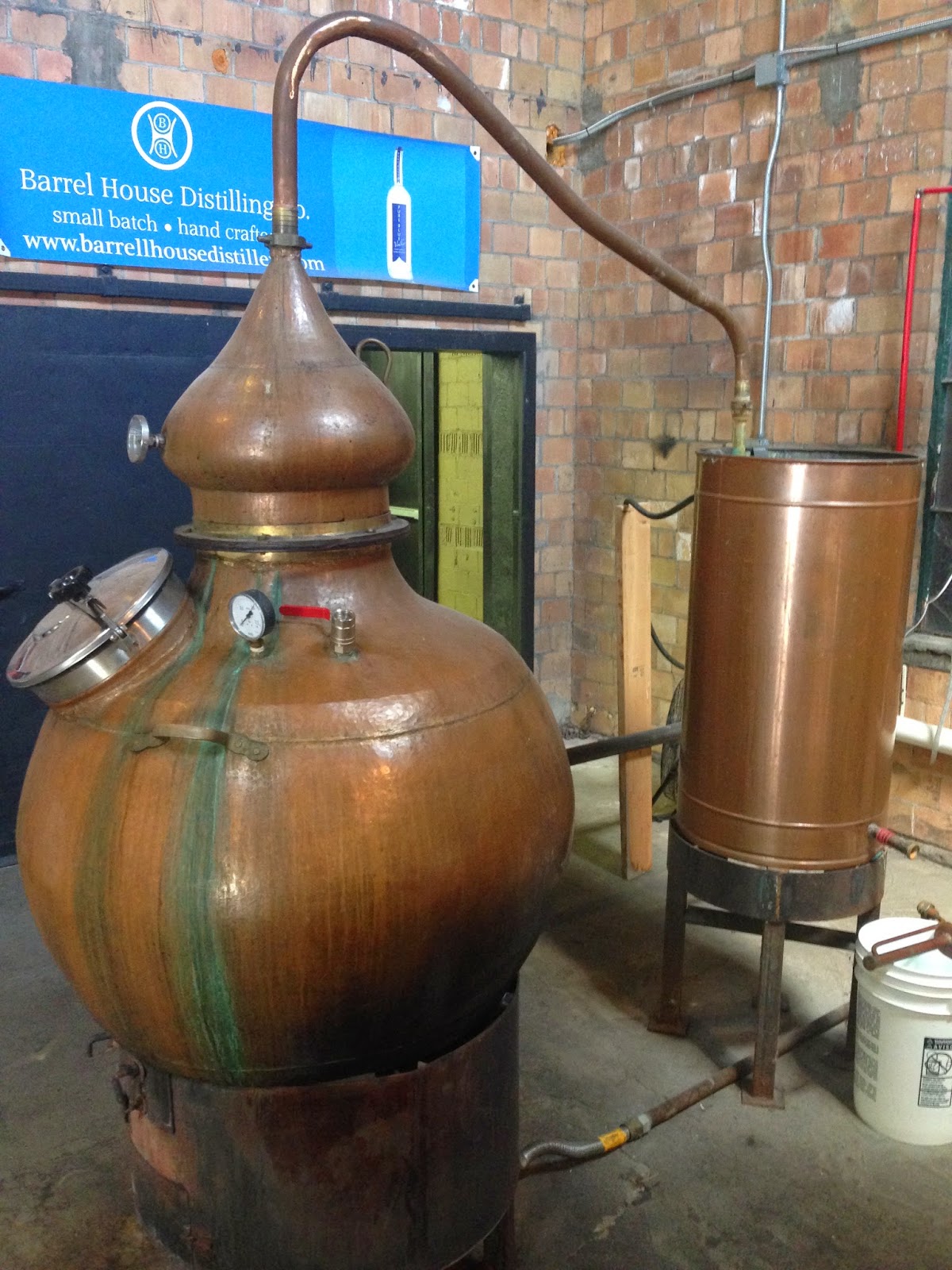
This all brings me to my latest stop on the Kentucky Bourbon Trail Craft Tour, the Barrel House Distillery, home of Devil John Moonshine, in a former barrel house of the James E. Pepper Distillery. Barrel House Distillery produces Bourbon-barrel aged Rum, Pure Blue Vodka (made from 100% corn), Devil John Moonshine, a soon-to-be-released Bourbon barrel aged Moonshine, and – importantly – Bourbon. Although the precise mash bill is a secret, in round numbers the Bourbon is made with 60% corn, 30% wheat and 10% barley. The oldest Bourbon is six years old, and while it isn’t ready yet, Barrel House is hoping for early 2015. Barrel House Distillery uses a 130-gallon pot still, and ages its Rum and Bourbon in a separate part of the same building, using Buffalo Trace barrels for the used barrel aging, mini-barrels from Kelvin Cooperage for its Bourbon, and standard 53-gallon barrels for its older Bourbon.
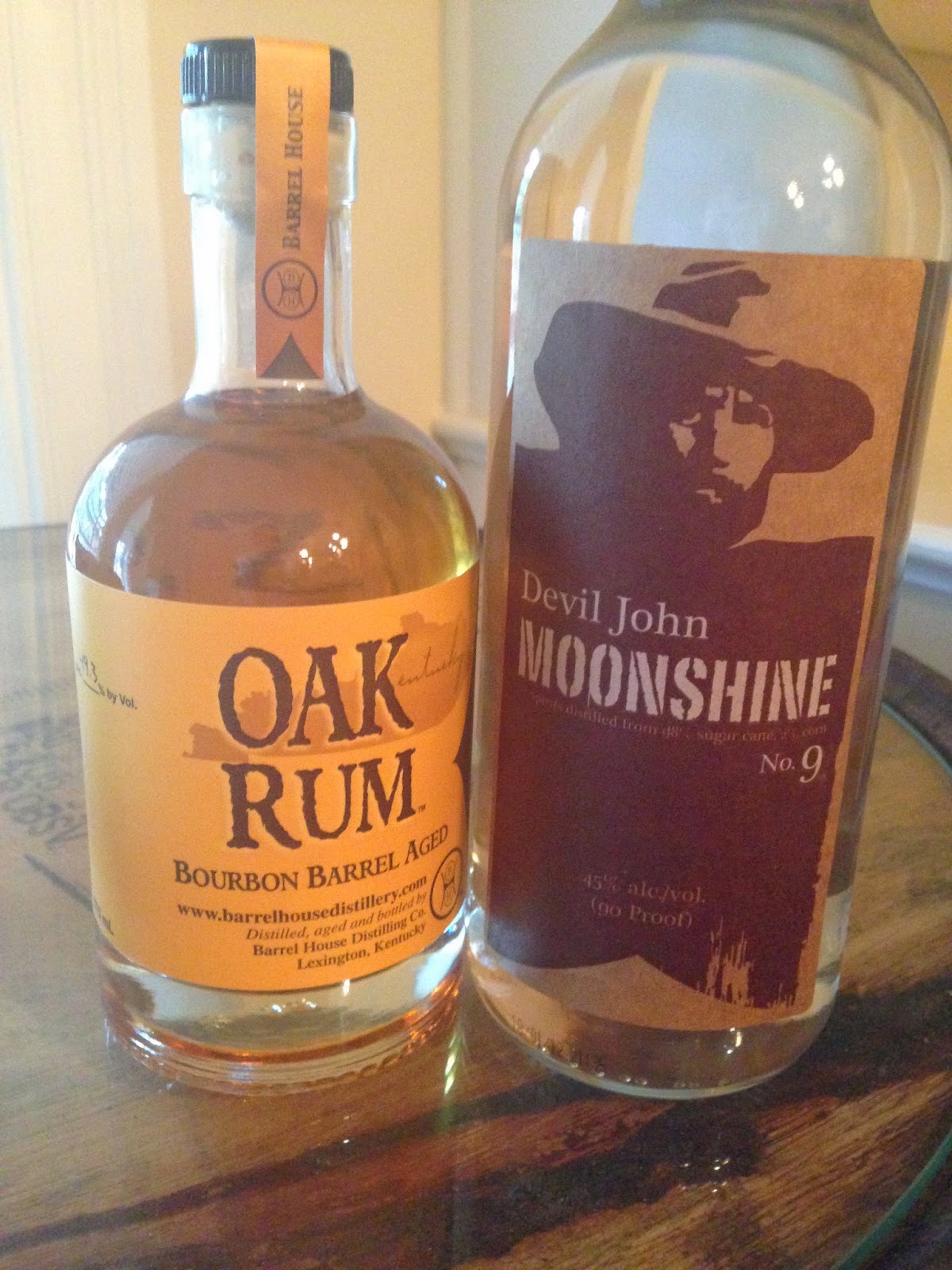 Devil John Moonshine was originally sold at 90 proof in a tall bottle, although now Barrel House has switched to a more authentic, shorter bottle (and thankfully not a hokey mason jar), and is bottling at 100 proof. The retail price that I paid was $21.99, although I’ve seen it priced at $24.99. (The 90 proof version is on sale now at the gift shop for $19.99 to clear inventory.) This moonshine is distilled with a vast majority of sugar cane, but also with some corn. The nose is more aromatic than I expected, with less of an ethanol hit than is typical with some moonshine. The flavor combines the rum sweetness of sugar cane and corn graininess. It finishes with more corn sweetness, and while not particularly complex, it’s a longer finish than I expected. Still, overall, Devil John ought to be limited to an alternative for mixing.
The Oak Rum comes in a 375ml bottle, retailing for $24.99. The used Bourbon barrel aging gives it a light amber hue, and in this case, it was bottled at 98.6 proof. I’m typically not a rum drinker, so I was hoping that the Bourbon barrel flavors would shine through. The nose was mostly sweet, but added dimensions of citrus and oak. Like the nose, tropical sweetness dominated in the taste, but the sweetness was balanced out by magic that was left in the Bourbon barrel – caramel, vanilla and oak – which also helped bring some earthiness to the finish. Overall, this never had a prayer of swaying me away from Bourbon, and I’ll be sharing it with Rum fans to get their impression.
In the meantime, definitely add Barrel House Distillery to your list for the Craft Tour, and I’ll be on the lookout for the wheated Bourbon in 2015.
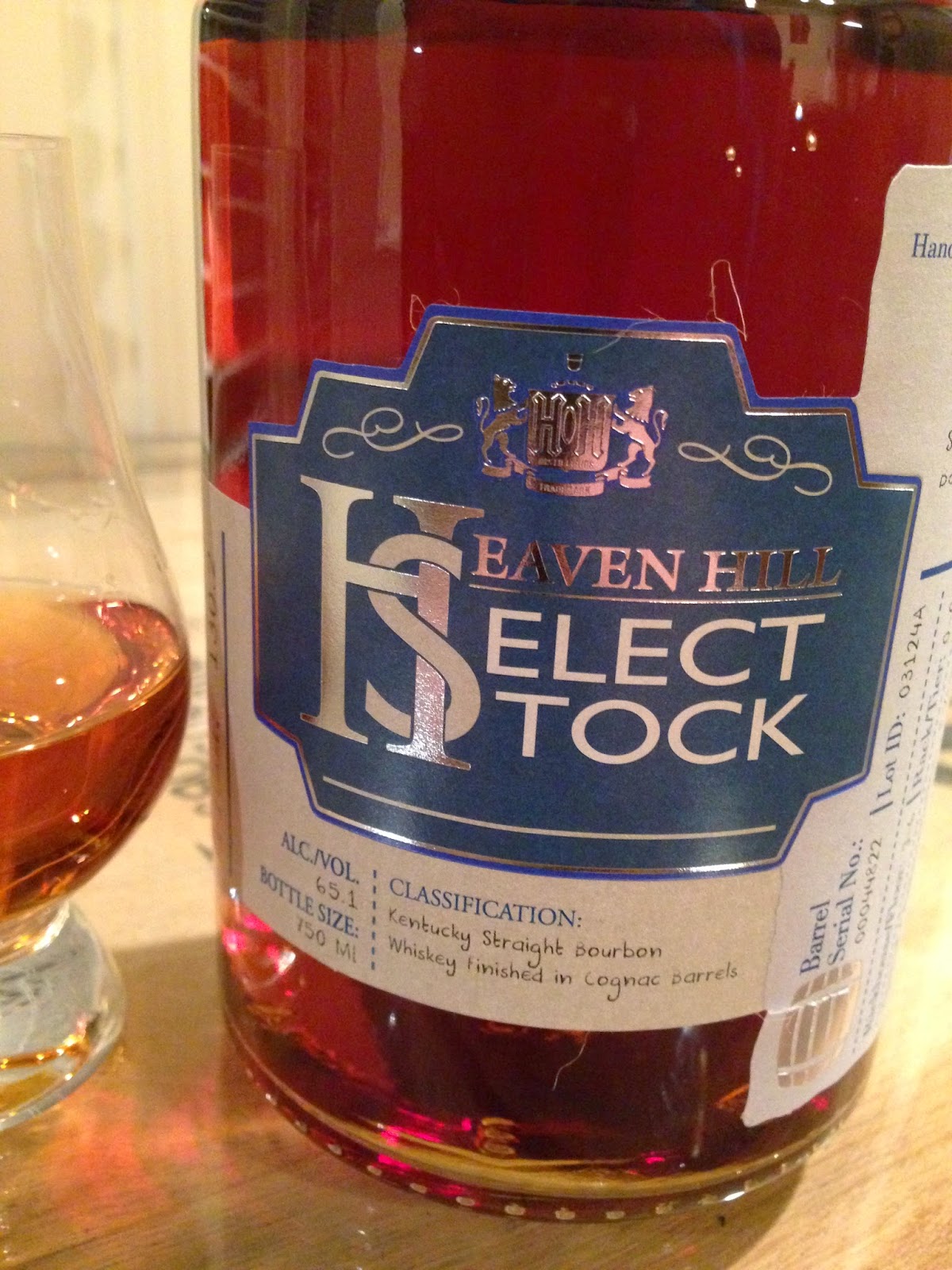
Sipp’n Corn Bourbon Review – Heaven Hill Select Stock (8-year wheated + 2-year Cognac finished; Spring 2014)
Heaven Hill Select Stock is just one in an increasingly long line of special edition, high-end and even higher-priced Bourbon. You won’t find it at your favorite retailer. You won’t find it outside of Kentucky. In fact, you won’t find it outside of the Bourbon Heritage Center in Bardstown, Kentucky. Its rareness and retail price could have made this bottle an instant collectible, but its taste needs to back up the price tag, so for those of us interested in experiencing Bourbon, I have this review.
Bourbon: Heaven Hill Select Stock (Spring 2014 Release)
Distillery: Heaven Hill New Bernheim (Louisville) and aged in Bardstown
Age: 8 years + finished 2 years in Cognac barrels
Proof: 130.2 proof
Cost: $250.00
Tasting Notes
Color:
Rich amber with a reddish hue; silky.
Nose:
The high proof is very evident from the nose, but once you get past the strong ABV, the nose is a pleasant blend of dark fruit and citrus, along with some floral wine notes. I would not have accurately guessed that this was the Heaven Hill wheated recipe from the nose.
Taste:
Again, the ABV dominates when tasting neat, to the point where I don’t recommend it neat. This Select Stock needs ample time with air, a splash of water and ice. Once the alcohol burn is dealt with, flavors of corn, pear, cherries and oak are most prominent. The Cognac finish shines, but in a subtle way (not overpowering). The tastes profile is missing some traditional Bourbon characteristics (especially the rich sweeter notes often found in wheated Bourbon), but sweet flavors still dominate, which in hindsight might be the outcome of the finishing. There’s also a perfume note that I could do without.
Finish:
There’s plenty of heat in the finish. As with the nose and the taste, the finish is not best when tasted neat. Aeration, water and a chill all dramatically improve the finish, resulting in a warm, long finish. There is some bitterness in the finish, but it is not distracting.
Bottom Line
I might have been one of the first purchasers of Select Stock this past March, but I’ve been hesitant to open it, maybe because of the price, or maybe out of a perception that it was going to be something too special for a random midweek pour. Then I saw that a new batch, which had not been aged quite as long, was being sold at the Bourbon Heritage Center for “only” $150. What about my version was going to warrant an additional Benjamin? That extra intrigue, combined with the upcoming September flood of limited edition Bourbon, helped me decide to crack it open for a review.
This is a Bourbon that deserves some experimentation with different amounts of water or ice, other chilling methods, and especially with aeration by “hyperdecanting” to trigger oxidation and help mellow harsh flavors. However, this means that I don’t recommend simply pouring and drinking, which I consider to be the real rubber-meets-the-road test for Bourbon.
While Select Stock fails that high standard for me, I really enjoyed it once I personalized it. I’d be interested in trying Select Stock in a blind tasting, or at least seeing the results of a blind tasting, especially paired with Parker’s Heritage Collection 5th Edition, which was also Cognac finished. In the meantime, for rating purposes, Select Stock is overpriced at $250 – a fact that Heaven Hill seems to have recognized for its newer releases – and in this case it really hurts the score on my scale. I didn’t score Select Stock as a must-have Bourbon, and while I’m certainly happy to have it in my home bar, there are taste and profile peers that won’t bust your Bourbon budget.
Score on The Sipp’n Corn Scale: 3.0
The Sipp’n Corn Scale:
1 – Wouldn’t even accept a free drink of it.
2 – Would gladly drink it if someone else was buying.
3 – Glad to include this in my bar.
4 – Excellent bourbon. Worth the price and I’m sure to always have it in my bar.
5 – Wow. I’ll search high and low to get another bottle of this.
Limestone Branch – Craft Distilling, Sugar Shine and Experimentation.
I’ve been to the truly big distilleries where operations are much more akin to a “factory” than what many of us envision when we hear “distillery.” Some control rooms make these factory operations seem like NASA instead of what the homespun legends would have us believe. Those distilleries are still fascinating, they can make some outstanding Bourbon, and I’ll be visiting all of them again, but thankfully we can also see small-scale (and micro-scale) distilling that is a more accurate depiction of Kentucky’s early frontier distillers.
One of those micro-distillery options is Limestone Branch Distillery in Lebanon, Kentucky. Limestone Branch, along with eight other craft distilleries, is part of the Kentucky Bourbon Trail Craft Tour, which I highly recommend.
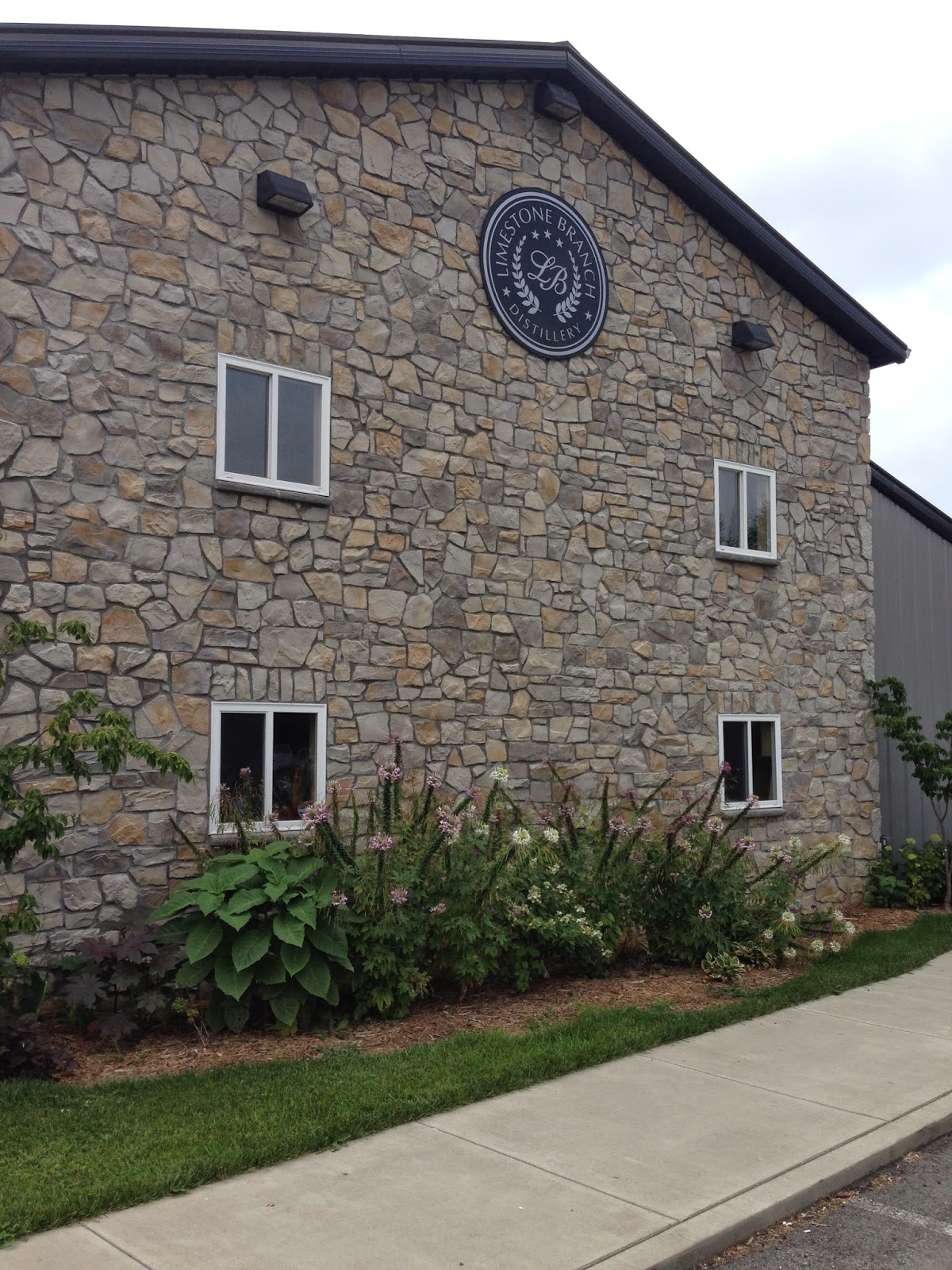
A couple of these craft distilleries have as much history as the big distilleries, and one unique fact about Limestone Branch is that it was founded by a Beam. It’s no secret that the Beam family has played integral roles in many distilleries other than Jim Beam, including Heaven Hill, Maker’s Mark, Barton and a bevy of historical brands. A Beam even helped Mary Dowling move Waterfill & Frazier to Juarez, Mexico during Prohibition. So it should come as no surprise that yet another Beam – Steve Beam – is at the helm of Limestone Branch.
Remarkably, Steve Beam gets his Bourbon heritage from both sides of his family. Steve’s great-great grandfather on his mother’s side of the family was J.W. Dant, who began distilling whiskey in 1836. The distillery was then operated by Steve’s great grandfather, W.W. Dant and his brother, J.P. Dant, and Bourbon fans will recognize the Dant name.
On the Beam side, Steve’s great-grandfather is Minor Case Beam, the great-grandson of Jacob Boehm (who is said to have arrived in Kentucky through the Cumberland Gap with a pot still, and then changed his surname to “Beam”), and the cousin of James Beam. Minor Case Beam had three distilleries, and his direct descendants continued to produce Bourbon including Old Trump, Pride of Nelson and Richwood.
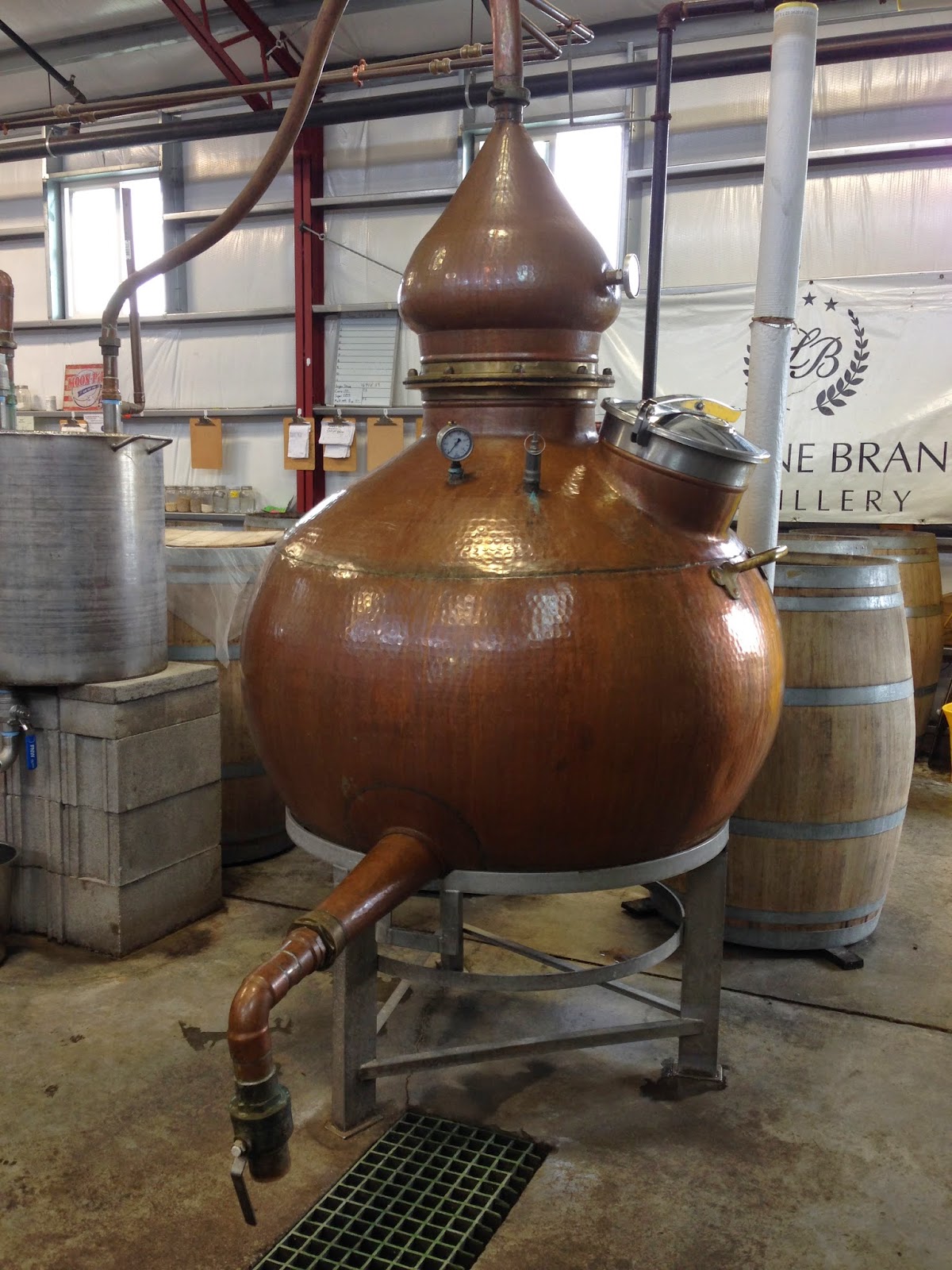 The operations at Limestone Branch are more on scale with Kentucky’s earliest distillers. By my estimation, the entire contents of the distillation room – the still, tanks, barrels, equipment, grain, cabinets, tables, everything – could fit into just one of the 10,000 gallon mash tubs at Jim Beam. And like the early distillers, Limestone Branch starts with locally-grown heirloom corn and a 150-gallon copper pot still. Using a mash bill that I couldn’t convince Steve to tell me, Limestone Branch barreled its first Bourbon distillate 2 ½ years ago. With just a single barrel at that age, Steve understandably couldn’t spare a sample for an inquisitive blogger like me.
 This incredibly small scale can’t produce much distillate, and there’s no substitute for the time it takes Bourbon to age, so Limestone Branch’s primary craft product now is Moonshine. Limestone Branch’s Moonshine – “Sugar Shine” – is distilled with 50% corn and 50% cane sugar, and then proofed and flavored. With all due respect to the magic taking place at Flavorman, that’s not how Limestone Branch does it. For instance, the Blackberry Sugar Shine is made with real blackberries, and the Apple Pie Sugar Shine is made with high-quality apple juice. I bought the Blackberry Sugar Shine and mixed it at home with lemonade and fresh mint leaves on ice for a refreshing close to a hot afternoon.
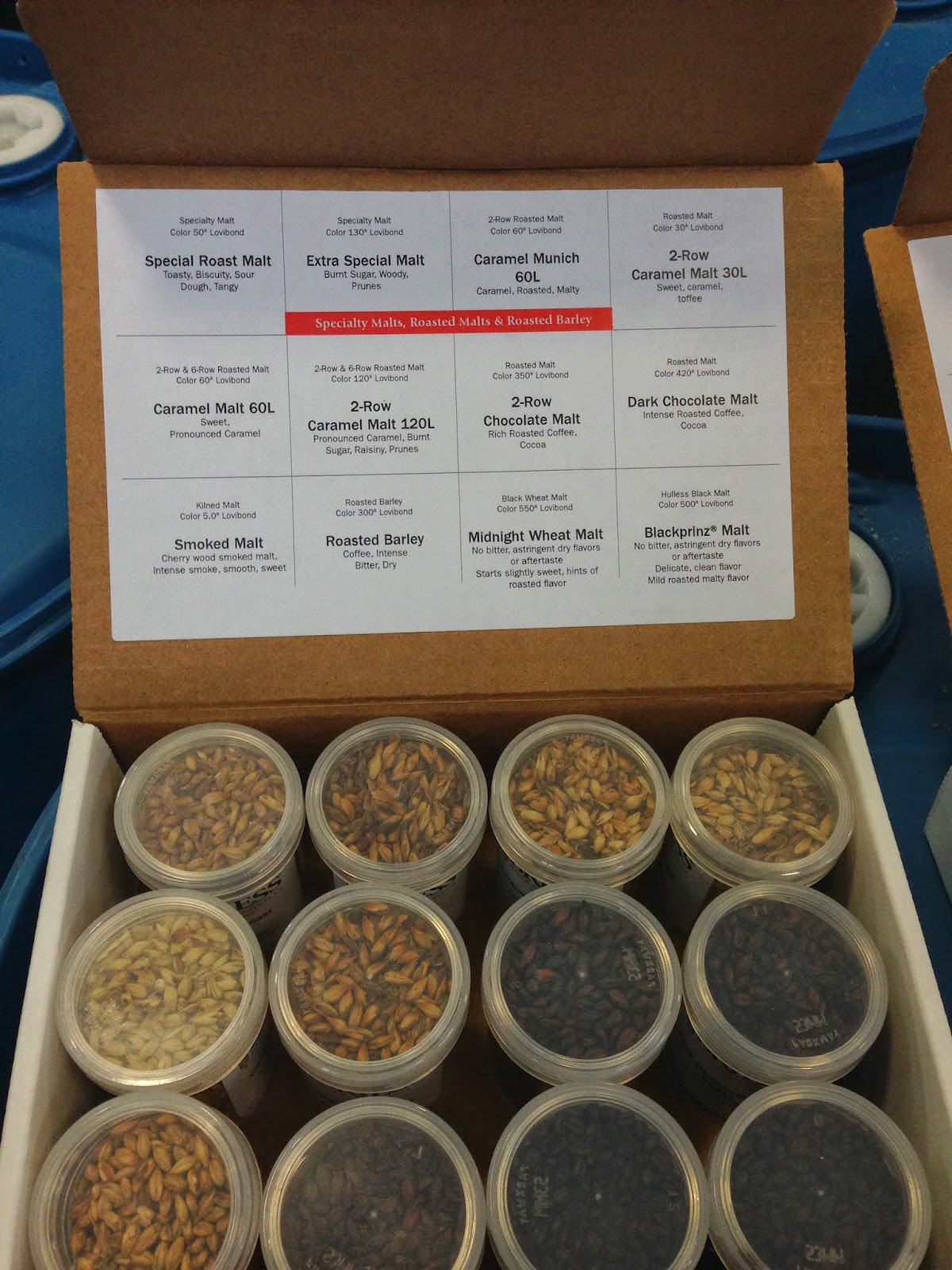
The small scale and craft mentality at Limestone Branch also fosters experimentation. So many factors go into the profile of Bourbon – grain sources and percentages in the mash bill, water source, yeast strain, proof at barreling, char level, aging location and conditions – just to name a few. Lisa Wicker, who is in charge of fermentation and production at Limestone Branch, showed me yet another factor: barley. I tasted barley at Limestone Branch that could result in some incredible flavor profiles down the road. I never appreciated how different barley could taste, or how it can impart flavors of cherry, chocolate or caramel to distillate, and eventually to Bourbon.
With experimentation like this, look for big things from Limestone Branch in the years to come. In the meantime, I’ll continue to go a little off the beaten path, and visit Limestone Branch again.

