Brian Haara
Bourbon. Law. Author.
Sipp’n Corn Bourbon Review – William Heavenhill Kentucky Straight Bourbon Whiskey (4th Edition 15-Year Cask Strength)
Despite my relative disappointment with some recent high-priced Bourbon, my resounding praise of Elijah Craig 12-Year Barrel Proof and this year’s Parker’s Heritage Collection (“Original Wheat”) drew me back into the Evan Williams Bourbon Experience to purchase the latest $250.00 extremely limited edition Bourbon from Heaven Hill: William Heavenhill 15-year Cask Strength. Like last spring’s Select Stock, this bottle is only available at the gift shop in Bardstown, but a few bottles found their way to Louisville. Unlike the wheated, Cognac-finished, Select Stock, William Heavenhill uses Heaven Hill’s standard Bourbon mash bill (75% corn; 13% rye; 12% malted barley), and there’s no fancy finishing.
What sets William Heavenhill apart from Elijah Craig 12-year Barrel Proof (aside from three additional years of aging) is that William Heavenhill was aged in barrels larger than traditional 53-gallon size. After some inquiries, Heaven Hill gave me exclusive additional information: they used nine out of thirteen custom-built 65-gallon barrels for this edition of William Heavenhill. Parker Beam found these custom-made barrels – that were actually built for a different customer – and he was intrigued. I was also told that the nine selected barrels only produced about 350 bottles, which seems low even for 15 years and cask strength, at least at average evaporation rates, but apparently three of the barrels in particular were extremely low.
Regardless, the real question is probably whether William Heavenhill is materially different when compared to a $55.00 Elijah Craig Barrel Proof? I certainly wondered, so I opened an Elijah Craig 12-year Barrel Proof from the spring of 2014, which weighed in at a conveniently similar 134.8 proof. Let’s see if there’s a $200 difference.

Bourbon: William Heavenhill Kentucky Straight Bourbon Whiskey
Distillery: Heaven Hill (distilled in Louisville and aged in Bardstown)
Age: 15 years (in 65-gallon barrels, stored upright)
Proof: 135.6 proof
Cost: $249.99
Tasting Notes
Color:
Dark brown; some of the darkest that I’ve seen. It’s even darker than Elijah Craig 12-year Barrel Proof, which used to be the darkest Bourbon in my collection.
Nose:
The nose is similar to Elijah Craig 12-year Barrel Proof, but it has more oak, and more earthy and leather tones too. It has a nice balance of oak and spice along with caramel and cinnamon apple. There isn’t as much burn on the nose as might be expected from the high proof, and it has noticeably less burn than the slightly lower proofed Elijah Craig (to be fair, this particular batch of Elijah Craig Barrel Proof has the hottest nose out of all of them to date).
Taste:
The high proof is evident immediately, but it’s not distracting. A little air calmed it down too, but it still has a robust blast of complex flavors. It has the oak and leather from the nose, with an overall dry taste, but much more complexity than I expected. The taste has fewer similarities compared to Elijah Craig 12 Barrel Proof than with the nose, but it’s clearly still related. William Heavenhill is creamier than the Elijah Craig and definitely drier, but despite having slightly higher proof, it’s less hot on the tongue. William Heavenhill also has a unique dry tang of black tea. This is a remarkable Bourbon.
Finish:
The finish was really long, and definitely longer than my comparison Elijah Craig, with the same spice, oak and black tea flavors carrying through from the taste.
Bottom Line
With such a limited release and with such a premium price, I would have appreciated more attention to detail on the bottle. The thick gold wax seal adds a nice touch, although the thickness and density of the wax made the strip really difficult to pull. The simplicity of the bottle itself makes it attractive, but hand-labeling the warehouse information and bottle number would have been a nice gesture for anyone dropping this kind of cash.
Regardless, I pay more attention to what’s inside the bottle than its appearances, and inside it is exceptional. It’s considerably better than my last $250 Heaven Hill purchase (the wheated, Cognac-finished Select Stock). Unlike that Select Stock, which I didn’t recommend drinking neat, William Heavenhill’s heat doesn’t absolutely require taming. Instead, much like Elijah Craig Barrel Proof and Parker’s Heritage Collection 8th Ed. Original Wheat, this is a beast that can be enjoyed neat, and then you’d better cut the proof. Adding differing amounts of water or ice gives a creamier, somewhat sweeter, taste, without sacrificing the finish.
While I really enjoyed William Heavenhill and would love to have a constant supply, I can’t say that it’s worth $200 more than Elijah Craig Barrel Proof, even though I think that this William Heavenhill is much better than my comparison Elijah Craig Barrel Proof. On the other hand, this edition of William Heavenhill is unique, so I hope you get a chance to try it. If I didn’t consider value, or if this were priced in the range of the suggested retail prices for many of this fall’s limited edition releases, William Heavenhill would have easily scored a 4.5, and maybe higher. But I do account for value, so I had to adjust the score to a 3.5.
Thanks to sharp eyes and good fortune of a friend in Savannah, I just learned that Heaven Hill bottled one of its other 65-gallon barrels of the same mash bill 15-year Bourbon (bottled at 131 proof) as a private barrel under the Select Stock label. This barrel was selected for Bourbon Bar in Atlanta, where the menu indicates a price of $40.00 per pour. That leaves three more 65-gallon barrels unaccounted for; let the hunt begin.
Score on The Sipp’n Corn Scale: 4.0 (4.5+ if not considering price)
The Sipp’n Corn Scale:
1 – Wouldn’t even accept a free drink of it.
2 – Would gladly drink it if someone else was buying.
3 – Glad to include this in my bar.
4 – Excellent bourbon. Worth the price and I’m sure to always have it in my bar.
5 – Wow. I’ll search high and low to get another bottle of this.

Sipp’n Corn Bourbon Review – “The Smooth Ambler Old Scout Challenge”
I was inspired to review these after attending a Smooth Ambler tasting in September with John Foster, Director of Sales and Distiller at Smooth Ambler in Maxwelton, West Virginia. He was a breath of fresh air in the often secretive and sometimes deceitful world of sourced whiskey, or, as Smooth Ambler calls it, “merchant bottling.” John took us through a tasting of Smooth Ambler Yearling, a 1.5 year old wheated Bourbon, a 7 year old high-rye Bourbon sourced from MGP, a 10 year old low-rye Bourbon sourced from MGP, a 7 year old rye whiskey sourced from MGP, along with vodka, gin and a barrel-aged gin. To top off all of those, John pulled out a sample bottle of the highly-anticipated “Contradiction,” a blend of 73% of 9 year old MGP high-rye bourbon with 27% of Smooth Ambler’s 2.5 year old wheated Bourbon.
Smooth Ambler started with the goal of distilling and selling vodka and gin while waiting for its Bourbon to age. Realities of business, however, led Smooth Ambler to also become a non-distiller producer (“NDP”) for some of its current product line. So unlike many NDPs who don’t distill a drop, Smooth Ambler is busy both distilling and aging its own product, as well as sourcing Bourbon from MGP in Lawrenceburg, Indiana. Many small craft distillers simultaneously sell sourced and produced spirits, but Smooth Ambler is different because of its scale, perhaps only being topped by Willett among brands that both distill and source (Willett just got there in the reverse direction).
Smooth Ambler is also honest about the contents and provenance of its Bourbon. Smooth Ambler freely discloses and distinguishes between what they distill and what they source. There are no secrets about the mash bills and there’s no pretending that they found their pre-Prohibition family recipe.
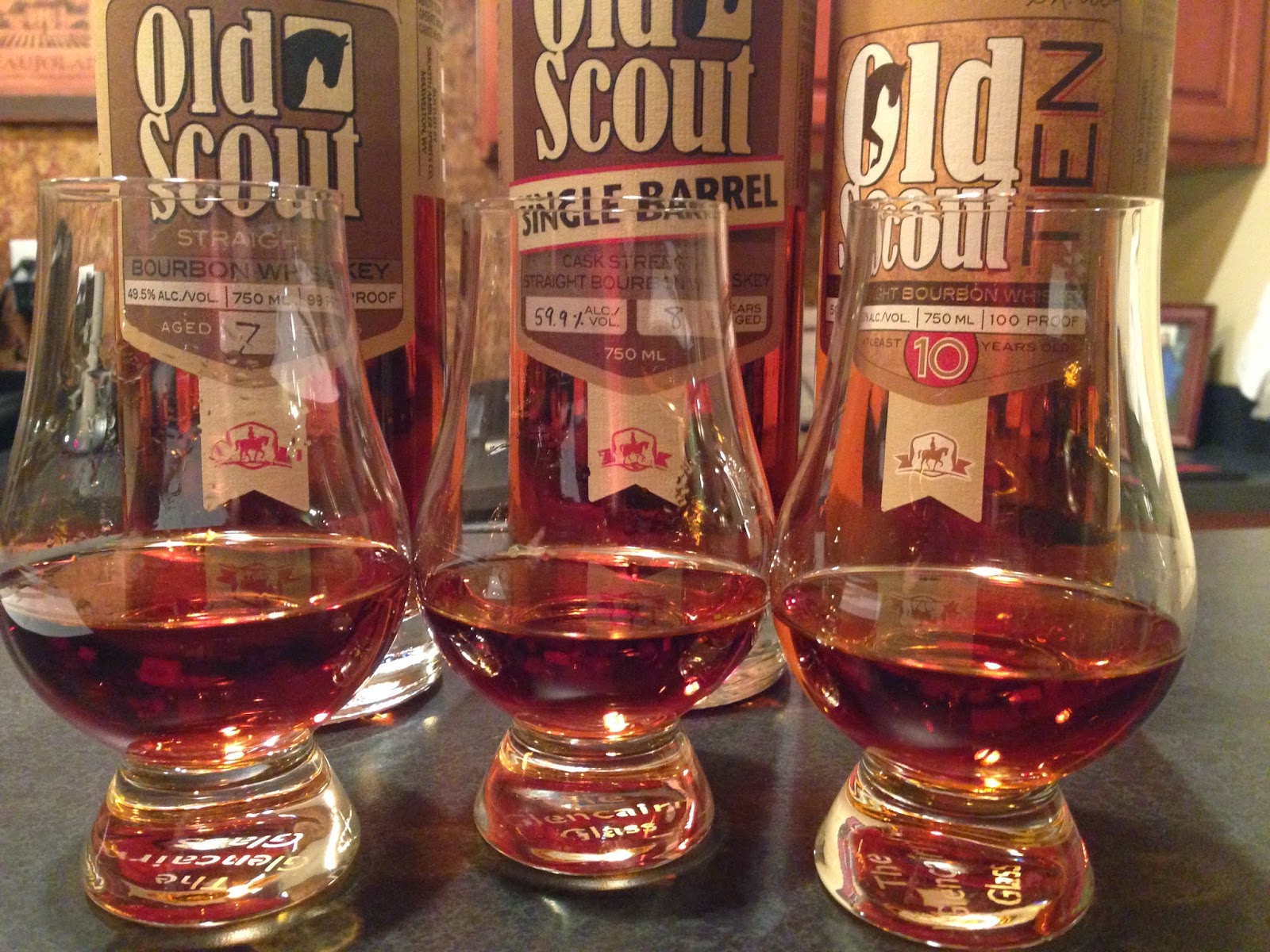
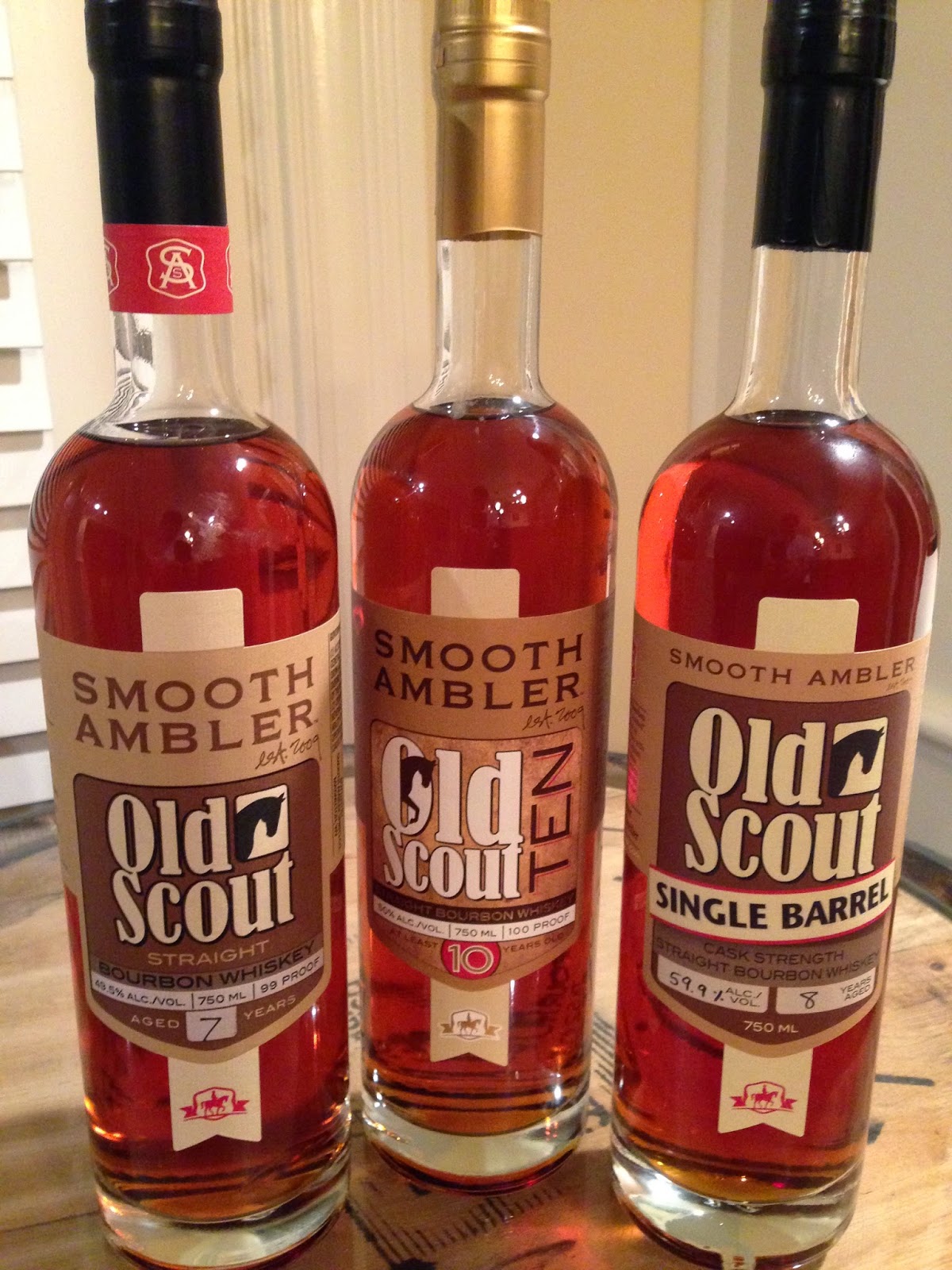
I had picked up bottles of the 7-year and 10-year this past summer in Michigan (which by their batch numbers and bottling dates appear to have sat on the shelf for a year), but I hadn’t opened either one yet. I enjoyed the tasting so much that I picked up the eight-year Single Barrel that night, and I decided that it was high time to put them to the test. I like the proof of these three options, I like that they’re not chill-filtered, and I like that they’re in a sweet spot for aging. With all of these things done right, let’s just hope that the Bourbon passes muster.
Here are the three, ordered by proof:
Smooth Ambler Old Scout 7-year Straight Bourbon Whiskey
Distillery: Sourced from MGP; Batch 30 bottled 5-29-2013
Mash Bill: 60% corn; 36% rye; 4% malted barley (MGP high-rye recipe)
Age: 7 years
Proof: 99
Cost: $41.99
The color is deep copper trending toward light brown. The nose is strong on rye and black pepper spice, but is balanced with caramel, slight oak, and a little mint. The nose has great subtle flavors and is really pleasant. Caramel and vanilla sweetness are the first tastes, but that quickly transitions to nice blast of rye, tea and pepper. Right away you can tell that this is a remarkable Bourbon. The medium-length finish is very warm, dry and lingering.
Smooth Ambler Old Scout 10-year Straight Bourbon Whiskey
Distillery: Sourced from MGP; Batch 4 bottled 6-10-2013
Mash Bill: 75% corn; 21% rye; 4% malted barley (MGP low-rye recipe)
Age: 10 years
Proof: 100
Cost: $56.99
Interestingly, the color isn’t any different than the 7-year, which I expected given the extra time and lack of chill filtering for either. The most noticeable differences in the nose include clear oak and corn sweetness replacing the rye spice, but it also had nuanced scents of clove, pear, honey and an old empty tobacco barn. My first taste seemed a little hotter than 100 proof, but the heat mellowed to warmth with a little air. The taste also has buttered corn sweetness, cocoa, roasted nuts and caramel. I had hoped for a longer finish, but it has nice warmth and ends with a little mint.
Smooth Ambler Old Scout 8-year Single Barrel Straight Bourbon Whiskey
Distillery: Sourced from MGP; Barrel 904 bottled 9-16-2014
Mash Bill: 60% corn; 36% rye; 4% malted barley (MGP high-rye recipe)
Age: 8 years
Proof: 119.8 (barrel proof)
Cost: $47.99
The color is essentially the same as the other two, which again puzzled me since no water was added to this one to reduce the proof for bottling. I literally put all three in front of a light and the differences are miniscule, if there’s any difference at all. The nose is very similar to the 7-year, although the higher proof is absolutely noticeable, and it adds scents of leather and maple syrup to the rye and black pepper spice. The taste is partly an amped-up version of the 7-year, but it’s mostly different because of the higher proof burn. There’s also less of a “pop” of the rye spice, and more of an even spread of the spice. The 8-year had a similar finish too, and while the burn from the higher proof lasted longer, the flavors didn’t necessarily last as long.
Bottom Line:
While my clear favorite was the 7-year, go out and buy any of these. If you prefer more oak flavors coupled with more sweetness, then the 10-year will be your choice. But if you prefer the spice and dryness that comes with MGP’s high-rye Bourbon mash bill, you’ll prefer the 7-year or the 8-year. There’s also less oak flavor in those two than I expected, but I didn’t miss it.
Scores on The Sipp’n Corn Scale
Smooth Ambler Old Scout 7-year: 4.0
Smooth Ambler Old Scout 8-year: 3.5
Smooth Ambler Old Scout 10-year: 3.0
The Sipp’n Corn Scale:
1 – Wouldn’t even accept a free drink of it.
2 – Would gladly drink it if someone else was buying.
3 – Glad to include this in my bar.
4 – Excellent bourbon. Worth the price and I’m sure to always have it in my bar.
5 – Wow. I’ll search high and low to get another bottle of this.
Col. E. H. Taylor, Jr. Fights for Trademark Protection from Beyond the Grave.
There’s a massive distillery complex that not many people know about near Frankfort, Kentucky, nestled in a scenic bend on the meandering Elkhorn Creek. It’s closed to visitors and doesn’t distill anymore, but it ages Beam Suntory brands and bottles about 12 million of the approximately 21 million cases produced each year in Kentucky by Beam Suntory.

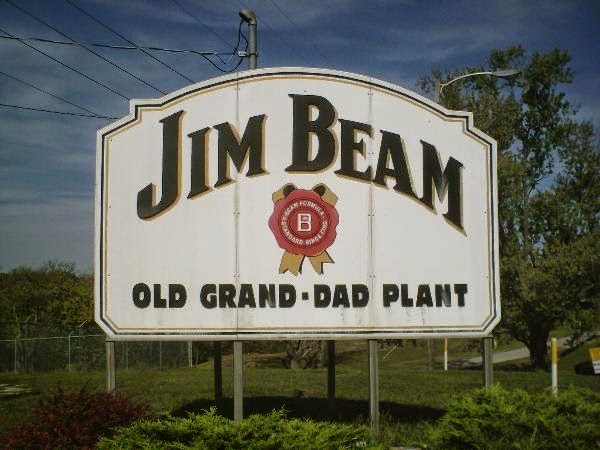
This hidden distillery – DSP 14, or simply referred to as the “Frankfort Plant” if you dig deep enough on the Beam Suntory website – has distilling history dating back to at least 1901 when R.A. Baker established “The Frankfort Distillery,” extending through to 1940 – 1987 when it was home to Old Grand-Dad. But it also played a significant role in the development of trademark law and the use of surnames in a case arising out of the attempted revival of a pre-prohibition family name.
The case of National Distillers Products Corp. v. K. Taylor Distilling Co., 31 F. Supp. 611 (E.D. Ky. 1940) tells the story of how Col. E. H. Taylor, Jr. and his sons, Swigert and Kenner, organized “E. H. Taylor, Jr. & Sons” in 1894, and how the “Old Taylor” brand rose to great prominence. The Court also explained that when Col. Taylor died in 1923, his sons basically wasted no time in selling out to what eventually became part of National Distillers Products Corporation.
As the demise of National Prohibition became more likely, speculators positioned themselves to enter the market. One of those entrepreneurs was a Lexington, Kentucky attorney, S. S. Yantis, who along with his New York City investment banker relatives, thought the timing was right to invest in a distillery. Before Repeal, they bought “a former distillery site located near Forks of Elkhorn in Franklin County, Ky. … with the view of promoting an enterprise for the manufacture of whiskey in the event of the repeal of National Prohibition, which seemed impending.” Four months before Repeal, they formed the “Franklin County Distilling Company” and began preparations at DSP 14.
The Judge noted that the Yantis family was “entirely without previous experience in the distillery business,” so they courted two other prominent former distillers who rejected them, before approaching Kenner Taylor. In September 1933 Kenner Taylor agreed to become President and CEO of the new company for a five-year term, and he agreed that his name could be used for branding and advertising purposes.
With the instant prestige afforded by Taylor’s participation, in October 1933 the two-month-old company changed its name to “The K. Taylor Distilling Company.” Repeal came on December 5, 1933, and Taylor left for Florida for his usual winter vacation on December 28. Taylor returned to Kentucky on April 1, 1934, but he was ill, and he died on June 1, 1934. While the company never actually distilled any whiskey during Taylor’s brief stint as President, he assisted in launching the “Kenner Taylor” brand using sourced Bourbon.

After Taylor’s death, the company ramped up use of the “Taylor” name – but not just “Kenner Taylor.” Instead, the Court noted that the company advertised by using pictures of E. H. Taylor, Jr., Swigert Taylor and Kenner Taylor, and used the phrase “Taylor-Made Whiskies.” The Court held that this use infringed on the “Old Taylor” brand because it misled the public into believing that the “K. Taylor” brand was related to “Old Taylor.” Therefore, the Court prohibited use of the brand name “K. Taylor” or “Kenner Taylor” “unless accompanied by a statement plainly and specifically showing that the defendant is neither the successor to nor connected with the maker of ‘Old Taylor whiskey’ and that its product is ‘not the product of E. H. Taylor, Jr. & Sons, or its successors.’” This is the same result reached almost a decade later when Bill Samuels, Sr. decided to strike out on his own (Country Distillers v. Samuels – the rise of Maker’s Mark).
The ruling was issued on February 14, 1940, and The K. Taylor Distilling Company fought on by challenging National Distillers in the marketplace. A mere month after the ruling, in March 1940, the company contracted with a Cincinnati distributor who successfully developed a demand for “K. Taylor, Bottled-in-Bond” and somewhat less demand for a second K. Taylor brand called “The Belle of Franklin.” (A breach of contract case between that distributor and The K. Taylor Distilling Company ensued, resulting in two interesting decisions that I’ll save for a later post.)
Having won its lawsuit, but seemingly having failed to destroy The K. Taylor Distilling Company, on August 5, 1940 National Distillers bought the upstart distillery along with the K. Taylor brand, which it immediately discontinued. National Distillers then rechristened the distillery as the Old Grand-Dad Distillery, making one of the most popular brands of the time. Beam bought National Distillers in 1987 and moved distillation of Old Grand-Dad to Clermont, but retained the Old Grand-Dad distillery for aging and bottling.
Kenner Taylor might have been forgotten to history due to the litigious spirit of his father and the domination strategies of National Distillers, if it weren’t for the record created by this trademark lawsuit.
Sipp’n Corn Bourbon Review – Elmer T. Lee Commemorative Edition
Over the past two years, Elmer T. Lee has become a rarity on retail shelves. It had been somewhat of a hidden gem – far less glamorous than its mash bill brother Blanton’s – but quietly better balanced. Of course, it is named after the legendary Elmer T. Lee (1919-2013), who was hired in 1949 by Col. Albert B. Blanton when Buffalo Trace was called the George T. Stagg Distillery. He worked his way up through the ranks from a maintenance engineer all the way to Master Distiller.
By the time Elmer retired in 1985, he had sparked a revolution in Bourbon that is probably partially responsible for the wild success of Bourbon today: he introduced the first single-barrel Bourbon since the time when Bourbon was sold to consumers by the barrel, honoring Col. Blanton by naming it Blanton’s Single Barrel. After he retired, Elmer himself was honored with a single barrel Bourbon bearing his name, using the same mash bill as Blanton’s (the former Ancient Age mash bill, now known as Buffalo Trace’s mash bill #2) but aged around nine years instead of six years for Blanton’s. Although he had officially retired, Elmer continued as Master Distiller Emeritus, and he helped select the barrels for his namesake brand.
Elmer died in 2013, at the age of 93. Bourbon enthusiasts suggested that the proof of Elmer T. Lee should be raised from 90 to 93 in Elmer’s honor, and word spread about the great value of Elmer T. Lee. Buffalo Trace announced that it would in fact honor Elmer, but instead of permanently raising the ABV, it produced this Commemorative Edition at 93 proof, with limited allocation. Buffalo Trace also used profits from the sale of the Commemorative Edition to support the local VFW Post 4075, in which Elmer was active (Elmer had served as a radar bombardier in WWII).
As Elmer T. Lee has become scarce on store shelves, its price has gradually increased over the past year. I recall Elmer T. Lee being priced at $28.99, then last fall it was $31.99, this summer I found it for $35.99, and $40.00 retail prices are being reported. Fortunately, Buffalo Trace’s MSRP was $34.99 for the Commemorative Edition.
Bourbon: Elmer T. Lee Commemorative Single Barrel
Distillery: Buffalo Trace, Frankfort, Kentucky
Age: NAS, but typically 9 years old
Proof: 93 proof
Cost: $34.99
Tasting Notes
Color:
The Commemorative Edition has the same amber gold color as the standard Elmer T. Lee.
Nose:
The nose has rich sweetness of caramel and vanilla, honey with light fruit, along with cinnamon, black pepper and oak. Very well balanced.
Taste:
Classic Elmer T. Lee. The taste follows the lead of the nose with honey, caramel and toffee sweetness dominating, but it’s not too much, and instead is balanced with oak, cinnamon and pepper spice. The lighter fruit (apples and pear) transition to more of a plum flavor. It’s warm without being hot. Whether at 90 or 93 proof, this is a Bourbon to sip neat.
Finish:
The Commemorative Edition finishes by moving away from sweetness to more spices, for a great warming sensation that lingers.
Bottom Line
This was another Bourbon that I had hoped to review months ago (long before the flood of fall releases), but it was so much like the standard Elmer T. Lee that it fell behind. It is so similar to the standard Elmer T. Lee – which is one of my favorites – that any extra value is really just in having the unique commemorative bottle, not necessarily what’s inside. To the credit of Buffalo Trace, though, this Commemorative Edition was not priced to drive profits. In this current environment of price gouging, Buffalo Trace did the right thing.
Comparing Elmer T. Lee Commemorative to other spring releases, it’s better that the Wild Turkey Diamond Anniversary (and costs a fraction of the price), but it’s nowhere near as good as the Four Roses 2014 Limited Edition Single Barrel (which retailed for $90). Elmer T. Lee and the Commemorative Edition are still one of the reigning “price performers” and I highly recommend that you buy one or the other if you’re lucky enough to find them.
Score on The Sipp’n Corn Scale: 4.0
The Sipp’n Corn Scale:
1 – Wouldn’t even accept a free drink of it.
2 – Would gladly drink it if someone else was buying.
3 – Glad to include this in my bar.
4 – Excellent bourbon. Worth the price and I’m sure to always have it in my bar.
5 – Wow. I’ll search high and low to get another bottle of this.

Sipp’n Corn Bourbon Review – Bulleit Bourbon
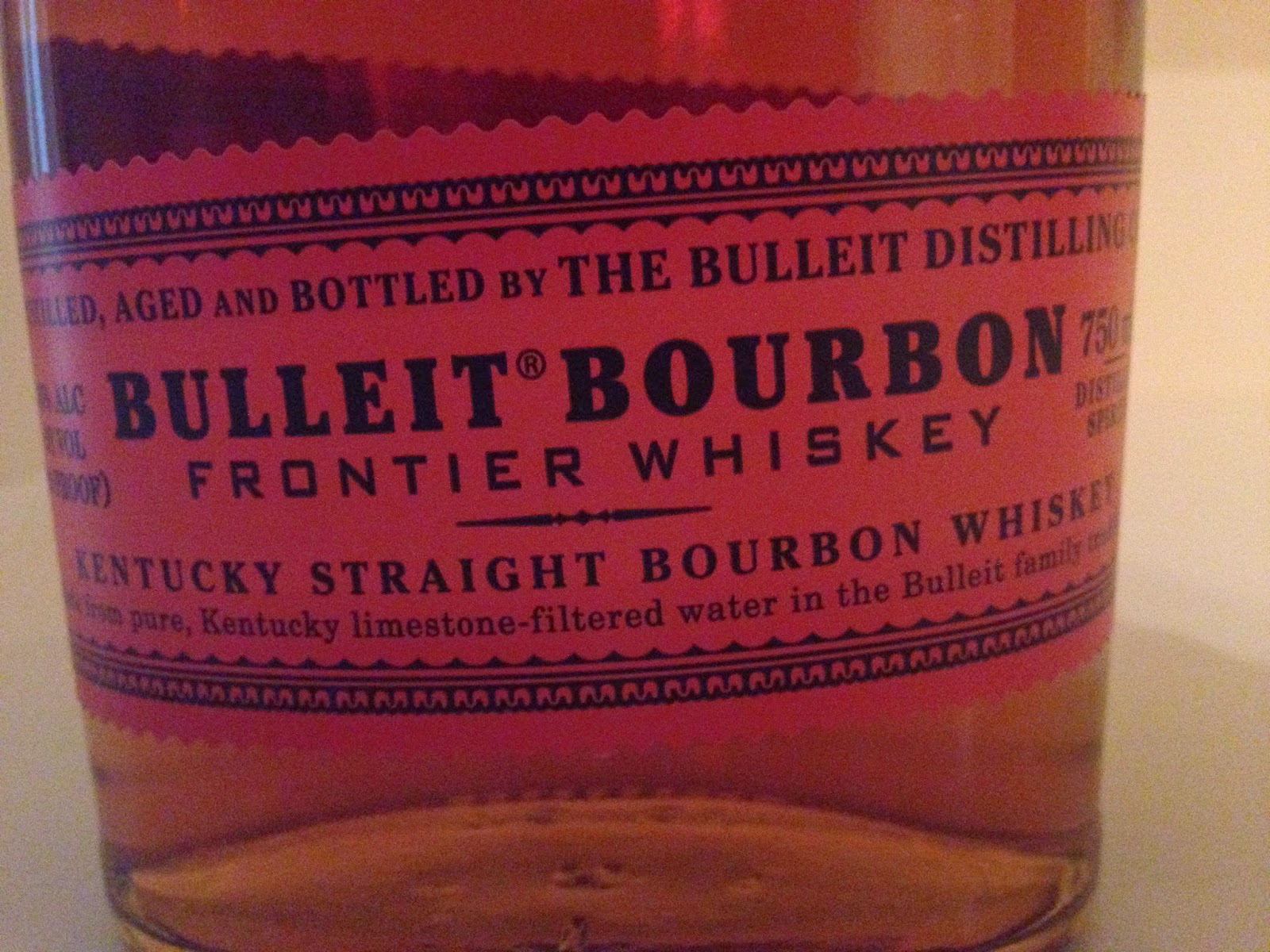
Bulleit Bourbon and its parent company, Diageo, get a fair amount of grief from some Bourbon enthusiasts for being a non-distiller producer (“NDP”) of Bourbon without most consumers realizing that indisputable fact. But there’s no denying that Bulleit Bourbon has nevertheless taken hold, which it wouldn’t have been able to do without actually being good Bourbon.
For instance, Bulleit doubled its 2012-2013 U.S. sales from about 300,000 to 640,000 cases. This is still a drop in the bucket compared to the over 3 million cases of Jim Beam sold just in the U.S. every year, so if Diageo wants to extend its market to Bourbon, it has some work to do. Diageo is certainly putting in the work, though. First, in February 2014, it announced that it would spend $2 million on renovations to the famed-but-mothballed Stitzel-Weller Distillery. As I’ve previously reported, firing up the old still was not planned, but in today’s Press Release Bulleit announced that its total Stitzel-Weller investment will increase to $10 million and will include a small craft still to focus on innovation and experimentation, along with a bottling line.
Many of the initial renovations were complete when I visited this past spring (see my post about The Bulleit Experience at Historic Stitzel-Weller), and now with the revived visitor’s center officially open as of the ribbon-cutting today – called the “Bulleit Frontier Whiskey Experience at Stitzel-Weller” – it’s bound to be a hot tour on the Kentucky Bourbon Trail.
Diageo’s primary Kentucky distilling will be at the site of its estimated $115 million new distillery in Shelby County, Kentucky, just east of Louisville. The groundbreaking ceremony was on August 21, and I was lucky enough to catch the tail-end of that event.

When completed in late 2016, this new distillery will have the capacity to produce what will eventually result in 750,000 cases per year, including both Bulleit Bourbon and Bulleit Rye. Warehouses will also be built with the capacity to store 330,000 barrels. Between joining the Kentucky Distillers’ Association, participating in the inaugural “Bourbon Affair” this past spring, and announcing the new distillery plans, Diageo and Bulleit Bourbon have kept a constant presence in the media.
As for the backlash, some of it is completely unfair. For example, social media posts like the following Tweet often ignore the Bourbon itself and devolve to pettiness: “You like Bulliet [sic] Bourbon because it looks like something off of Pinterest, and for no other reason.” Other criticism is a bit weightier because it addresses the brand’s representations, like there hasn’t been an actual distillery called “Bulleit Distilling Co.” in Lawrenceburg, Kentucky despite the claim on the label, and the worst-kept secret in Bourbon that Bulleit has really been distilled by Four Roses (which is in Lawrenceburg). The harshest criticism has focused on other Diageo brands (Orphan Barrel).
When I attended the “Bulleit Experience” this past spring as part of the Kentucky Bourbon Affair, Tom Bulleit was totally upfront about Bulleit Rye being sourced from MGP in Indiana. But Diageo’s former Director of Whiskey Supply Strategy, Andrea Wilson, who recently took a job at Michter’s, was not terribly open about the post-Four Roses world, what’s actually being aged at Stitzel-Weller, or where Bulleit Bourbon is aged. She would not even tell me public information like the mash bill percentages for Bulleit (which the website itself discloses, and which Tom Bulleit told us too).
There is plenty more that I or others can say about Diageo and Bulleit later, but for my current purposes, I want to focus on the review, so here we go:
Bourbon: Bulleit Bourbon Frontier Whiskey
Distillery: Not disclosed, but popularly believed to be under contract with Four Roses, although also popularly believed that the contract has been terminated
Mash bill: 68% corn; 28% rye; 4% malted barley
Age: NAS, but about 6 years old
Proof: 90 proof
Cost: $24.99
Tasting Notes
Color:
Amber with a distinct orange hue.
Nose:
The nose includes the standard caramel and vanilla, but adds sweet citrus, dark fruits and maybe banana, along slight oak and rye spice.
Taste:
Like the nose, the taste starts with classic caramel, toffee and vanilla notes, but also includes cinnamon, orange rind and rye spice, without allowing the spice to be overpowering. It’s crisp and sharp, and lends itself nicely to cocktails, especially cocktails with citrus.
Finish:
The finish is medium in length, with nice warmth, as the caramel notes transition to spice and a just enough toasted oak.
Bottom Line
I am a fan of Bulleit Bourbon, especially in cocktails. In fact, if I’m serving Bourbon cocktails, Bulleit is likely to be one of my two choices. I’ve often grumbled about the need for transparency in all Bourbon brands, including Bulleit, but we know that the Bulleit on the market today was distilled in Lawrenceburg, Kentucky, we know that it is a “Straight” Bourbon, we know its approximate age (and we’re guaranteed its minimum age), we know that it cannot have any additives, and we know its mash bill. Plus, Bulleit is priced right for its profile and characteristics, and there are plenty more expensive Bourbons that I would pass over when compared to Bulleit.
Score on The Sipp’n Corn Scale: 3.5
The Sipp’n Corn Scale:
1 – Wouldn’t even accept a free drink of it.
2 – Would gladly drink it if someone else was buying.
3 – Glad to include this in my bar.
4 – Excellent bourbon. Worth the price and I’m sure to always have it in my bar.
5 – Wow. I’ll search high and low to get another bottle of this.


