Brian Haara
Bourbon. Law. Author.
Sipp’n Corn Bourbon Review – Willett Family Estate Single Barrel 8 & 9 Year (Liquor Barn Private Barrels)
*Updated on September 16, 2014 after adding the review for the 9-year expression.
Thirteen months ago, Liquor Barn selected three barrels at The Willett Distillery, and last week they finally hit the shelves. The length of time from selection to bottling in Willett’s private barrel program has been the subject of other blogs, so for my purposes, let’s just see if it was worth the wait.
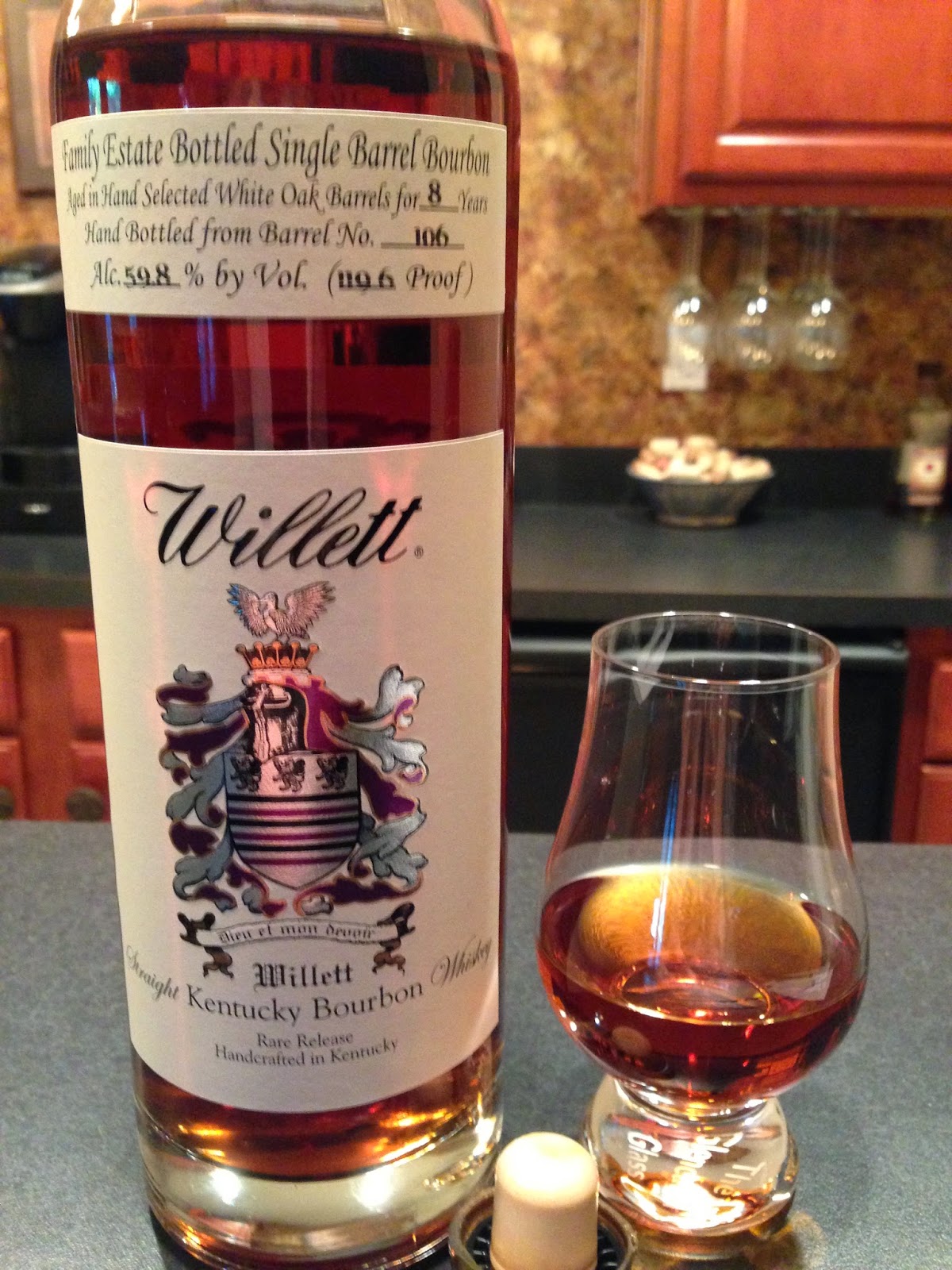
The three barrels include an 8-year 119.6 proof (gold wax), 9-year 119.6 proof (blue wax), and 9-year 121.8 proof (burgundy wax). Having three different wax seals is a nice touch, but I was disappointed to see that Willett moved away from handwritten labels. While using the exact same label from previous Family Estate bottlings, this time the age, barrel number, ABV and proof are computer-printed. Sometimes the printer was not exactly lined up with the blanks and the toner looked like it could have used replacing. Whoever made this presumably time-saving call at Willett might re-think appearances and attention to detail.

As with all current offerings from Willett (whether hard-to-find Family Estate bottles, the ubiquitous Pot Still Reserve variety, or any of the numerous brands bottled by Willett), Willett did not distill this bourbon. Still, Willett knows how to select and age barrels, as they’ve proven time and time again.
|
Bourbon:
|
Willett Family Estate Single Barrel
|
Willett Family Estate Single Barrel
|
|
(Barrel No. 106)
|
(Barrel No. 196)
|
|
|
Age:
|
8 years
|
9 years
|
|
Proof:
|
119.6 proof
|
119.6 proof
|
|
Cost:
|
$74.99
|
$84.99
|
|
Distillery:
|
Not disclosed, but bottled at The Willett Distillery, in Bardstown, Kentucky, which is an assumed name adopted by Kentucky Bourbon Distillers, Ltd in 2005. The Willett Distilling Company was originally incorporated in September 1936.
|
|
Tasting Notes
|
Willett Family Estate 8-year
Color: Bright brown. The light plays really well with this one.
Nose: Cracked corn and straw, some corn sweetness, subtle spice, a bit of clove and a little smoky. The nose is very pleasant. While ethanol is certainly noticeable, the nose masks true ABV. After some aeration, the only difference is the addition of slight cocoa notes.
|
Willett Family Estate 9-year
Color: A very similar bright amber-brown.
Nose: Definitely a sweeter nose than the 8-year. It’s heavy on the caramel and toffee, and combines that candy sweetness with roasted nuts, toast and oak. A little air also helps soften the ABV on the nose.
|
|
Taste: Nice bite revealing that it’s a higher-proof bourbon, but still masking that it’s nearly 60% ABV (I would have guessed about 100 proof). It has a great balance of brown sugar with grains and oak, pepper spice, and some slight bitterness of espresso; really fantastic flavors for an overall dry taste. After trying this neat, you’ll need a splash of water or ice, which regulates the heat and brings out a little more sweetness. A few ice cubes is probably my favorite way to drink this one.
|
Taste: Consistent with the nose, the taste starts with candy bar sweetness, but it has incredible balance with a smokiness that wasn’t present in the nose, along with black pepper and oak. As with the 8-year (and as with most – but not all – barrel proof Bourbon) after trying this neat, try it with a single large ice cube and a splash of water. You may be surprised at how new flavors open up. However, this 9-year was better neat than the 8-year.
|
|
Finish: The finish was medium in length with great warmth, and overall somewhat subtle in its flavors.
|
Finish: The finish may have been a little shorter than the 8-year, but maybe it just seemed that way because of its sweetness.
|
Bottom Line
These Bourbons are fantastic, with great, classic dry profile, and no downside on the taste. Finding a Family Estate bottle is going to be a little difficult, but keep looking. And if you know that your favorite store selected a barrel some time ago, be patient; it’s sure to be worth the wait. Of course, because this is a private selection single barrel, Family Estate bottles that you find anywhere other than Barrel No. 106 bottled for Liquor Barn will be different, but I’ve never gone wrong with Willett private selection.
Of course, the price is steep for anyone except diehard bourbon fans or those looking for a special bottle as a gift. These particular private barrels are great but they aren’t magic, so if you’re new to bourbon, I’d spend your $75 or $85 on one bottle each of Weller 12 ($24.99 last purchase), Elmer T. Lee ($28.99 last purchase) and Four Roses Yellow Label ($19.99 last purchase). Those three combined will cost roughly the same amount, and you’ll increase my chances of finding another bottle of Willett Family Estate.
Score on The Sipp’n Corn Scale:
Willett Family Estate 8-year: 4.0
Willett Family Estate 9-year: 4.0
The Sipp’n Corn Scale:
1 – Wouldn’t even accept a free drink of it.
2 – Would gladly drink it if someone else was buying.
3 – Glad to include this in my bar.
4 – Excellent bourbon. Worth the price and I’m sure to always have it in my bar.
5 – Wow. I’ll search high and low to get another bottle of this.
Sipp’n Corn Bourbon Review – Parker’s Heritage Collection (7th Edition) “Promise of Hope”
After my last review of a sub-$10.00 Very Old Barton 6-year bourbon, I had to go to the other extreme for a limited-release bourbon higher than top shelves. In 2013 Parker Beam and Heaven Hill released their seventh expression of Parker’s Heritage, this time a 10-year single barrel bourbon from Rickhouse EE, said to be Parker’s favorite. This 2013 edition includes a donation by Heaven Hill of $20.00 to the ALS Association for every bottle (with projections of $250,000 in total donations), in honor of Parker’s diagnosis with ALS. Plus, I had to review the seventh edition before the eight edition is released…
Bourbon: Parker’s Heritage Collection 7th Edition, Promise of Hope Single Barrel
Distillery: Heaven Hill
Age: 10 years
Proof: 96 proof
Cost: Expect to spend between $80.00 and $129.00 (I paid $129.99 at the Evan Williams Bourbon Experience, which charges more for everything)
Tasting Notes
Color:
More of a bright copper than amber.
Nose:
There was more going on with this nose than I expected. It had a balance of caramel, vanilla, basil, oak and some slight earthy notes; overall this is a fantastic nose.
Taste:
The taste starts with just a little caramel and pear sweetness, and moves to classic rye spice with more warmth than the proof might indicate, even with some bite on some sips. It feels a little thin compared to other high-shelf offerings, but it has absolutely great flavors. Don’t water this down; it’s a great bourbon to sip neat. On the other hand, the chill of a little ice tamed the dryness, and I think I’ll ice this down for my summer bourbon.
Finish:
The finish continues with similar flavors and a little more oak for an overall dry finish, and maybe a hint of mint, for a medium-length, warm finish.
Bottom Line
In addition to the VOB line, I’ve reviewed some other “value” bourbons lately. They’ve all had their qualities, but now I’m reminded of what bourbon can be. It’s rare to have a bourbon with balance like this seventh edition of Parker’s Heritage, and my pendulum is swinging back to thinking that I’m better off spending more and drinking better bourbon. Promise of Hope doesn’t rely on novelties, and since Heaven Hill bottled this one as single barrels, there’s no hiding or supplementing the characteristics of this bourbon. It’s a classic bourbon with refined balance. While Promise of Hope is undoubtedly priced too high (there are better bourbons for the price, and in a few of cases better bourbon for about 1/2 – 2/3 the price I paid, and that lowers the score on my scale), Promise of Hope is still a must-have for your collection.
Score on The Sipp’n Corn Scale: 4.0
The Sipp’n Corn Scale:
1 – Wouldn’t even accept a free drink of it.
2 – Would gladly drink it if someone else was buying.
3 – Glad to include this in my bar.
4 – Excellent bourbon. Worth the price and I’m sure to always have it in my bar.
5 – Wow. I’ll search high and low to get another bottle of this.

Sipp’n Corn Bourbon Review – Very Old Barton 6-Year vs. Very Old Barton NAS vs. Very Old Barton 6-Year Bottled in Bond.
Tax day hurts, so I’m hitting the bottom shelf for this review. At least I picked a brand that has gotten high praise despite its price, shelf placement and limited distribution.
Very Old Barton – or “VOB” – is distilled at the Barton 1792 Distillery, in Bardstown Kentucky (f/k/a the Tom Moore Distillery). The VOB brand comes in several different varieties, including an 80 proof, 86 proof, 90 proof and 100 proof Bottled in Bond. For the three that I compared, both 86-proof versions cost $8.83 on sale (regular price $9.99) and the BIB version cost $11.99. I wanted to see if a bottle containing the age statement was distinguishable from the NAS version, and whether either variety was materially different from the BIB version.
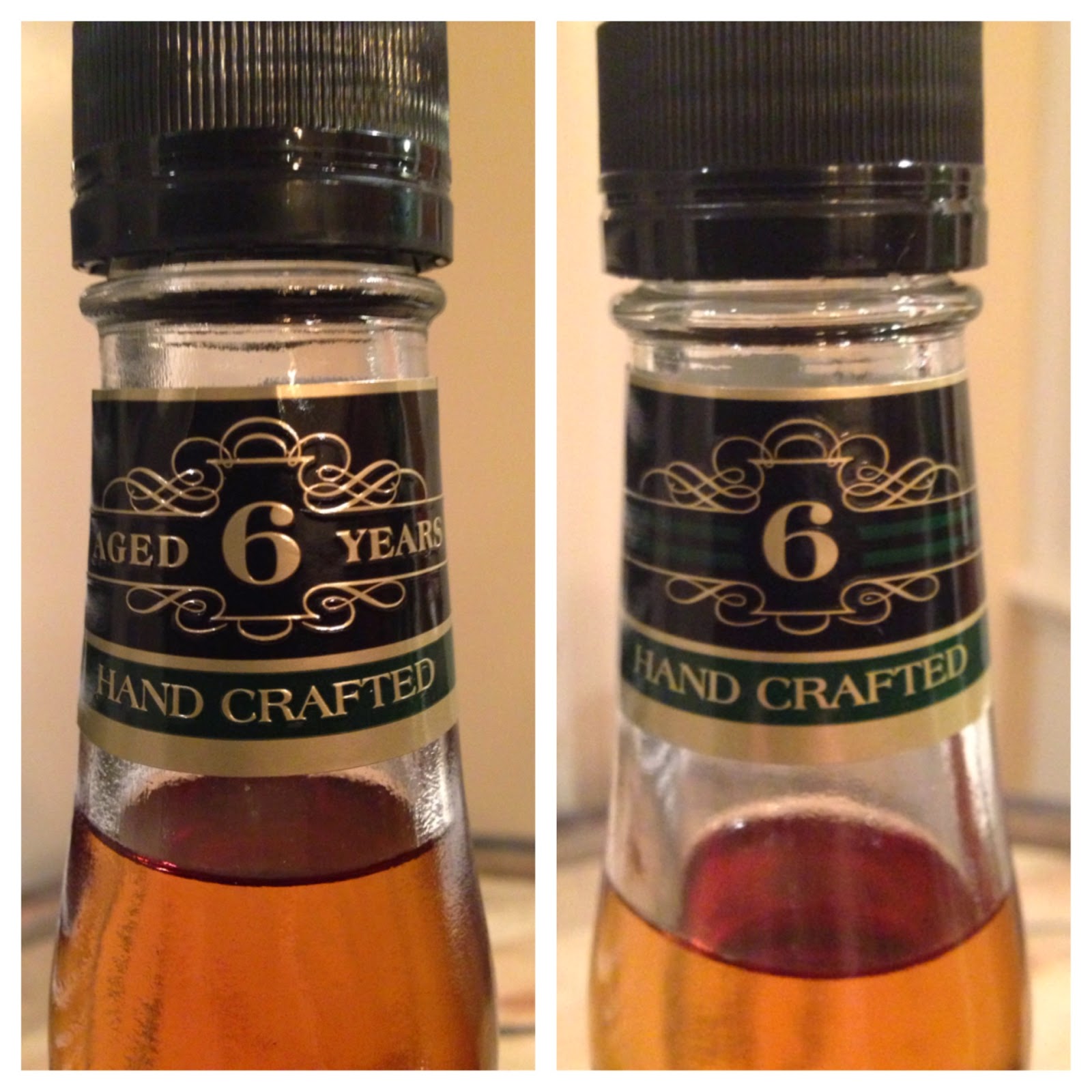
Along with its praise, though, VOB (and its owner, Sazerac, and its other distillery, Buffalo Trace) has received a healthy dose of well-deserved criticism for how it removed the 6-year age statement. See Sku’s Jan. 27, 2014 post — “Sazerac’s Funny Numbers” as one great example. Removing an age statement is one thing, but the necks of VOB continue to carry a deceptively prominent numeral 6, just without the smallish font words “aged” and “years” on either side.
Color:
Medium amber for all three.
Nose:
The nose has a little honey and fruit sweetness, with the BIB version having more of the tell-tale smell of higher proof, but black pepper and rye were the dominant scents for all three. Overall it’s a light nose. The nose of the BIB version held up better to ice.
Taste:
VOB has even less sweetness than the nose might indicate. It’s not a powerhouse, but the rye and pepper spice has a nice bite, and it rounds out with toffee and corn flavors, while still overall being dry. There was a very slight medicinal quality too, which detracted from the other flavors, but it went away with an ice cube (which also brought out some of the fruit). These are very solid classic bourbons.
Finish:
The finish was medium in length for each, with predominate notes of black pepper and oak, and it was dryer than the taste. Ice gave the finish a sweeter taste for each.
Bottom Line:
Many people have sung the praises of VOB as a hidden gem on the bottom shelf. While I’m surprised at its cost, and while it no doubt is one of the top “value bourbons,” I think that it doesn’t rank any higher than mid-shelf. I’d buy it over a few brands in the $20-$30 price range, but it can’t touch my favorites. Every time that I had a favorable impression of the nose, taste or finish, it followed in my mind with “for the price.” Additionally, while the 86 proof 6-Year and NAS versions are virtually indistinguishable now, I suspect that Sazerac won’t be able to keep up with the relative quality of the profile, and upcoming releases will taste younger and less balanced. The 100 proof BIB version was only distinguishable by the clearly higher alcohol content, and given the choice between the two, I’d pick the 86 proof because I prefer it neat. If you prefer ice or a splash of water, definitely go with the BIB version.
When you’re broke on tax day, or for any other occasion where you’re looking to spend only $10.00, VOB probably can’t be beat (which helps the score on the Sipp’n Corn Scale). If you’re looking for other great values for just a few more dollars, try Old Grand-Dad BIB and Four Roses “Yellow Label.”
Scores on The Sipp’n Corn Scale
Very Old Barton NAS: 2.5
Very Old Barton 6-Year: 3.0 (bonus points for age statement)
Very Old Barton 6-Year BIB: 2.5
The Sipp’n Corn Scale:
1 – Wouldn’t even accept a free drink of it.
2 – Would gladly drink it if someone else was buying.
3 – Glad to include this in my bar.
4 – Excellent bourbon. Worth the price and I’m sure to always have it in my bar.
5 – Wow. I’ll search high and low to get another bottle of this.

Sipp’n Corn Bourbon Review – Garrison Brothers Texas Straight Bourbon Whiskey
Because of very limited distribution, it took a trip to Texas for me to finally find Garrison Brothers. I had heard so many promising reviews of Garrison Brothers, so I was really looking forward to my trip last week to San Antonio. But I had also heard that it was a bit pricey. The website embraces its price by stating “Garrison Brothers Texas Straight Bourbon Whiskey is NOT for everyday drinking. It’ll set you back a little. It should be enjoyed in moderation, straight up, or with just a little ice.”
After striking out at several restaurants on the River Walk and at the market, I finally found Garrison Brothers served at The Republic of Texas Restaurant on the River Walk, where they were kind enough to also show me the bottle (pictured below). Would this young bourbon be worth the steep price?
Bourbon: Garrison Brothers Texas Straight Bourbon Whiskey
Distillery: Garrison Brothers Distillery, Hye, Texas.
Age: Two years.
Proof: 94 proof.
Cost: About $70.00 ($12.00 by the drink)
Tasting Notes
Color:
The color is a lot darker than I’d expect from a young bourbon; it’s an appealing dark amber.
Nose:
Honey sweetness, grassy and a ton of corn. There wasn’t any real spice to speak of on the nose, but it was pleasant.
Taste:
I only drank it neat. The taste was mostly corn sweetness, with only a little cinnamon spice and no earthy or oaky flavors. It was definitely young from a lack of depth or complexity, but it was good nevertheless. It seemed a little syrupy at the end, but not in a bad way.
Finish:
The finish was medium in length but it lingered, and it again had mostly sweet flavors.
Bottom Line
Garrison Brothers Texas Straight Bourbon Whiskey isn’t bad by any stretch – it’s a decent whiskey – but it’s no $70.00 bottle of whiskey. There are plenty of $20-$30 bourbons that are better any day of the week, and several sub-$20 bottles too. Unless the price gets more realistic, leave this one on the shelf.
Score on The Sipp’n Corn Scale: 2.5 (because of the price)
The Sipp’n Corn Scale:
1 – Wouldn’t even accept a free drink of it.
2 – Would gladly drink it if someone else was buying.
3 – Glad to include this in my bar.
4 – Excellent bourbon. Worth the price and I’m sure to always have it in my bar.
5 – Wow. I’ll search high and low to get another bottle of this.

Churchill Downs Distilling Co. v. Churchill Downs, Inc. – Bourbon and The Kentucky Derby Collide.
It’s finally warm in Louisville and Derby fever is about to strike again in Kentucky and beyond. So in celebration of the upcoming 140thrunning of the Kentucky Derby on May 3, 2014, I found yet another example of how bourbon history and American law are intertwined.
Just as bourbon litigation has guided American courts and helped develop the then-emerging areas of unfair competition, consumer fraud and trademark protection, bourbon played a critical role in the notion that a trade name could be protected outside of the actual business pursuit of the owner. In Churchill Downs Distilling Co. v. Churchill Downs, Inc., 262 Ky. 567 (1936), the Court of Appeals of Kentucky (Kentucky’s highest court at the time) established the right of an owner to protect his trade name against use by anyone else. Imagine if the name “Coca-Cola” could be used by any business that didn’t sell beverages; a bourbon lawsuit helped change that.
It all started in 1933, when B. J. Frentz decided to get into the whiskey business by opening “Churchill Downs Distilling Co.” in Nelson County, Kentucky, about thirty miles from Louisville. None of his business partners were named “Churchill” or “Downs,” and he had no connection whatsoever to the real Churchill Downs, but he used that name prominently on his bottles, along with identifying Louisville as his place of business. His label included an image of the grandstand located at Churchill Downs, along with horses and jockeys racing on a track.
The real Churchill Downs had never agreed to the use of its name in this manner. Mr. Frentz even admitted in his testimony that he used the name “Churchill Downs” precisely because it was well-known and he hoped it would increase sales. He admitted that there was no connection with the real Churchill Downs and that he was trying to profit from the reputation of Churchill Downs, which since opening and featuring the first Kentucky Derby in 1875, had gained worldwide renown.
It seems obvious to us now that Mr. Frentz was not allowed to profit from the reputation of Churchill Downs by using its name without its permission. But that wasn’t necessarily the law in 1933. Mr. Frentz argued that the law only protected the name “Churchill Downs” from use by competitors, and a company’s goodwill in its name only extended to its own actual line of business. Since Mr. Frentz did not operate a horse racing track, he argued that he was free to use the name without permission or consequence, and he was able to cite plenty of cases that supported this argument.
But the Court decided to adopt an emerging trend in the law that expanded the scope of protection for unfair competition, so that it was not confined to actual market competition. Instead, now the law would protect against use of a trade name by anyone else who tried to pass off his goods or services as being connected to or endorsed by that that business.
There was also a thread of protectionism in the Court’s opinion, or at least an extreme sense of pride in the history of Churchill Downs and the Kentucky Derby. The Court recited the founding of Churchill Downs in 1875 and the running of the first Kentucky Derby, and added this flowery ode to the Derby:
Louisville has always been a great racing center, commencing in 1839. In 1875, Colonel M. Lewis Clark was a spectator at the annual running of the English Derby, at Downs, England… He acquired [land] from his uncles, John H. and Hugh Churchill… [and] named it Churchill Downs. In the year 1875, at the racing plant, they inaugurated the Kentucky Derby, which was modeled in general outlines after the English Derby at Downs.
Continuously since that date the soil of Churchill Downs has been a field of honor of the winners of the Kentucky Derby. Chivalry springs from the handsome, polished horse. The Kentucky Derby exemplifies Kentucky chivalry… The Kentucky Derby is a true reflection-directly from the first derby at Epsom Downs. For the Kentuckian it sums up all the history of his forbears, their nativity and horses. To it, annually, pilgrimages are made from distant shores. The élite, the middle class, the captains of industry with the occupants of cabins, from every section of our country, attend it, yet in them thereat is the democracy of peers…
The celebrity of the Kentucky Derby is in every country. Each year the royal blood of the world’s turf competes thereat… The name “Churchill Downs” is inextricably interlaced with the origin, history, and fame of the Kentucky Derby. Indeed, in the esteem of the general public, they are synonyms-signifying the classic home of only cultured racers.
With that kind of endorsement of Churchill Downs, it should be no surprise that the Court affirmed an injunction against the distillery for its deceptive use of the Churchill Down name and prevented any further use.
This is all still relevant today, too. Just last month, spirits giant Diageo was sued by The Explorer’s Club – a New York City club founded in 1904 – for Diageo’s alleged infringement on the name “Explorer’s Club.” Diageo has used the name without permission since 2012 on its Johnnie Walker line in duty-free stores. (Click here to see the Complaint.) Maybe Diageo hasn’t read the Churchill Downs case.
Regardless, bourbon and Churchill Downs get along fine now, so sip your favorite bourbon while enjoying a spectacular Derby Day!
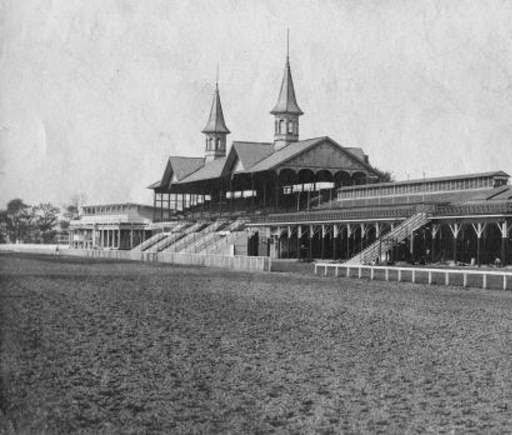
Photograph credit: Item no. 1994.18.0853 in the Herald-Post collection, University of Louisville Photographic Archives, Louisville, Kentucky, accessed at: http://digital.library.louisville.edu/cdm/singleitem/collection/heraldpost/id/953/rec/10

