Brian Haara
Bourbon. Law. Author.
Sipp’n Corn Tasting Notes: 2019 Four Roses Limited Edition Small Batch
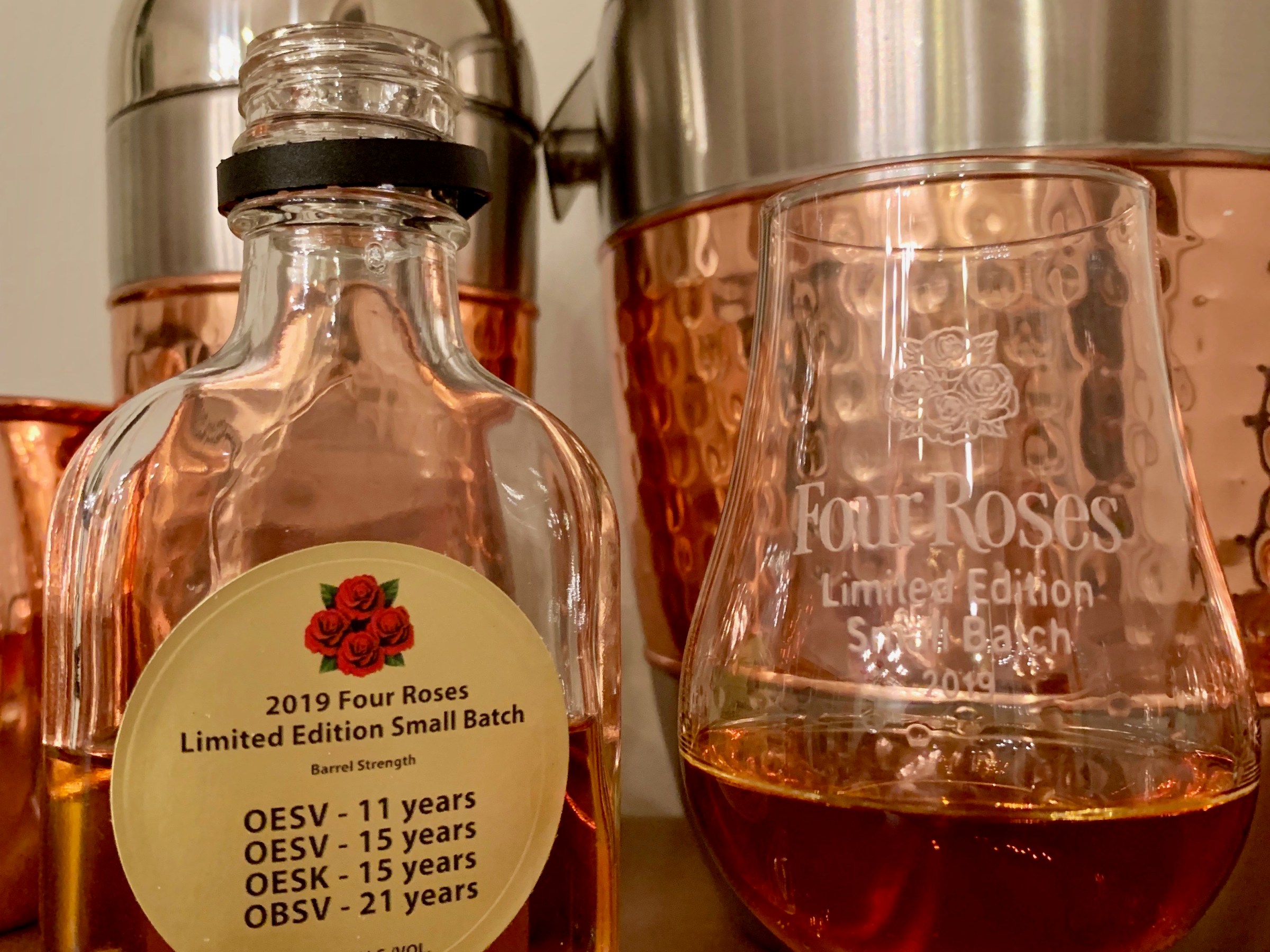
I love this time of the year! It’s Bourbon Heritage Month and that means Four Roses releases its annual Limited Edition Small Batch. With its unique 10 recipes Four Roses has a tremendous single barrel program, but it really allows Four Roses to shine by blending, which no other distillery can match.
This year Master Distiller Brent Elliott used the following recipes and ages:
OESV – 11 years
OESV – 15 years
OESK – 15 years
OBSV – 21 years
While the percentages were not disclosed, this Limited Edition is mostly the lower-rye recipe mash bill (although of course at 20% rye grain that’s still far more rye that other distillers use), and a majority of the “V” yeast, which Four Roses describes as “delicate fruit.”
Four Roses Limited Edition Tasting Notes
Bourbon: 2019 Four Roses Limited Edition Small Batch Kentucky Straight Bourbon Whiskey
Distillery: Four Roses, Lawrenceburg, Kentucky (and aged at Cox’s Creek)
Age: 11-21 years (% not disclosed)
ABV: 56.3% (112.6 proof)
Cost: $140.00
Bottles: 13,440 for U.S. distribution only
Appearance:
Old copper.
Nose:
Unmistakable Four Roses dark berries, honey, caramel, and oak and as well-rounded as I can imagine.
Taste:
Whoa—Four Roses touts being “Mellow,” and this Limited Edition nails Mellow. It’s silky, has subtle complexity of butterscotch, berries, and vanilla cream balanced by cinnamon and oak. This is an elegant bourbon that keeps revealing more flavors sip after sip. This is a bottle that will go way too fast.
Finish:
Long, full, sweet and buttery with a lingering balance of oak.
Bottom Line
I don’t know how Four Roses continues to perform at this level. First, in my book Small Batch Select destroyed the field this year for best new bourbon of 2019. But this whole time Four Roses had an Ace in the hole; its 2019 Limited Edition Small Batch has got to be in the running for best bourbon of the year. This is a fantastic bourbon that should be tops on your hunting list this fall. Look for it at the distillery and at the bottling facility on September 21, and then at retailers later in the month.
Disclaimer: The brand managers kindly sent me a sample
for this review, without any strings attached.
Thank you.
Sipp’n Corn Tasting Notes – Old Taylor (1953) Bottled in Bond; Old Fitzgerald Decanter; and Cream of Kentucky
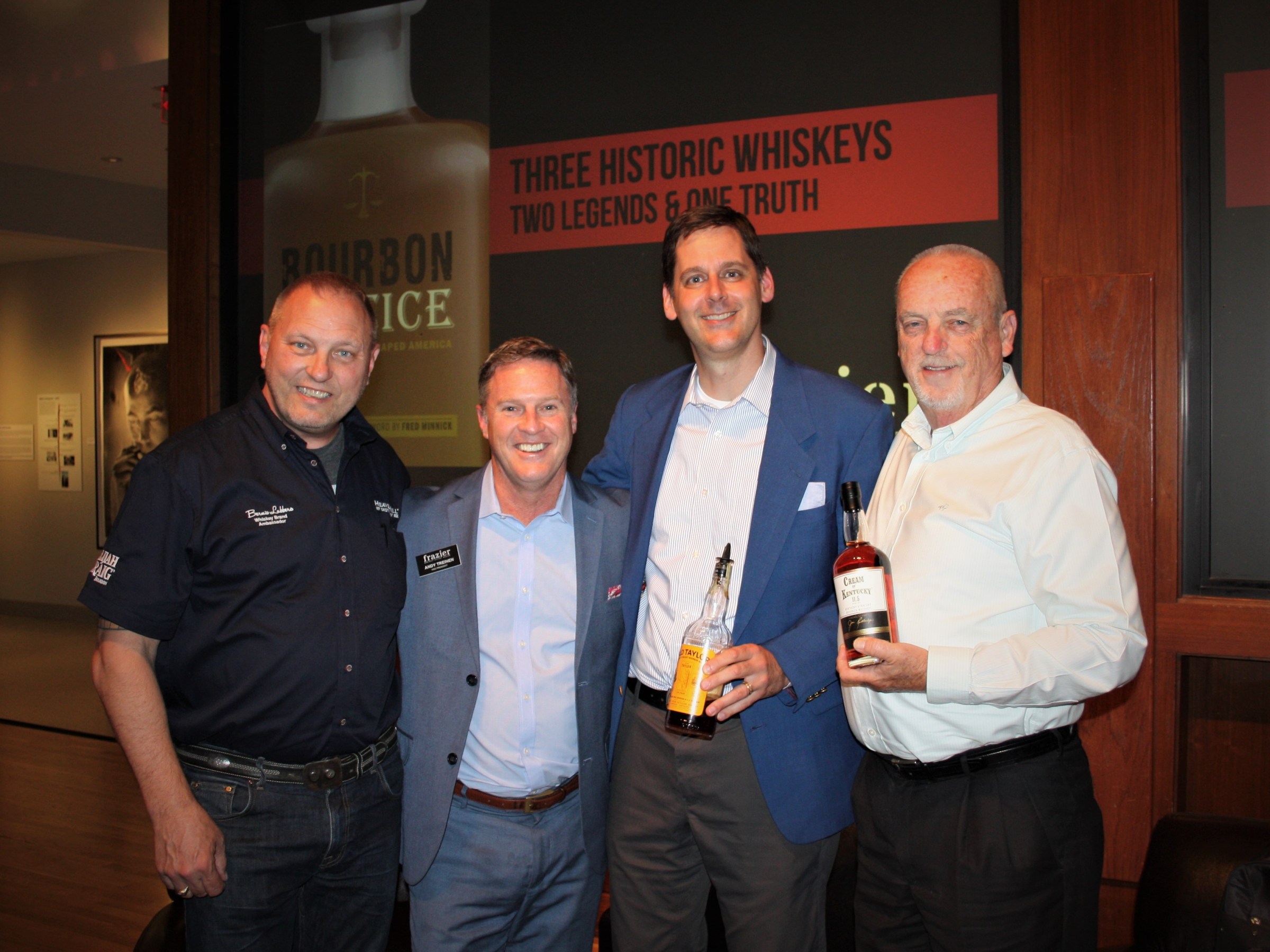
The Frazier History Museum presents a bourbon series and I was lucky enough to be part of it earlier this summer to discuss Bourbon Justice alongside legendary Master Distiller Jim Rutledge and incomparable Heaven Hill brand ambassador and author Bernie Lubbers.
In addition to the lively discussion, The Frazier provided a guided tasting of two current-day classics—Jim’s revival of Cream of Kentucky and Heaven Hill’s Old Fitzgerald Decanter—along with a vintage Old Taylor distilled and aged at the historic Old Taylor Distillery, which is now the home of Castle & Key.
We had a lively discussion and an engaged crowd, and some folks who missed it have asked about tasting notes, so here we go:
Bourbon: Cream of Kentucky (Batch 2, 2019)
Distillery: Sourced by J.W. Rutledge Distillery, Crestwood, Kentucky
Age: 11.5 years
ABV: 51% (102 proof)
Cost: $149.99
Bourbon: Old Fitzgerald Decanter Series (Second Release, Fall 2018)
Distillery: Heaven Hill, Bardstown, Kentucky
Age: 9 years
ABV: 50% (100 proof)
Cost: $89.99
Bourbon: Old Taylor (distilled Fall 1953; bottled Fall 1957)
Distillery: The Old Taylor Distillery, Millville, Kentucky
Age: 4 years
ABV: 50% (100 proof)
Cost: priceless


Tasting Notes
Appearance:
Surprisingly, the much younger Old Taylor was just as dark—if not darker—than Cream of Kentucky and Old Fitzgerald, and it wasn’t because the Cream of Kentucky or Old Fitzgerald were light. As the oldest and because it was bottled at (barely) the highest proof, the Cream of Kentucky should have been the darkest. Maybe because of lower entry proof, higher barrel char level, tighter wood grain, or aging conditions, however, the Old Taylor never would have been taken for a four-year bourbon in a blind tasting.
Nose:
Jim remarked how much difference a mere four months of aging meant for his second run of Cream of Kentucky; the aromas are sweeter and less peppery. The Old Fitzgerald 9-year had more baking spice, familiar aromas of baking fresh bread, brown sugar, caramel, and oak. Old Taylor was remarkable—again, there’s no way that this is a four-year old bourbon. Warm, deep aromas of oak, pepper, and caramel make this an inviting nose.
Taste:
The second batch of Cream of Kentucky also has a fruiter palate according to Jim, but I wouldn’t call it fruity just yet; it’s still more focused on oak and baking spice. The Old Fitzgerald had more caramel with a transition to pepper spice, not really what I might have picked blind as a wheated bourbon, but checking all of the boxes and with the most complexity of the three. It will sound like a broken record, but the Old Taylor was unlike any other four-year old bourbon that I’ve ever tried: creamy, spicy, less sweet than the nose, and full-bodied.
Finish:
The finish on all three bourbons were fantastic, but in different ways. Cream of Kentucky was more elegant and gentle. The Old Fitzgerald was more robust, like a big warm hug that trails off with vanilla and oak. And Old Taylor had the biggest initial burst of warmth that trailed off with lingering oak.
Bottom Line
There’s a reason that Kentucky passed a Vintage Spirts law—many truly dusty bourbons pack in a unique experience that can’t be duplicated by current-day brands. Sure, there’s also the sense of exclusivity and historical awe, but for people focusing on the spirit itself, it’s about experiencing bourbon made the old way, producing a depth of flavors rarely found today. If you have the opportunity, definitely try mid-century or older bourbon.
Of course, many current-day brands are still worth pursuing hard. Cream of Kentucky and these limited release Old Fitzgerald Decanters are two that should be at the top of every enthusiast’s list.
Jim Rutledge is not only one of the best distillers, but he has the added dimension of being a genius blender. His decades of experience distilling at Four Roses gave him the unique role of blending ten recipes to create a consistent profile for Four Roses and blending a handful of recipes of varying ages each year to create his award-winning Limited Edition Small Batches. I will buy any bourbon that Jim has touched, and even though Jim didn’t distill it, Cream of Kentucky is one of those.
And finally, as for the Old Fitzgerald, Heaven Hill not only continues to lead the way in both age-stated bourbon and Bottled in Bond bourbon, but it also does so by reinvigorating a once-famous brand that had slipped to a “value brand,” and seemed all but replaced by Larceny. I have a soft spot for historical brands but those names aren’t worth anything unless you strive to exceed the quality of the past. That’s what Heaven Hill has done with the Old Fitzgerald Decanter Series.
Sipp’n Corn Review – Kentucky Straight Rye Whiskey Battle Royal Revisited
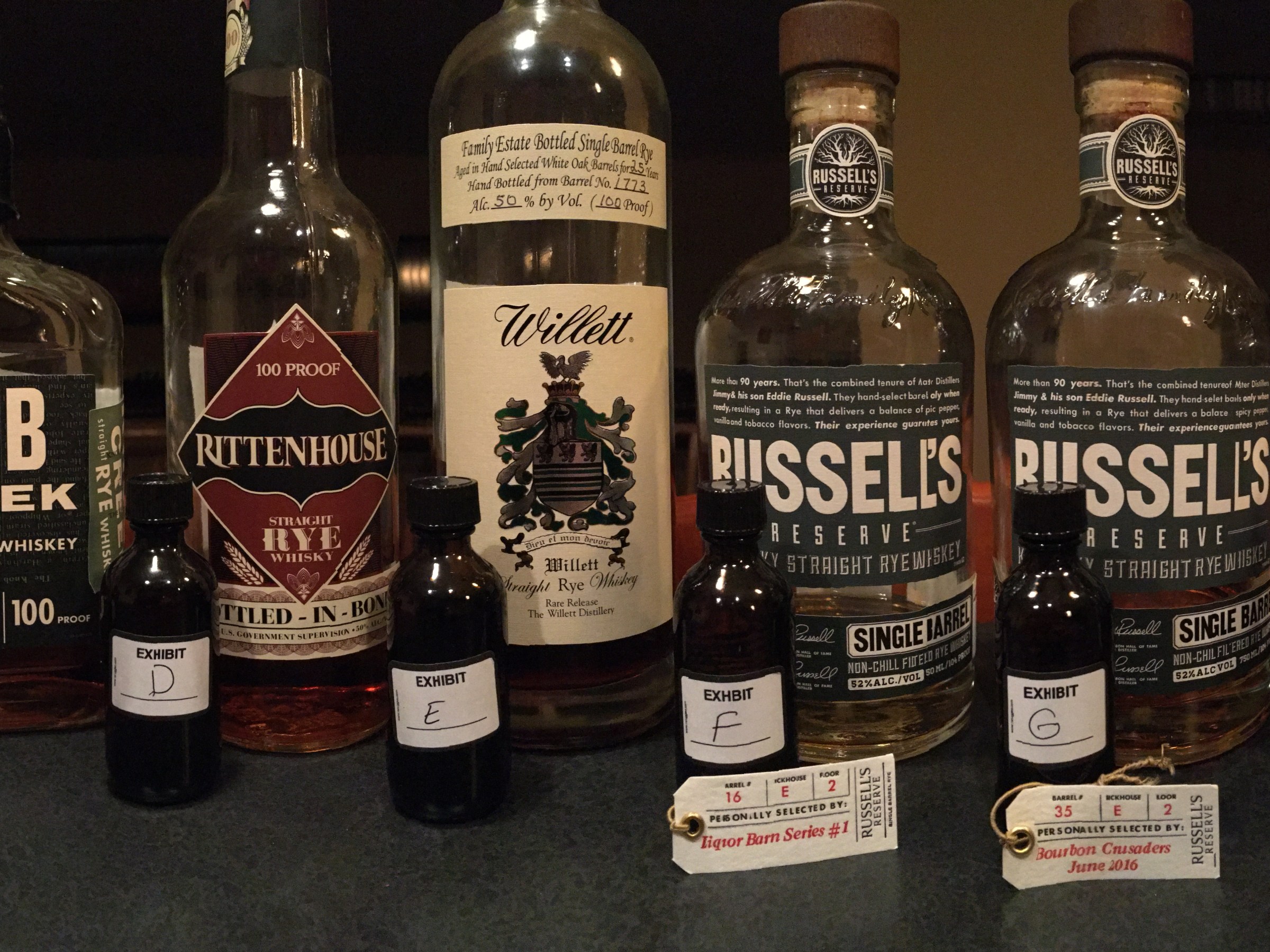
When I put together my Rye Battle Royal at the end of 2016, I had stocked away four extra complete sets of samples. I assumed—but wanted to check—that my palate and preferences might shift and I also wanted to get a few more local blind reviews. I tried them blind again this time, but I knew which ten Rye whiskies were in the mix and certain characteristics of some, like the color of the Willett 25-year and the heat of Booker’s Rye, were dead giveaways.
In the end there was a narrowing of the spread between the top two, 3rd place almost fell to 4th, and there was some shifting among the bottom half. I’d like to see how new entrants into the Rye market would fare against this lineup—especially Wilderness Trail which I think would place in the top three—but I decided against introducing factors that didn’t exist in 2016 in order to keep the comparison intact. I saved one last box of the 10 samples to revisit in another few years. In the meantime, here’s the old January 2017 post, updated with a few of the new comments and with the adjusted rankings:
*****
Over the past few years, American Straight Rye Whiskey has begun to experience a renaissance much like the early years of the Bourbon craze. And like the Bourbon market, distillers and other producers are clamoring to repackage earlier, lower-shelf brands as premium, super-premium, and limited edition offerings. Jim Beam “yellow label” Rye was a cheap option that was phased out in favor of a new green label option, reimaged to include the slick marketing claim that it is crafted from a “pre-Prohibition recipe.” And Beam did not stop there; it also released a super-premium Booker’s Rye limited edition with a suggested retail price of $299.00, which was named 2016 “Whiskey of the Year” by many. That all sounds eerily similar to what happened with Bourbon …
For this review, I wanted to take a large cross-section of Rye Whiskey from usually-available to scarce (but attainable), and from young to old. Every one of my selections was bought at retail prices without going to the secondary market or waiting in line for a chance to purchase. Even without lotteries and lines, I was able to get a Booker’s Rye and a Willett 25, so keep that in mind the next time you’re tempted to camp outside of a store. It might have been nice to include the strictly-allocated brands that flippers clamor to get, but then this comparison wouldn’t be realistic for the vast majority of consumers.
I decided to go with all American Straight Rye Whiskies so that I was comparing apples to apples, and so that I could be assured that there were no coloring or flavoring additives. I also avoided anything finished in other barrels; this is pure Straight Rye Whiskey. To further narrow the field, I went with Kentucky Straight Rye (sorry MGP), even if it is not labeled as Kentucky (like Pikesville). This knocked out most merchant bottlers, including—admittedly—some that might have challenged for high rankings.
This undertaking was big enough that I knew I needed help, so I assembled a panel of friends with trusted palates for a blind comparison. I arranged the samples by proof, but did not tell the group anything about the order. They only knew that they were trying Straight Rye Whiskey. My own initial tasting and scoring was also blind, but I re-tasted non-blind after compiling and averaging all of the rankings.
Here are the contestants, ordered by proof:
1. Russell’s Reserve Kentucky Straight Rye Whiskey Small Batch
Distillery: Wild Turkey, Lawrenceburg, Kentucky
Age: 6 years
Proof: 90 proof
Percentage rye grain: 51%
Cost: $45.00
2. Woodford Reserve Kentucky Straight Rye Whiskey
Distillery: Distilled at Brown-Forman, Louisville, Kentucky and bottled at Woodford Reserve, Versailles, Kentucky
Age: NAS
Proof: 90.4 proof
Percentage rye grain: Unknown
Cost: $40.00
3. Knob Creek Kentucky Straight Rye Whiskey
Distillery: Jim Beam, Clermont, Kentucky
Age: NAS
Proof: 100 proof
Percentage rye grain: Unknown
Cost: $35.00
4. Rittenhouse Bottled in Bond Kentucky Straight Rye Whiskey
Distillery: Heaven Hill New Bernheim Distillery, Louisville, Kentucky and aged in Bardstown, Kentucky
Age: NAS
Proof: 100 proof
Percentage rye grain: 51%
Cost: $30.00
5. Willett Family Estate Single Barrel Kentucky Straight Rye Whiskey
Distillery: Undisclosed (but maybe Old Bernheim)
Age: 25 years
Proof: 100 proof
Barrel No. 1773
Bottle 73 / 84
Percentage rye grain: Unknown
Cost: $350.00 (more recent releases cost $750)
6. Russell’s Reserve Kentucky Straight Rye Whiskey Single Barrel (Liquor Barn)
Distillery: Wild Turkey, Lawrenceburg, Kentucky
Age: NAS
Proof: 104 proof
Barrel No. 16
Warehouse E, 2nd floor
Percentage rye grain: 51%
Cost: $69.00
7. Russell’s Reserve Kentucky Straight Rye Whiskey Single Barrel (Bourbon Crusaders) (via Joyal’s)
Distillery: Wild Turkey, Lawrenceburg, Kentucky
Age: NAS
Proof: 104 proof
Barrel No. 35
Warehouse E, 2nd floor
Percentage rye grain: 51%
Cost: $65.00
8. Pikesville Straight Rye Whiskey
Distillery: Heaven Hill New Bernheim Distillery, Louisville, Kentucky and aged in Bardstown, Kentucky
Age: 6 years
Proof: 110 proof
Percentage rye grain: 51%
Cost: $50.00
9. Willett Family Estate Small Batch Kentucky Straight Rye Whiskey
Distillery: Willett Distillery, Bardstown, Kentucky
Age: 2 years
Proof: 111.8 proof
Percentage rye grain: Unknown
Cost: $35.00
10. Booker’s Kentucky Straight Rye Whiskey
Distillery: Jim Beam, Clermont, Kentucky
Age: 13 years
Proof: 136.2 proof
Percentage rye grain: Unknown (but not standard Beam)
Cost: $320.00
And the Winner (still) is…
In this comparison of ten Kentucky Straight Rye whiskies from across the age spectrum, from two years old to aged as long as you’ll ever see, and from affordable to market-leading expensive, I wondered whether the two heavyweights could withstand the challenge. They mostly did, but what I really learned was that after the top three and bottom two were established pretty conclusively (but my no means unanimously), personal preference was the key. Between those bookends, the panelists had some dramatically-different reactions to the same whiskey, although it’s also true that the averages were fairly delineated from top to bottom.
In other words, drink what you like and what makes you happy, and just use ratings, rankings, and reviews as a guide, except maybe for the extremes. With that said, the oldest, rarest Rye won, but it needed a photo-finish to do it:
2016—2019 Rye Battle Royal Results:
1. Willett Family Estate 25-year Rye
Boom – this Willett was ranked 1st by five out of the seven panelists and one more first-place vote in 2019. Believe the hype about these extra-aged Ryes that have been trickling out from Willett. The color—a dark mahogany—ranks up there with the darkest that I’ve experienced. Intense aromas of brown sugar, dark fruits, tobacco, and heavy oak previewed a thick, syrupy mouthfeel with rich, layered flavors. Those who don’t like oak might want to move on (although it’s not as oaky some other extra-aged whiskies), but it also nails dark fruit (plums, cherries), dark chocolate, pralines, brown sugar, orange peel, and rich caramel for a true desert quality. The finish has a remarkably long swell. Enjoy a whiskey like this neat, over a long, relaxing time.
2. Pikesville
Even though the oddsmakers had Pikesville coming in third, it retained its major upset by coming in second, barely behind Willett 25. With the 2019 results added, Pikesville really distanced itself from the third-place spot. Pikesville barely qualifies as Rye Whiskey with 51% rye grain and 39% corn, which in many ways makes it similar to a high-rye Bourbon. In part because of the corn percentage, it’s sweeter than I often think of for Ryes, but it’s extremely well balanced with rye spice, black pepper, and mint, so it’s not just a “sweet Rye.” It’s simply a fantastic whiskey, beginning with well-rounded nose and continuing with a great mouthfeel and solid warming finish. If you’re looking to spend $50 on a Rye, Pikesville makes your decision easy. Pikesville was scored consistently high by the panel, never dropping below 4th by anyone, but not garnering any first-place votes, either.
3. Booker’s Rye
2016 Whiskey of the Year? That’s something that I contemplated when I reviewed it during the summer of 2016, and it has since received this accolade from the big-time reviewers. We certainly can’t dispute those who think so, but it fell to an average of 3rd place here by the thinnest of margins in 2016, and almost fell to 4th place when adding the 2019 reviews. One 2016 reviewer rated it much lower and thought that it smelled like “cinnamon flavored paint thinner” and was too hot and tannic. Still, there’s no denying that Booker’s Rye is a legitimate Whiskey of the Year. Comments remarked on its “dark and sultry nose,” and it absolutely bursts with layers of spice. Plus it also has outstanding balance and a fantastic finish (one panelist wrote the finish spread like “ripples on a calm lake”). Once you consider the price on the secondary market, why not just buy a case of Pikesville?
4. Knob Creek Rye
Here’s where some reshuffling started. Already the volume King of Bourbon, Jim Beam is making a run at Rye King with its Booker’s Rye, and a very respectable Knob Creek Rye. Leather, woody and spice balanced by nougat, with noticeably high ABV, were common comments. Knob Creek Rye has a medium finish that holds onto the rye spice and pepper throughout. Claiming the second-lowest price of the contestants, Knob Creek Rye certainly takes the title of price performer, and it increased two spots in the 2019 reviews.
5. Russell’s Reserve Rye – Single Barrel (Liquor Barn)
The profiles of some Russell’s Reserve Bourbon private barrels have varied greatly, so I wanted to see whether the Rye would be more consistent, and I wanted to compare two of the best sources of private barrel selections. It turns out that they share some similarities, but this one was much sweeter, with butterscotch, buttered popcorn, and vanilla playing the primary role with nuttiness but with great spice in the backbone. The Liquor Barn barrel also has a much more prominent Big Red cinnamon flavor. While receiving rankings mostly straight down the middle, this Russell’s Reserve received one 2nd-place vote and one 10th-place vote.
6. Russell’s Reserve Rye – Single Barrel (Bourbon Crusaders)
This is a great Rye, so 5th place surprised me more than any other result, let alone 6th place after being leapfrogged by Knob Creek, and it’s much lower than my personal scoring. This is a classic Rye where it’s spicy without screaming heat, and sweet without sugary candy. Starting with aromas of oak and black pepper, the taste continues with oak, pepper, and baking spices balanced by cherry, crème brûlée, and crisp fruit with cocoa that hits at the tail end right before the beginning of the medium finish. I have a bottle of this left and I’ll take it any day over Knob Creek Rye, but the averages didn’t agree with me.
7. Russell’s Reserve Rye – Small Batch
Wild Turkey nails a sweet Rye with its six-year Small Batch. The proof seemed a little low for this Rye, and I can’t help but wonder what this would be like at the 101 that Wild Turkey has made famous. Light bananas, macadamia, and well-rounded candy notes made for a delicious—albeit sweet—Rye. A less-than-subtle nose and the lack of a rye-grain kick makes this less of what we expected in a Rye Whiskey, but it was enjoyable in its own right. In the new round of tasting, it even received a first-place vote!
8. Rittenhouse Bottled in Bond Rye
Rittenhouse BIB received consistent 8’s and 9’s in the first round, which spelled doom and resulted in a 10th place finish by a narrow margin. But 2019 scores reshuffled the bottom three and lifted Rittenhouse up to 8th place. Rittenhouse was mistaken as a young craft Rye with muddled flavors and an orange marmalade quality, and there’s some green wood, but there’s also dark fruit, cinnamon, and the expected rye spice. While by no means a show-stopper, Rittenhouse BIB hits the Rye Whiskey criteria, and as the lowest-priced Rye out of the ten, it is often considered a great value. I think this would fare well in a $30-and-under Battle Royal, but it fell flat with this group.
9. Woodford Reserve Rye
Woodford Reserve’s core brands of Distiller’s Select and Double Oaked Bourbon enjoy great popularity for good reason, but the Rye hasn’t caught on yet. After a nice nose, most panelists thought that the taste was thin and weak. One panelist noted an acetone finish with “cinnamon that coats your nasal passages.” One of the best comments that I’ve ever read (good or bad) about whiskey described the “funky” finish in these terms: it “tosses you about like a wagon ride over a cobblestone street, with each wheel shaped differently.” Woodford Reserve Rye was ranked 10th by several panelists, which is exactly where I put it in 2016 and this time around.
10. Willett Family Estate 2-year Rye
Willett is having great success with its own distilled Rye and Bourbon, and a few years ago when its first two-year Rye was released, I picked one up to see how it would compare in this field. Unfortunately, many panelists thought that it could have used more time in the barrel. A couple of panelists loved it though. The “love it” or “hate it” impression was shown by the widest spread of votes in two distinct camps (2nd and 3rd place, versus 9’s and 10’s, with nothing in between). Comments for this polarizing Rye ranged from “crisp and lively” and “lovely golden raisin,” to “fish oil pills” and “vile stuff.” Personal preference for young whiskey—or an aversion to it—probably explains these two extreme camps. Low votes in the 2019 round doomed its final ranking.
If your favorite Rye isn’t on this list, spend some time in 2019 comparing it with Pikesville, a Russell’s Reserve Single Barrel, or Knob Creek, or any of the other readily-available Ryes, and you might be surprised. As Rye continues to expand, you’re bound to have plenty of choices.

Bourbon History Matters as a Matter of Law

I’m pleased to announce that The Kentucky Journal of Equine, Agriculture, & Natural Resources has published an article that I wrote with Melissa Whitehead, a former associate at my firm who helped with the Sazerac v. Peristyle litigation. The 2018 ruling by the Sixth Circuit—on National Bourbon Day no less—established groundbreaking rights under the fair use defense and was lauded as a “Top 10 Trademark Ruling of 2018” by Law360.
While this law journal article digs deep into the legal analysis of the defense that prevailed in Sazerac v. Peristyle, you’ll also see that it cites to works by many non-legal friends who will be familiar to bourbon enthusiasts. And, ultimately, it’s about the importance of history to bourbon. Enjoy.
Link: Bourbon History Matters as a Matter of Law
Full citation: Brian F. Haara, Sazerac Brands v. Peristyle: Bourbon History Matters as a Matter of Law, 11 Ky. J. Equine, Agric., & Nat. Resources L. 307 (2019). © Brian F. Haara 2019.
Sipp’n Corn Tasting Notes – Four Gate Kentucky Straight Bourbon Whiskey Finished in Ex-Sherry Rum Casks (“The Kelvin Collaboration”)
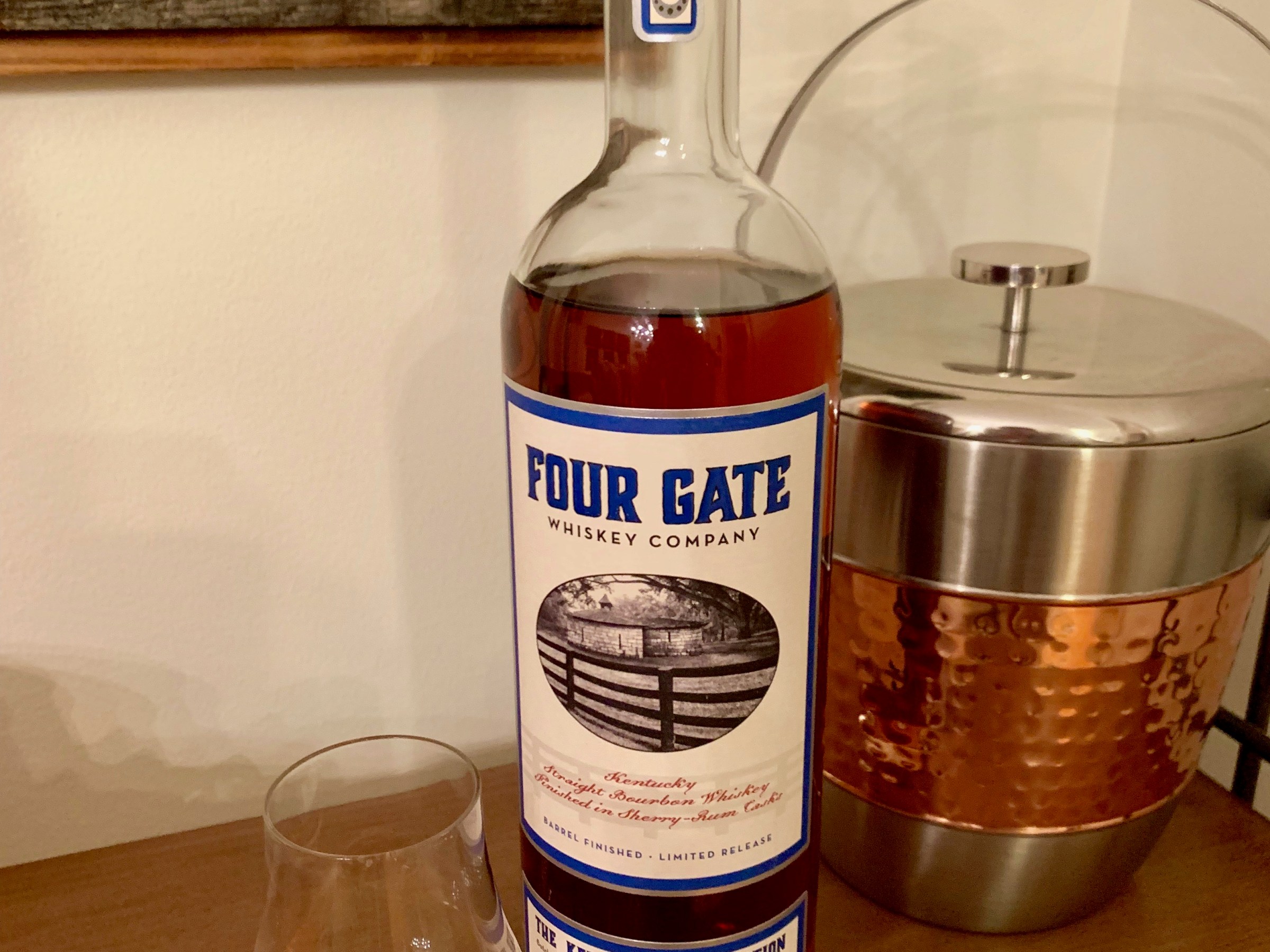
Amid springtime in Kentucky we have a new whiskey to enjoy. Four Gate Whiskey Company offers an 11-year old American Whiskey that went decidedly against the boring habit of other sourced brands that proof down their omnipresent MGP bourbon resulting in whiskeys that carry a hefty price tag but aren’t differentiated from other sourced bourbon on the market.
Four Gate also withstood the temptation to make up legends, marketing stories, or family recipe nonsense. Instead, Four Gate took a substantial risk by sourcing 18% rye-grain Kentucky Straight Bourbon Whiskey that easily could have been bottled in its own right, and that could have been proofed down to make it go farther. Not even close. Four Gate took a risk by finishing this bourbon in sherry casks that had been used once for rum already, with guidance from the experts at Kelvin Cooperage. Their risk is your reward.
But before jumping into the tasting notes, I have more than the typical disclaimers when I receive a 50mL sample from brand managers. Here, I know and respect the guys behind the brand. It turned out that I am also friends with some of the investors because Louisville is a small town. During the development of the brand, I was invited to and took part in a tasting that helped guide the owners to the blend used for this inaugural release. And I attended the Four Gate launch event in mid-April where I tried more free samples of the whiskey and stout aged in the bourbon barrels. So, in a nutshell, it can be fairly said that I’m rooting for Four Gate to do well. Take that for what it’s worth but know that I strive for objectivity in all of my tasting notes.
Bourbon: Four Gate Kentucky Straight Bourbon Whiskey finished in Ex-Sherry Rum Casks
Distillery: Undisclosed; Sourced by Four Gate Whiskey Company
Age: 11 years before finishing
ABV: 61.7% (123.4 proof)
Cost: $199.99
Tasting Notes
Appearance:
Brown with a copper-red undertone.
Nose:
The aromas are some of the best that I’ve had in recent memory. The interplay of the rye spice and cinnamon with sweet sherry dark fruit notes strikes a perfect, inviting balance. It somehow combines deep soulful aromas with light sharp aromas, like striking the entire range of piano keys.
Taste:
The flavors didn’t seem as influenced by the sherry and rum compared to the nose. The sweetness shifted more towards brown sugar and the high rye shone through with oak and black pepper. Despite the high proof, the first sip neat is creamy and lingers without burning.
I also enjoyed it with a splash of water. That’s not to say that it should have been proofed down for bottling; I appreciate that it was bottled at barrel strength. That lets consumers do the proofing for their particular preference and palate. Adding water brought more creaminess but diluted the sweetness.
Finish:
The finish was medium in length and, at first, I thought it was mostly oaky. Then the sherry and rum sweetness came back as it then shifted to lingering rye spice. I think that the sherry and rum sweetness defines the finish, but it still has a vibrant dry oak and spice as it trails off. It’s a very contemplative finish.
Bottom Line
Four Gate has a big winner here. The bad news is that Batch 1 is available only in Kentucky and Tennessee (and only 1,732 bottles for this first run), so it’s going to be difficult to find. But with the talent involved at Four Gate, the future is bright.
The price is going to scare off many consumers, of course, especially when barrel strength Elijah Craig 12-year and Four Roses private selections can be found with some regularity in the $60-$75 range. I used to complain about prices five years ago and maybe even swore that I wouldn’t buy bourbon for more than $100. Then things went from crazy to insane. It’s just where we are today in the bourbon market, and an extremely limited release like Four Gate that is well-crafted in its blending and finishing can fetch its suggested retail price easily.
 Brian Haara