Brian Haara
Bourbon. Law. Author.
Kentucky Bourbon Affair 2015 – Crab & Crawfish with Bill Samuels, Jr. and Maker’s Mark.
Now in its second year, the Kentucky Distillers’ Association Bourbon Affair (held this year June 3-7) is already firing on all cylinders. Events this year ranged from fishing with Fred Noe, blending at Four Roses (post coming soon!), sampling Bourbon from all over Heaven Hill, culinary events, polo on the riverfront, and much, much more. The vast majority of people I met at the Bourbon Affair were from out of state – one extremely fun group was in from Canada – and they were here to enjoy daily events.
 Instead of the full immersion of attending events over the better part of a week, my plan has been more akin to dipping my toes, with the goal of selecting one or two once-in-a-lifetime experiences. For 2015, that meant the Maker’s Mark southern style crab and crawfish boil hosted by Bill Samuels, Jr. and his wife, Nancy, at their home on the Ohio River near Louisville.
I’ve already written about Bill, Sr.’s exit from, and immediate competition with, Country Distillers, and the resulting necessity of coming up with a new name since the Kentucky Court of Appeals prevented Bill, Sr. from using his surname in any material way associate with his newly planned Bourbon (link here). I’ve also already written about the more recent legal fight with Diageo over the iconic dripping red wax seal (link here).
 Litigation tells a great story about the Samuels family, but after getting the chance to talk with Bill, Jr., I saw firsthand how his family has made its mark. Bill’s affability and charm held his audience gripped for the next story. And Bill’s family pride – without being boastful and without false modesty – gives him an impressive command of the room. Combine those people skills with his knowledge of the Bourbon business, and it’s no wonder that Bill, Jr. was able to pick up where his father left off.
The evening started with greetings from Bill, Jr. and informal tours around his home, which had rooms more reminiscent of museums and art galleries. The vaulted ceiling entryway was dominated by contemporary art, but after moving into the parlor and other interior rooms, the mood became purely historical. That’s where Bill, Jr. showcased Marker’s Mark memorabilia, historical furniture, and oil-paint portraits from a bygone era.

The historical Maker’s Mark treasures included things like the very first Maker’s Mark bottle, and non-Bourbon historical pieces included the actual desk where Stephen Foster wrote “My Old Kentucky Home,” a checker’s set owned by Thomas Jefferson, and Robert E. Lee’s pistol in a shadow box.
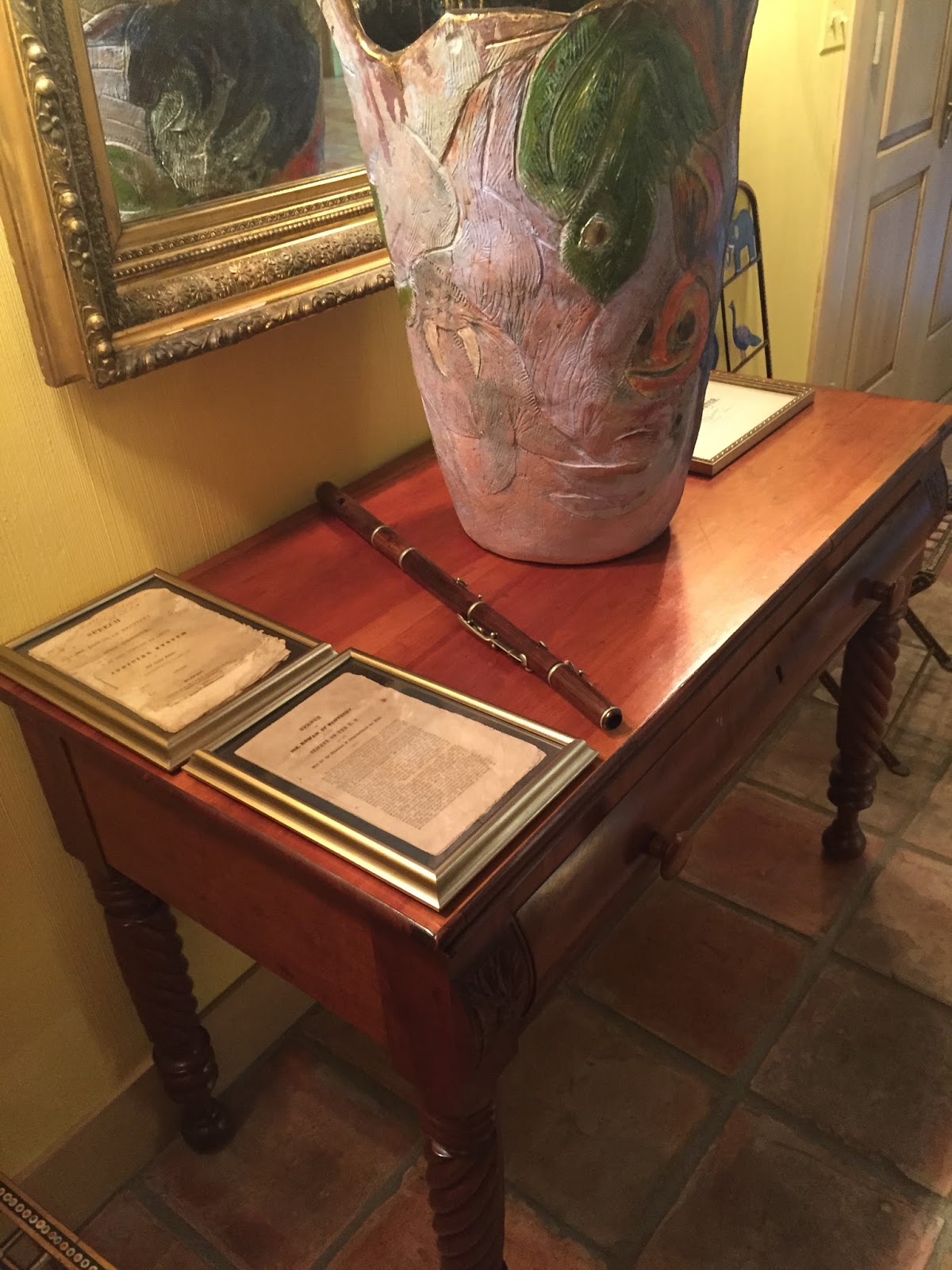
Some of the art wasn’t to my taste (posed mannequins enjoying tea and pie on the sun porch), but that scene led to some tremendous conversations.
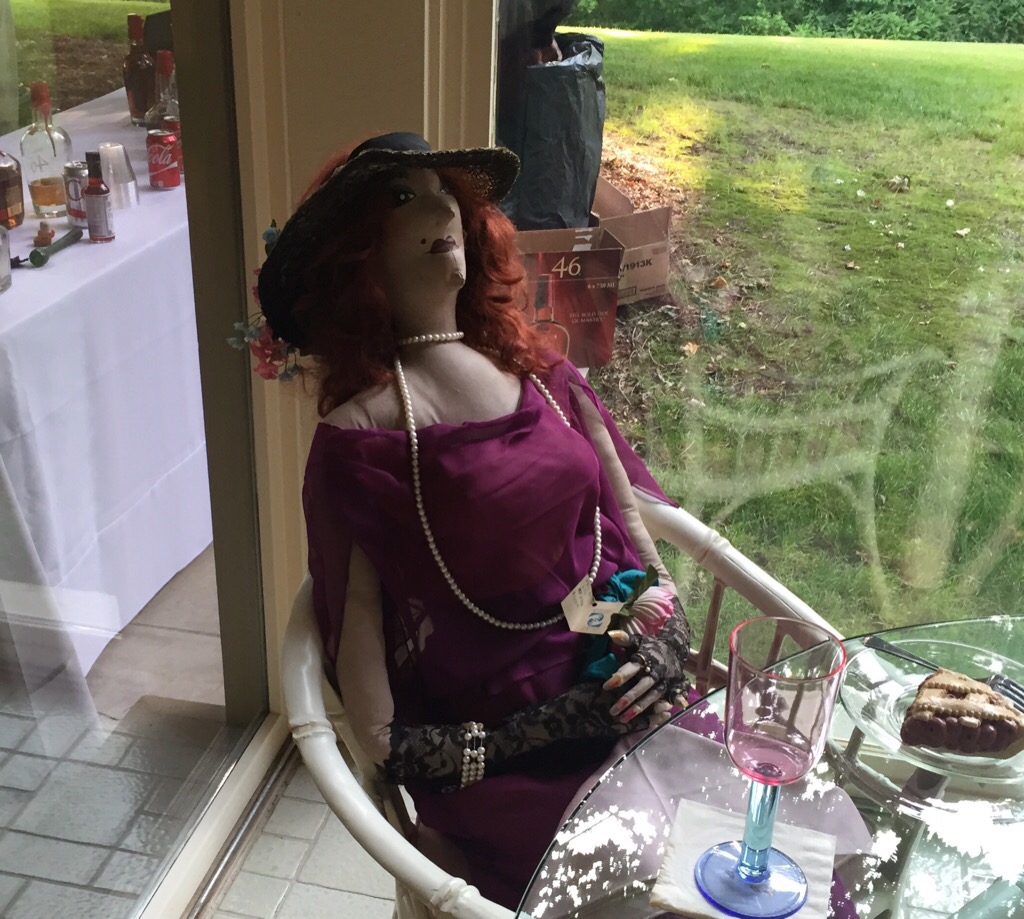
The family-style crab and crawfish boil, followed by more time on the sweeping back lawn overlooking the Ohio River, together with Bill, Jr.’s graciousness, made for a perfect evening.
Sipp’n Corn Bourbon Review – Blood Oath Pact No. 1
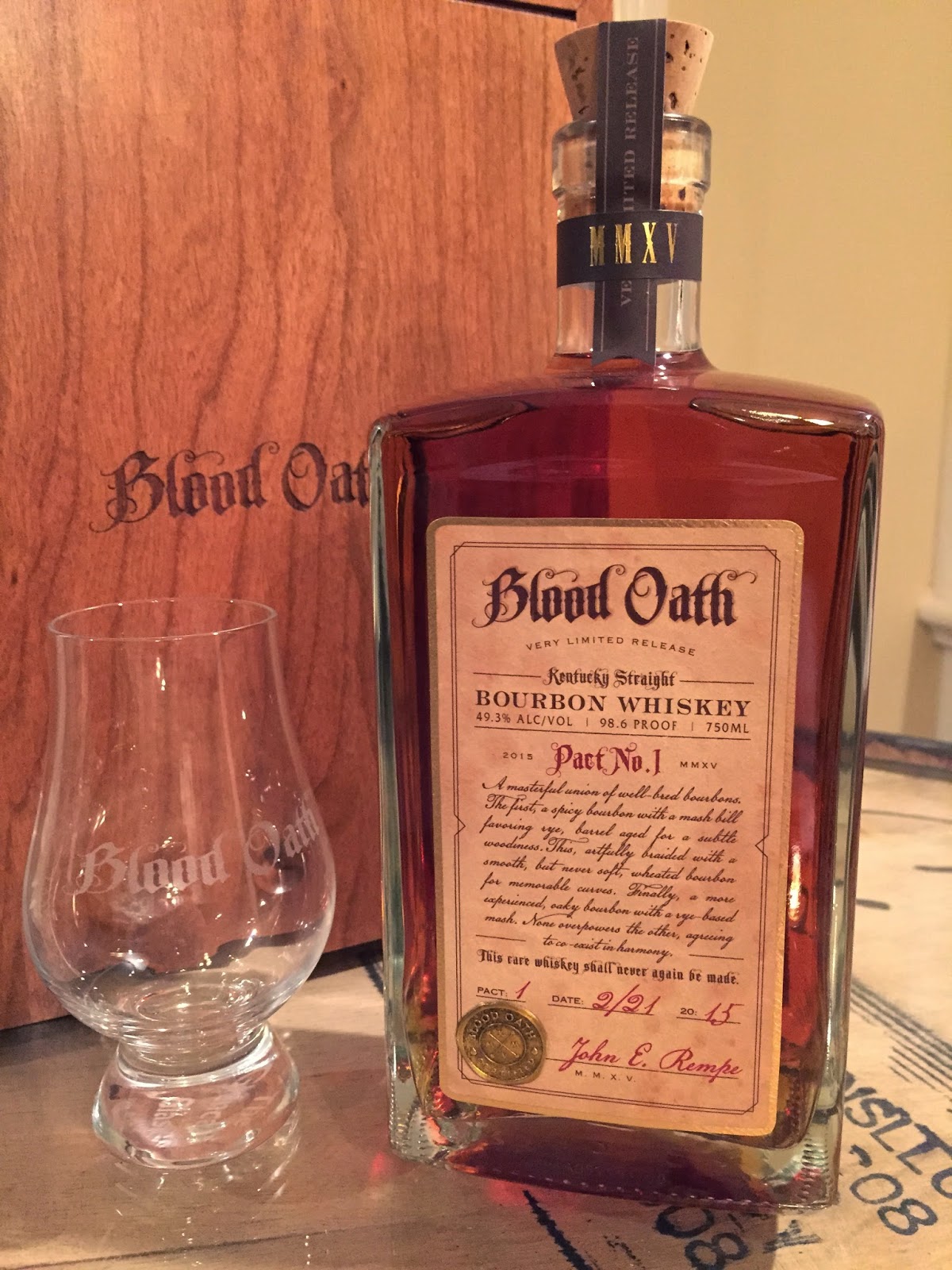
Blood Oath Pact No. 1 is one of the latest self-declared premium Bourbons to hit the market, complete with a marketing story, artful and attractive bottle, wooden box, and limited bottling run of 15,000. At an MSRP of $89.99, the price is premium as well, making Blood Oath the first foray into this Bourbon market segment for St. Louis-based Luxco Inc., a non-distiller producer (“NDP”) which owns many existing spirits brands, including the moderately-priced Rebel Yell and Ezra Brooks lines. Luxco plans on following up with “Pact No. 2” in 2016 as well as future new “Pacts” with different blends.
Perhaps anticipating some level of pushback because it is an NDP, Luxco released a preemptive video (link here) called “Q&A with John Rempe,” who is Director of Corporate Research & Development at Luxco. Mr. Rempe answers questions like “Why release a new bourbon now?” and “Should Luxco be releasing a super premium bourbon as an NDP?” He also argues the case for why it’s better to be an NDP.
Although Mr. Rempe and Luxco have not identified any more than the ages and secondary grains of the Bourbons used in Blood Oath Pact No. 1, those reported ages and mash bills match up with brands mentioned above already owned by Luxco. If we can assume that Luxco is using stock that would have been destined for its existing brands, then Blood Oath is likely a blend of Ezra Brook 12, Ezra Brooks 7, and Rebel Reserve.
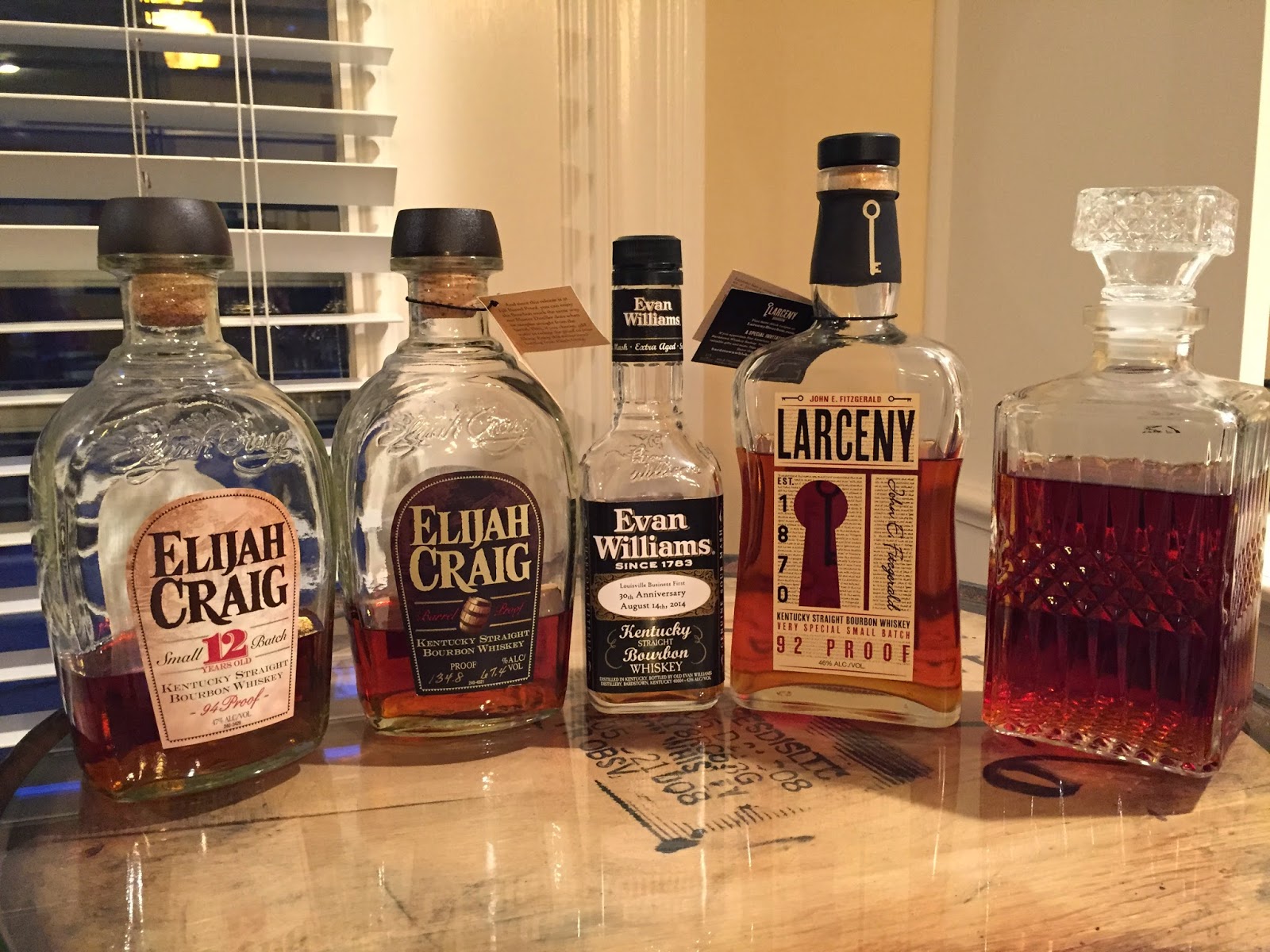 Heaven Hill produces those brands for Luxco, and in addition, Heaven Hill has its own popular labels that match the Luxco brands in age and mash bills: Elijah Craig 12, Evan Williams Black Label, and Larceny.
Because I was intrigued by Luxco’s idea for its blend, and I because owned all of the Heaven Hill brands that I needed for ingredients, I created a homemade blend with 12 oz. Elijah Craig 12 (94 proof), 4 oz. Elijah Craig 12 Barrel Proof (134.8 proof), 4 oz. Evan Williams Black Label (86 proof), and 5 oz. Larceny (92 proof). I hated to use my Elijah Craig Barrel Proof on an experiment, but I needed to use it in order to approximate the proof of Blood Oath, and I came surprisingly close at an estimated 98.8 proof. (As a disclaimer, I have no idea whether my percentages of these brands match up with the percentages of the three Bourbons used by Luxco in Blood Oath.)
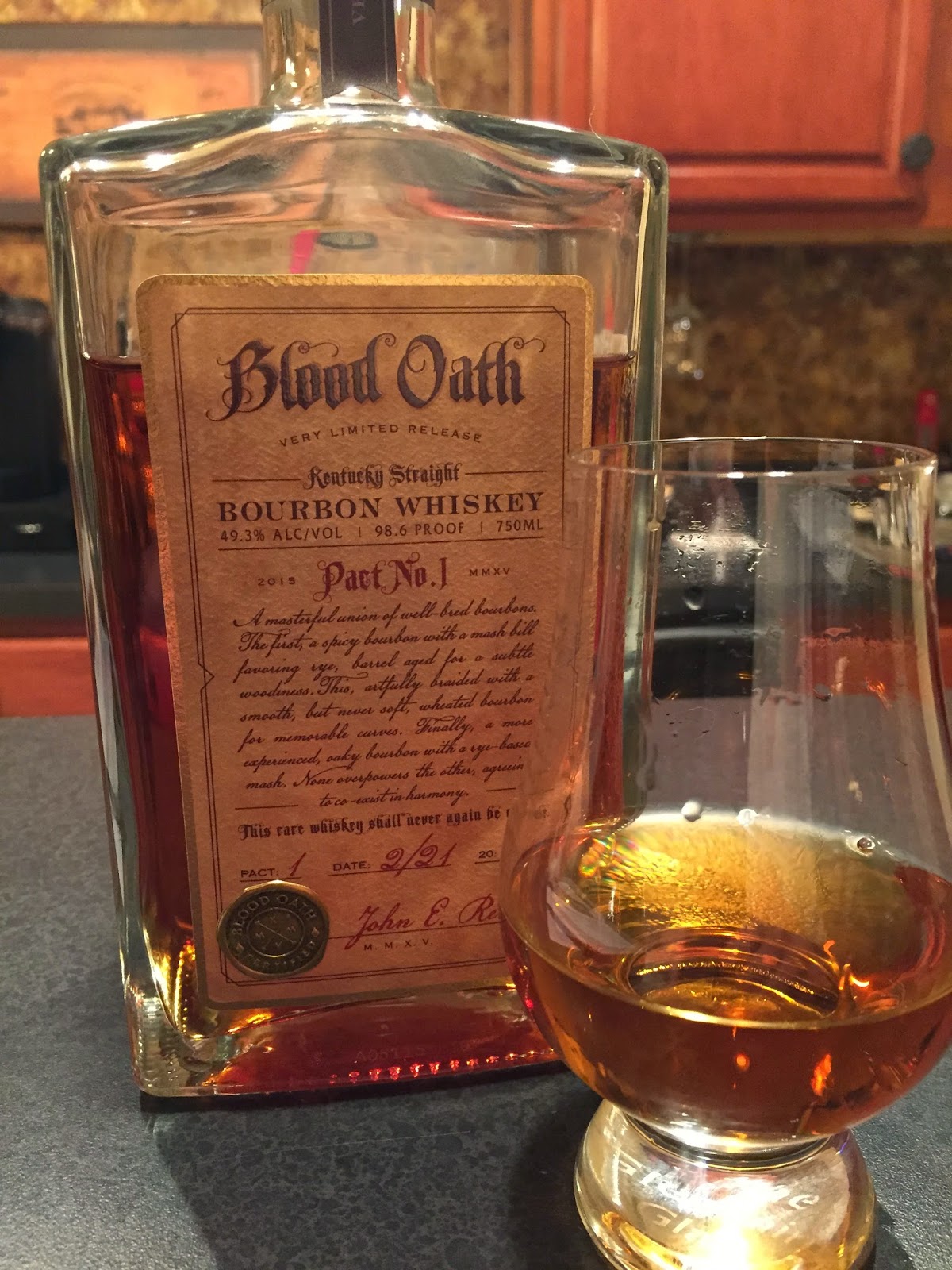 After trying Blood Oath Pact No. 1 on its own a few times, I compared it side-by-side on more occasions with my “Blood Oath Approximation.” As a check on my impressions, I also conducted double blind tests with fellow enthusiasts to compare Blood Oath; my “Blood Oath Approximation;” a 90 proof Bourbon with rye as the secondary grain, which I think is heavy on corn flavors; and a 9-year old 101 proof Bourbon using rye as the secondary grain, which emphasizes more of the rye flavors.
That’s a long lead-in, but here are the results:
Blood Oath Review
Disclaimer: Luxco kindly sent me a sample bottle of its
Blood Oath Pact No. 1 for this review, without any strings attached.
Thank you.
|
Bourbon:
|
Blood Oath Pact No. 1 – Straight Kentucky Bourbon Whiskey
|
|
Distillery:
|
Undisclosed
|
|
Age:
|
A blend of 12-year Bourbon with rye as the secondary grain; 7-year Bourbon also with rye as the secondary grain; and 6-year Bourbon with wheat as the secondary grain
|
|
Bottled:
|
Luxco, Inc.
|
|
Proof:
|
98.6 proof
|
|
Cost:
|
$89.99
|
Tasting Notes
Color:
Medium amber. Elijah Craig 12 is darker, and so is my “Approximation,” so this could indicate a higher usage rate of the younger components.
Nose:
Vanilla, tea, honey and light, summery floral notes.
Taste:
I sensed the taste of younger wheated Bourbon, which I know some people have loved, for example in Contradiction, but which isn’t my personal favorite. (I reviewed Rebel Reserve last year and was not a fan.) Still, there’s a lot more going on, like vanilla, honey, and some rye spice along with cinnamon. I didn’t get some of the other flavors that I identify with well-aged wheated Bourbon, nor did I find much oak, which struck me as further indication of higher use of the younger components. The heat of the alcohol is more evident than I expected, even at nearly 100 proof. With a Bourbon at this price and proof, I’d usually caution against adding ice, but the chill of an ice cube added some creaminess and opened some caramel flavors that I didn’t find initially.
Finish:
Overall a short to medium finish that starts sweet but loses that flavor pretty quickly, ending with faint cinnamon spice and some bitterness.
Bottom Line
Kudos to Luxco for trying something new and innovative. Many Bourbon enthusiasts have been blending different brands for years, oftentimes choosing to blend rye and wheated Bourbons together. On the other hand, the only regularly-produced labels I’ve had that blend rye and wheated Bourbons are Noah’s Mill and Smooth Ambler Contradiction. Maybe Luxco is onto the next big idea in Bourbon, and thankfully they presented this new brand with transparency.
While the innovation is there, the cost is too high. The components of my “Blood Oath Approximation” cost about $35.00, so presumably Blood Oath could have entered the market in the ever-increasing $40.00 range. I suppose that Luxco would have had to jettison the wooden box at that lower price-point, but it still could have kept the bottle and marketing strategy, and maybe built some momentum.
As Mr. Rempe’s video shows, Luxco anticipated some criticism, but I think that they could have misjudged why enthusiasts might be critical. There’s no problem being an NDP when it’s coupled with transparency and when the NDP avoids outlandish “historical” stories or claims. There’s also no problem bringing a new Bourbon into the market, especially something that is unique when compared to most other options. The source of any pushback might instead be on pricing when we don’t know why the component Bourbons are so special as to warrant a price commensurate with limited edition releases that have proven track records: what is the provenance of the Bourbon?; is it unique?; is it rare?; was it selected by a name we know and trust?
In sum, great idea, good Bourbon, but overpriced.
Score on The Sipp’n Corn Scale: 3.0
The Sipp’n Corn Scale:
1 – Wouldn’t even accept a free drink of it.
2 – Would gladly drink it if someone else was buying.
3 – Glad to include this in my bar.
4 – Excellent bourbon. Worth the price and I’m sure to always have it in my bar.
5 – Wow. I’ll search high and low to get another bottle of this.
Review: Kid-Focused Tour at Buffalo Trace.
In the first tour of its kind, over Mother’s Day weekend Buffalo Trace taught kids the basic history and science behind Kentucky Bourbon, while barely mentioning – let alone promoting or glamorizing – alcohol. That’s a tough task for a distillery, and some people will undoubtedly be judgmental about gearing a distillery tour specifically for children, but Buffalo Trace handled it perfectly by showing just how much there is to learn about things other than Bourbon.
To be clear, though, families with children have already been welcome at Buffalo Trace, and all tours are open to visitors of all ages, except the Hard Hat Tour (which requires a minimum age of 12). The Mother’s Day weekend tour was innovative because instead of kids being along for the ride, here the parents were along for the ride, and the tour focused on details that would be appealing to the 12-and-under crowd.
The kids were guided by the incomparable Freddie Johnson. Freddie’s father, Jimmy, worked for 47 years at the distillery (long before it was known as Buffalo Trace), and Freddie’s grandfather, James B. Johnson, Sr., worked at the distillery for 52 years between 1912 and 1964. Both worked their way up to Warehouse Supervisor, with James becoming the first African American to hold that position. Jimmy and Freddie were interviewed for the University of Kentucky’s Louie B. Nunn Center for Oral History Bourbon project (link here), and they have some fascinating stories.
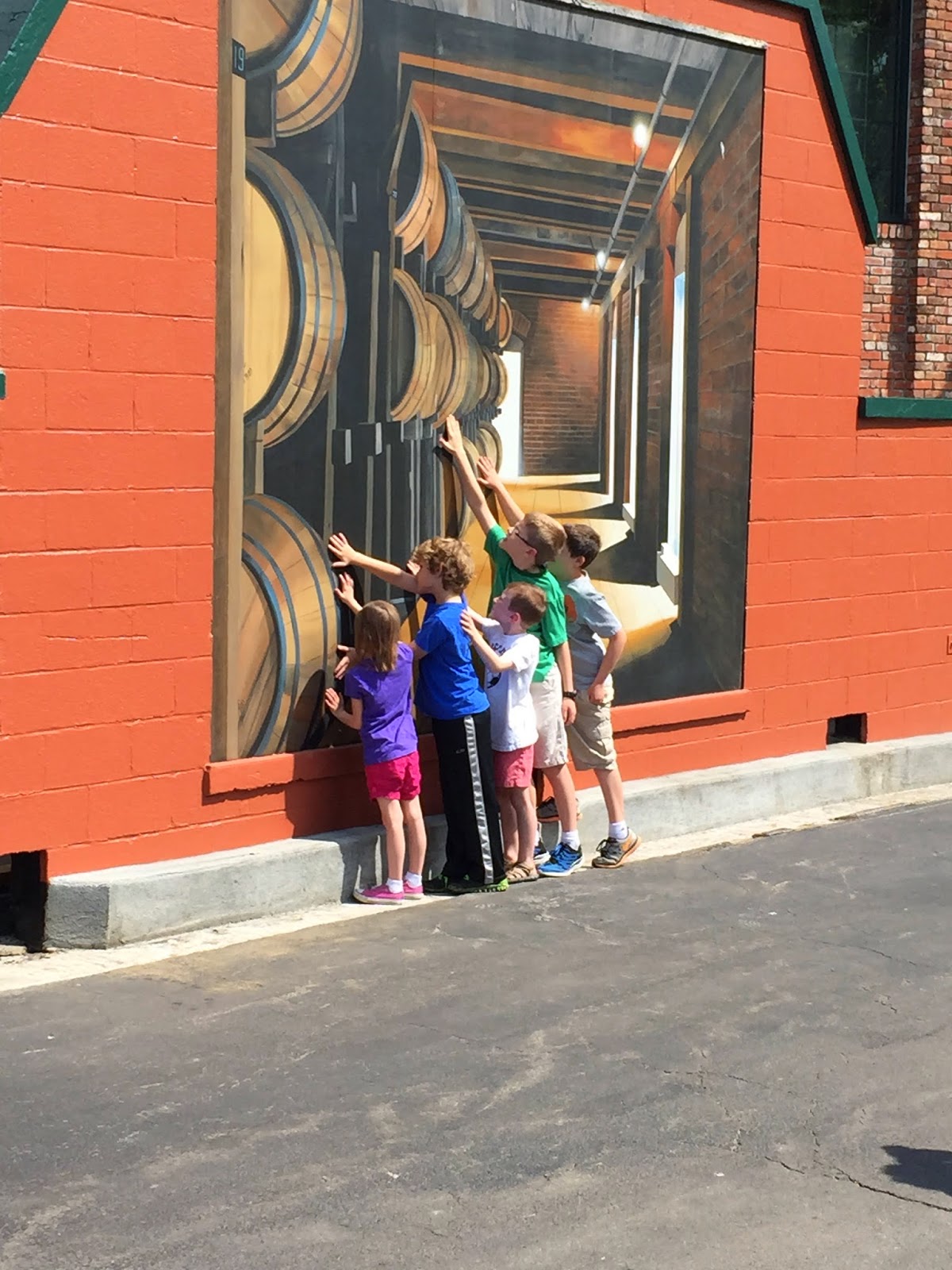 Freddie started the tour by describing how buffalo carved the four main roads around Frankfort and leading to the Kentucky River, with inquisitive kids wanting to talk about the difference between bison and buffalo, and how huge these beasts were. Freddie gave just a bit of history about the property and family farmer distilling in Kentucky, but sensing that the kids would be bored with numbers, he didn’t spend long on it. We moved outside for a “hands-on” viewing of the optical illusion painting of a warehouse row, which entertained the kids, and then we walked to Warehouse C.
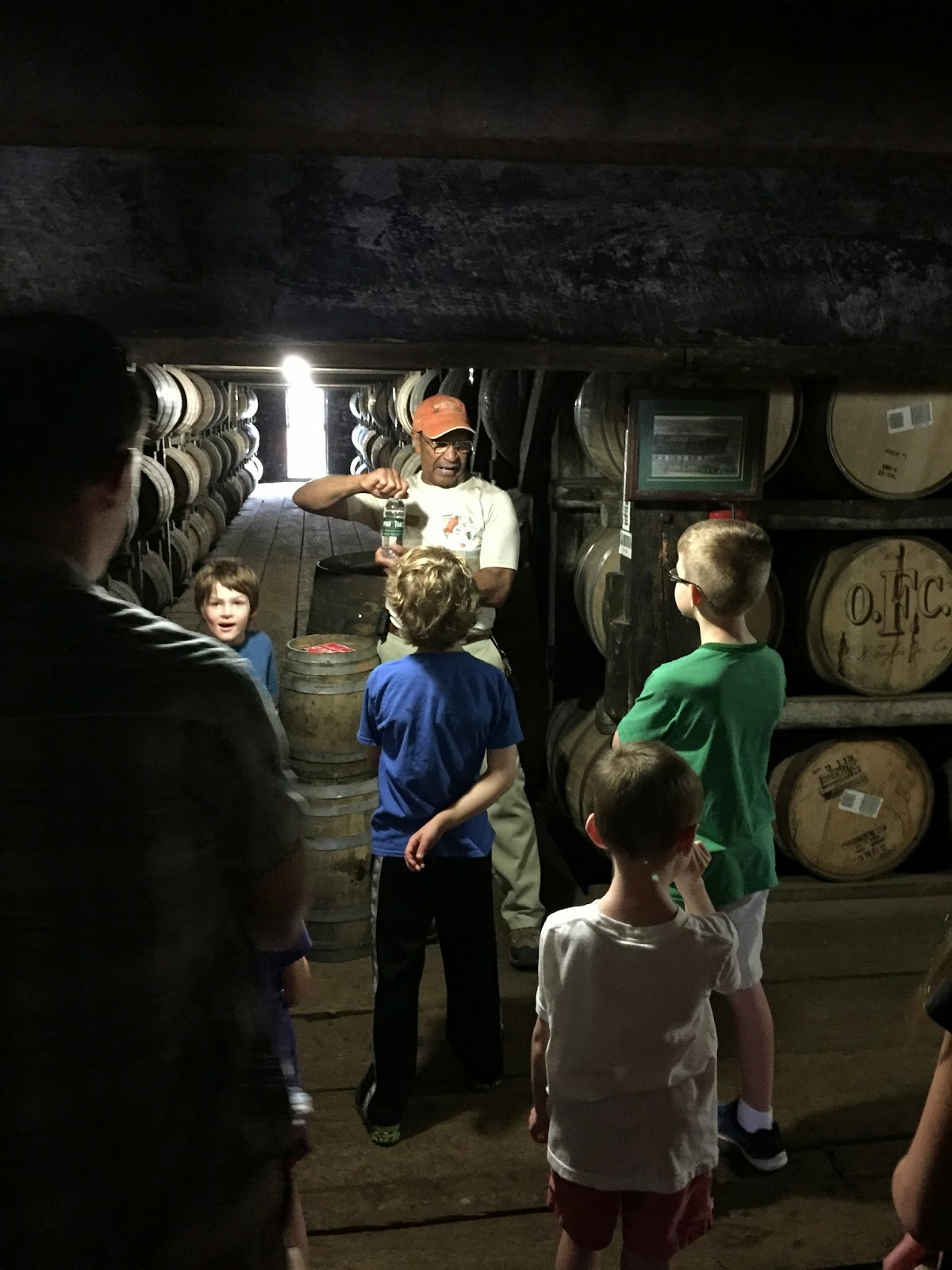 Freddie explained along the way – and it turned into a theme – that early distillers had to be farmers, scientists, architects, and engineers. While in Warehouse C, the kids could feel the coolness of the ground floor. Freddie coaxed out of them that upper levels and attics in houses were warmer, and he explained that this happens in warehouses too. Just like hot conditions create pressure in a water bottle, Freddie explained temperature and pressure inside aging barrels, with the added dimension of the liquid’s interaction with the wood (interestingly, Freddie only used the words “Bourbon,” “whiskey” or “alcohol” a time or two). The kids got a chemistry lesson without even realizing it.
 Chemistry gave way to architectural engineering outside of Warehouse C where Freddie pointed out the 2006 tornado damage. The tornado pulled up massive Sycamore trees and tossed them like toothpicks, and those trees kicked the tornado up off the ground where it peeled the roof off of Warehouse C and ripped off some brick. Remarkably, the tornado didn’t harm the rick structure or a single barrel of Bourbon, or the massive water tower which had been built to withstand everything that Kentucky weather can throw at it.
Getting back into chemistry, Freddie explained that the barrels at the top of Warehouse C were exposed to the most adverse weather conditions you could imagine during the storm, then they were baked in direct sun over the summer, and cooled with Kentucky wind and rain while the walls and roof were repaired, resulting in a surprisingly exceptional product. He explained that this inspired Buffalo Trace to build Warehouse X, an experimental warehouse to test all kinds of aging conditions. The slogan “Honor Tradition, Embrace Change” might have been lost on the kids, but they appreciated the experimentation that goes into the scientific method.
Then we moved to barrel design and experienced the ease of flipping and rolling a heavy barrel. Barrel construction seemed to interest the kids – especially how a barrel without glue, grooves or nails could keep liquid inside – and how different trees or different sections of the same tree have different flavor characteristics. Freddie sensed that the kids had absorbed all they could, so he led us to a tasting room to try Dr. McGillicuddy’s root beer, which was the perfect high note to end the tour.
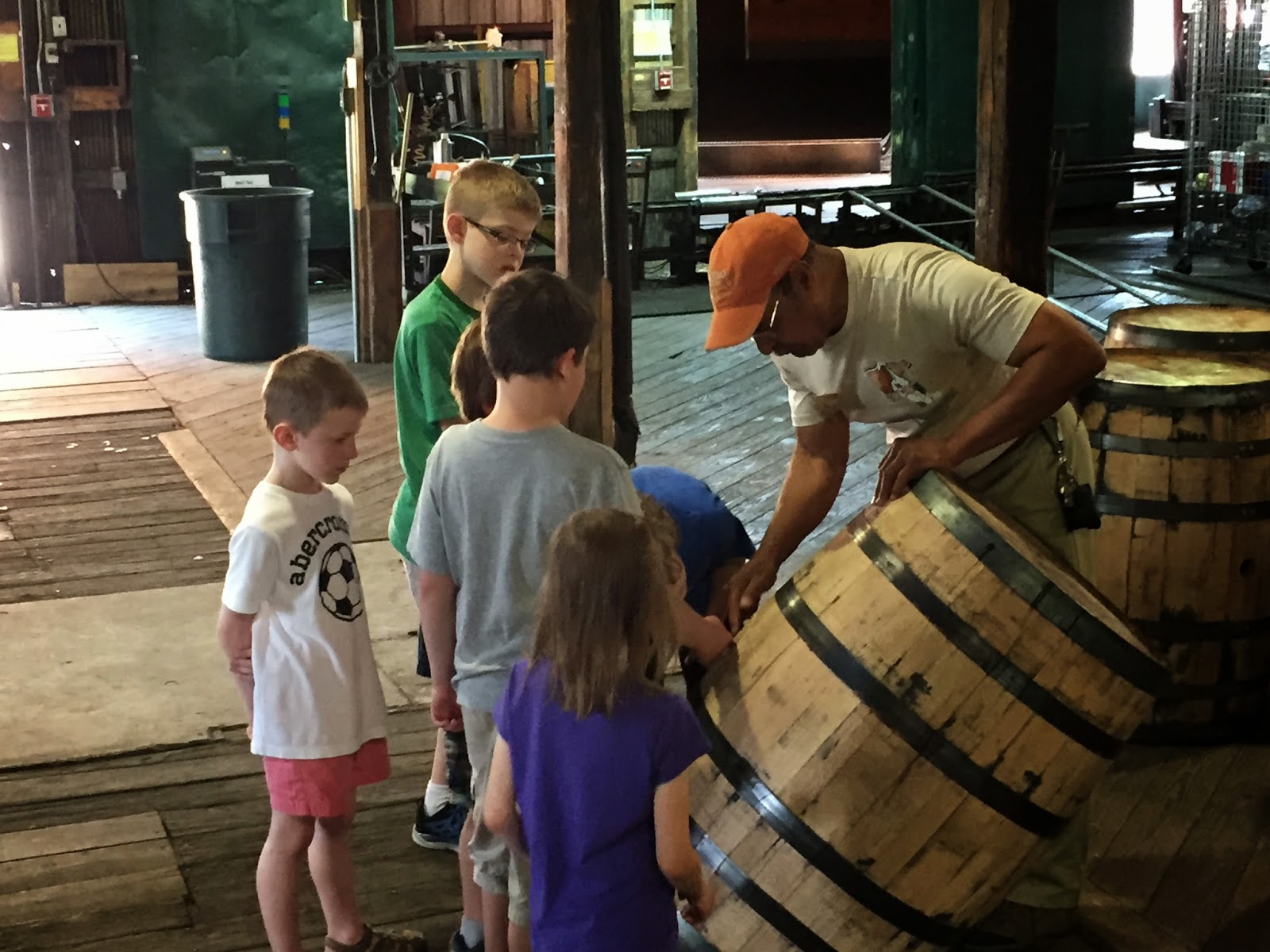
Hopefully some aspect of chemistry or engineering will resonate with the young visitors, and I suspect that chances are good because of Freddie’s enthusiasm and because he never talked down to his audience.
We could have done without the historical lesson of 2,000 family farmer distillers or prescription use during Prohibition, but otherwise the tour hit the kids’ interests. Finding a way to let the kids touch and smell the grain would have added a nice tactile and sensory dimension to the day. Unfortunately, Buffalo Trace doesn’t have an ideal setup to show kids grain receiving or the mill room, which along with the mash house, fermenters, still house, and other operations are on the “Hard Hat” industrial side of the distillery property. For good reason, that side is unlikely to be part of a kid-focused tour. But a simple table with canisters of corn, rye, barley and wheat could have helped satisfy the need to touch and use other senses, and add to a memorable experience.
I hope to hear that Buffalo Trace will continue this experiment. If any readers are interested, I encourage you to call Buffalo Trace (800-654-8471) to request the kid-focused tour, and that might help make this a permanent feature.
(A special thanks to Maggie Kimberl for spearheading this tour. Check out her article on Louisville.com: Bourbon Tourism is for the Whole Family!)
Sipp’n Corn Bourbon Review – Maker’s Mark Cask Strength
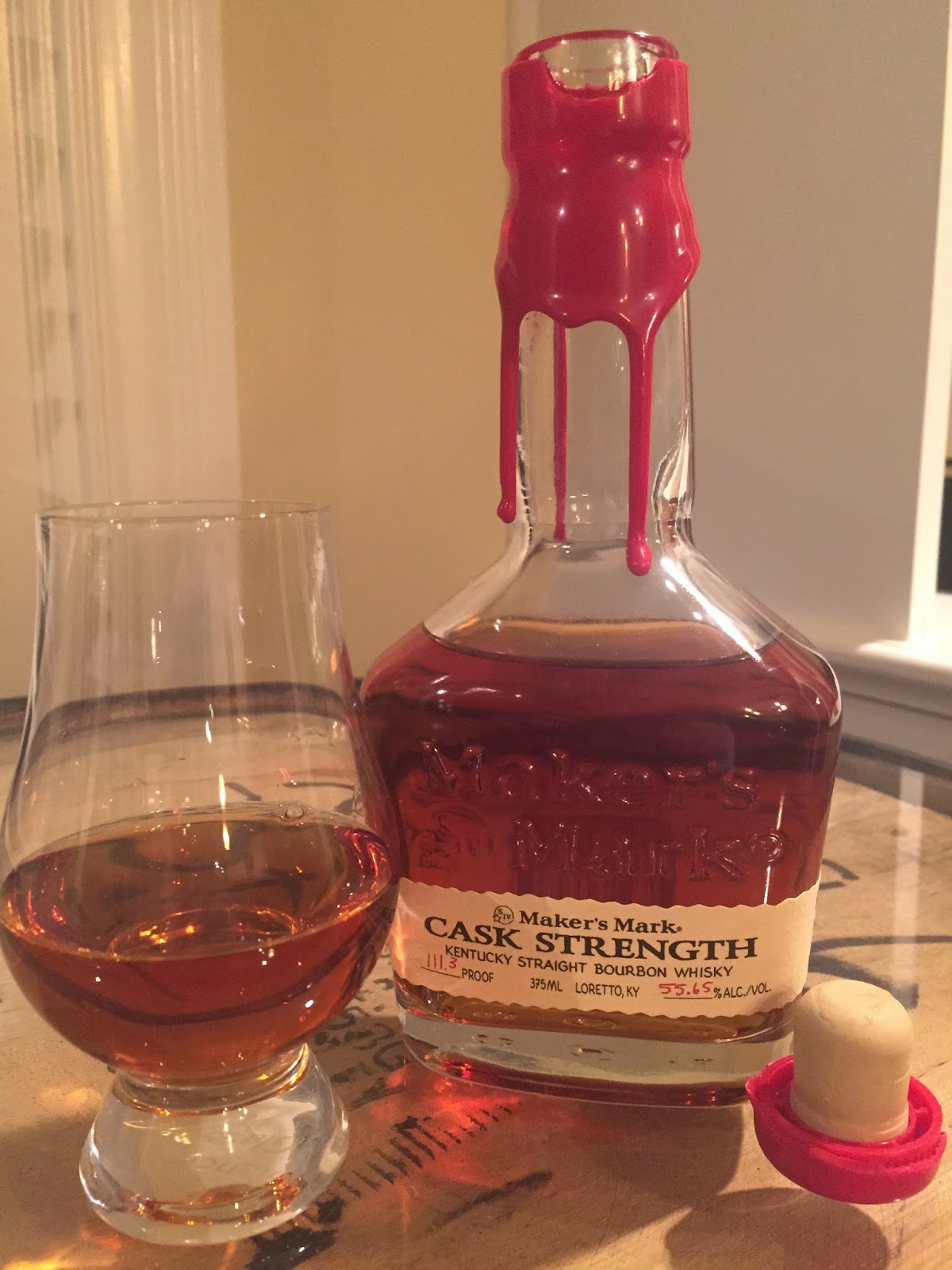
After toying with reducing the proof of its standard bottling a couple of years ago, Maker’s Mark instead followed the barrel proof trend and last August released its iconic Bourbon at cask strength, and the world is a better place for it.
|
Bourbon:
|
Maker’s Mark Cask Strength Straight
|
|
Bourbon Whisky
|
|
|
Distillery:
|
Maker’s Mark, Loretto, Kentucky
|
|
Age:
|
NAS
|
|
Proof:
|
Batch 14-02 – 113.3 proof
Batch 15-01 – 111.2 proof
|
|
Cost:
|
$34.99 for one 375 mL bottle, $37.99 for the other
|
|
(750 mL now available for around $50.00)
|
Tasting Notes
Color:
Dark amber.
Nose:
Great nose with scents of vanilla, light fruit, apricot, plum, fresh grass and a bit of leather. It’s definitely identifiable as a Maker’s nose, but it’s still different.
Taste:
Creamy vanilla, raisins, honey, and oak, for an overall sweet taste as anticipated. Some of the expected caramel doesn’t come out until ice is added, but I preferred it neat nevertheless.
Finish:
Maker’s Mark Cask Strength has a great, long, warming finish.
Bottom Line
If you’re a fan of Maker’s Mark, you’ll love it at barrel strength. It has a very similar flavor profile (a little less caramel though), but it’s amped up. With so many barrel strength options that torch the taste buds, the proof range for Maker’s Mark (108 – 114) is just about perfect, and it’s drinkable neat for the best experience of the flavors. People who have strayed from Maker’s Mark due to the proliferation of new brands should come back for this.
Score on The Sipp’n Corn Scale: 4.0
The Sipp’n Corn Scale:
1 – Wouldn’t even accept a free drink of it.
2 – Would gladly drink it if someone else was buying.
3 – Glad to include this in my bar.
4 – Excellent bourbon. Worth the price and I’m sure to always have it in my bar.
5 – Wow. I’ll search high and low to get another bottle of this.
Sipp’n Corn Bourbon Review – Booker’s 25th Anniversary Bourbon
I’m late to this party because I was shut out of Booker’s 25th Anniversary Bourbon last year. Fortunately a friend helped me out, and now I’ve been able to see what all the fuss has been about.
Booker’s 25thAnniversary Bourbon is, of course, named after Booker Noe, the 6thgeneration distiller who died in February 2004 and who left a giant legacy at Jim Beam and throughout the Bourbon world. The standard brand specs for Booker’s are about 6-8 years old, but the special limited edition anniversary bottling is about 10 years old, and it may have been part of the last distillation and barreling that Booker oversaw.
Thank you Booker Knows (@bourbonooga) for sharing.
|
Bourbon:
|
Booker’s 25th Anniversary Kentucky Straight Bourbon Whiskey
|
|
Distillery:
|
Beam Suntory (at the time, still Jim Beam), Clermont, Ky.
|
|
Age:
|
10 years, 3 months
|
|
Proof:
|
Batch 2014-1 – 130.8 proof
|
|
Cost:
|
$99.99 retail; over $200 on secondary market
|
Tasting Notes
Color:
Dark amber.
Nose:
Oak, pepper, dark fruit, leather, and some subtle non-candy sweetness.
Taste:
Robust cinnamon, leather, and slight citrus (the citrus was accentuated with ice). There is also a balance of sweetness, but overall it’s still on the darker, smoky side of Bourbon. Surprisingly, the high proof was very well hidden; I never would have guessed it. High proof so often can overwhelm a Bourbon, but not here. The bottle had some air before I tried it, so I would expect a fresh pour from a new bottle would have more heat.
Finish:
Wow – here’s where Booker’s 25th Anniversary really shined for me. What a long, fantastic finish with more dark oaky and leather flavors along with maple sweetness.
Bottom Line
As before, I don’t rate when I have a limited sample because I can’t explore it over time, but just after this first impression, I’d be willing to put Booker’s 25th Anniversary Bourbon in contention for one of the top five American whiskies of 2014. For those who were lucky enough to find it but still haven’t opened it, please either send it to me or try it as soon as possible. You won’t be disappointed.

I thought it would be darker, but it is indistinguishable from
Maker’s Mark Cask Strength.
Maker’s Mark Cask Strength.
Which is which?

