Brian Haara
Bourbon. Law. Author.
Sipp’n Corn Photo Journal: T.W. Samuels Distillery

There’s something about Deatsville. Some of my favorite Heaven Hill single barrels have matured in Deatsville; it’s home of the historic, long-ago-shuttered T.W. Samuels Distillery; it has great bourbon lawsuit stories like the battle between Samuels and the railroad (check it out here: Bourbon Takes on the L&N Railroad–Two Titans of the Late 1800’s…); and roadside pictures that I’ve taken over the years give a glimpse of grandeur springing up in the middle of farmland.


But I have never been inside the T.W. Samuels Distillery. Fortunately, my friend Chasta McIntyre at Mint Julep Experiences found her way inside and shared these pictures. Like other abandoned distilleries, it’s remarkable that equipment, machinery, and supplies seem to have been just left behind. Although it’s unlikely that the T.W. Samuels Distillery will ever produce bourbon again, I hope that its history is preserved. In the meantime, the property continues to be used for aging and finding Deatsville-aged bourbon ought to be on everyone’s to-do list for 2020.


And a special thanks again to Chasta!
Sipp’n Corn Book Review – The American Whiskey Tasting Notebook by Susan Reigler and Mike Veach.

I previously reviewed The Bourbon Tasting Notebook by Susan Reigler and Mike Veach, which gave us honest reviews of nearly 350 bourbons. Now, following on the success of those tasting notes, Reigler and Veach have joined forces again for The American Whiskey Tasting Notebook, covering American Whiskey except bourbon. And, like their earlier collaboration, these American Whiskey tasting notes are provided without the drama of rankings, stars, or other scoring; that’s up to the reader.
Rye whiskey and other spirits (especially rum, gin, and brandy) have all made a run at being “the next bourbon,” and generally-speaking, those efforts get a little traction and then fizzle. But American Whiskey is where distillers can innovate. It’s almost a test kitchen for spirits. Whereas bourbon is strictly defined and must follow specific rules (which only gets stricter for “Straight Bourbon Whiskey” and “Bottled in Bond”), distillers have room to experiment with blends, unique grains, flavored grains, and more. (However, as Reigler and Veach note, “Rye Whiskey,” “Wheat Whiskey,” and “Corn Whiskey” all have their own specific rules and regulations. The real freedom comes with the basic “American Whiskey” designation.)
The breadth of this book is astounding. I never would have been able to tell you that there were over 230 non-bourbon American Whiskeys, and most of my experience there is limited to American Rye Whiskey. The book’s only notable absence is Charbay, the California distillery with popular rum, brandy, and flavored vodka, but known especially for revolutionizing whiskey by distilling bottle-ready craft beer. Hopefully Charbay’s full hop-flavored whiskey lineup is included in a future Volume II.
It was interesting to see Reigler and Veach’s distinct palates and preferences shine through in their respective tasting notes. Only three of the whiskeys had a genuine “don’t buy this” vibe—notes like “rotten fruit” and “scented dishwashing soap” make the warning pretty clear. But that’s a good thing because the disciplined point of The Tasting Notebook isn’t to persuade, it’s to educate and to let the reader decide; each page has space for the reader’s own thoughts and impressions.
Because I’m a big proponent of knowing which brands are sourced and cutting through baloney when brands imply or leave an impression that they distilled what they’re selling, I appreciated that The Tasting Notebook pointed out numerous brands that source their whiskey (Old Carter, Old Henry Clay, and Kentucky Owl, for instance), but I paused at all of the Michter’s entries. Sourcing wasn’t mentioned for Michter’s, so hopefully that gets updated too.
Reading The Tasting Notebook inspired me to rummage through my shelves and to try many of these non-bourbon whiskey beauties, which helped me understand that the lesson is to not get bogged down in bourbon. Experience the creativity of other American Whiskeys. And let The American Whiskey Tasting Notebook be your guide.
The American Whiskey Tasting Notebook is timed perfectly for the holiday season and would make a great stocking stuffer for the whiskey fan in your life.
Acclaim Press (2019)
$19.95 on Amazon
2019 BRIAN’S BOOK AND A BOTTLE ™
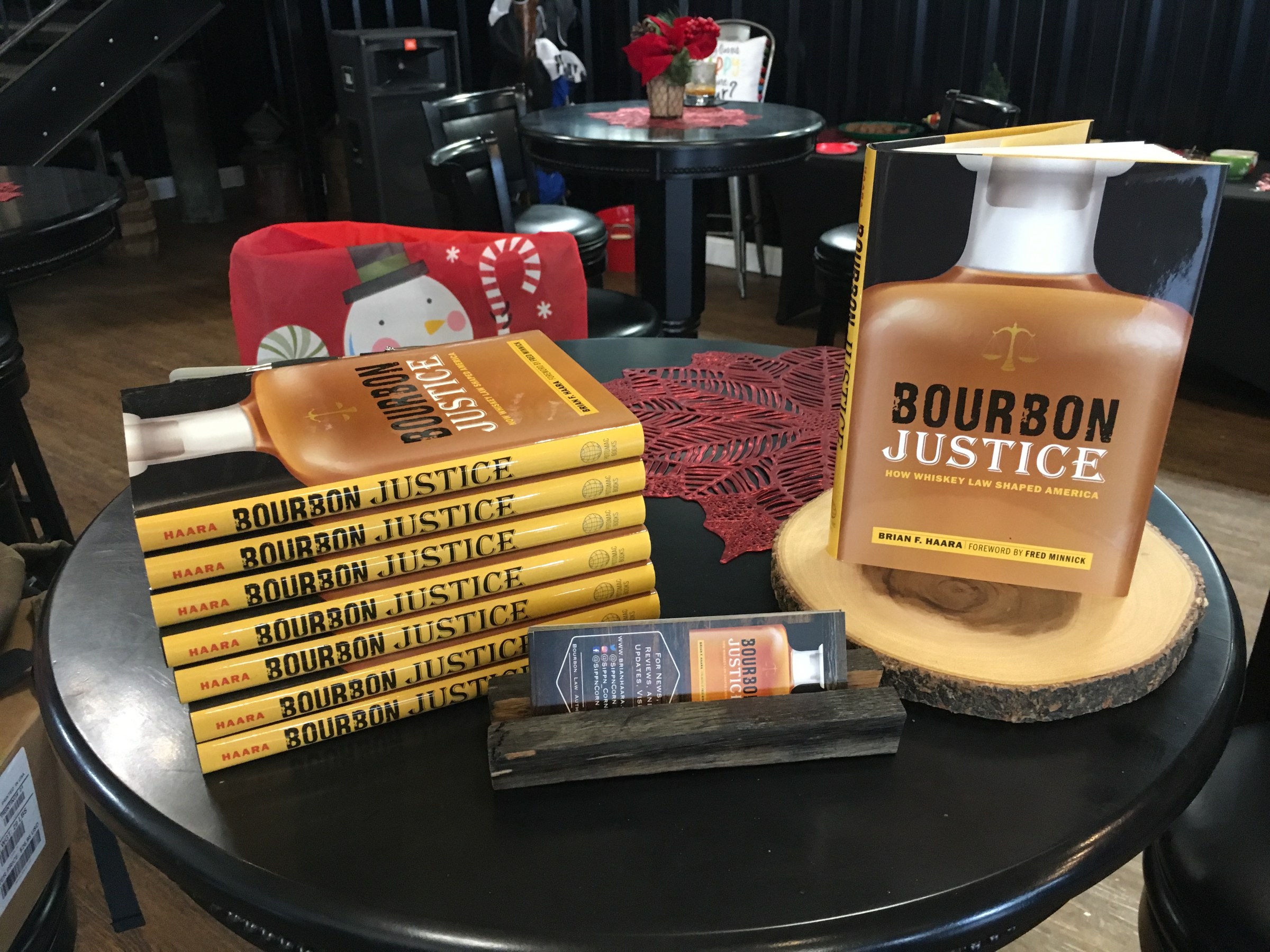
With the holidays upon us, avoid the awkwardness of lame host gifts and never knowing what to get for bosses, co-workers, and other hard-to-shop-for friends and family. Brian’s Book and a Bottle™ has the right suggestion for everyone on your list:
For your business partner: Bourbon Justice and Four Roses Small Batch Select. Look for “Select” and 104 proof because Four Roses also has a standard Small Batch. Small Batch Select is hands-down the best new release of 2019. You’re clearly the brains of the business (especially if you can find this with limited distribution). For your impossible family member: Bourbon Justice and Elijah Craig Small Batch Bourbon. No other bourbon matches the consistency and value of Elijah Craig Small Batch. Plus, you’ll be able to find it at any store even at the last minute on your way to the family get-together. Grab a Christmas wine bag from last year and voilà, you’ll have the best gift at the party.
 For a host/hostess: Bourbon Justice and Old Forester 1920 Prohibition Style Bourbon. The sheer heft of this bottle makes it memorable, the 115 proof shows that you appreciate the host, and those in the know understand that this is a connoisseur’s bourbon. Plus, these holiday parties always need conversation starters, and the combination of Prohibition and Bourbon Justice will provide a welcome diversion from talking about the weather and a new acquaintance’s kid’s art projects. You’ll be the hit of the party.
 For your boss or other authority figure: Bourbon Justice and Wilderness Trail. You need something exclusive but not gaudy and something modern but still founded in tradition—and that’s a tall order. You’ll earn props if you can pull this off. Fortunately, Wilderness Trail is hitting full stride. A bottle of Wilderness Trail sweet mash bourbon or rye whiskey will show that you are a crucial part of the team, and you’ll get bonus points if you find a version in the classy wooden box set.
 Please enjoy the Holidays responsibly!
Bourbon Justice Turns One at the Kentucky Book Fair (and my sincere thanks).
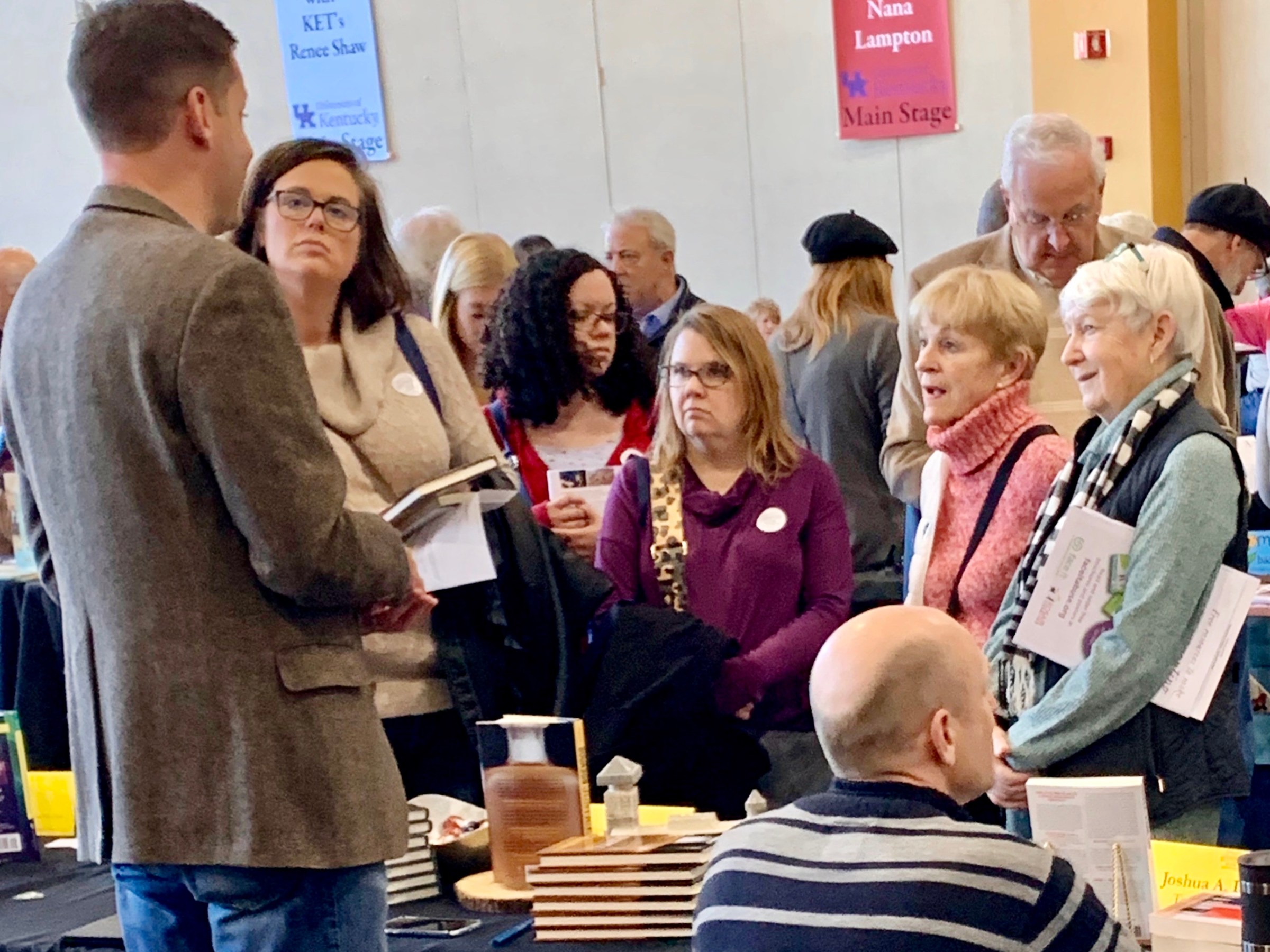
I celebrated the one-year anniversary of Bourbon Justice this weekend as an author invited to the Kentucky Book Fair—everything in that statement is still a little surreal.
On the drive home from Lexington, my mind meandered through the past year since Bourbon Justice was released. It’s been a year of significant pain, but family and friends—including many friends who I only met because of a shared appreciation of bourbon—comforted me.
It has also helped to meet even more people who have supported me along the way and people who just want to talk about bourbon. The discussion usually involves current brands, new bourbons to try, and rock-star Master Distillers, but my hope is that Bourbon Justice may have had a small role in piquing a broader interest in the uniquely-American history of bourbon.
Old friends and new acquaintances are surprised that the phrase “brand name” originated with bourbon and that, in the late 1800’s, the federal government apparently cared less about protecting citizens from dangerous products and adulterated food than it cared about ensuring that whiskey was pure. People want to learn about bourbon history.
They’re visiting distilleries in record numbers too. Visitors to the Kentucky Bourbon Trail® have skyrocketed and, in the last decade, Kentucky has gone from 8 to about 70 distilleries. While the seemingly-insatiable appetite for bourbon and bourbon knowledge is striking, in the past year I’ve been perhaps even more surprised that bourbon is still at the leading edge of American commerce and law.
I had not anticipated how timely of a topic bourbon is today, both for those domestic topics and for international relations. Bourbon is playing a crucial role in the current-day trade war with counter-tariffs targeted against farmers who grow our grains and even more specifically targeted against bourbon, presumably because 95% of it is still made in Kentucky, a state that voted “red” and that is home of the Senate Majority Leader.
Best of all though, the past year has shown me that bourbon is not just a welcome diversion from current events, but it also provides much needed common ground. Despite plenty of room for disagreement, it’s unifying and gives us a sense of collective pride. That’s partly why bourbon is uniquely American, just like the complex experience of being American. We need each other, and bourbon can help bring us together.
I appreciate everyone’s support and raise a toast to our future.


The Bourbon Crusaders and Four Roses Barrel Through Hunger.

A year after the resounding success of #Willett2BCured—a charity event sponsored by The Bourbon Crusaders and Willett Distillery—The Bourbon Crusaders crushed it again. For the fourth year of their annual event, The Bourbon Crusaders partnered with Four Roses to benefit two Kentucky food banks, God’s Pantry and Dare to Care, setting new records along the way and trending the hashtag #BarrelThroughHunger.
Brent Elliott, Master Distiller of Four Roses, led a VIP tasting of Elliott’s Select, Four Roses Small Batch Select, and two short barrels picked for the event, and he also shared a barrel-aged imperial stout collaboration between Four Roses and Brooklyn Brewery. Brent also led all of the guests on a tasting of all of Four Roses’ ten recipes with single barrels collected by members of The Bourbon Crusaders.
Guests mingled with the likes of Chris Morris of Brown-Forman / Woodford Reserve, Dr. Pat Heist of Wilderness Trial, and the team from Four Roses—Al Young, Marcus Niemann, and Mandy Vance. After a night of generous bidding on silent auction items and dinner served by chef Josh Moore, MCs Fred Minnick and Ryan Cecil opened the highly-anticipated live auction. Barrels offered by four Kentucky distilleries and other live auction items helped push the total for donations past last year’s record of $340,000. Especially with the help of the oldest-ever Four Roses barrel offered for a private barrel selection that sold for $65,000, The Bourbon Crusaders raised about $375,000 for God’s Pantry and Dare to Care!
Just like last year, The Bourbon Crusaders proved that it’s not just about the bourbon.


