Sipp’n Corn Bourbon Review – Heaven Hill Select Stock (8-year wheated + 2-year Cognac finished; Spring 2014)

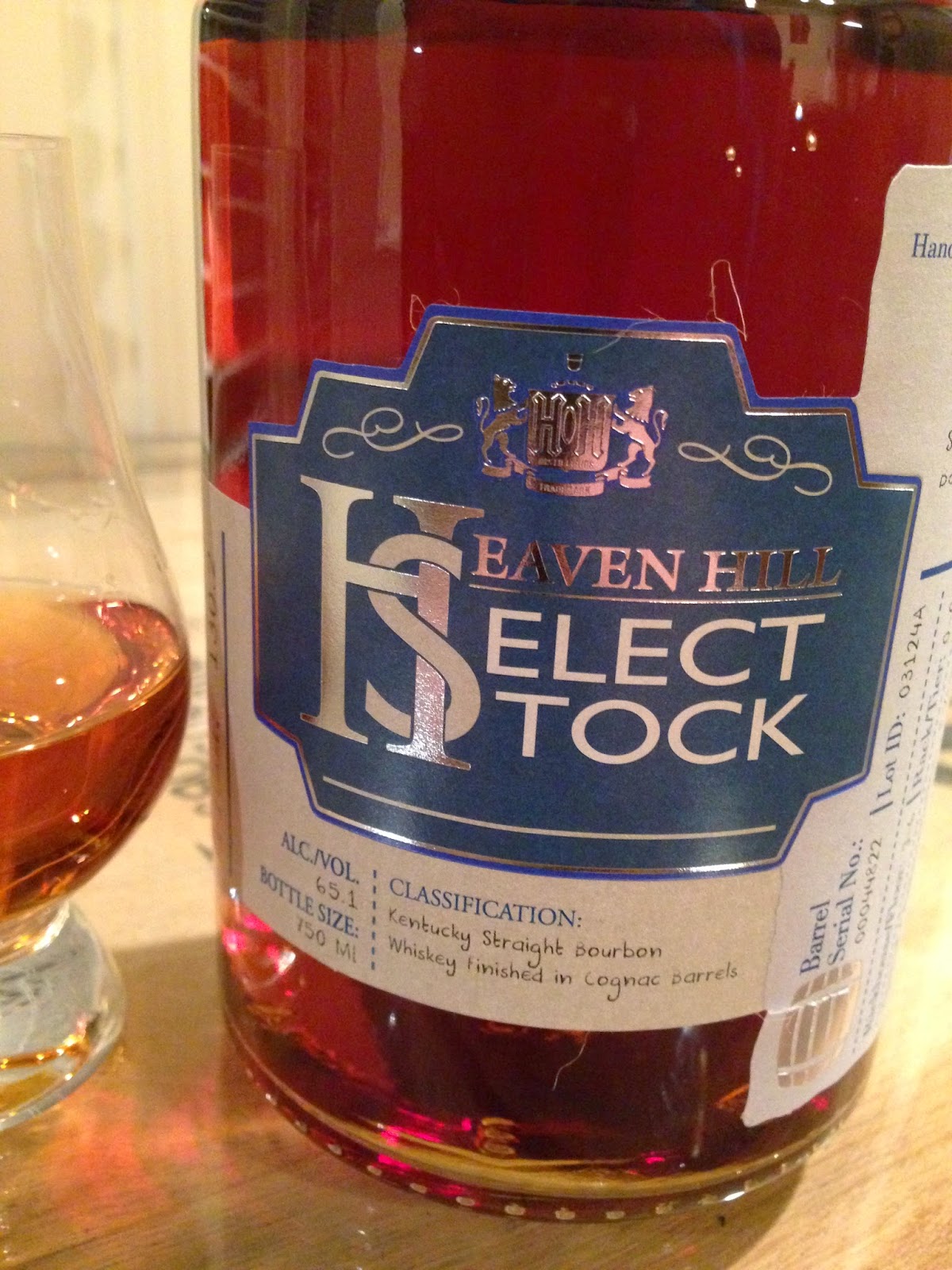
Heaven Hill Select Stock is just one in an increasingly long line of special edition, high-end and even higher-priced Bourbon.  You won’t find it at your favorite retailer.  You won’t find it outside of Kentucky.  In fact, you won’t find it outside of the Bourbon Heritage Center in Bardstown, Kentucky.  Its rareness and retail price could have made this bottle an instant collectible, but its taste needs to back up the price tag, so for those of us interested in experiencing Bourbon, I have this review.
Bourbon:        Heaven Hill Select Stock (Spring 2014 Release)
Distillery:        Heaven Hill New Bernheim (Louisville) and aged in Bardstown
Age:                8 years + finished 2 years in Cognac barrels
Proof:             130.2 proof
Cost:               $250.00
Tasting Notes
Color:
Rich amber with a reddish hue; silky.
Nose:
The high proof is very evident from the nose, but once you get past the strong ABV, the nose is a pleasant blend of dark fruit and citrus, along with some floral wine notes.  I would not have accurately guessed that this was the Heaven Hill wheated recipe from the nose.
Taste:
Again, the ABV dominates when tasting neat, to the point where I don’t recommend it neat.  This Select Stock needs ample time with air, a splash of water and ice.  Once the alcohol burn is dealt with, flavors of corn, pear, cherries and oak are most prominent.  The Cognac finish shines, but in a subtle way (not overpowering).  The tastes profile is missing some traditional Bourbon characteristics (especially the rich sweeter notes often found in wheated Bourbon), but sweet flavors still dominate, which in hindsight might be the outcome of the finishing.  There’s also a perfume note that I could do without.
Finish:
There’s plenty of heat in the finish.  As with the nose and the taste, the finish is not best when tasted neat.  Aeration, water and a chill all dramatically improve the finish, resulting in a warm, long finish.  There is some bitterness in the finish, but it is not distracting.
Bottom Line
I might have been one of the first purchasers of Select Stock this past March, but I’ve been hesitant to open it, maybe because of the price, or maybe out of a perception that it was going to be something too special for a random midweek pour.  Then I saw that a new batch, which had not been aged quite as long, was being sold at the Bourbon Heritage Center for “only” $150.  What about my version was going to warrant an additional Benjamin?  That extra intrigue, combined with the upcoming September flood of limited edition Bourbon, helped me decide to crack it open for a review.
This is a Bourbon that deserves some experimentation with different amounts of water or ice, other chilling methods, and especially with aeration by “hyperdecanting” to trigger oxidation and help mellow harsh flavors.  However, this means that I don’t recommend simply pouring and drinking, which I consider to be the real rubber-meets-the-road test for Bourbon.
While Select Stock fails that high standard for me, I really enjoyed it once I personalized it.  I’d be interested in trying Select Stock in a blind tasting, or at least seeing the results of a blind tasting, especially paired with Parker’s Heritage Collection 5th Edition, which was also Cognac finished.  In the meantime, for rating purposes, Select Stock is overpriced at $250 – a fact that Heaven Hill seems to have recognized for its newer releases – and in this case it really hurts the score on my scale.  I didn’t score Select Stock as a must-have Bourbon, and while I’m certainly happy to have it in my home bar, there are taste and profile peers that won’t bust your Bourbon budget.
Score on The Sipp’n Corn Scale:  3.0
The Sipp’n Corn Scale:
1 – Wouldn’t even accept a free drink of it.
2 – Would gladly drink it if someone else was buying.
3 – Glad to include this in my bar.
4 – Excellent bourbon.  Worth the price and I’m sure to always have it in my bar.
5 – Wow.  I’ll search high and low to get another bottle of this.

Limestone Branch – Craft Distilling, Sugar Shine and Experimentation.

I’ve been to the truly big distilleries where operations are much more akin to a “factory” than what many of us envision when we hear “distillery.”  Some control rooms make these factory operations seem like NASA instead of what the homespun legends would have us believe.  Those distilleries are still fascinating, they can make some outstanding Bourbon, and I’ll be visiting all of them again, but thankfully we can also see small-scale (and micro-scale) distilling that is a more accurate depiction of Kentucky’s early frontier distillers.
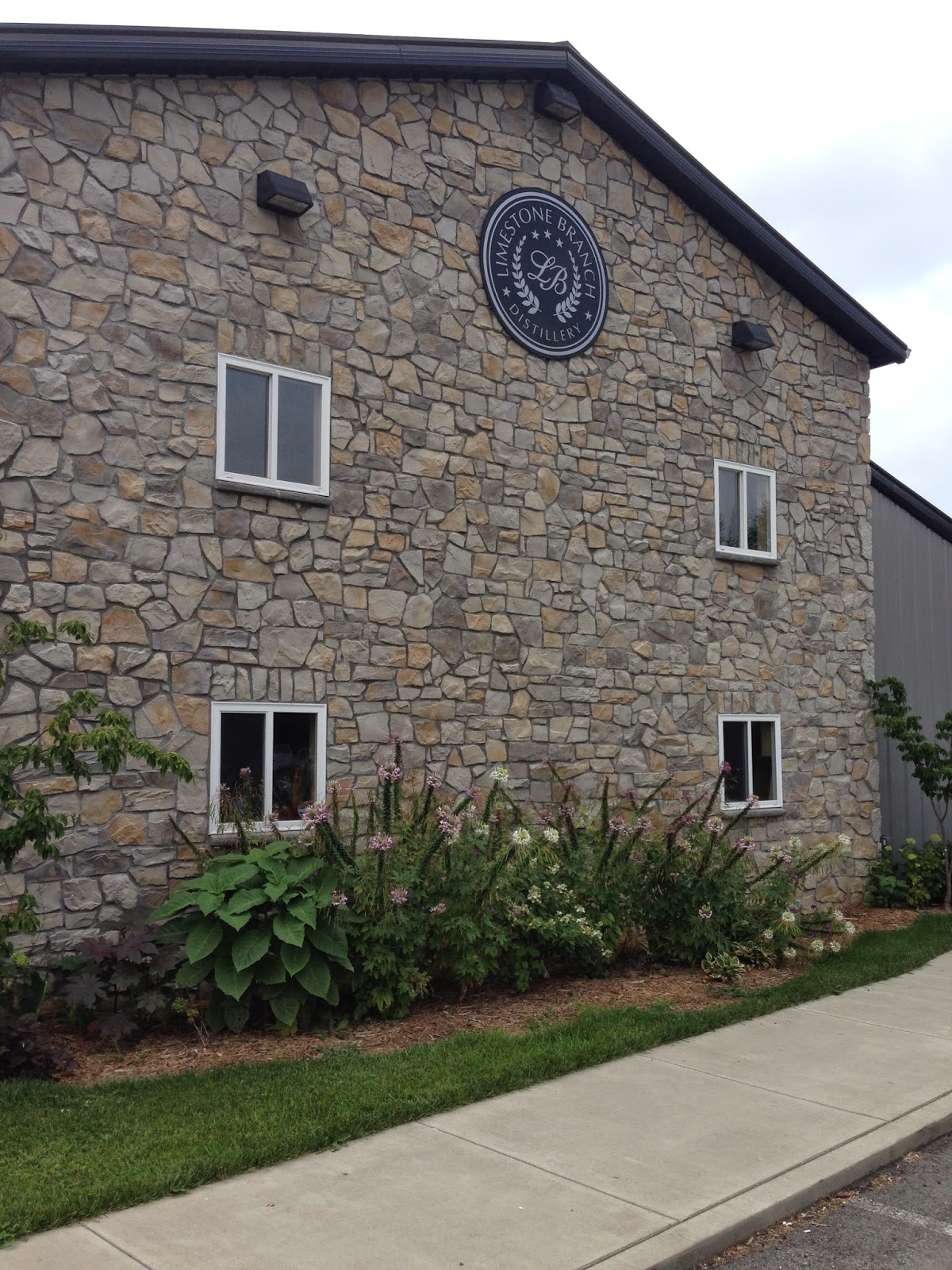
One of those micro-distillery options is Limestone Branch Distillery in Lebanon, Kentucky.  Limestone Branch, along with eight other craft distilleries, is part of the Kentucky Bourbon Trail Craft Tour, which I highly recommend.
A couple of these craft distilleries have as much history as the big distilleries, and one unique fact about Limestone Branch is that it was founded by a Beam.  It’s no secret that the Beam family has played integral roles in many distilleries other than Jim Beam, including Heaven Hill, Maker’s Mark, Barton and a bevy of historical brands.  A Beam even helped Mary Dowling move Waterfill & Frazier to Juarez, Mexico during Prohibition.  So it should come as no surprise that yet another Beam – Steve Beam – is at the helm of Limestone Branch.
Remarkably, Steve Beam gets his Bourbon heritage from both sides of his family.  Steve’s great-great grandfather on his mother’s side of the family was J.W. Dant, who began distilling whiskey in 1836.  The distillery was then operated by Steve’s great grandfather, W.W. Dant and his brother, J.P. Dant, and Bourbon fans will recognize the Dant name.
On the Beam side, Steve’s great-grandfather is Minor Case Beam, the great-grandson of Jacob Boehm (who is said to have arrived in Kentucky through the Cumberland Gap with a pot still,  and then changed his surname to “Beam”), and the cousin of James Beam.  Minor Case Beam had three distilleries, and his direct descendants continued to produce Bourbon including Old Trump, Pride of Nelson and Richwood.
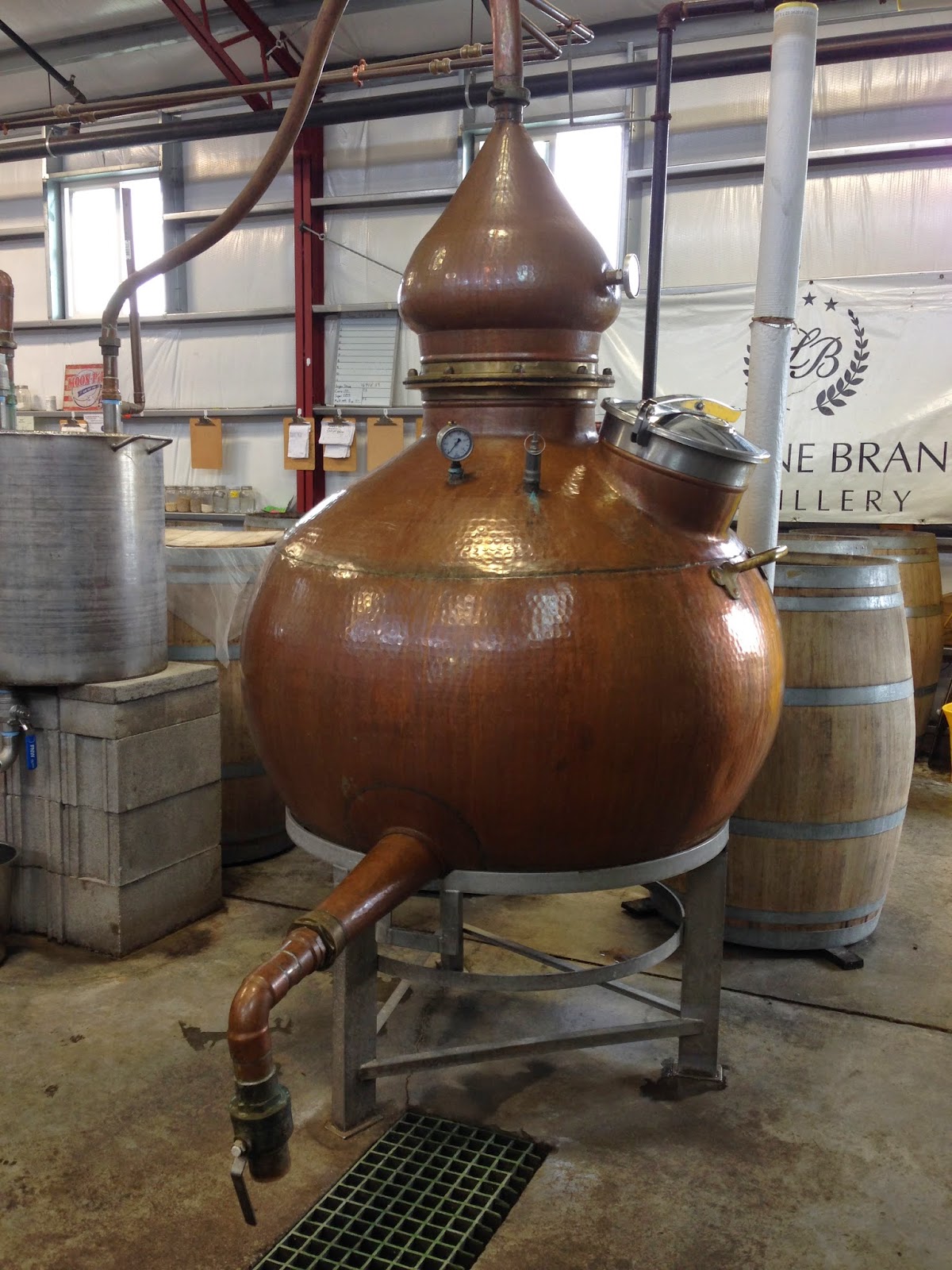
The operations at Limestone Branch are more on scale with Kentucky’s earliest distillers.  By my estimation, the entire contents of the distillation room – the still, tanks, barrels, equipment, grain, cabinets, tables, everything – could fit into just one of the 10,000 gallon mash tubs at Jim Beam.  And like the early distillers, Limestone Branch starts with locally-grown heirloom corn and a 150-gallon copper pot still.  Using a mash bill that I couldn’t convince Steve to tell me, Limestone Branch barreled its first Bourbon distillate 2 ½ years ago.  With just a single barrel at that age, Steve understandably couldn’t spare a sample for an inquisitive blogger like me.


This incredibly small scale can’t produce much distillate, and there’s no substitute for the time it takes Bourbon to age, so Limestone Branch’s primary craft product now is Moonshine.  Limestone Branch’s Moonshine – “Sugar Shine” – is distilled with 50% corn and 50% cane sugar, and then proofed and flavored.  With all due respect to the magic taking place at Flavorman, that’s not how Limestone Branch does it.  For instance, the Blackberry Sugar Shine is made with real blackberries, and the Apple Pie Sugar Shine is made with high-quality apple juice.  I bought the Blackberry Sugar Shine and mixed it at home with lemonade and fresh mint leaves on ice for a refreshing close to a hot afternoon.


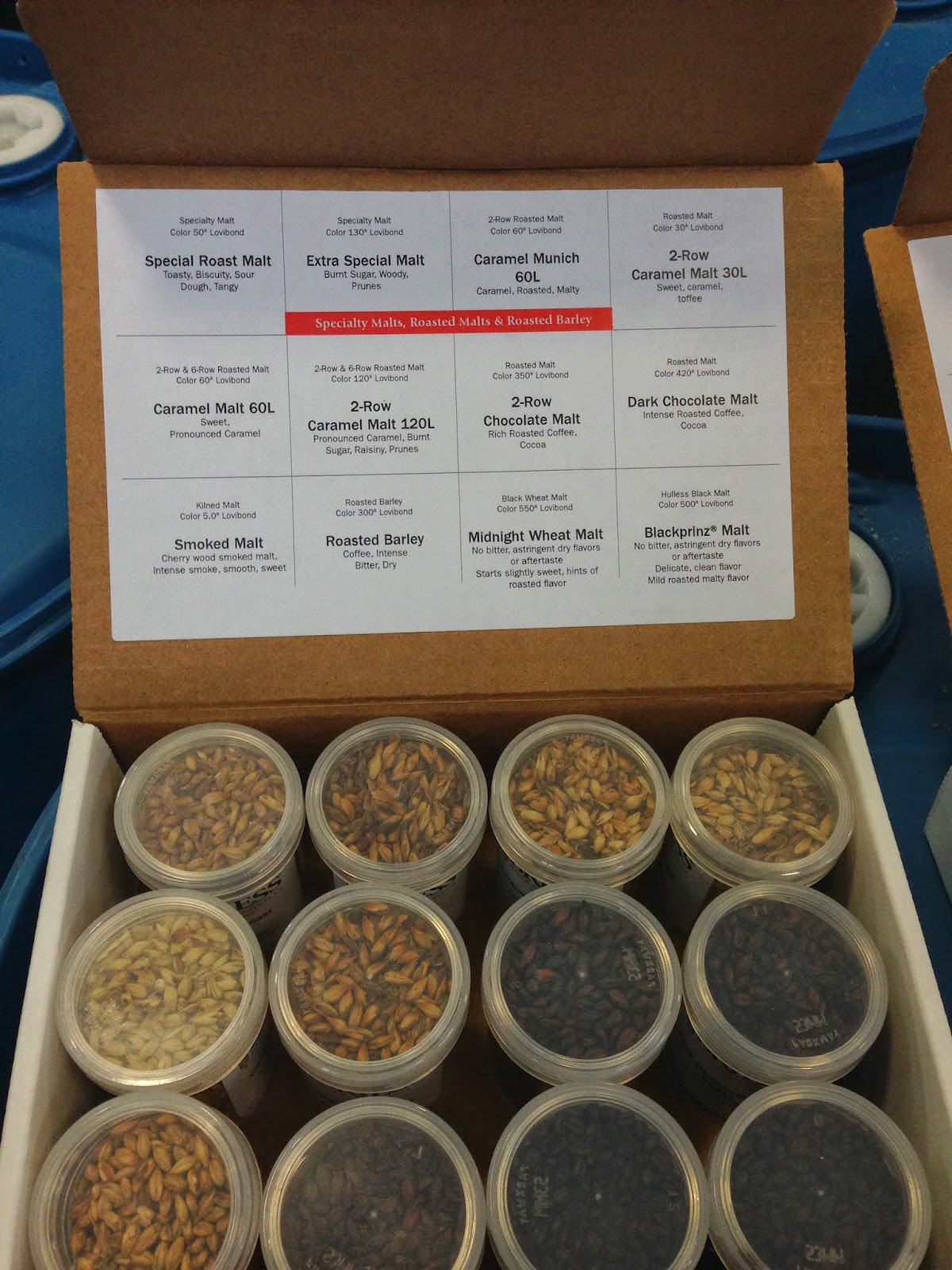
The small scale and craft mentality at Limestone Branch also fosters experimentation.  So many factors go into the profile of Bourbon – grain sources and percentages in the mash bill, water source, yeast strain, proof at barreling, char level, aging location and conditions – just to name a few.  Lisa Wicker, who is in charge of fermentation and production at Limestone Branch, showed me yet another factor:  barley.  I tasted barley at Limestone Branch that could result in some incredible flavor profiles down the road.  I never appreciated how different barley could taste, or how it can impart flavors of cherry, chocolate or caramel to distillate, and eventually to Bourbon.


With experimentation like this, look for big things from Limestone Branch in the years to come.  In the meantime, I’ll continue to go a little off the beaten path, and visit Limestone Branch again.

Col. E. H. Taylor, Jr. – Running from Creditors in the Summer of ‘77.

Many of the bourbon barons of the late 1800’s rode a roller coaster of success and failures.  Despite his strong business acumen and wild success, Col. E. H. Taylor, Jr., literally fled the Commonwealth in May 1877 to avoid creditors before George T. Stagg bought him (and the O.F.C.) out of bankruptcy in December of that year.
As described in Newcomb-Buchanan Co. v. Baskett, 14 Bush 658, 77 Ky. 658 (1879), Col. Taylor’s troubles were brewing at least by the spring of 1875.  Just months before the running of the first Kentucky Derby, Taylor sold 150 barrels to J. S. Baskett, a Henry County farmer who also raised Hereford cattle and was a banker – both passions he shared with Col. Taylor.  Baskett also apparently was seeking to gain a foothold as a bourbon dealer.  Baskett paid for the bourbon and paid the taxes, so the barrels were to be moved from the bonded warehouse at the O.F.C. to a free warehouse.  Instead, Col. Taylor sold the same 150 barrels to Newcomb-Buchanan Co. to cover debts Col. Taylor owed.  (Some readers might recognize Newcomb-Buchanan as one of the largest distillery groups in Kentucky at the time, which by 1884 went broke in a scandalous fashion, and was taken over by the Anderson & Nelson Distilleries.)
Newcomb-Buchanan sold 25 of Baskett’s barrels and credited Taylor’s account, shipped another 101 of Baskett’s barrels to George T. Stagg in St. Louis to cover debt Col. Taylor owed to Stagg, and still had the remaining barrels when Baskett came looking for his bourbon during the summer of 1877.  Col. Taylor was nowhere to be found – in the Buffalo Trace Oral History Project Col. Taylor’s great-great grandson says that Col. Taylor fled to Europe and left one of his sons behind to deal with the creditors – but the Court simply noted that “In May, 1877, Taylor left the state on account of pecuniary troubles…”, so Baskett sued Newcomb-Buchanan.
Newcomb-Buchanan defended on the ground that it simply didn’t know about Baskett’s ownership of the barrels.  The Court ruled in favor of Baskett, reasoning that Newcomb-Buchanan never had an ownership interest in the barrels because Col. Taylor never had the right to (re-)sell the barrels in the first place.  “Buyer beware” was alive and well in the 1870’s.
So Newcomb-Buchanan had to pay damages to Baskett, and presumably chase down Col. Taylor along with all of the other creditors.  Not to worry though, Col. Taylor more than found his footing after being bailed out by Stagg; he built grand distilleries, led the fight for the Bottled in Bond Act, and left an indelible mark on bourbon history.  Although Col. Taylor has practically attained the equivalent of sainthood in the Bourbon world, just remember that he didn’t always wear the white hat.

Mellwood Bourbon – The Early Fight Against Phantom Distilleries.

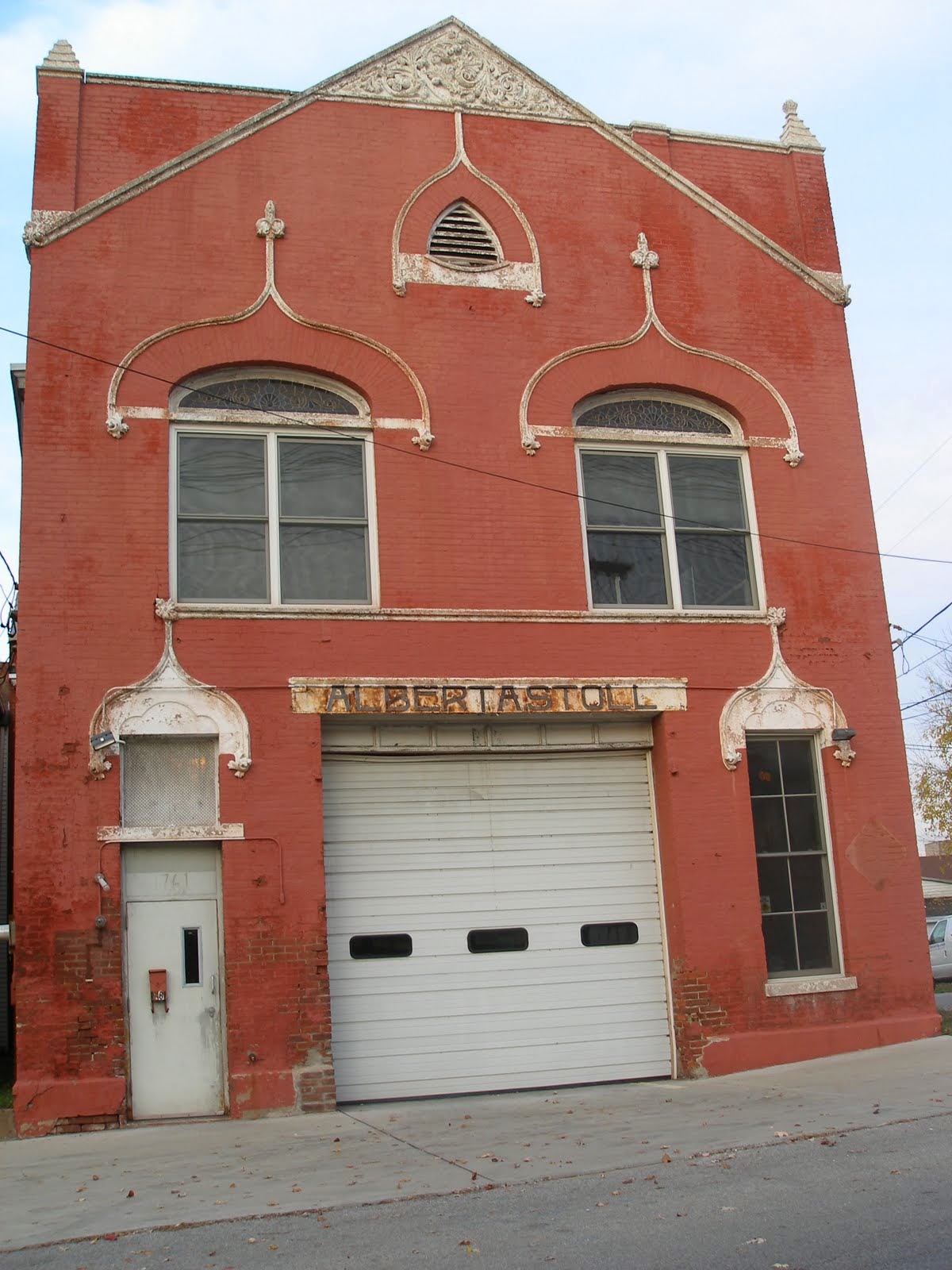
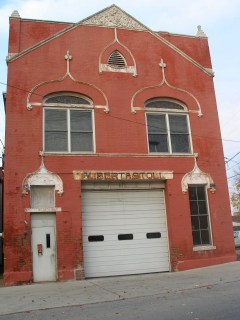
Just after the Civil War, at the intersection of the former Southall St. (later changed to Reservoir Ave. in 1884, and now Mellwood Ave. since 1895) and the Louisville and Shelbyville Turnpike (now Frankfort Ave.) in Louisville, two blocks from the where the Albert A. Stoll Firehouse (now The Silver Dollar) would be built decades later in 1890, the Mellwood Distillery was founded on the South Fork of Beargrass Creek.  The distillery is reported to have been an impressive Richardsonian Romanesque building, but I could not find any pre-prohibition pictures through the University of Louisville online archives, and National Historic Registry documents for the Clifton Historic District did not include any photographs, either, so here’s a picture of the Albert A. Stoll Firehouse from the mid-2000’s, before its renovations:
The Mellwood Distillery is historically significant because it filed one of the first lawsuits against a competitor who lied on its label about having a distillery (and who also tried to imitate the Mellwood brand).
As described in Mellwood Distilling Co. v. Harper, 167 F. 389 (W.D. Ark. 1908), the name “Mellwood” was actually an accident.  It was founded by George W. Swearingen (circa 1837 – 1901), a Bullitt County farmer who, after graduating from Centre College in 1857, ran a small still on his family farm, which he called “Millwood.”  After the Civil War, Swearingen moved to Louisville and opened a distillery, intending to name it “Millwood” after his old farm, on the border of what are now the Clifton and Butchertown neighborhoods.  But when he ordered his brand, its name was misspelled as “Mellwood.”  Swearingen decided to keep it anyway, and in 1895 this brand mistake found permanency when Reservoir Ave. was renamed Mellwood Ave. in honor of the Mellwood Distillery, which had grown to occupy both sides of the street for nearly an entire block.
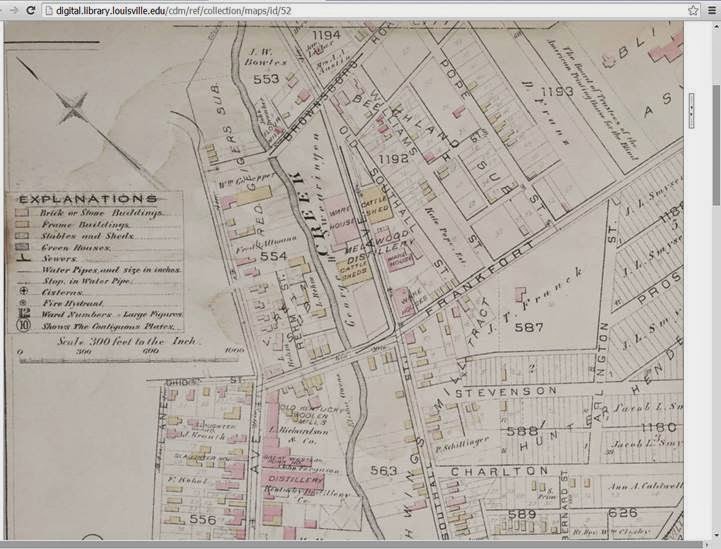
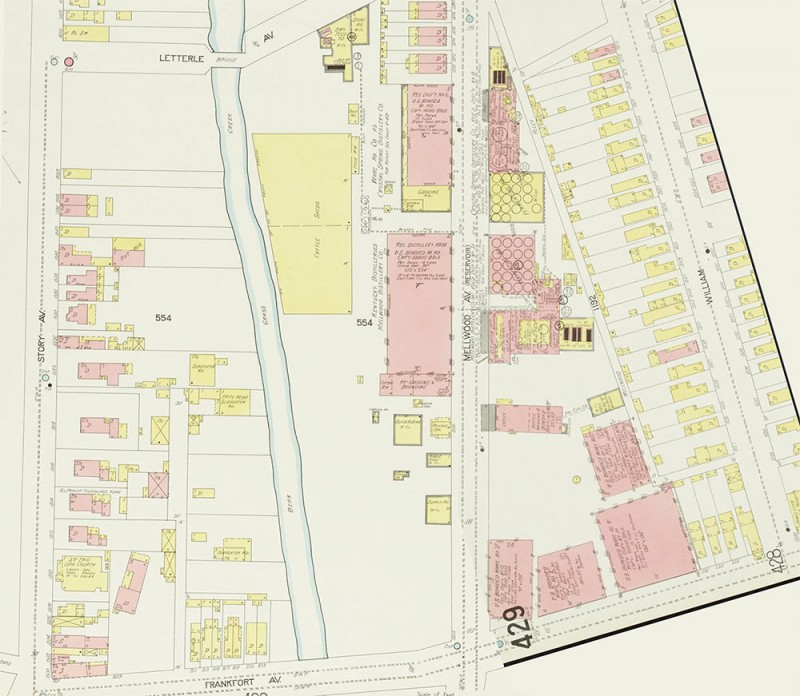
This 1884 map shows the expansion of the Mellwood Distillery across both sides of then Southall St:
Photograph credit:  Image No. ULUA.LouAtlas1884, Plate 7 in the Kentucky Maps collection, University of Louisville Photographic Archives, Louisville, Kentucky, accessed at: http://digital.library.louisville.edu/cdm/ref/collection/maps/id/52.

Even greater expansion was evident by 1905:

Credit to Broken Sidewalk for finding this 1905 Sanborn map via KYVL.

Swearingen sold his distillery in the late 1800’s, and after he sold, it appears to have become part of the infamous Whiskey Trust (Kentucky Distilleries and Warehouse Company) in 1899.  Having made his fortune, Swearingen stayed out of the distilling business, and focused instead on real estate (as president of the Kentucky Title Company) and banking (as founder of the Union National Bank).

As the Mellwood Distillery continued to experience great success, it attracted an imposter and led to one of the earliest court rulings on false labeling and fake distilleries.  The imposter was the Harper-Reynolds Liquor Company, a distributor in Ft. Smith, Arkansas.  Harper bought blended whiskey and bottled and labeled it as “Mill Wood,” used the name “Mill Wood Distilling Co.,” used a picture of an extensive distillery on the label, used “Kentucky” on the label, and included this description on its label:
This celebrated whiskey is made exclusively by the sour mash fire copper process, employed only in the distillation of the finest whiskeys, from carefully selected grain, and bottled only after being matured in barrels for 8 years.
The evidence, however, showed that there was no “Mill Wood Distilling Company” in Kentucky or elsewhere, that the whiskey was a blend, that it was not handmade, sour mash or made by the fire copper process, that it was not made from the carefully selected grain, that it was not aged for 8 years, and that no such distillery existed as shown in the picture on the label.  The court ruled that Harper used this false label “to mislead the public into the belief that in purchasing the ‘Mill Wood’ brand of whisky they were purchasing [Mellwood] whisky,” and it issued an injunction against Harper.
Unfortunately, the Mellwood Distillery was one of the many casualties of Prohibition.  It closed in 1918, reopened after Repeal as General Distilling Company, and continued to produce the Mellwood brand, along with bulk whiskey sales.  After General Distilling closed in the 1960’s, the handful of buildings that survived through Prohibition seem to have been demolished in the 1960’s and 1970’s.  It’s also a shame that there is no good photographic record of the distillery (although I’m continuing to look).  This 1921 picture is described in the U of L archives merely as a stretch of Mellwood Ave. from Frankfort Ave. to Brownsboro Rd., which is precisely the block where the Mellwood Distillery was located, so this must show the distillery property, albeit during Prohibition.
Photograph credit:  Image No. ULPA CS 034548 in the Caufield & Shook Collection, University of Louisville Photographic Archives, Louisville, Kentucky, accessed at: http://digital.library.louisville.edu/cdm/singleitem/collection/cs/id/830/rec/1.
Additionally, this 1936 picture is described by the U of L archives simply as an “Alley between Mellwood & William,” without noting that it appears to also show the back side of the Mellwood Distillery (by then General Distilling) property:
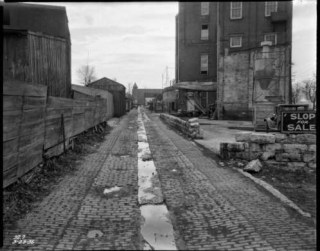
Photograph credit:  Image No. ULPA MSD.092.007 in the Metropolitan Sewer District collection, University of Louisville Photographic Archives, Louisville, Kentucky, accessed at: http://digital.library.louisville.edu/cdm/singleitem/collection/msd/id/7725/rec/6.

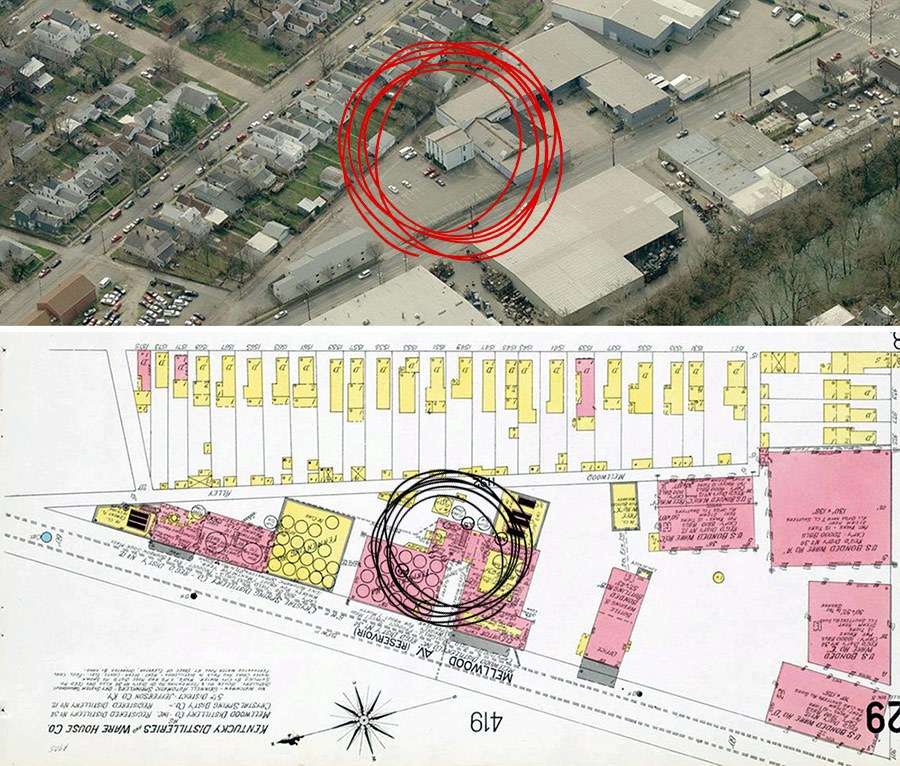
Maybe just one forgotten building remains from the Mellwood Distillery, as mentioned in Broken Sidewalks republication of this post:

Credit to Broken Sidewalk for comparing the 1905 Sanborn map to a current aerial view.

Like the Mellwood Distillery itself, it also appears that part of the legal significance of Mellwood Distilling Co. v. Harper has been forgotten.  Bottles today list fictitious distilleries by using assumed names, which is fine.  But some brands pretend that they distilled the contents.  The latest example might be Duke Bourbon, which claims on its label to be “Distilled By Duke Spirits, Lawrenceburg, Kentucky.”  Duke Spirits claims on its Twitter profile to be “an artisan distiller crafting small batches of superior bourbon…”  However, Duke Spirits is not located in Kentucky, it is not an assumed name of any Kentucky distillery, and the entity is not even registered to do business in Kentucky with the Secretary of State.

Other than coincidentally being in a few pictures, the Mellwood Distillery seems to have been lost to history.  If consumers demand to know the source of their bourbon, Mellwood Distilling Co. v. Harper won’t be lost to history too.


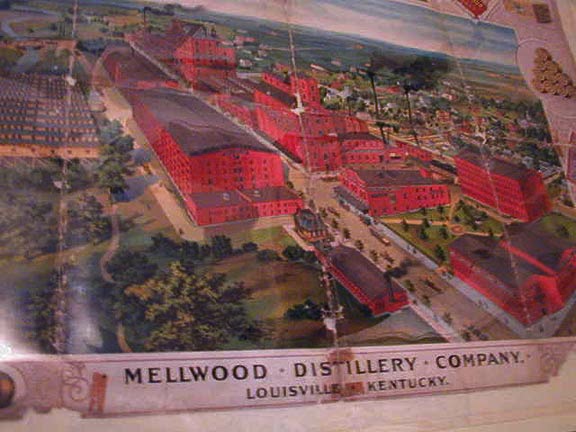
Updated Dec. 15, 2014 to include this image of a circa 1900 Lithograph of the Mellwood Distillery property provided by reader Fred K.  Thanks Fred!


January 24, 2018 update:

It had always stunned me that there weren’t any readily-available photographs or drawings of the Mellwood Distillery, but thankfully Janet Borgerding Murphy, granddaughter of Walter L. Borgerding, read this post.
Walter was president of General Distillers, which reopened and renamed the Mellwood Distillery after Repeal.  General Distillers was well-known for making bulk sales and selling its own brands such as Old Pot Still, Derby Town, Old Kentucky General, County Chairman, Kentucky Nectar, and others, as well as for bottling dozens of other brands that have since been lost to history, including Live Oak, Rosewood, Old Boone, Golden Ribbon, Golden Years, Old Saddler, and Quality Street, some of which were distilled by famous distilleries such as Stitzel-Weller and the K. Taylor Distillery.
Janet sent historical documents to me showing why the Mellwood Distillery was mostly lost to history.  The Mellwood Distillery and the adjacent Crystal Springs Distillery were casualties of Prohibition, and without any hope of reopening, in 1921 the new owner of the property demolished Crystal Springs, removed all machinery and gutted the piping and equipment from the Mellwood distillery room, fermenting house, and bottling house, and demolished all warehouses except one.  The property then sat abandoned.
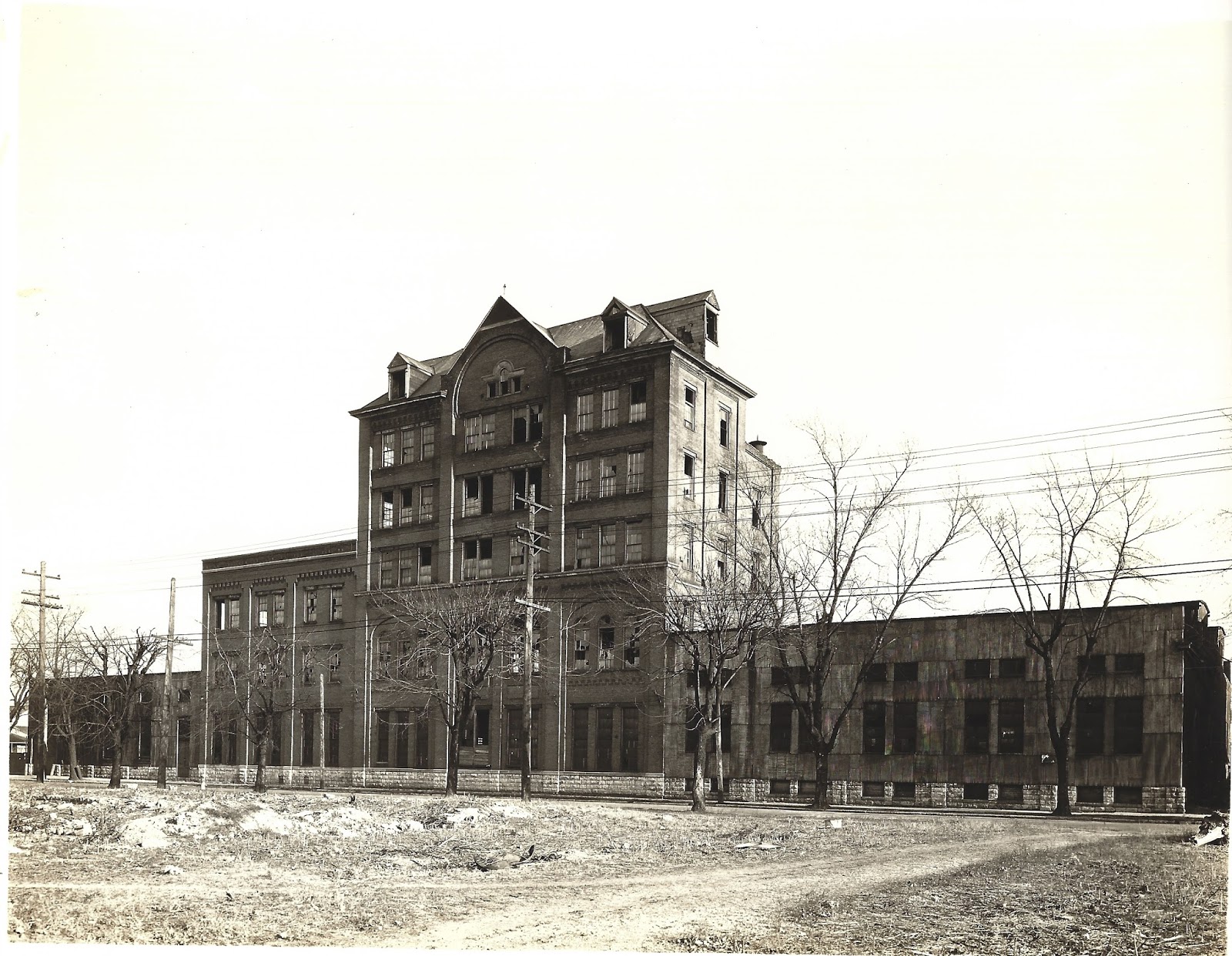
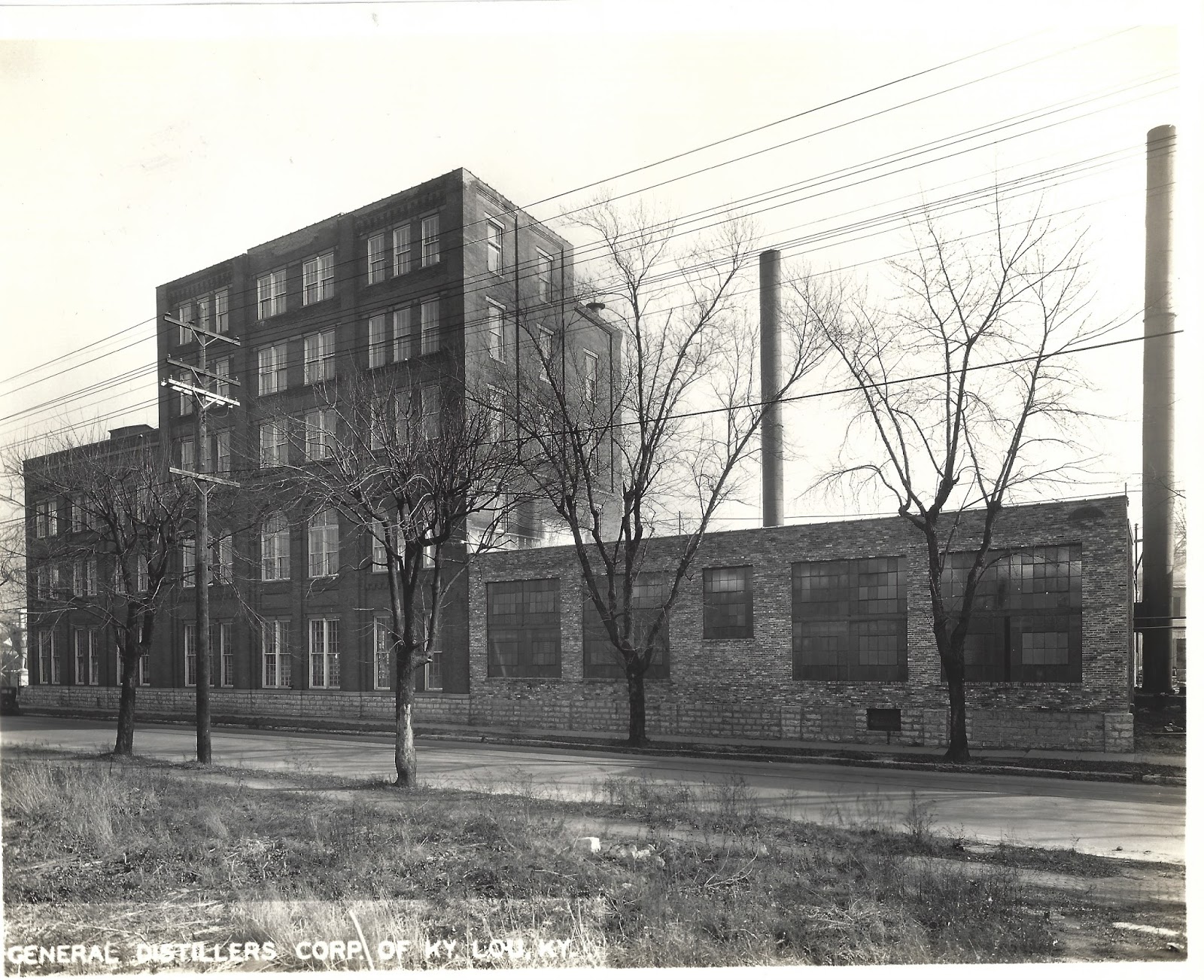
Although steps to reopen began in 1933, due to the dilapidated condition of the property and the necessity of installing all new equipment, it took until December 13, 1935 before General Distillers was able to fill its first barrel.  The renovations by General Distillers proved to be the source of the only known complete photograph of the Mellwood Distillery: 
 
Granted, this photograph was taken after its closure and abandonment, but its imposing stature can help us all envision the former grandeur of the Mellwood Distillery.  Sadly, the less ornate sensibilities of mid-1930’s Modernism influenced the renovations by General Distillers, resulting in the removal of the Richardsonian Romanesque lines, peaks, and ornamentations:
While the new design rejected earlier decorative architectural styles and embraced pure functionality and the ongoing industrial revolution, General Distillers simultaneously touted its adherence to old-world bourbon-making techniques, its deep limestone well, and the connection of its master distiller to legendary pre-Prohibition distillers.  All of the effort by General Distillers was ultimately for naught since it operated only for a few decades before closing and being demolished, but at least the Borgerding family kept a piece of history.
Tremendous thanks and photo credit to Janet Borgerding Murphy; all rights reserved.
Buffalo Trace Private Barrel Selection – Buffalo Trace, Eagle Rare, Weller, Elmer T. Lee and Blanton’s (Whew!)

The rumblings about the demise of the private barrel selection program at Buffalo Trace aren’t quite accurate yet, although it’s certainly true that not all brands are available for private barrels.  Don’t even ask for Weller 12 or Pappy.  But surprisingly, Elmer T. Lee and Blanton’s were in the mix last week when I had the pleasure of giving my 2 cents on the selection of Buffalo Trace, Eagle Rare, Weller Special Reserve, Old Weller Antique, Elmer T. Lee and Blanton’s with the experts at Cork ‘N Bottle (click here for the website) and the Whiskey Barrel Society.
The history at Buffalo Trace is palpable. Distilling on this picturesque site situated on the Kentucky River began as early as 1811.  It moved from a small distillery to an industrial complex when Col. E. H. Taylor, Jr. bought the property in 1870 and christened his distillery the “O.F.C.” (“Old Fire Copper”) Distillery.  Col. Taylor was a titan of bourbon, and during his life he owned interests in other famous distilleries like the Carlisle Distillery (built with his then-partner, George T. Stagg, next to the O.F.C.), the Old Oscar Pepper Distillery (later Labrot & Graham and now Woodford Reserve), the J.S. Taylor Distillery, and the abandoned but recently purchased Old Taylor Distillery.
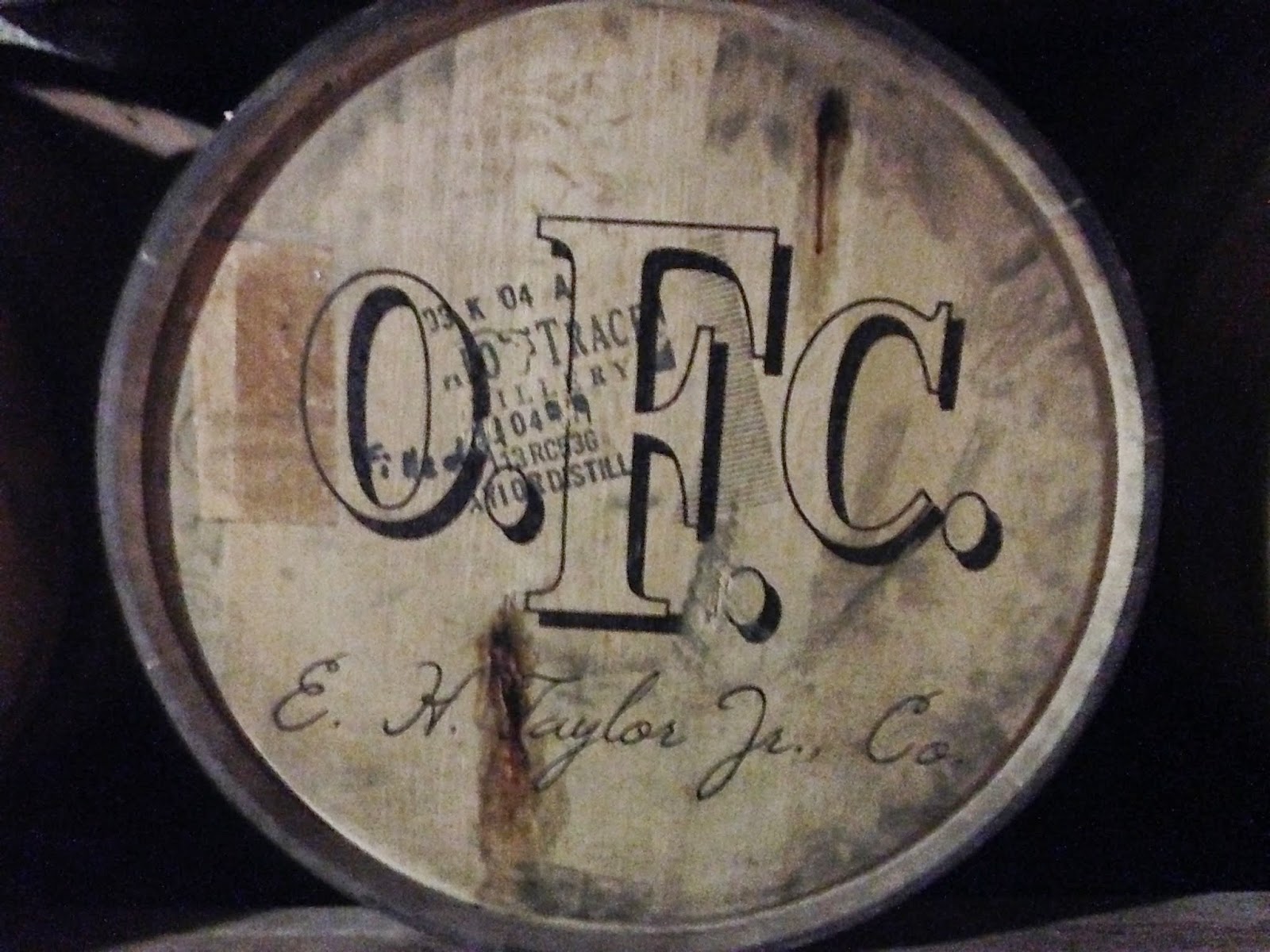
Our pre-barrel-selection tour included the standard stop inside Warehouse C, built in 1881.  I’ve been on the tour before and heard mostly the same speech, so I started looking at barrel heads and found this one:
Other information on the barrel showed that it was made with mash bill #1 but Fred, our tour guide, didn’t know what this was, and Buffalo Trace hasn’t responded to my inquiries.
We also saw a new version of “O.F.C.” aging, which is made with a new recipe using white corn, which was reported to have been the way Col. Taylor did it.
Our walk through the Albert B. Blanton Bottling Hall whetted my appetite even more.  They just so happened to be bottling the upcoming edition of the Buffalo Trace Antique Collection George T. Stagg, which this year weighs in at 138.1 proof.  I’ve never seen more than two bottles of George T. Stagg in one room, so needless to say, this was pretty awe-inspiring.
 
Still, of course, the whole point of the trip was to help select barrels, and we had our work cut out for us because Cork ‘N Bottle had thirty-nineto choose from.  The tasting room at Buffalo Trace is located in Warehouse H, which was built in 1934 by then-Master Distiller Col. Albert B. Blanton.  We started with eighteen barrels of Buffalo Trace, from which we selected eight, then moved to selecting four barrels of Eagle Rare.  Then we hit some of my favorites:  We got to pick two out of six barrels of 7½ year-old Weller (one for W.L. Weller Special Reserve and the other for Old Weller Antique; all barrels were about 121 proof), one out of three Elmer T. Lee barrels (9 years old and about 130 proof) and one out of three Blanton’s (6 years old at about 125 proof).  What a day!
I’ve reviewed most of these brands, but never the namesake brand, so this is the perfect opportunity to review the standard variety of Buffalo Trace bourbon available everywhere.  Buffalo Trace bourbon uses the distillery’s mash bill #1, which is shared with Eagle Rare, the E.H. Taylor, Jr. collection, the George T. Stagg collection, Old Charter, and Benchmark.  This is the “low-rye” mash bill, which is estimated to contain only about 10% rye grain.  Even Buffalo Trace’s “high-rye” mash bill is not particularly high, reportedly with only about 15% rye grain.
Bourbon:        Buffalo Trace Kentucky Straight Bourbon Whiskey
Distillery:        Buffalo Trace, Frankfort, Kentucky
Age:                NAS (Buffalo Trace tells me 8-9 years though)
Proof:             90 proof
Cost:               $23.99
Color:
Nice traditional amber.
Nose:
The primary scents are vanilla, corn, with just a bit of leather and mint, and not much oak to speak of.  Overall it has a pleasant nose, although not the most intriguing, and more alcohol smell than I expected for the proof.
Taste:
The taste starts with corn, brown sugar and a little toffee, and quickly moves to spice, before giving hints of toast and oak.  There seems to be a bit of dark fruits, but it’s very subdued.  A little water goes a long way and probably removes too much of the spice.
Finish:
The finish is medium in length with slight bitterness that I didn’t expect, but mostly licorice, rye spice and oak.
Bottom Line:
While I certainly like it, Buffalo Trace bourbon has never been my personal favorite, and except for George T. Stagg, I’m generally more a fan of the mash bill #2 bourbons.  Still, there is no denying that Buffalo Trace is a great mid entry-level buy, and it’s heads and shoulders above many of its competitors.  I’ll definitely get the Cork ‘N Bottle private barrel bottling in the fall, but frankly I’m more excited about the Old Weller Antique, Elmer T. Lee and Blanton’s private barrels.
Score on The Sipp’n Corn Scale:    3.0
The Sipp’n Corn Scale:
1 – Wouldn’t even accept a free drink of it.
2 – Would gladly drink it if someone else was buying.
3 – Glad to include this in my bar.
4 – Excellent bourbon.  Worth the price and I’m sure to always have it in my bar.
5 – Wow.  I’ll search high and low to get another bottle of this.